
Search
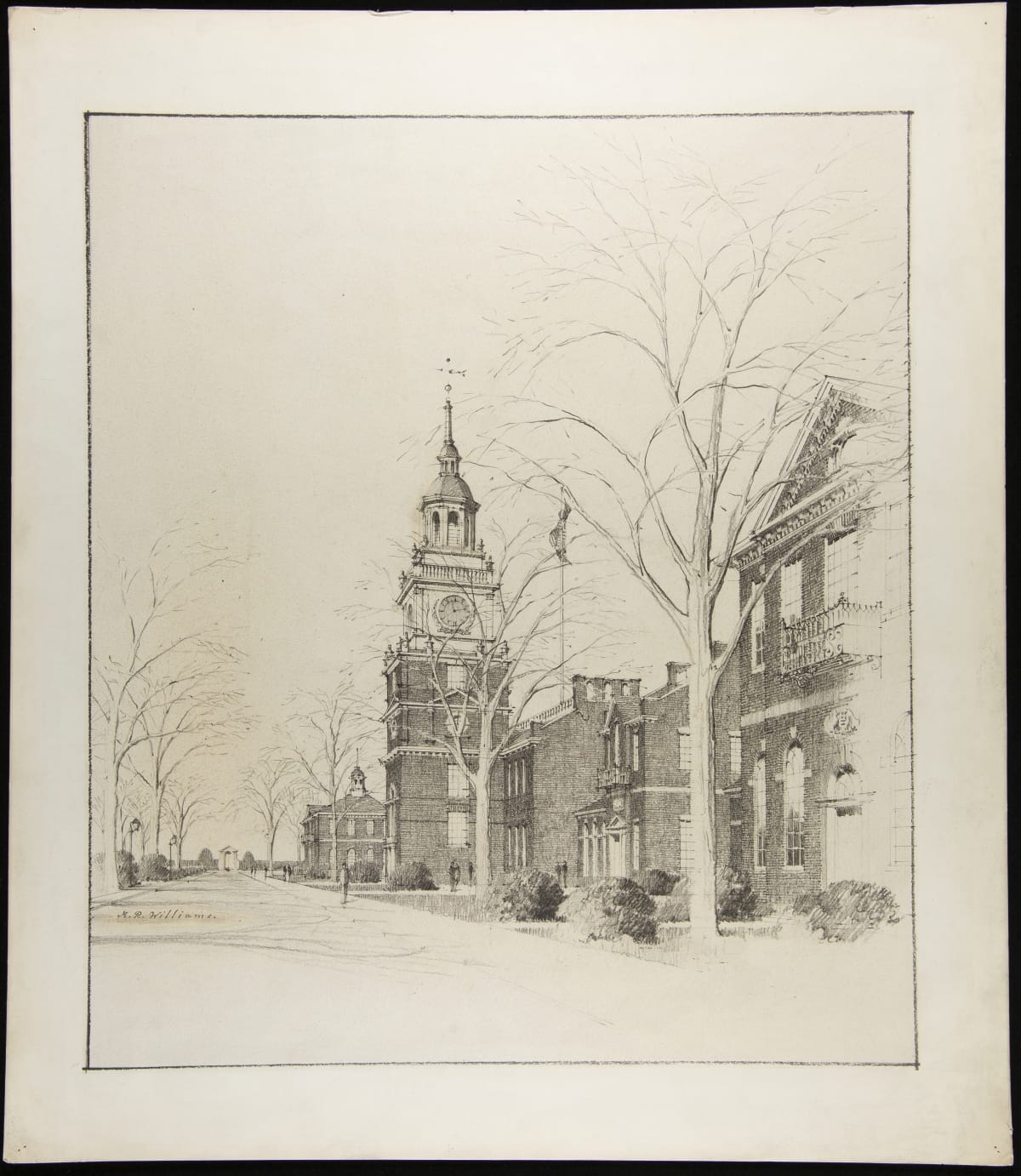
- Henry Ford Museum, East Facade, Clock Tower, 1928 - One of a series of views of the Museum as built, this black and white drawing shows the front façade of the Museum. A reproduction of Independence Hall is at the center, but the entire building was reproduced in reverse, with the clock tower as the focal point. This concession to history serves to provide balance to the extended series of buildings which comprise the front of the Museum.
- 1928
- Collections - Artifact
Henry Ford Museum, East Facade, Clock Tower, 1928
One of a series of views of the Museum as built, this black and white drawing shows the front façade of the Museum. A reproduction of Independence Hall is at the center, but the entire building was reproduced in reverse, with the clock tower as the focal point. This concession to history serves to provide balance to the extended series of buildings which comprise the front of the Museum.
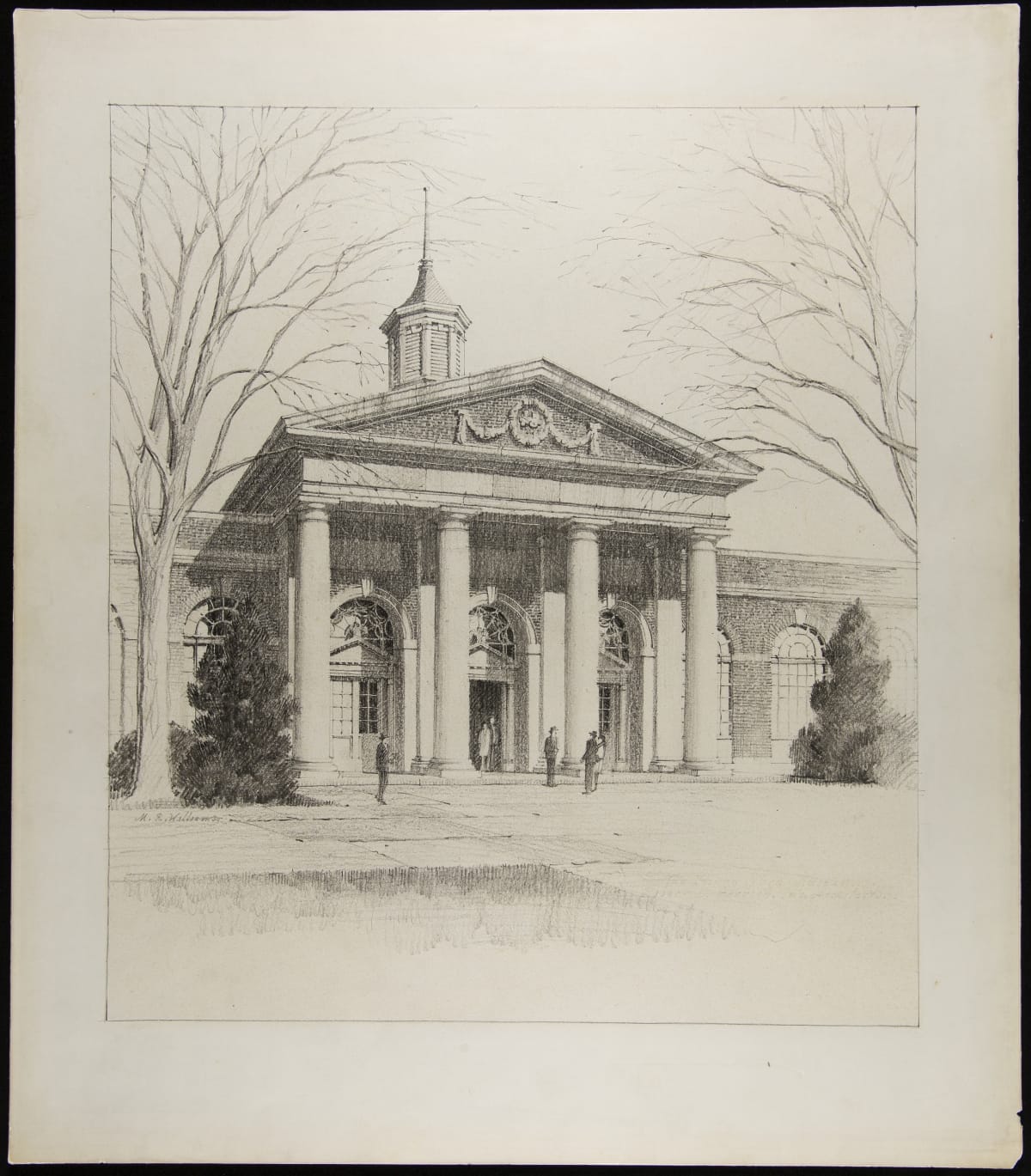
- Flanking Entrances, Henry Ford Museum, 1928 - One of a series of views of the Museum as built, this black and white drawing shows a detail of a decorative portico on the side of the Museum. This portico encloses a group of doorways providing access to the Museum to facilitate movement of large artifacts in and out the of the one-story gallery.
- 1928
- Collections - Artifact
Flanking Entrances, Henry Ford Museum, 1928
One of a series of views of the Museum as built, this black and white drawing shows a detail of a decorative portico on the side of the Museum. This portico encloses a group of doorways providing access to the Museum to facilitate movement of large artifacts in and out the of the one-story gallery.
- Waiting Room Showing East Wing Addition, Greenfield Village, October 9, 1935 - In 1930, Henry Ford commissioned Robert Derrick to create a gatehouse entrance for Greenfield Village. Like the Museum, the gatehouse was designed in a colonial revival style. This decorative building provided an orientation to the historic site. In 1935, Derrick enlarged the building, adding a waiting room, visible on the left and a porch on the rear of the building.

- October 09, 1935
- Collections - Artifact
Waiting Room Showing East Wing Addition, Greenfield Village, October 9, 1935
In 1930, Henry Ford commissioned Robert Derrick to create a gatehouse entrance for Greenfield Village. Like the Museum, the gatehouse was designed in a colonial revival style. This decorative building provided an orientation to the historic site. In 1935, Derrick enlarged the building, adding a waiting room, visible on the left and a porch on the rear of the building.
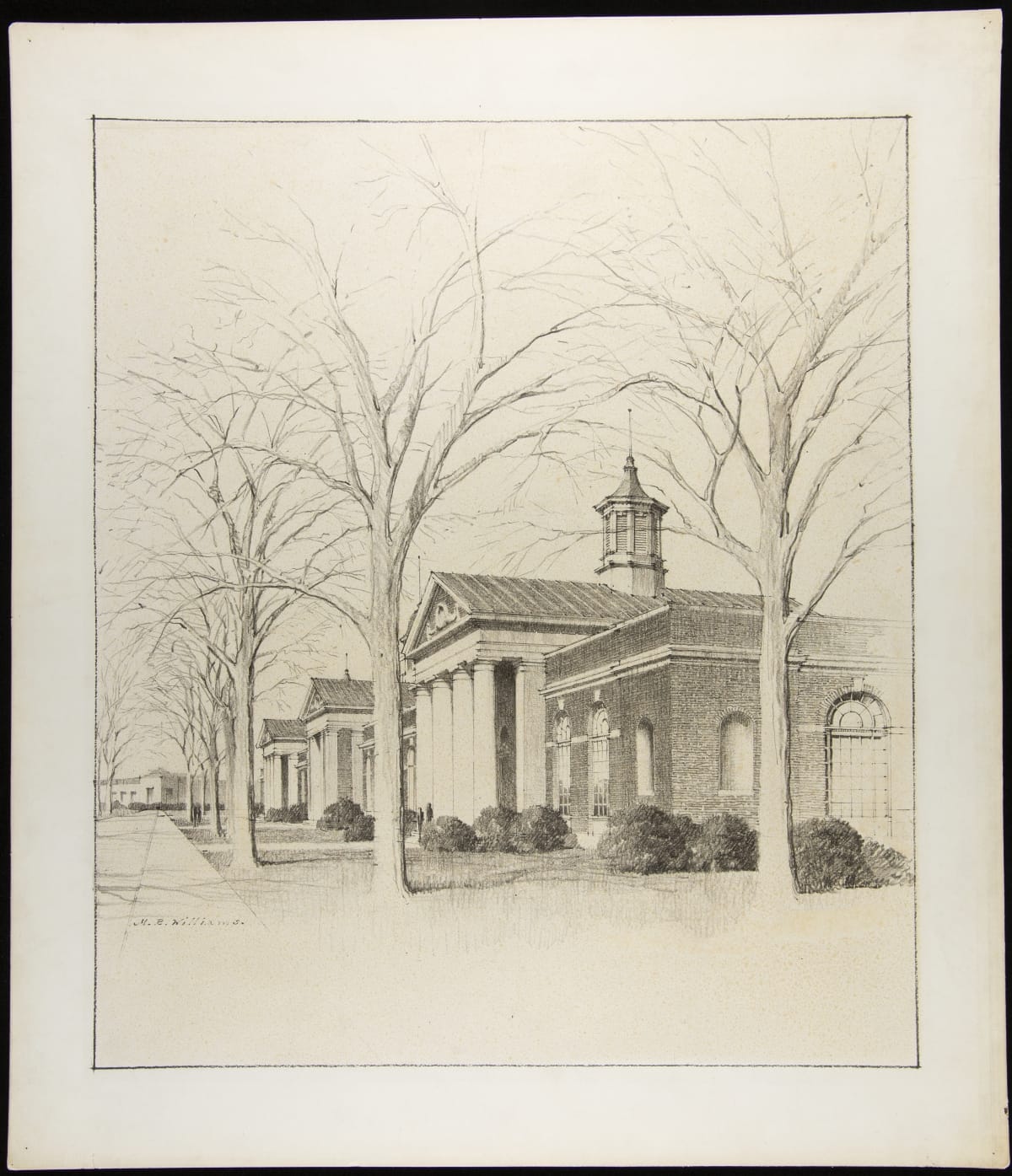
- Henry Ford Museum, South Facade, 1928 - One of a series of views of the Museum as built, this black and white drawing shows the south or side facade of the Museum. Rows of decorative porticos, surrounding doorways provide access to the museum to facilitate the movement of large artifacts in an out of the one-story gallery.
- 1928
- Collections - Artifact
Henry Ford Museum, South Facade, 1928
One of a series of views of the Museum as built, this black and white drawing shows the south or side facade of the Museum. Rows of decorative porticos, surrounding doorways provide access to the museum to facilitate the movement of large artifacts in an out of the one-story gallery.
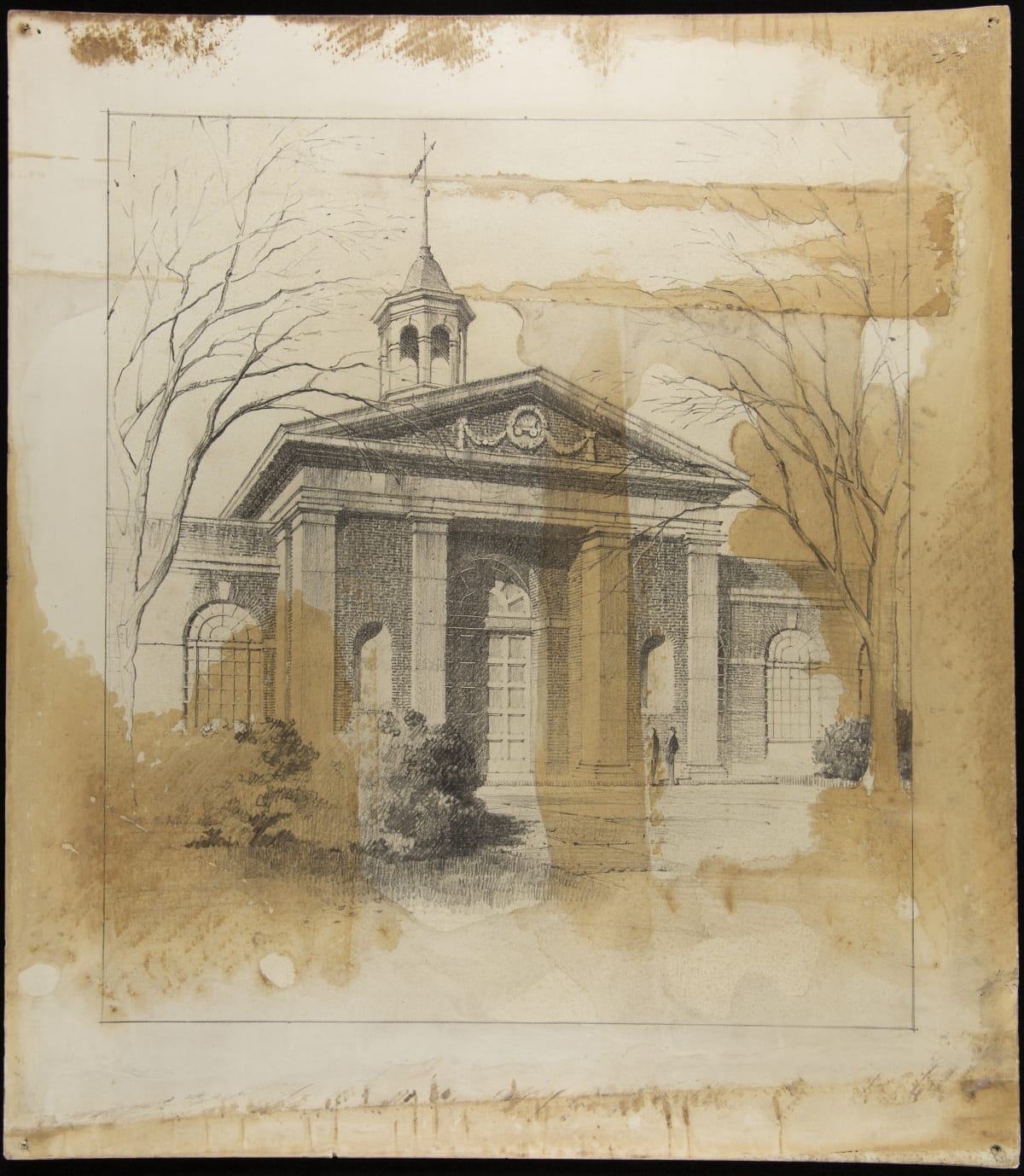
- Center Entrance (North and South Elevations), Building K, Henry Ford Museum, 1928 - One of a series of views of the Museum as built, this black and white drawing shows a detail of a decorative portico on the side of the Museum. This portico encloses a group of doorways providing access to the Museum to facilitate movement of large artifacts in and out the of the one-story gallery.
- 1928
- Collections - Artifact
Center Entrance (North and South Elevations), Building K, Henry Ford Museum, 1928
One of a series of views of the Museum as built, this black and white drawing shows a detail of a decorative portico on the side of the Museum. This portico encloses a group of doorways providing access to the Museum to facilitate movement of large artifacts in and out the of the one-story gallery.
- Auditorium, Henry Ford Museum, 1928 - One of a series of views of the Museum as built, this black and white drawing shows the auditorium, now known as the Anderson Theater. Built for use by the Greenfield Village Schools for plays and events, it has also served for presentations to general audiences. Today it is used by the Museum for major public events and by the Henry Ford Academy, a charter high school.

- 1928
- Collections - Artifact
Auditorium, Henry Ford Museum, 1928
One of a series of views of the Museum as built, this black and white drawing shows the auditorium, now known as the Anderson Theater. Built for use by the Greenfield Village Schools for plays and events, it has also served for presentations to general audiences. Today it is used by the Museum for major public events and by the Henry Ford Academy, a charter high school.
- Corridor in Building C Looking toward Building K, Henry Ford Museum, 1928 - One of a series of views of the Museum as built, this black and white drawing shows a long corridor which runs along the front of the Museum. Known as the Promenade, this marble floored space also connects front of the Museum with the exhibit gallery behind. This view shows the main entrance into the Museum from the clock tower which is behind us.

- 1928
- Collections - Artifact
Corridor in Building C Looking toward Building K, Henry Ford Museum, 1928
One of a series of views of the Museum as built, this black and white drawing shows a long corridor which runs along the front of the Museum. Known as the Promenade, this marble floored space also connects front of the Museum with the exhibit gallery behind. This view shows the main entrance into the Museum from the clock tower which is behind us.
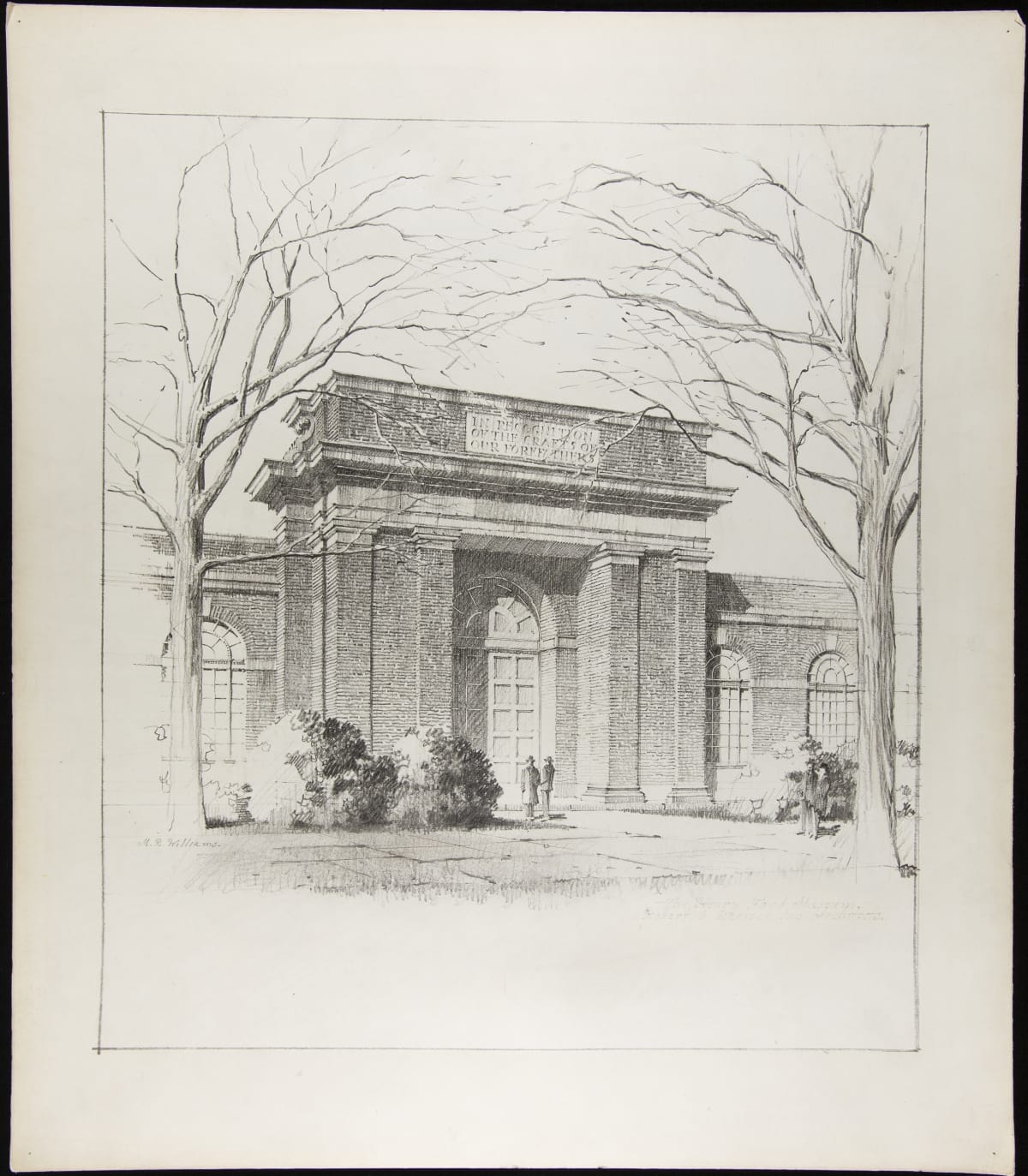
- One of Four Entrances to Henry Ford Museum Building K, West Elevation, circa 1928 - One of a series of views of the Museum as built, this black and white drawing shows one of the side entrances to the Museum exhibit floor. These grandly decorated entrances facilitate the movement of large artifacts in and out of the one-story gallery.
- 1928
- Collections - Artifact
One of Four Entrances to Henry Ford Museum Building K, West Elevation, circa 1928
One of a series of views of the Museum as built, this black and white drawing shows one of the side entrances to the Museum exhibit floor. These grandly decorated entrances facilitate the movement of large artifacts in and out of the one-story gallery.
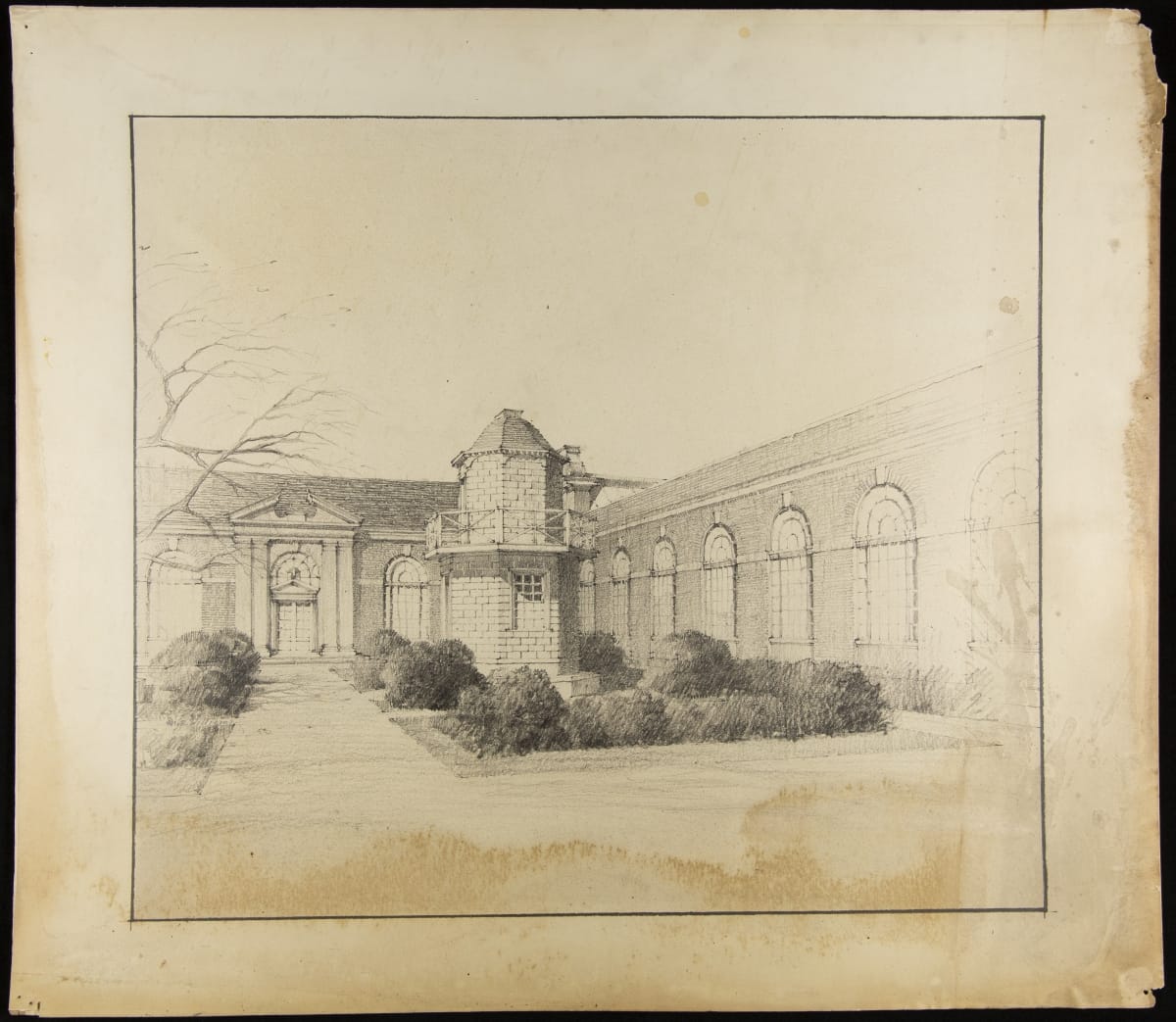
- Pennsylvania Court, Henry Ford Museum, 1928 - One of a series of views of The Henry Ford Museum as built, this black and white drawing shows one of two courtyards located between the entrance Promenade and the exhibit gallery. Filled with trees, plantings, and a decorative and functional pump house, architect Robert Derrick intended these spaces to provide light, air, and vistas from the Museum and Promenade.
- 1928
- Collections - Artifact
Pennsylvania Court, Henry Ford Museum, 1928
One of a series of views of The Henry Ford Museum as built, this black and white drawing shows one of two courtyards located between the entrance Promenade and the exhibit gallery. Filled with trees, plantings, and a decorative and functional pump house, architect Robert Derrick intended these spaces to provide light, air, and vistas from the Museum and Promenade.
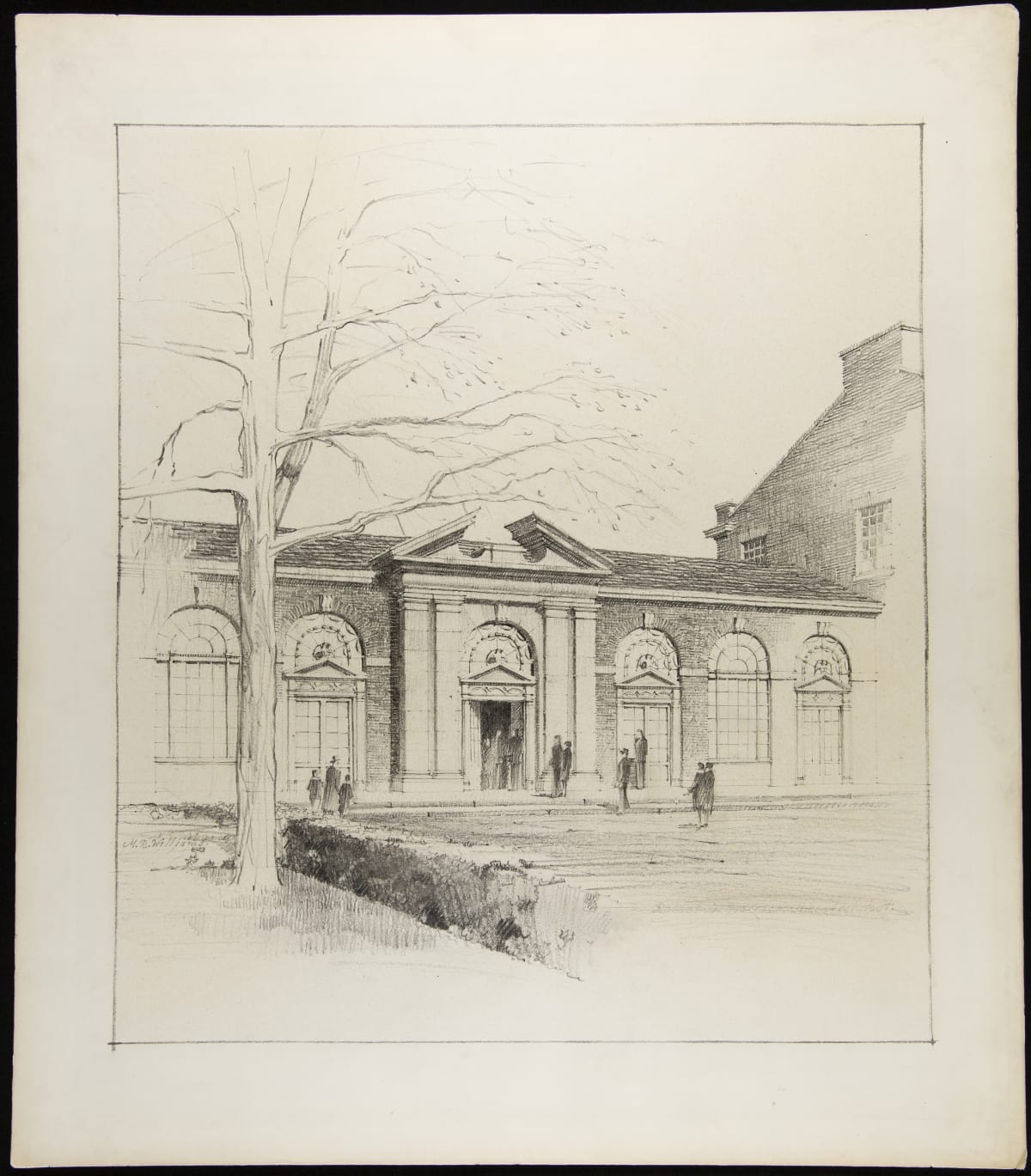
- Henry Ford Museum Main Entrances H and J (Auditorium Entrance), 1928 - One of a series of views of the Museum as built, this black and white drawing shows a decorative portico on the front façade of the Museum. Located just to the left of the Independence Hall replica, this entrance was intended to provide access the theater. Today it is primary used for picking up and dropping off visitors to the Ford Rouge Factory Tour.
- 1928
- Collections - Artifact
Henry Ford Museum Main Entrances H and J (Auditorium Entrance), 1928
One of a series of views of the Museum as built, this black and white drawing shows a decorative portico on the front façade of the Museum. Located just to the left of the Independence Hall replica, this entrance was intended to provide access the theater. Today it is primary used for picking up and dropping off visitors to the Ford Rouge Factory Tour.