
Search
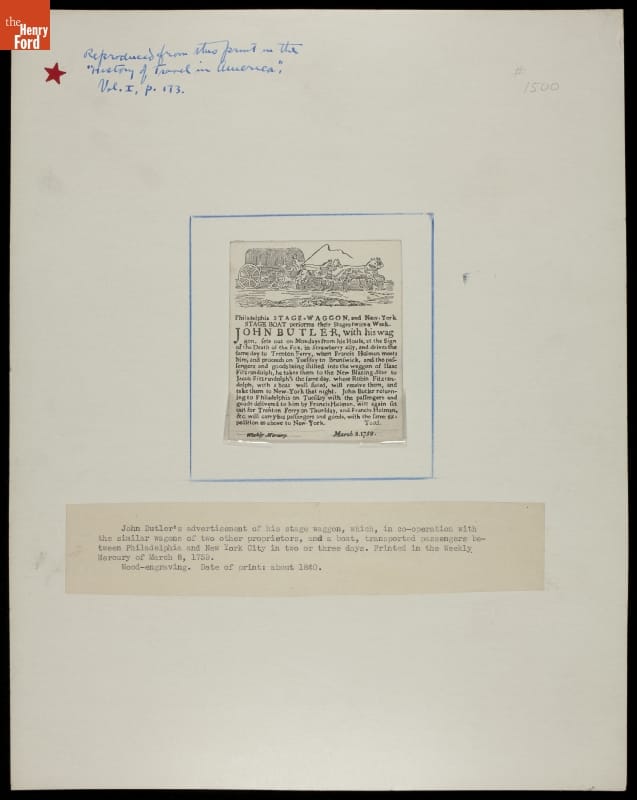
- Advertisement for Stage Wagon and Boat Transportation Between Philadelphia and New York City, circa 1840 - Originally printed March 8, 1759, in the <em>Weekly Mercury</em>, this advertisement features a wood engraving of John Butler's stage wagon. This stage line ran between Philadelphia, Pennsylvania, and New York City.
- March 08, 1759
- Collections - Artifact
Advertisement for Stage Wagon and Boat Transportation Between Philadelphia and New York City, circa 1840
Originally printed March 8, 1759, in the Weekly Mercury, this advertisement features a wood engraving of John Butler's stage wagon. This stage line ran between Philadelphia, Pennsylvania, and New York City.
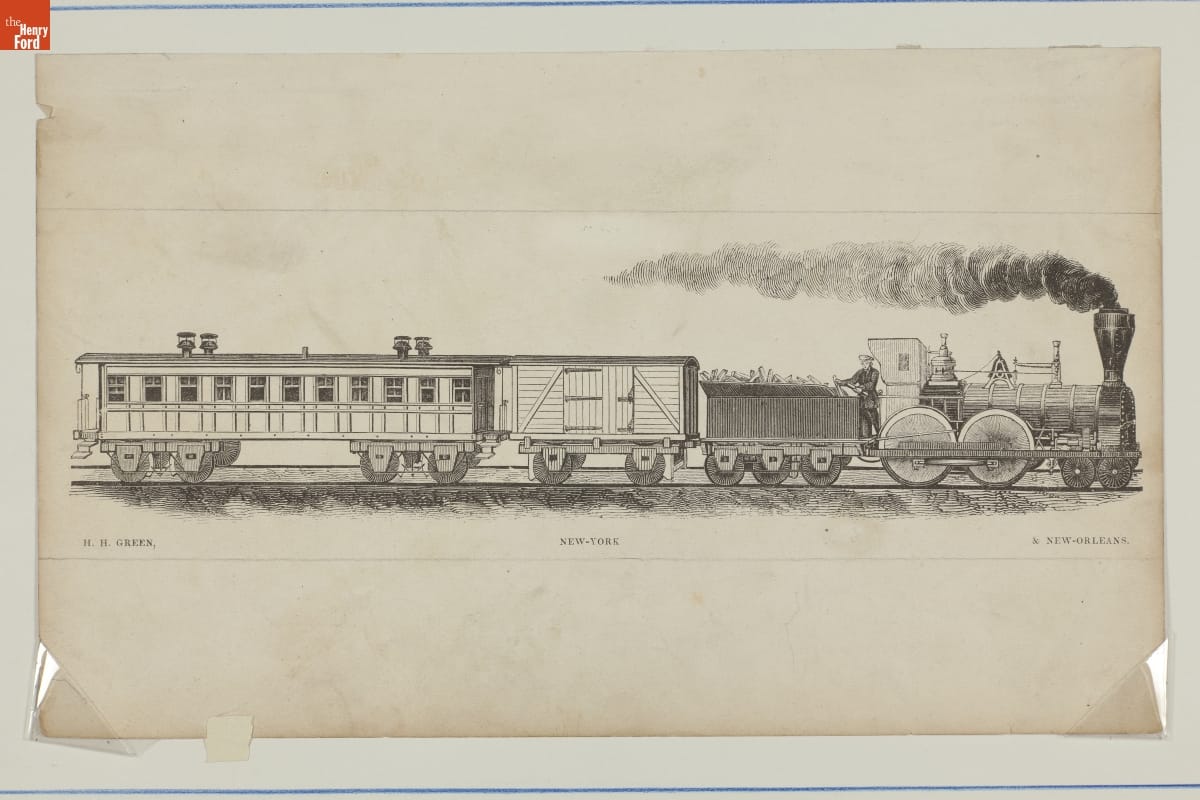
- Train with Steam Locomotive, Passenger and Freight Cars, circa 1856 - Locomotive boilers had to stay hot to produce steam. Lagging -- insulation around the boiler -- was crucial. This American-type locomotive of the 1850s had narrow wooden strips mounted around its boiler for insulation. But the wood deteriorated quickly when exposed to weather and sparks. Improved designs placed a protective sheet metal jacket over the wood.
- circa 1856
- Collections - Artifact
Train with Steam Locomotive, Passenger and Freight Cars, circa 1856
Locomotive boilers had to stay hot to produce steam. Lagging -- insulation around the boiler -- was crucial. This American-type locomotive of the 1850s had narrow wooden strips mounted around its boiler for insulation. But the wood deteriorated quickly when exposed to weather and sparks. Improved designs placed a protective sheet metal jacket over the wood.
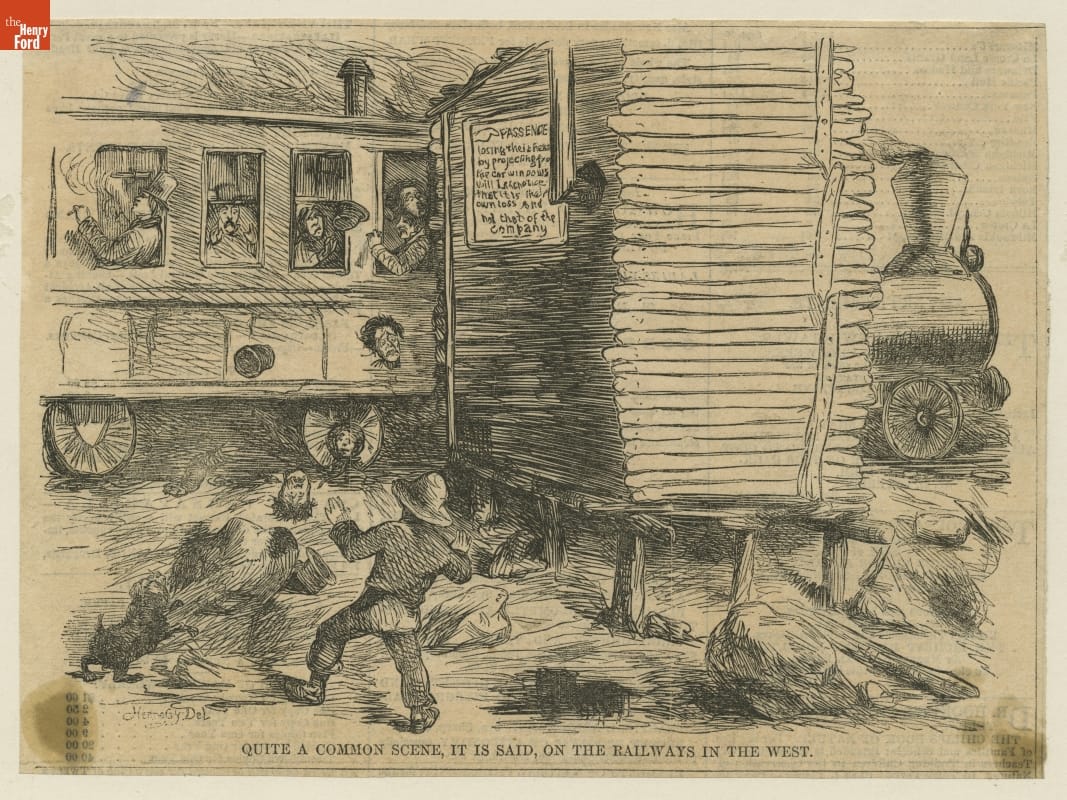
- Wood Engraving, "Quite a Common Scene, it is Said, on the Railways in the West," 1858 - While close clearances -- tight spaces between railroad cars and trackside structures -- did exist, this 1858 illustration from <em>Harper's Weekly</em> exaggerated the dangers faced by passengers who stuck their heads through windows. More likely threats from an open window included sparks, cinders and smoke from the steam locomotive pulling the train -- all of which could irritate eyes and damage clothing.
- 1858
- Collections - Artifact
Wood Engraving, "Quite a Common Scene, it is Said, on the Railways in the West," 1858
While close clearances -- tight spaces between railroad cars and trackside structures -- did exist, this 1858 illustration from Harper's Weekly exaggerated the dangers faced by passengers who stuck their heads through windows. More likely threats from an open window included sparks, cinders and smoke from the steam locomotive pulling the train -- all of which could irritate eyes and damage clothing.
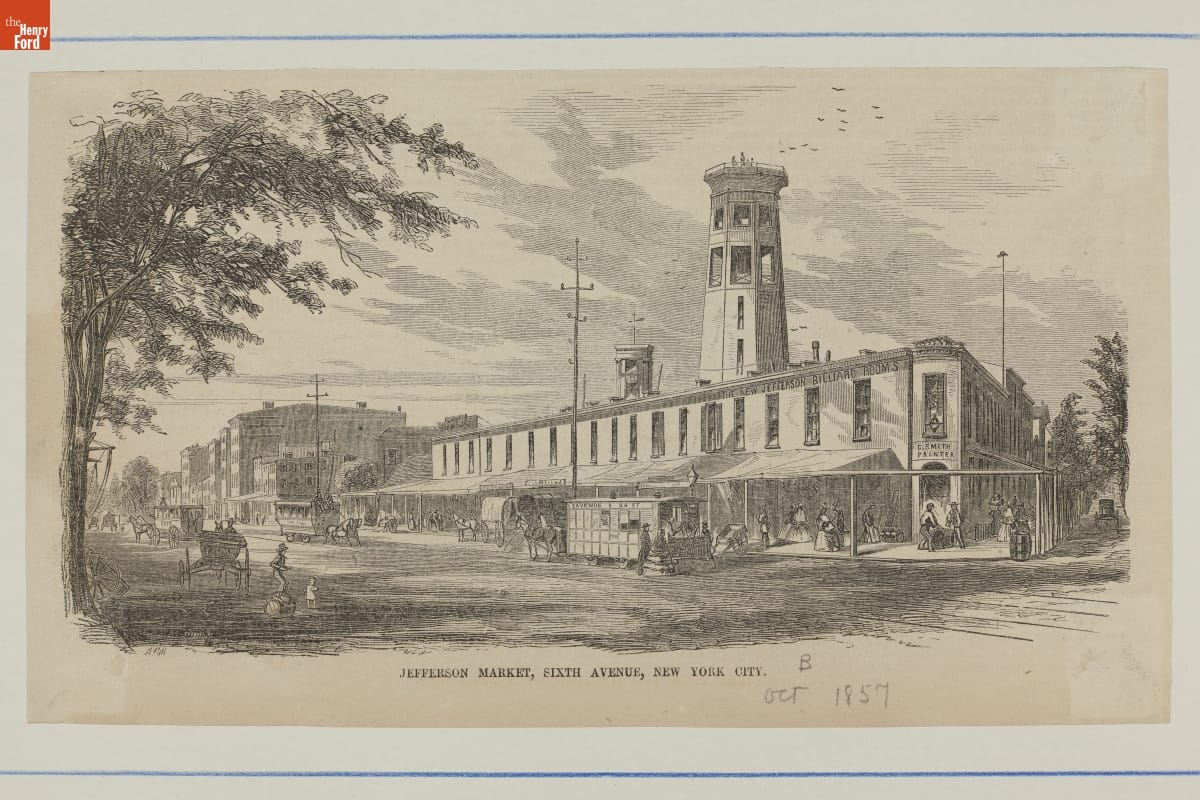
- "Jefferson Market, Sixth Avenue, New York City," 1857 - In the mid-1800s, horse-drawn streetcars provided a convenient and affordable way to get around a growing city. These streetcars traveled the main urban thoroughfares and took passengers to their workplaces, local shops and businesses, parks and other destinations. In this 1857 print, riders get on and off a streetcar at New York's Jefferson Market, while another streetcar approaches from down the street.
- 1857
- Collections - Artifact
"Jefferson Market, Sixth Avenue, New York City," 1857
In the mid-1800s, horse-drawn streetcars provided a convenient and affordable way to get around a growing city. These streetcars traveled the main urban thoroughfares and took passengers to their workplaces, local shops and businesses, parks and other destinations. In this 1857 print, riders get on and off a streetcar at New York's Jefferson Market, while another streetcar approaches from down the street.
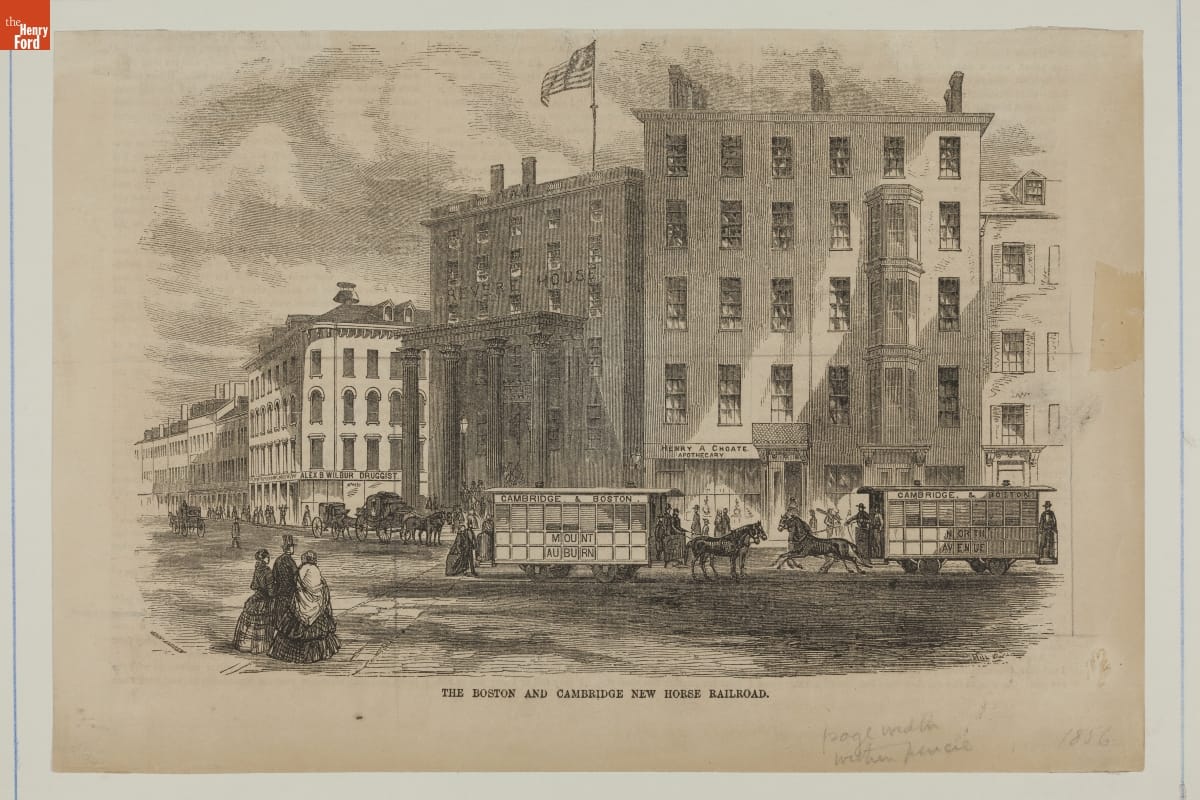
- "The Boston and Cambridge New Horse Railroad," 1856 - This wood engraving depicts the early horse-drawn railroads in 1856 that ran from Boston through Cambridge to Mount Auburn in Massachusetts. The print was originally engraved by printmaker John Andrew for the publication "Ballou's Pictorial."
- 1856
- Collections - Artifact
"The Boston and Cambridge New Horse Railroad," 1856
This wood engraving depicts the early horse-drawn railroads in 1856 that ran from Boston through Cambridge to Mount Auburn in Massachusetts. The print was originally engraved by printmaker John Andrew for the publication "Ballou's Pictorial."
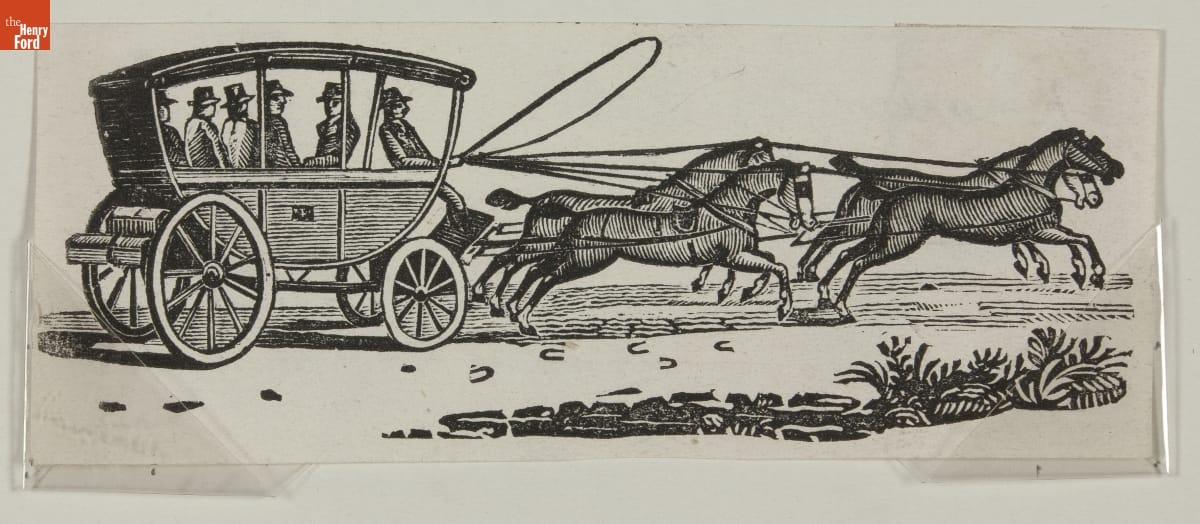
- Wood Engraving, American Coach, circa 1827 - Before railroads, long-distance travelers often rode in public coaches. They would jostle along rough country roads with mail, freight, and other passengers "in stages," stopping every few hours to change horses. This image depicting a loaded stagecoach in transit was drawn and engraved by Philadelphia artist Alexander Robb.
- 1825-1830
- Collections - Artifact
Wood Engraving, American Coach, circa 1827
Before railroads, long-distance travelers often rode in public coaches. They would jostle along rough country roads with mail, freight, and other passengers "in stages," stopping every few hours to change horses. This image depicting a loaded stagecoach in transit was drawn and engraved by Philadelphia artist Alexander Robb.
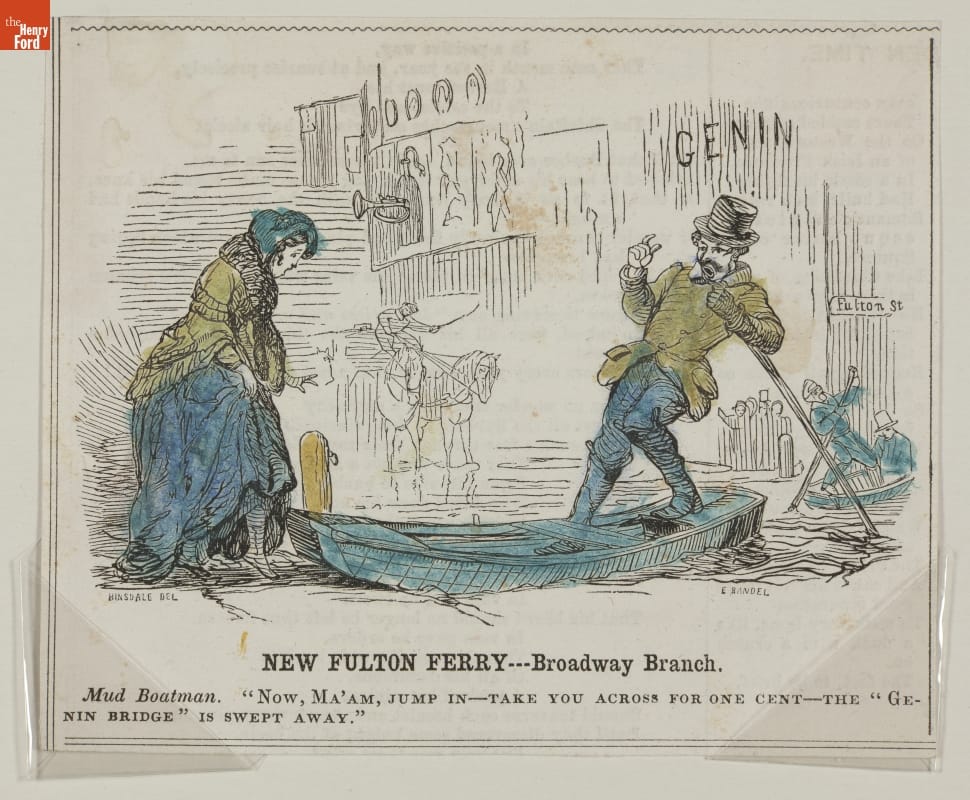
- Cartoon, "New Fulton Ferry - Broadway Branch," circa 1845 -
- circa 1845
- Collections - Artifact
Cartoon, "New Fulton Ferry - Broadway Branch," circa 1845
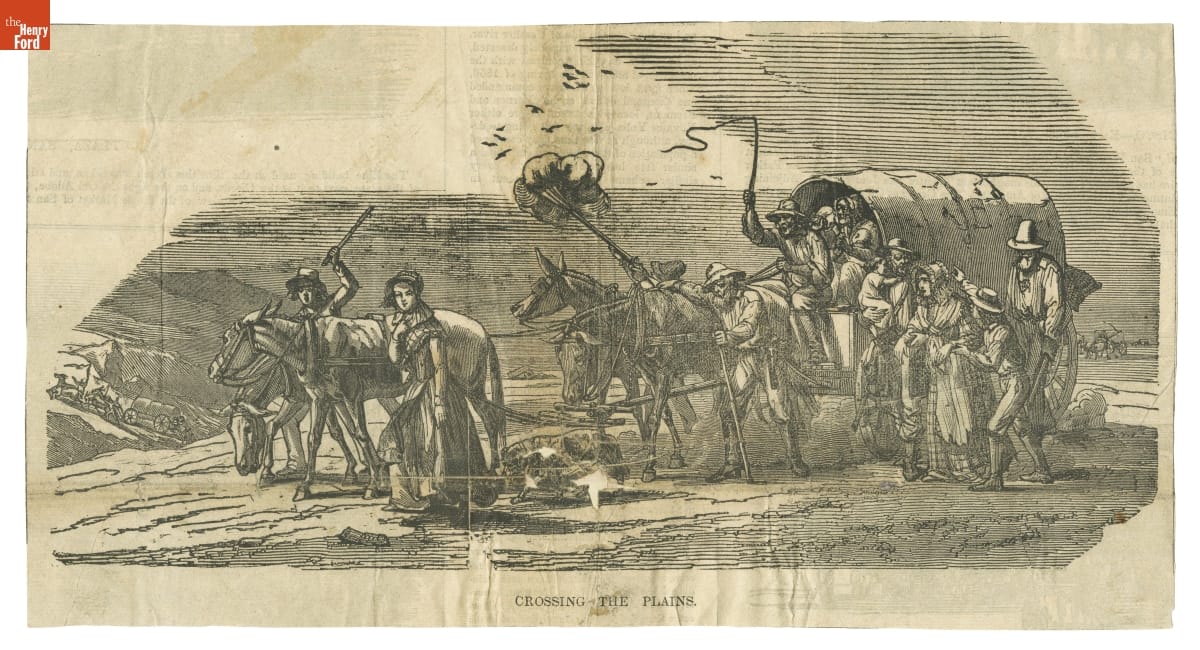
- A Party of Emigrants to California, Crossing the Plains, 1852 - Soon after the Mexican-American War ended in 1848, the newly acquired territory of California became the destination of hundreds of thousands of Americans, especially after gold was discovered at Sutter's Mill outside Sacramento. The California Gold Rush pulled Americans across the continent. This wood engraving is one of the few known portrayals of the migrations created at that time.
- January 01, 1852
- Collections - Artifact
A Party of Emigrants to California, Crossing the Plains, 1852
Soon after the Mexican-American War ended in 1848, the newly acquired territory of California became the destination of hundreds of thousands of Americans, especially after gold was discovered at Sutter's Mill outside Sacramento. The California Gold Rush pulled Americans across the continent. This wood engraving is one of the few known portrayals of the migrations created at that time.
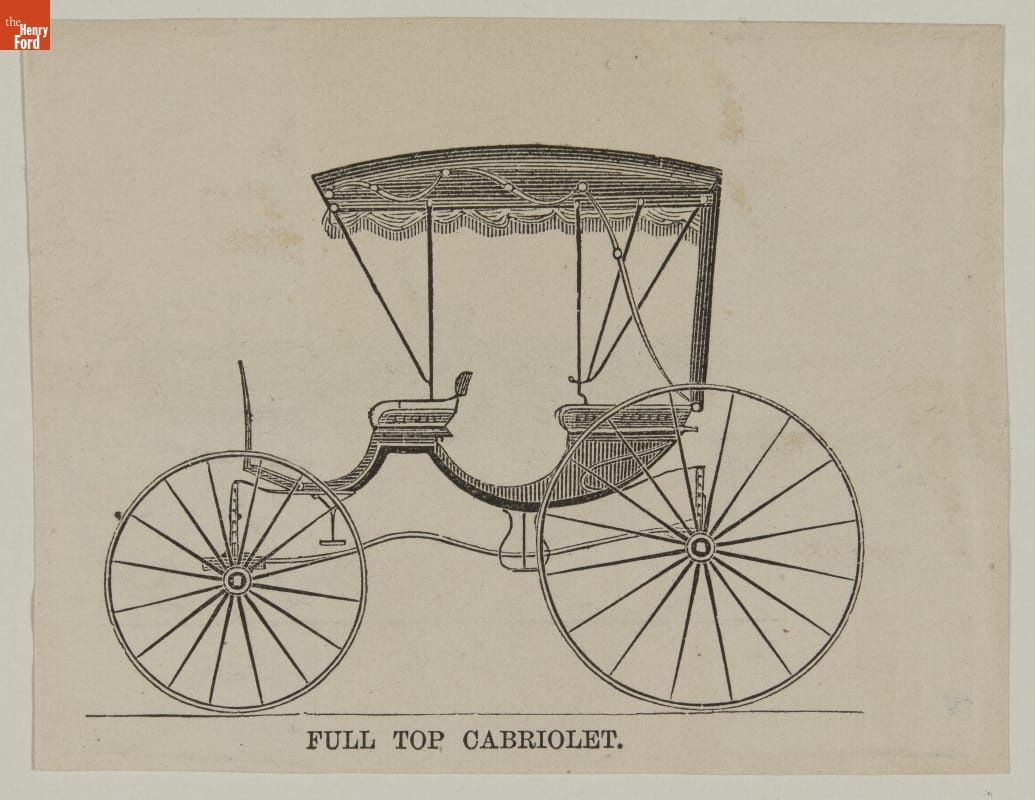
- "Full Top Cabriolet," circa 1850 - Many automotive body styles derive from horse-drawn origins. A cabriolet, as seen in this ca. 1850 wood engraving, was a light carriage with a collapsible top or roof. In automobile terminology, a cabriolet refers to a car with a folding roof.
- circa 1850
- Collections - Artifact
"Full Top Cabriolet," circa 1850
Many automotive body styles derive from horse-drawn origins. A cabriolet, as seen in this ca. 1850 wood engraving, was a light carriage with a collapsible top or roof. In automobile terminology, a cabriolet refers to a car with a folding roof.
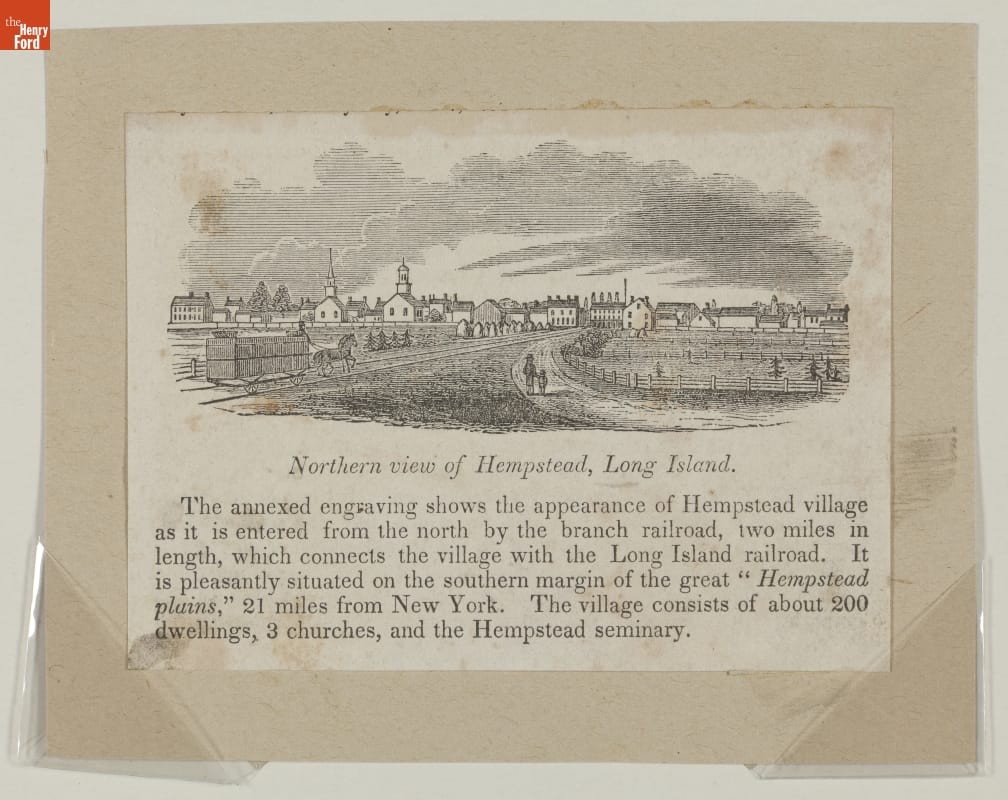
- Wood Engraving, "Northern View of Hempstead, Long Island," circa 1845 - Selecting a railroad's route was a delicate balance between the technical need for easy curves and gentle gradients, and the economic necessity of ready customers. When an important community got bypassed by the mainline, the railroad might build a branch line to it. The Long Island Rail Road built a branch to Hempstead, New York, two miles south of its mainline.
- circa 1845
- Collections - Artifact
Wood Engraving, "Northern View of Hempstead, Long Island," circa 1845
Selecting a railroad's route was a delicate balance between the technical need for easy curves and gentle gradients, and the economic necessity of ready customers. When an important community got bypassed by the mainline, the railroad might build a branch line to it. The Long Island Rail Road built a branch to Hempstead, New York, two miles south of its mainline.