
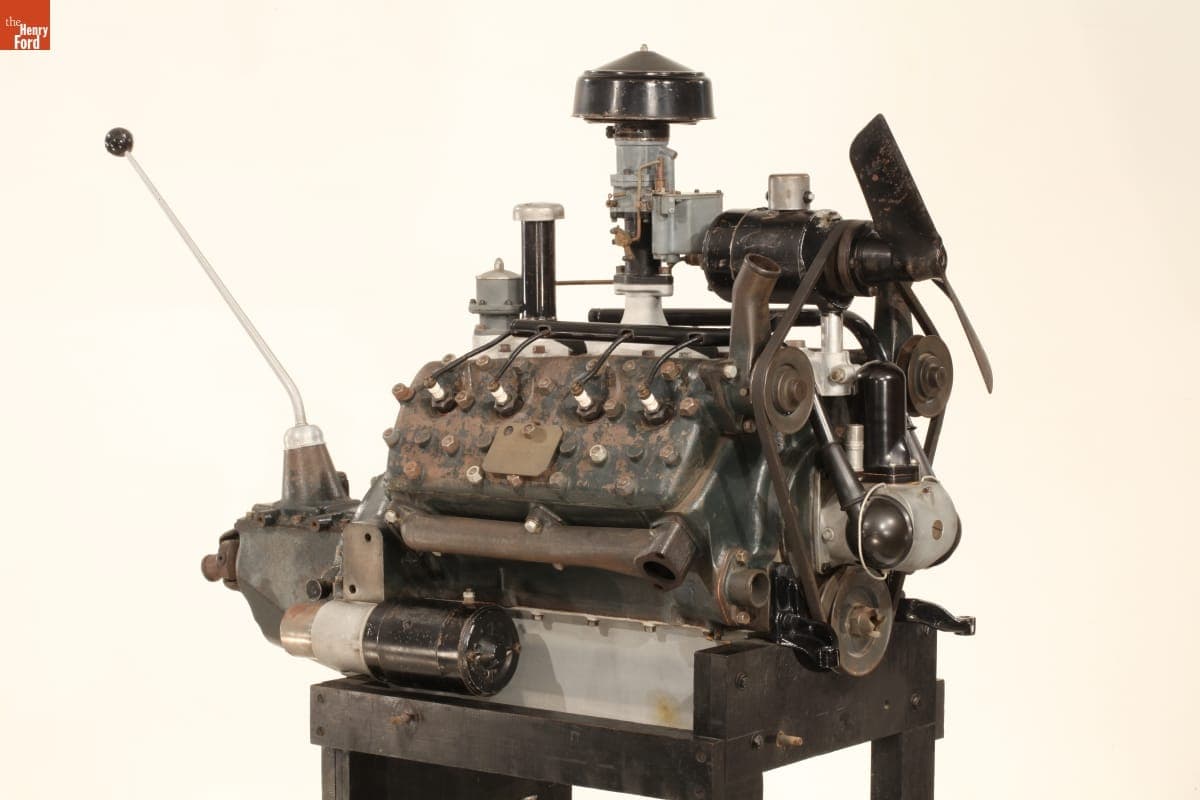
Ford X-8 Engine, 1920-1925
THF150908 / Ford X-8 Engine, 1920-1925
01
Artifact Overview
This odd looking X-shaped engine has two banks of four cylinders arranged around a central crankshaft. This X-8 layout fascinated Henry Ford and in 1920 he launched a secret project to build such an engine. But the X-8 turned out to be a flawed concept, and Ford finally abandoned the project in 1926.
Artifact Details
Artifact
Automobile engine
Date Made
1920-1925
Creators
Place of Creation
Location
at Henry Ford Museum in Driving America
Object ID
55.6.19
Credit
From the Collections of The Henry Ford. Gift of Ford Motor Company.
Material
Cast iron
Steel (Alloy)
Copper (Metal)
Dimensions
Height: 17 in
Width: 17 in
Length: 14 in (depth/thickness)
Specifications
Make & Model: X-8 engine, about 1925
Maker: Ford Motor Company, Highland Park, Michigan
Configuration: X-8, L-head valves, 108 cubic inches
Horsepower: unknown
Keywords |
|---|
02
Related Content
 Set
SetThe Ford V-8
- 20 Artifacts
Henry Ford and Ford Motor Company revolutionized the auto industry once again in 1932 with the introduction of a low-priced V-8 engine. By casting the crankcase and cylinder banks as a single unit, Ford cut manufacturing costs and could offer its V-8 in a car starting under $500. Ford's original V-8 design remained in production, with modifications, until 1953.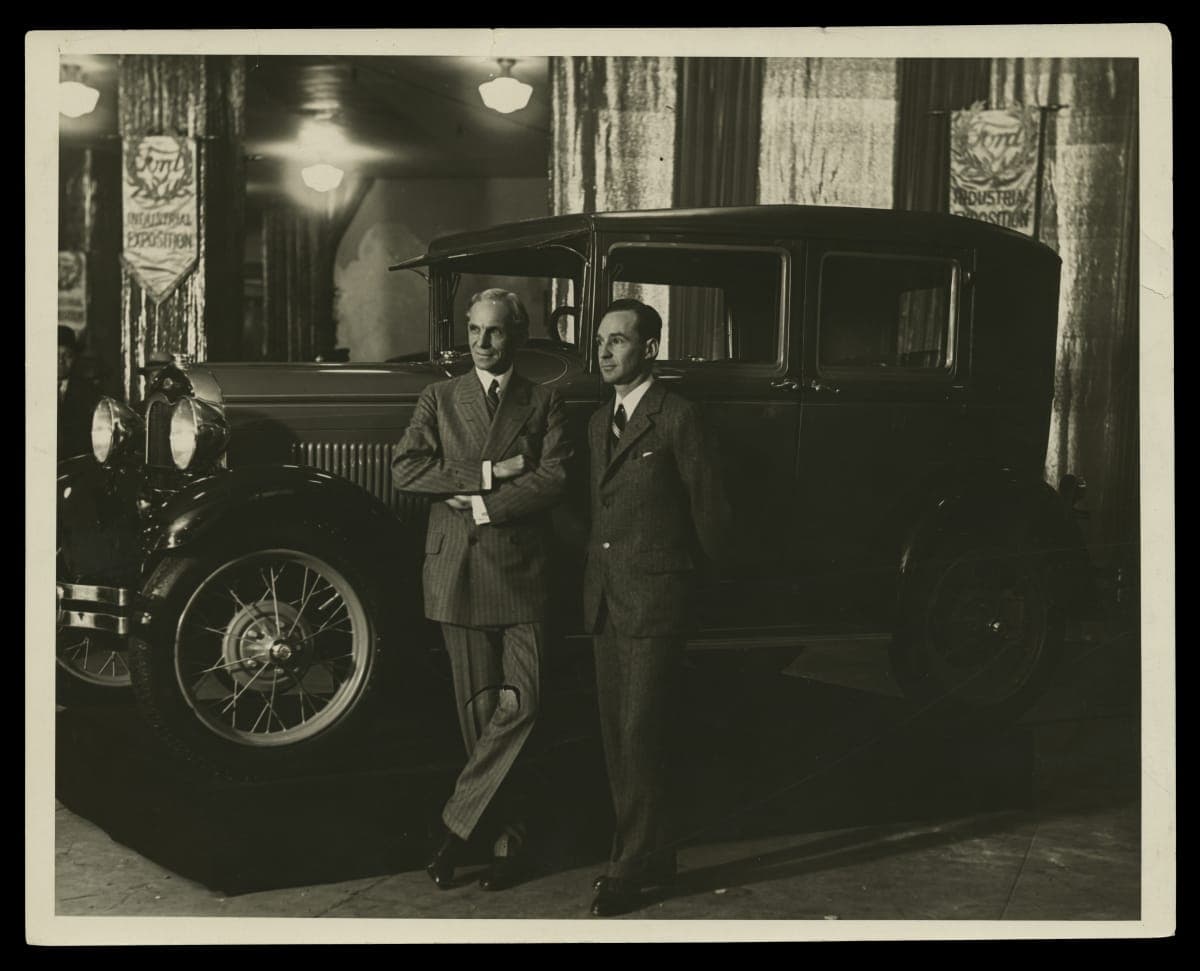 Set
SetHenry Ford: Post-Model T
- 17 Artifacts
Henry Ford and Edsel Ford introduced the Model A on December 2, 1927. After 19 years of Model T production, the public was eager for Ford Motor Company's new car. It took six months of intensive design work and plant retooling, but the Model A was a hit. Ford sold nearly five million cars over the Model A's four-year production run.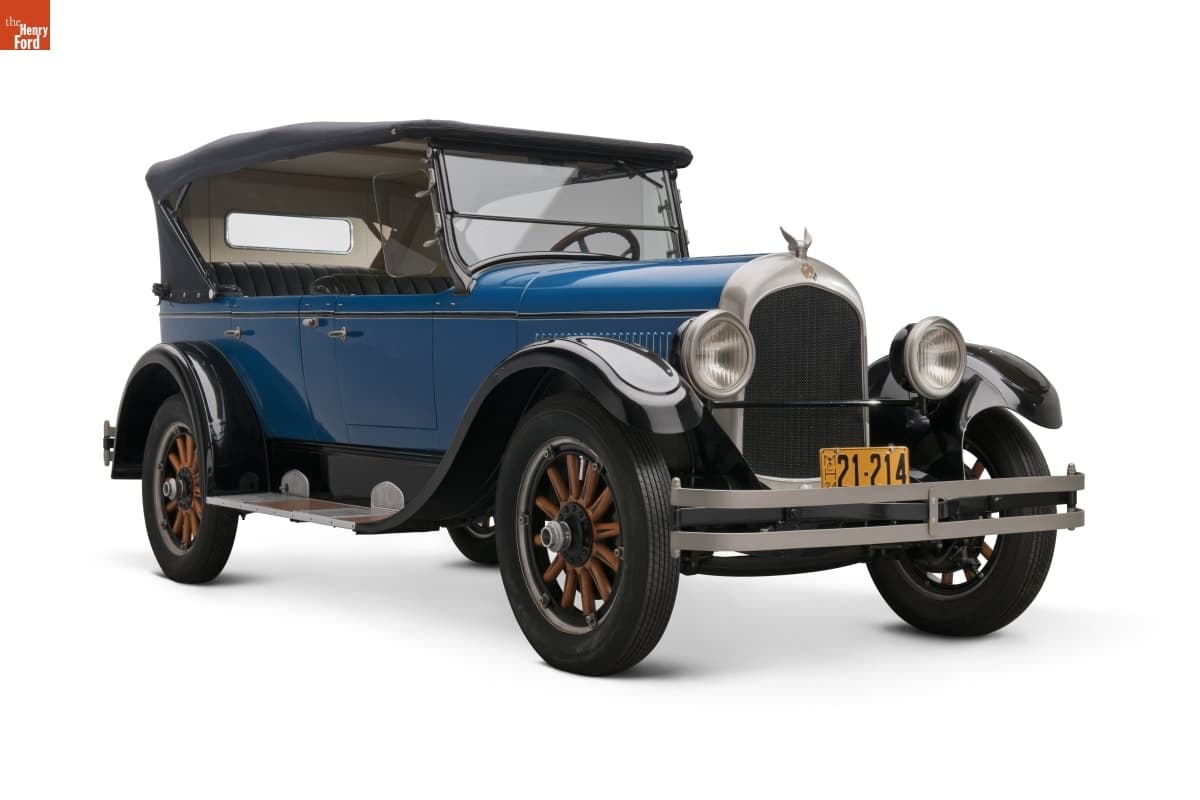 Set
SetHenry Ford: Henry Ford's Failures
- 22 Artifacts
The first car to wear the Chrysler nameplate was perfectly suited to the Roaring Twenties. It was a decade of fast profits, fast music, and fast driving. A lightweight chassis and an efficient engine meant Chrysler drivers could out-accelerate Cadillacs costing twice as much. When Chrysler drivers stopped, they used modern hydraulic brakes instead of the Caddy's old-style mechanical brakes. Small wonder that Chrysler sales increased 500 percent from 1925 to 1929.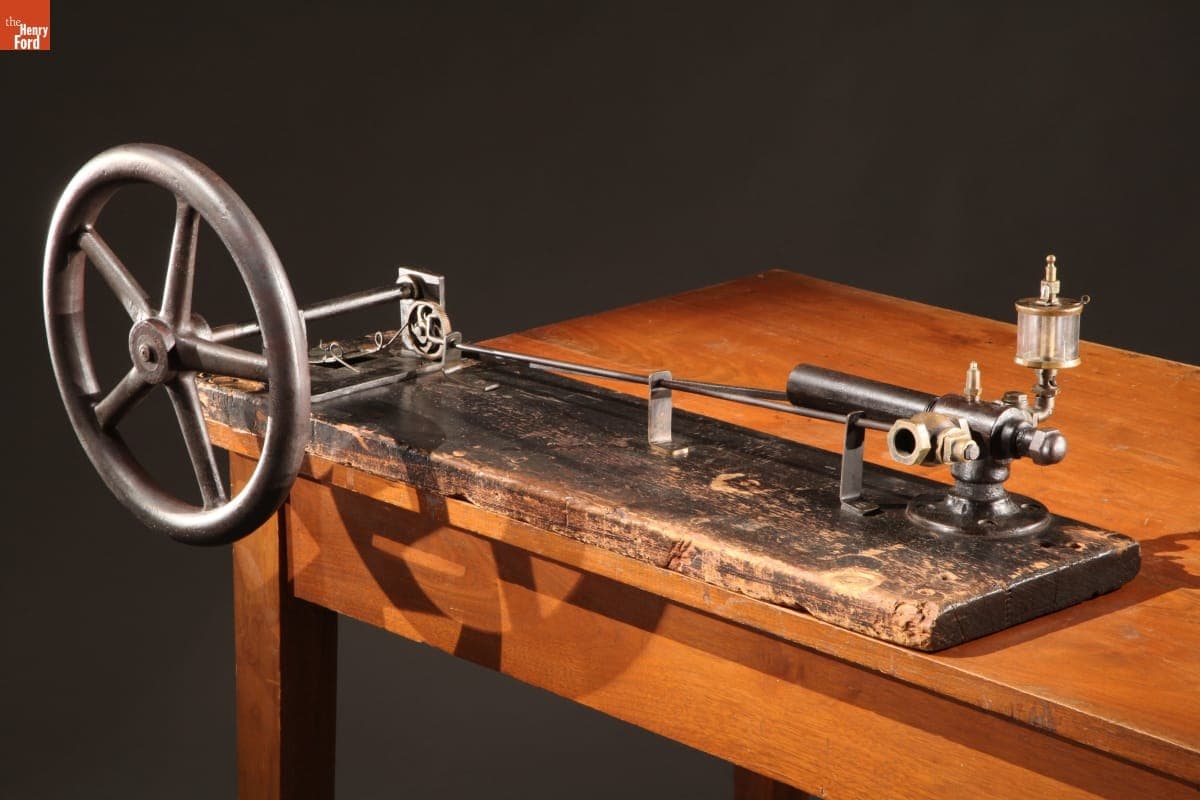 Set
SetExceptional Engines
- 14 Artifacts
Henry Ford built his first experimental engine using scrap metal for parts. He tested it on the kitchen sink after supper on December 24, 1893. For ignition he ran a wire from the ceiling's light bulb. His wife Clara hand-fed gasoline to the intake valve while Henry spun the flywheel. The engine roared into action, shaking the sink.