
Joseph Thatcher Torrence's Hansom Cab, 1880-1890
THF74930 / Joseph Thatcher Torrence's Hansom Cab, 1880-1890
01
Artifact Overview
Hansom cabs, introduced in Great Britain during the 1830s, were among the most common public cabs in London. Their low bodies made it easy for passengers to get in and out. By the late 19th century, they were found in larger American cities too. People occasionally purchased hansom cabs for private use. Chicago industrialist Joseph Thatcher Torrence bought this example.
Artifact Details
Artifact
Hansom cab
Date Made
1880-1890
Creators
Place of Creation
Location
Not on exhibit to the public.
Object ID
25.1.2
Credit
From the Collections of The Henry Ford.
Material
Glass (Material)
Leather
Paint (Coating)
Wood (Plant material)
Color
Black (Color)
Gold (Color)
Dimensions
Height: 88 in
Width: 78.25 in
Length: 164.5 in (Wheel Diameter)
Inscriptions
Hubs marked: C.P. KIMBALL & CO. CHICAGO
Serial number marked on hubs: 7553
Keywords |
|---|
02
Related Content
 Set
SetOnline Horse-Drawn Vehicles Collection
- 29 Artifacts
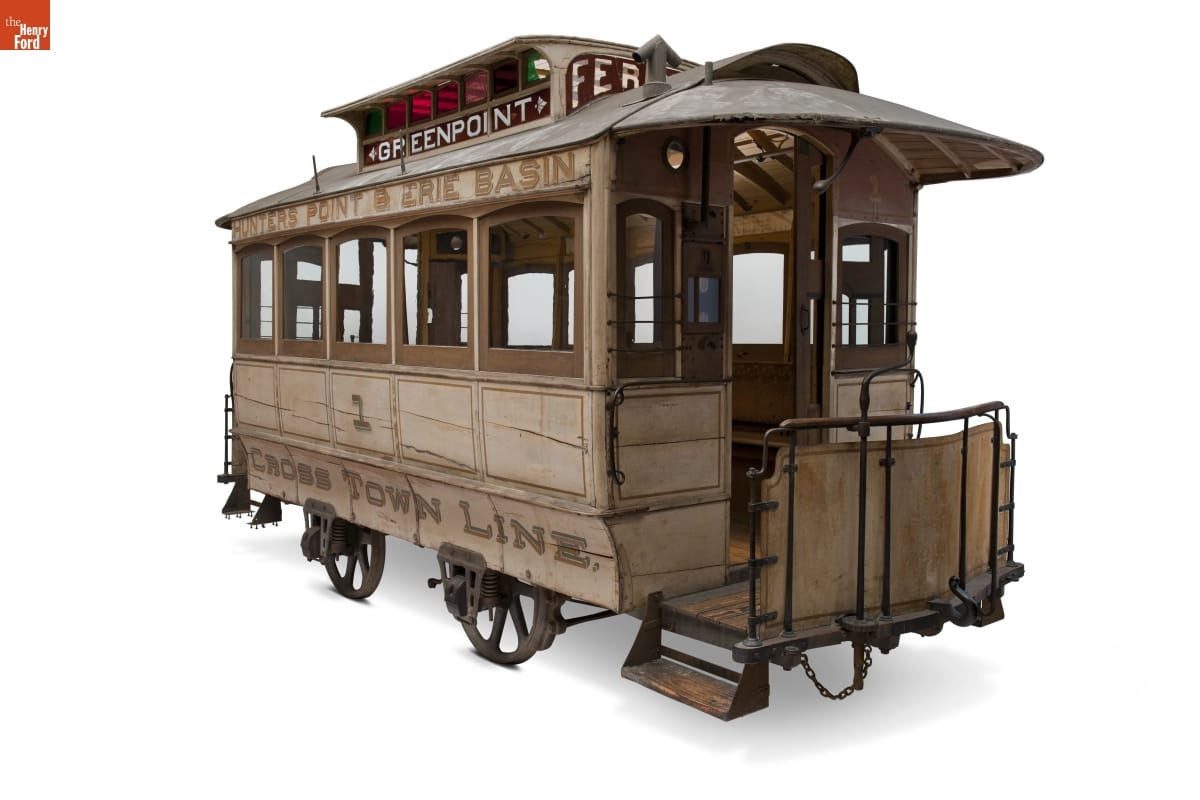
The horse-drawn streetcar was an important means of public transportation in 19th-century American cities. New York's Brooklyn City Railroad ran this car on its line between Hunters Point in Long Island City, and Erie Basin in South Brooklyn. But horses were expensive to stable and feed -- and messy too. Operators embraced electric streetcars starting in the late 1880s.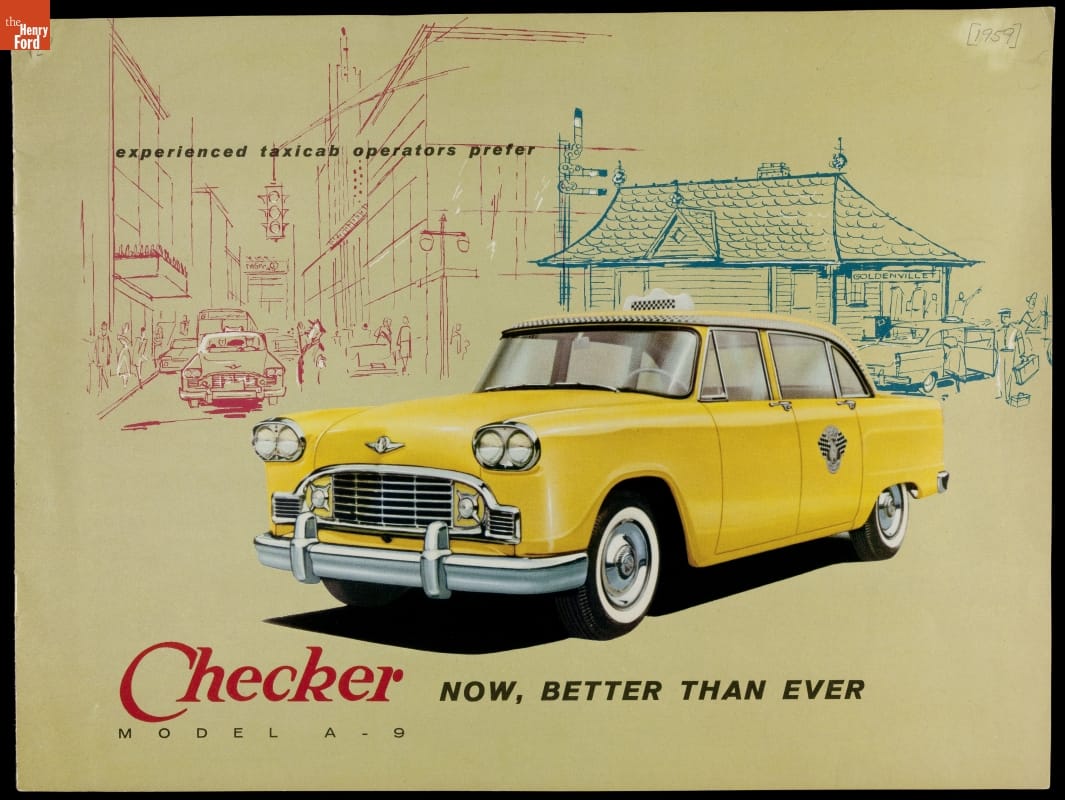 Set
SetTaxicabs
- 19 Artifacts
The taxicab is a fixture in American cities. Unlike buses, subways, and streetcars that run on pre-determined routes and schedules, the cab operates on the rider's terms -- it takes you where you want to go, when you want to go. From horse-drawn cabriolet carriages to specially built sedans, the taxi itself has evolved. But its convenient point-to-point transportation remains unchanged, even as newer ridesharing services compete for customers.