
Ford Rouge Plant Pictorial Flow Chart, "Complete Car Can Be Built in 28 Hours," 1940
THF113889 / Ford Rouge Plant Pictorial Flow Chart, "Complete Car Can Be Built in 28 Hours," 1940
01
Artifact Overview
This diagram illustrates how Ford Motor Company's massive River Rouge Plant turned coal, iron ore, limestone, rubber, and sand into iron, steel, tires, glass, and finished automobiles.
Artifact Details
Artifact
Photographic print
Date Made
25 February 1941
Subject Date
19 August 1940
Place of Creation
Collection Title
Location
By Request in the Benson Ford Research Center
Object ID
84.1.1660.P.833.75060
Credit
From the Collections of The Henry Ford. Gift of Ford Motor Company.
Material
Paper (Fiber product)
Technique
Gelatin silver process
Color
Black-and-white (Colors)
Dimensions
Height: 8.25 in
Width: 10 in
Inscriptions
Inscribed into image at upper left corner:
RIVER ROUGE / HERE IS FLOW CHART OF PLANT/ FROM ORE TO AUTO. COMPLETE / CAR CAN BE BUILT IN 28 HOURS"
Keywords |
|---|
02
Related Content
 Set
SetThe Rouge
- 22 Artifacts
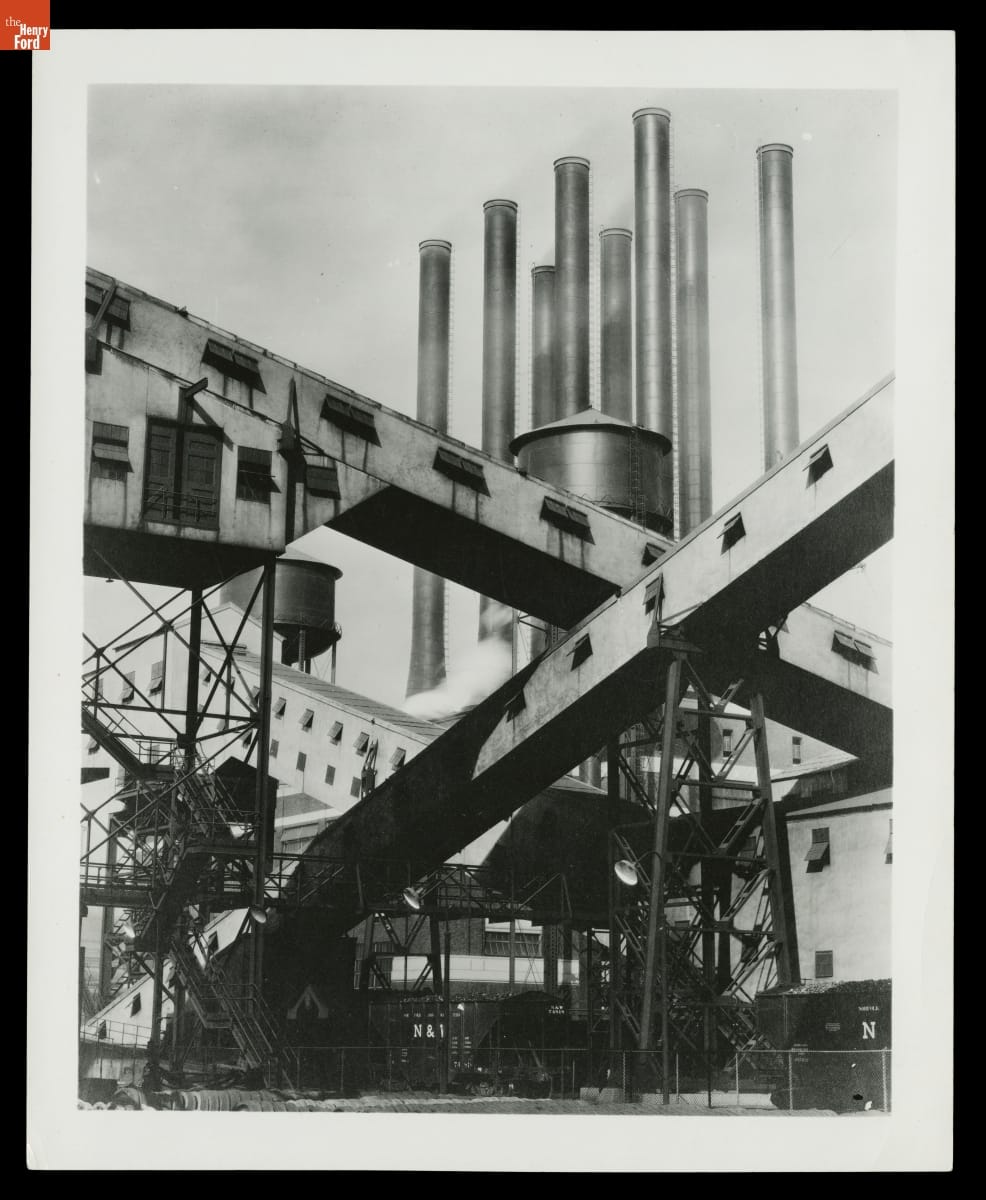
In 1927, Ford Motor Company commissioned Charles Sheeler to do a series of documentary photographs of its River Rouge industrial complex near Dearborn, Michigan. The conveyors moved coal and coke to the pulverizing building and screening stations. Coke made from coal was used in the steelmaking process of the blast furnaces. This vigorous photograph shows Sheeler's ability to form a compelling image from a complicated scene.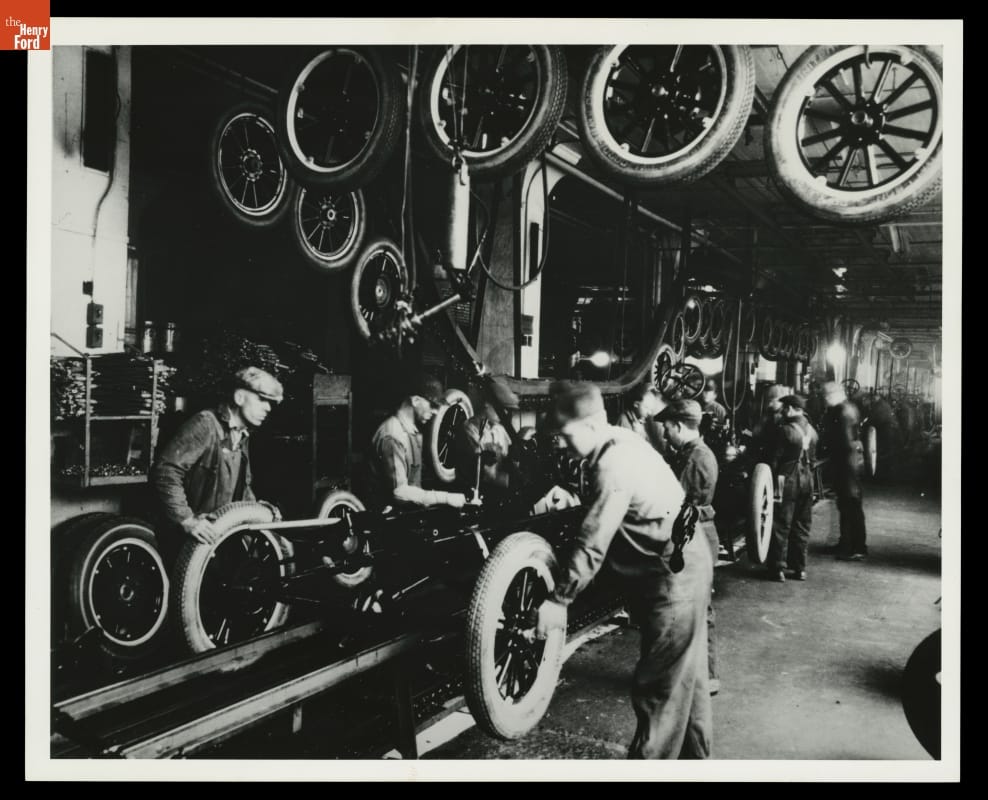 Set
SetHenry Ford: Assembly Line
- 25 Artifacts
Ford constantly tweaked Model T assembly lines at its Highland Park plant for efficiency. In 1914, wheels and radiators were conveyed to a platform and slid down ramps for installation on the same line. By 1925, wheels (with tires already mounted and inflated) were conveyed directly to workers, who installed them on both sides of the chassis at once. Set
SetHenry Ford: A Case Study of an Innovator
- 8 Artifacts
From the Curators: Henry Ford & Innovation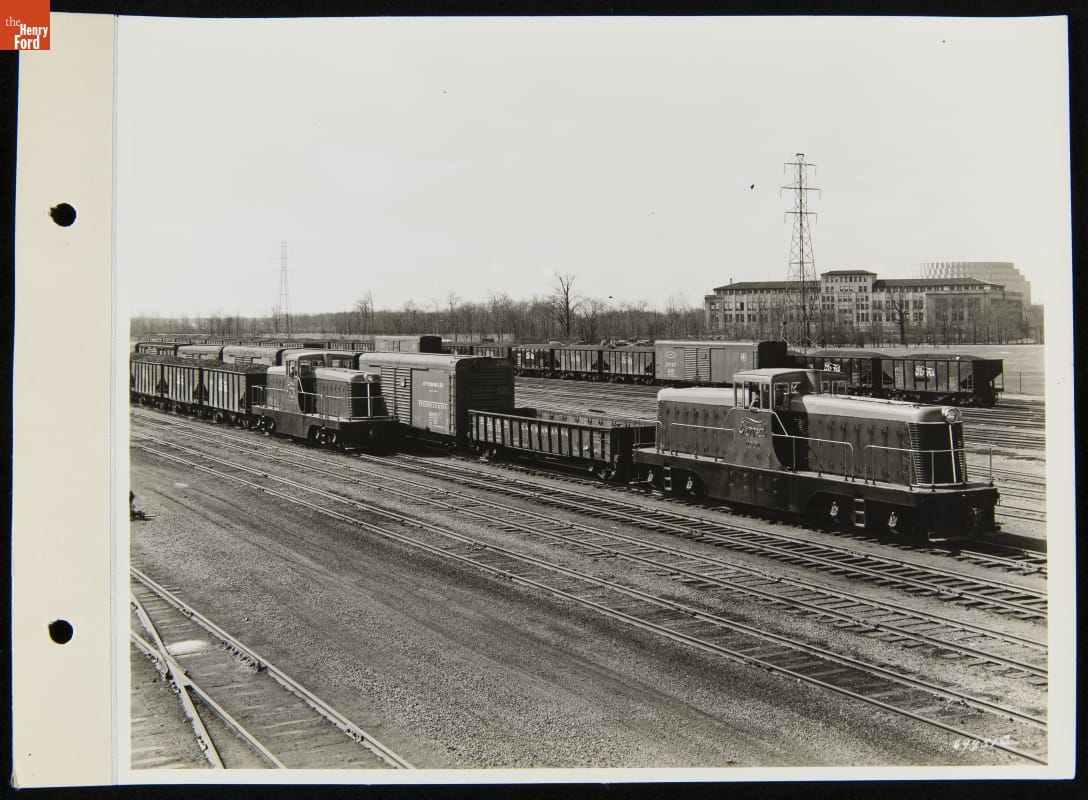 Set
SetFord Rouge Railroad
- 36 Artifacts
Ford Motor Company operated its own industrial railroad at the Rouge factory. Ford-owned locomotives moved incoming railcars filled with raw materials, and outgoing railcars loaded with finished parts and vehicles. Ford employees crewed trains, cared for locomotives, and maintained 100 miles of track within the factory grounds. At its 1930s peak, Ford's Rouge railroad was one of the largest privately owned rail operations in the world.