
1951 Beatty Belly Tank Lakester Land Speed Race Car
THF90122 / 1951 Beatty Belly Tank Lakester Land Speed Race Car
01
Artifact Overview
After World War II, hot rodders started using external fuel tanks from fighter planes as car bodies. The teardrop shape was ideal for speed record runs on dry lake beds and Utah's Bonneville Salt Flats. Californian Tom Beatty crafted this tank that was once the world's fastest.
Artifact Details
Artifact
Racing car
Date Made
1951
Creators
Place of Creation
Location
at Henry Ford Museum in Driven to Win: Racing in America
Object ID
2009.140.1
Credit
From the Collections of The Henry Ford.
Material
Aluminum
chromium
Plexiglas (TM)
Steel (Alloy)
Color
Blue
Light Blue
White (Color)
Dimensions
Weight: 2165 lbs
Wheelbase: 110 in
Length: 177 in
Height: 45 in
Width: 69 in
Inscriptions
painted on side:
100-B
painted on top fairing:
Tom Beatty AUTOMOTIVE ENG.
Specifications
Make & Model: 1951 Beatty Belly Tank Lakester (land speed racing)
Maker: Tom Beatty, Sun Valley, California
Engine: Oldsmobile V-8, overhead valves, supercharged, 260 cubic inches
Transmission: 4-speed automatic
Height: 45 inches
Width: 69 inches
Wheelbase: 110 inches
Overall length: 177 inches
Weight: 2165 pounds
Horsepower: 400
Pounds per horsepower: 5.4
Competition History: Fastest car in its class at Bonneville National Speed Trials in 1951, 1952, 1955, 1959, and 1962.
Keywords |
|---|
02
Related Content
 Set
SetRacing
- 50 Artifacts
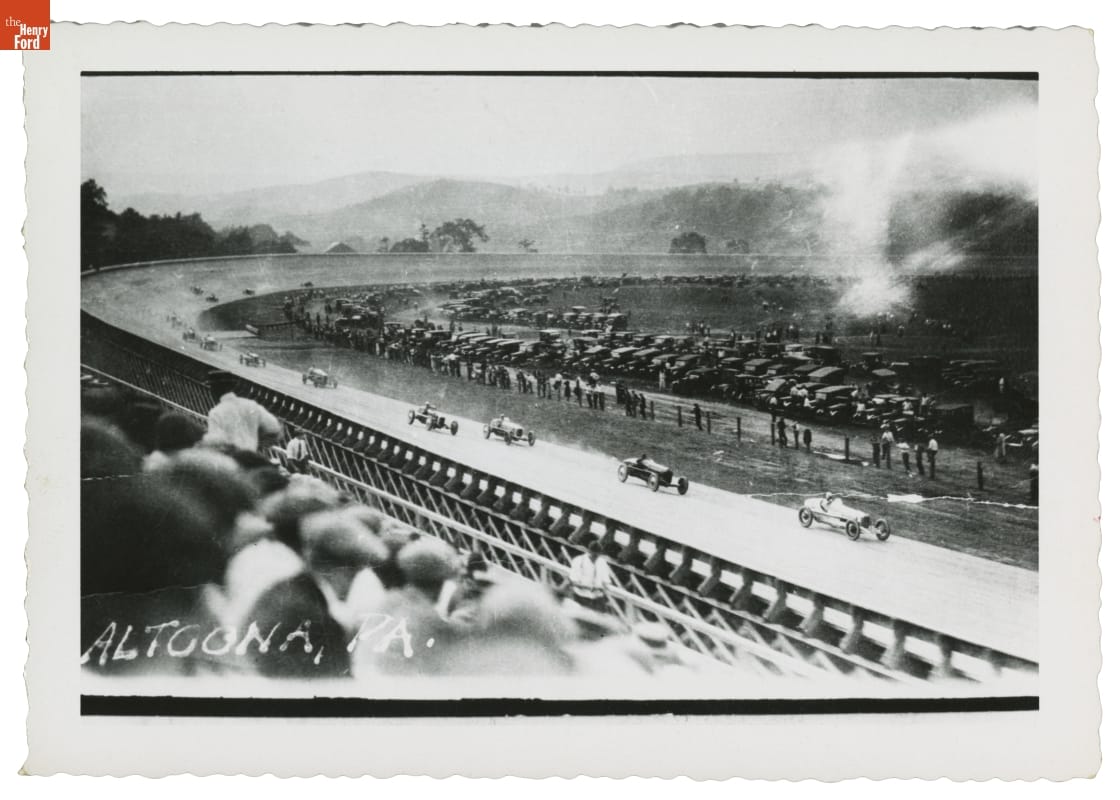
As automobile racing speeds increased, repurposed dirt horse tracks became inadequate. In the 1910s promoters turned to wooden boards, which provided a smooth road surface and were less expensive than bricks or concrete. But rotting wood required frequent replacement. Improvements in concrete and asphalt made board tracks obsolete in the 1930s. The 1.25-mile board track at Altoona, Pennsylvania, operated from 1923-1931.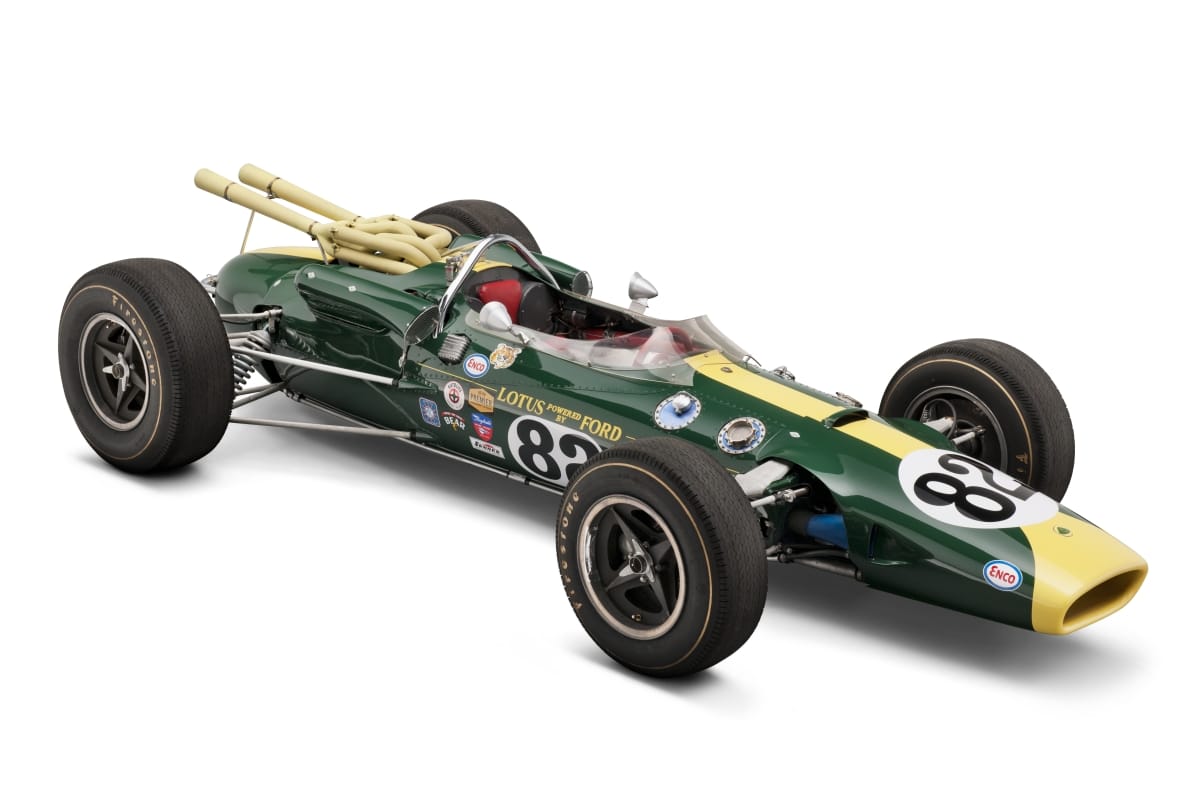 Set
SetRace Cars of Driven to Win
- 23 Artifacts
Scotsman Jim Clark won the Indianapolis 500 with this rear-engine car in 1965. After his victory, a traditional front-engine car never won that race again. The Lotus-Ford combined a European Formula One-inspired lightweight chassis with a big Ford V-8 engine. The Lotus-Ford's success effectively killed the traditional Indy roadster and established a new design for American race cars. Set
SetBiomimicry and Nature-Inspired Artifacts
- 7 Artifacts
Biomimicry involves innovation inspired by nature — imitating biological designs or processes in human endeavors. In this expert set, our curators select artifacts from our collections that were inspired by the natural world.
 article
Report from the 2015 Concours d'Elegance of America
Go behind the scenes to Michigan's Concours d’Elegance of America at St. John’s, which this year featured two of our vehicles: Tom Beatty’s 1951 Belly Tank Lakester and our 1928 Cleveland 4-61 motorcycle.