
Set of "Pracision" Drafting Tools, Used by Leo Goossen, 1925-1941
THF167205 / Set of "Pracision" Drafting Tools, Used by Leo Goossen, 1925-1941
01
Artifact Overview
Leo Goossen ranks among the most influential engine designers in American auto racing history. Goossen engines, built first with Harry Miller and then with Fred Offenhauser, dominated the Indianapolis 500 for the better part of 50 years. Goossen used these drafting tools while creating or refining many of his designs.
Artifact Details
Artifact
Drafting equipment
Date Made
1925-1945
Creators
Location
at Henry Ford Museum in Driven to Win: Racing in America
Object ID
2016.117.2
Credit
From the Collections of The Henry Ford. Gift of Don Marshall.
Material
Metal
Wood (Plant material)
Cloth
Dimensions
Height: 1.875 in (box)
Width: 12.875 in (box)
Length: 7.5 in (box)
Inscriptions
on tag inside lid of box:
Pracision / D. P. / E.O. Richter & Company
Keywords |
|---|
02
Related Content
 Set
SetRacing
- 50 Artifacts
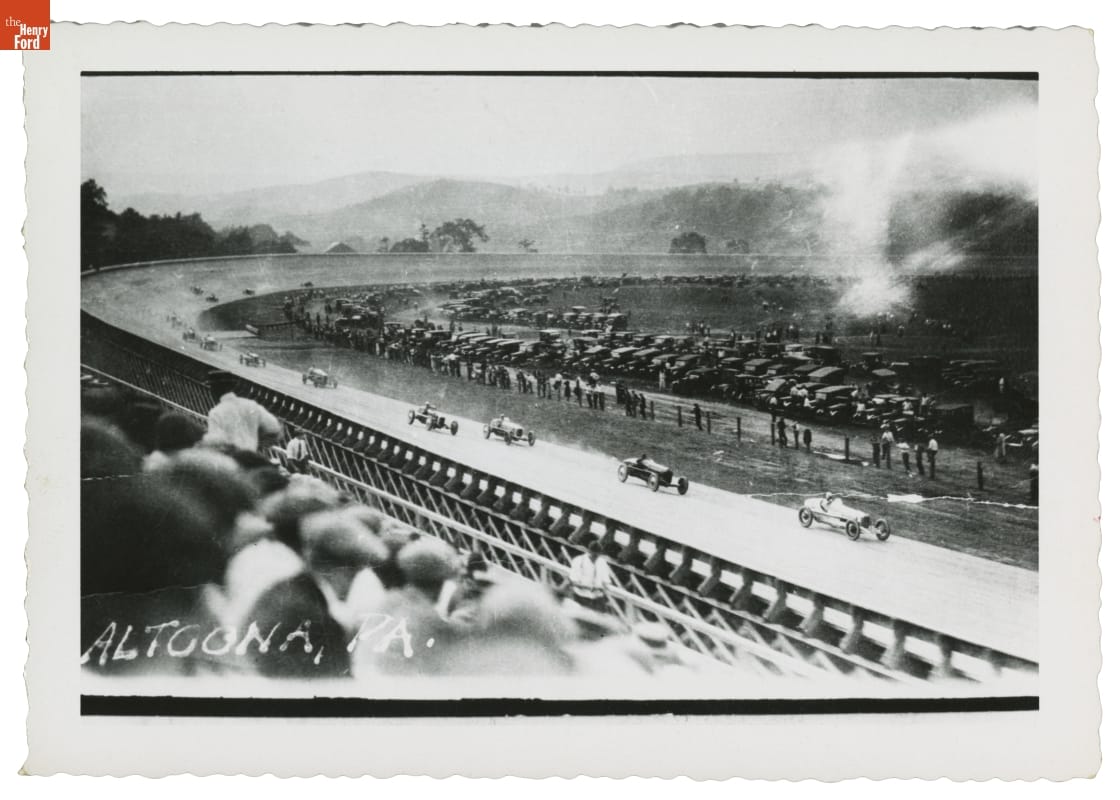
As automobile racing speeds increased, repurposed dirt horse tracks became inadequate. In the 1910s promoters turned to wooden boards, which provided a smooth road surface and were less expensive than bricks or concrete. But rotting wood required frequent replacement. Improvements in concrete and asphalt made board tracks obsolete in the 1930s. The 1.25-mile board track at Altoona, Pennsylvania, operated from 1923-1931. article
Leo Goossen
Learn the story of Leo Goossen — automotive draftsman, engineer, and one of the most influential engine designers in American auto racing — in this installment of our History Outside the Box program. article
New Racing Acquisitions at The Henry Ford
Curator of Transportation Matt Anderson walks you through some of the newly-collected auto racing artifacts you can see in our new exhibit, Driven to Win, in Henry Ford Museum.