
Mail Coaches Changing Horses at a New England Tavern, 1855
THF120729 / Mail Coaches Changing Horses at a New England Tavern, 1855
01
Artifact Overview
This wood engraving depicts a typical mid-19th-century travel scene. Traveling by stagecoach meant being jostled on rough country roads and stopping every few hours to change horses. Travelers squeezed into coaches and roadside inns with strangers.
Artifact Details
Artifact
Print (Visual work)
Subject Date
1855
Place of Creation
Collection Title
Location
Not on exhibit to the public.
Object ID
82.129.1559
Credit
From the Collections of The Henry Ford.
Material
Paper (Fiber product)
Technique
Engraving (Printing process)
Dimensions
Height: 5.5 in
Width: 10.75 in
Inscriptions
Printed below image:
MAIL-COACH CHANGING HORSES
Keywords |
|---|
02
Related Content
 Set
SetStagecoach Travel
- 33 Artifacts
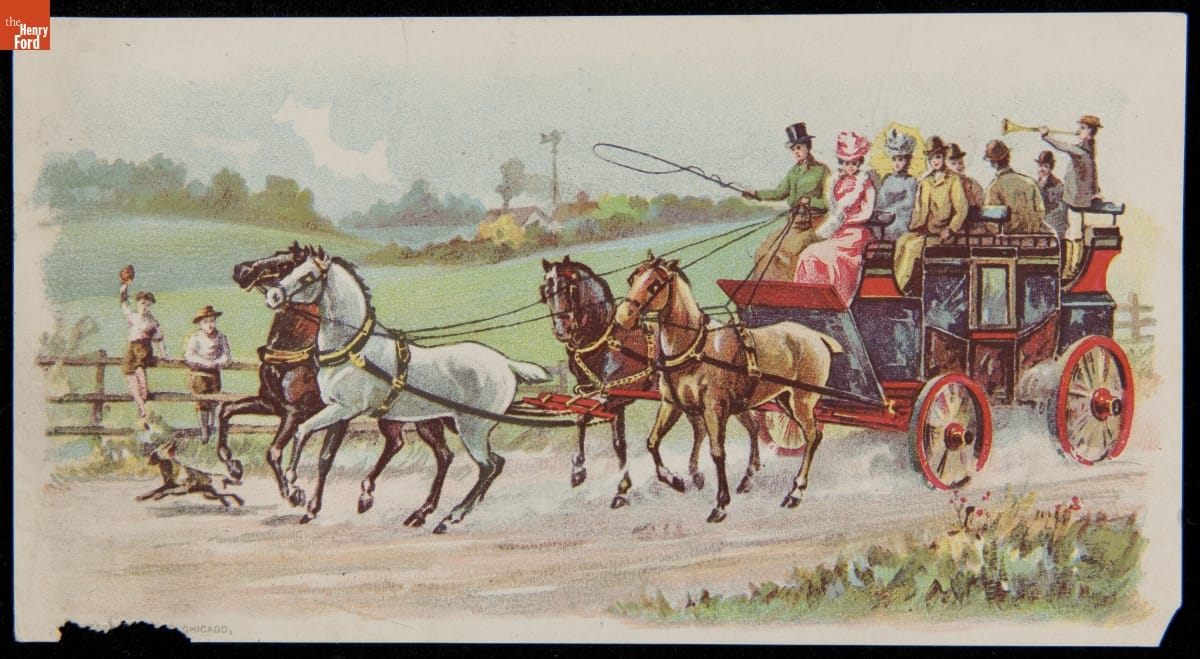
In the last third of the nineteenth century, an unprecedented variety of consumer goods and services flooded the American market. Advertisers, armed with new methods of color printing, bombarded potential customers with trade cards. Americans enjoyed and often saved the vibrant little advertisements found in product packages or distributed by local merchants. Many survive as historical records of commercialism in the United States.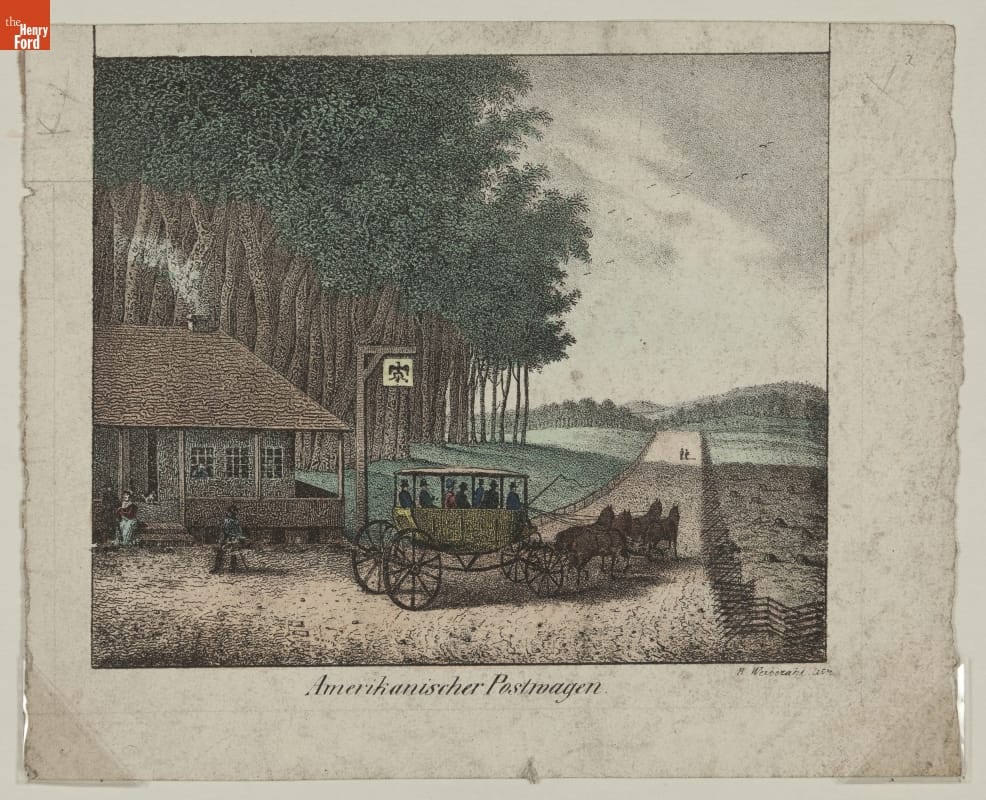 Set
SetRoadside Taverns
- 10 Artifacts
Stage wagons were light and open, though not as comfortable as later Concord stagecoaches. They could go about five miles per hour, barring bad weather or road obstructions. The gaily painted signboards of roadside taverns beckoned weary travelers, promising rest, meals, and a chance to catch up on news. Stage wagon drivers used the stop to care for their horses.