
Booklet, "The Industrialized American Barn," 1934
THF222009 / Booklet, "The Industrialized American Barn," 1934 / page 1
01
Artifact Overview
Henry Ford moved the William Ford barn from Dearborn to the 1934 Century of Progress Exposition in Chicago to demonstrate how soybeans could be processed for industrial uses in an ordinary American barn. Ford published this booklet to explain the process, and how it could create a better future for the American farmer.
Artifact Details
Artifact
Brochure
Date Made
1934
Collection Title
Location
By Request in the Benson Ford Research Center
Object ID
00.1334.12
Credit
From the Collections of The Henry Ford. Gift of Ford Motor Company.
Material
Paper (Fiber product)
Color
Black-and-white (Colors)
Dimensions
Height: 7.313 in
Width: 5.125 in (both pages together)
Keywords |
|---|
02
Related Artifacts
 Artifact
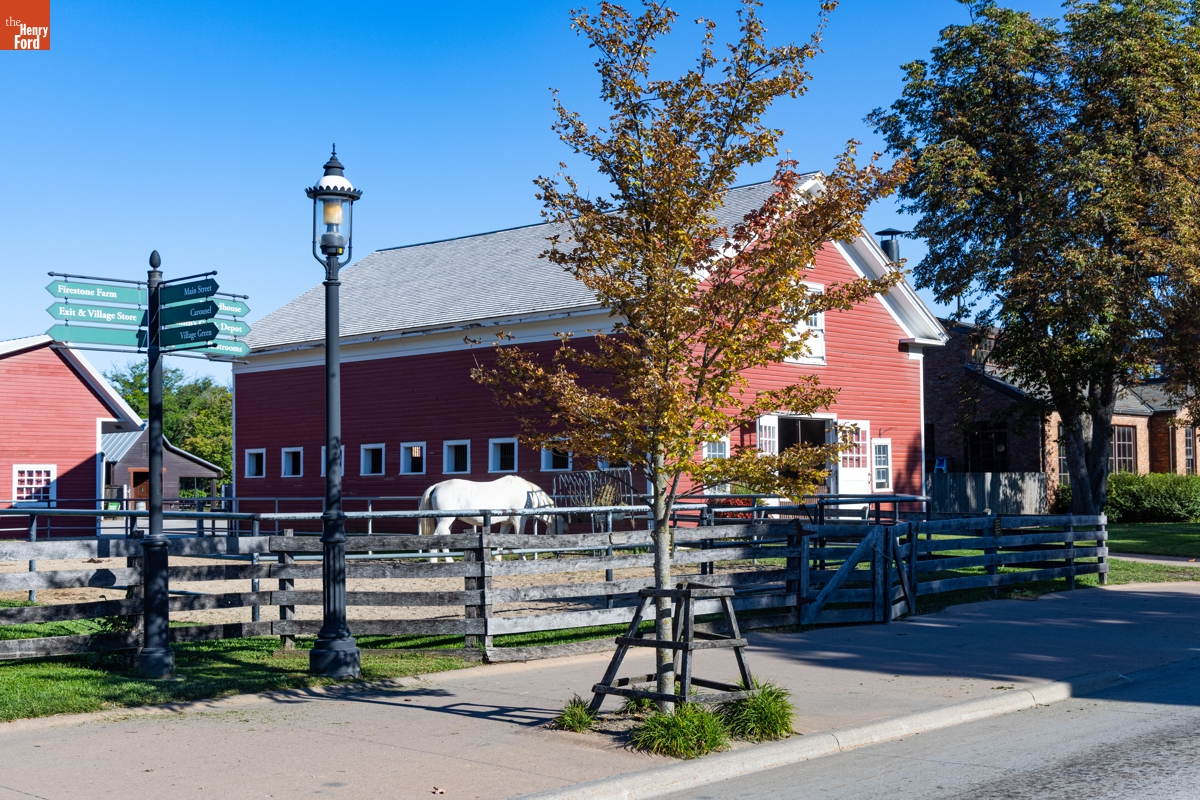
William Ford Barn
William Ford built this barn near present-day Dearborn, Michigan, in 1863 -- the same year his son Henry was born. Ford mainly used it to store grain and hay, though livestock and tools were occasionally housed in the structure. The barn was moved to The Henry Ford in 1934. Today it's used by Greenfield Village's horses.
03
Related Content
 Set
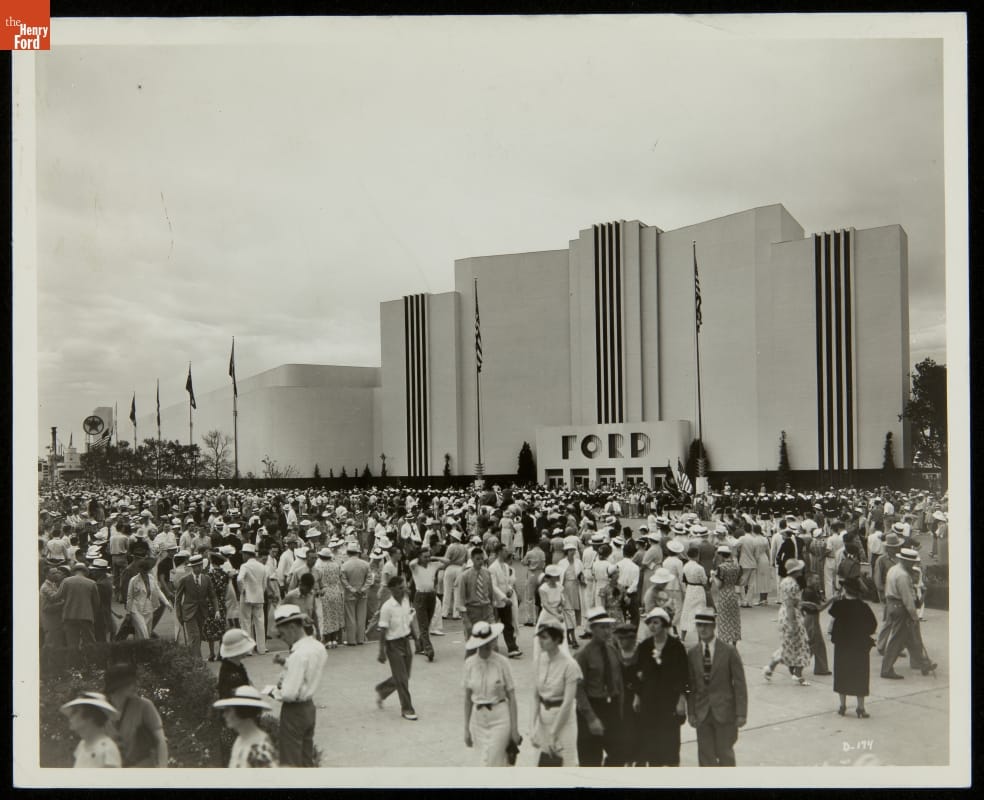
SetHenry Ford: Worlds Fair
- 24 Artifacts
The Texas Centennial Exposition in Dallas celebrated the frontier past of Texas, especially its 1836 victory over Mexico. The Ford Motor Company Pavilion, among the largest of industrial firms' buildings at the fair, was designed by industrial designer Walter Dorwin Teague. Its interior displays focused on how agriculture and natural resources of the Southwest could be transformed into car parts.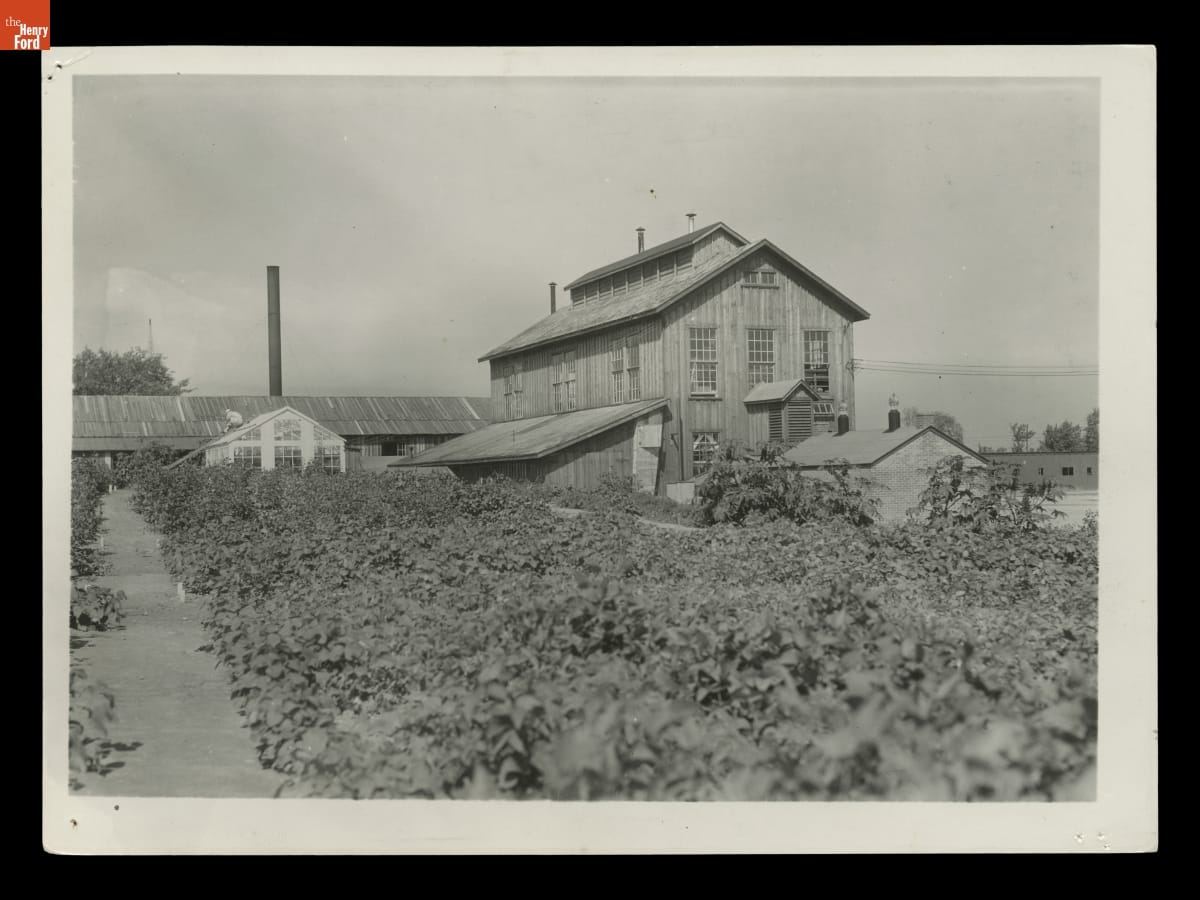 Set
SetHenry Ford: Soybeans
- 15 Artifacts
Henry Ford believed that industry and agriculture should complement one another. In the 1930s, he pursued soybeans as a crop that might unite the two. Ford built a soybean laboratory in Greenfield Village. Experiments there led to the use of some soy-based oils and plastics in Ford Motor Company vehicles.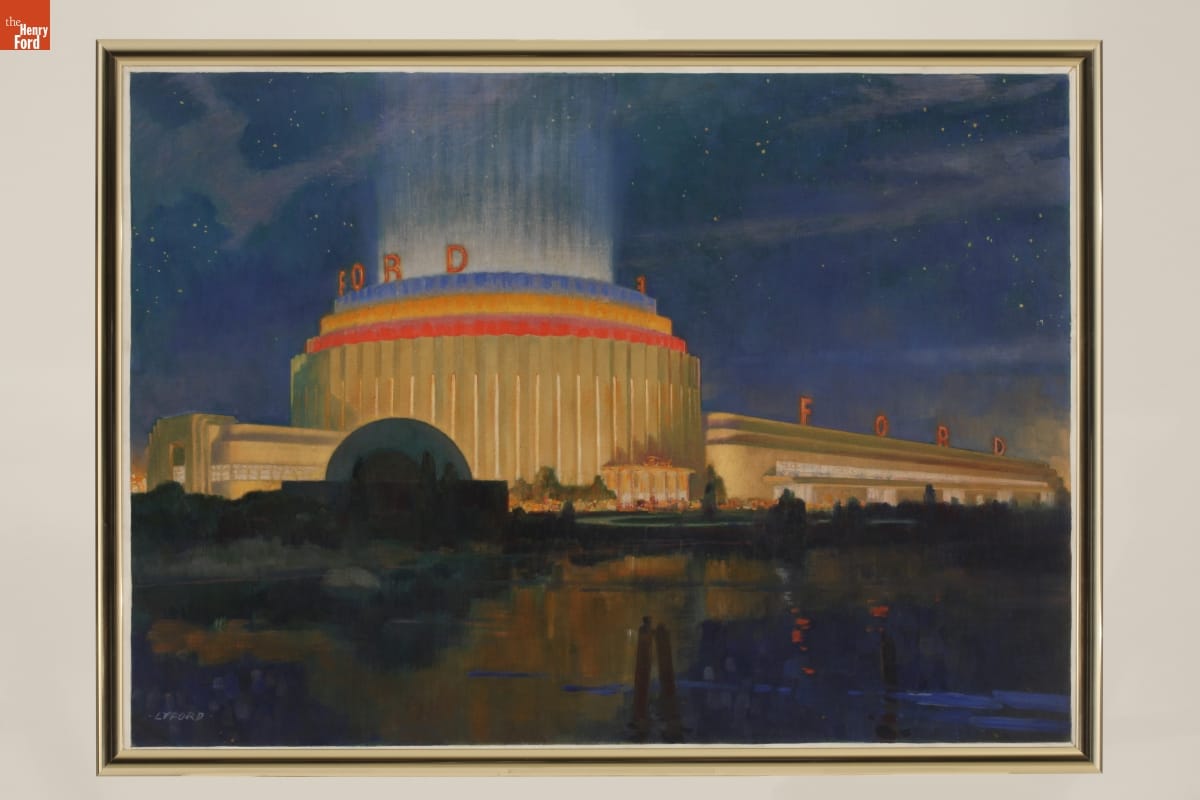 Set
SetFord at the Fair Exhibition
- 86 Artifacts
Chicago's 1933-34 Century of Progress Exposition used the theme of progress to encourage optimism during the Depression. The 11-acre Ford Motor Company exhibit became the most talked-about exhibit of 1934, featuring a central Rotunda designed to simulate graduated clusters of gears. After the fair, this building became an attraction at Ford headquarters in Dearborn, Michigan, until it burned down in 1962.