
Thomas Edison's Menlo Park Laboratory, Menlo Park, New Jersey, 1880
THF123470 / Thomas Edison's Menlo Park Laboratory, Menlo Park, New Jersey, 1880
01
Artifact Overview
Artifact Details
Artifact
Photographic print
Subject Date
1880
Collection Title
Location
Not on exhibit to the public.
Object ID
P.B.7430
Credit
From the Collections of The Henry Ford.
Material
Paper (Fiber product)
Technique
Gelatin silver process
Color
Black-and-white (Colors)
Dimensions
Height: 8.063 in
Width: 10 in
Keywords |
|---|
02
Related Artifacts
 Artifact
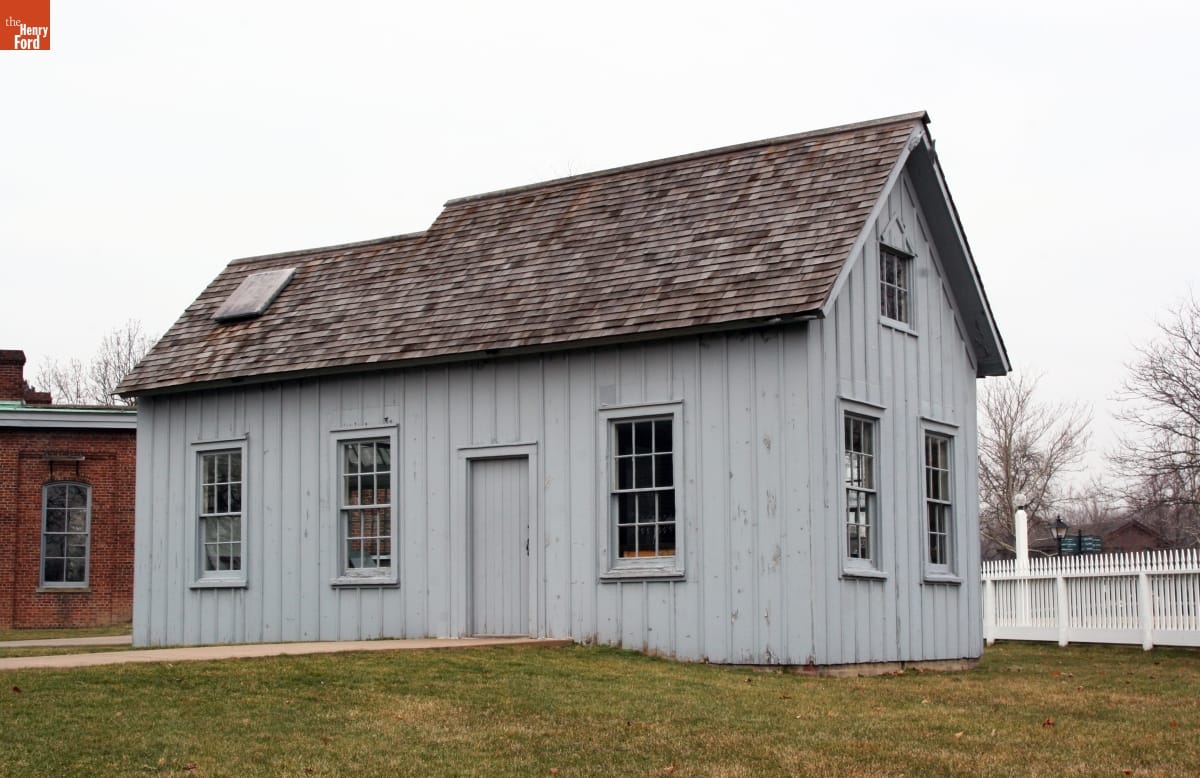
Menlo Park Glass House
Originally built as a photographic studio and drafting room, the glassblowing shop was fundamental to Edison's enterprise. Edison's incandescent lighting experiments ensured that the laboratory had a voracious appetite for glass -- not only for bulbs but also for associated apparatus such as vacuum pumps. Ludwig Boehm, the laboratory's first master glassblower, worked here -- and lodged in the attic space. Artifact
Menlo Park Laboratory
When Edison moved to Menlo Park, New Jersey, in spring of 1876 the laboratory building contained his entire operation -- a handful of collaborators, office, library, and machine shop as well as laboratory. As the scale of Edison's investigations grew so did the complex, but this building -- dedicated to experimental activities -- was always understood to be the heart of the enterprise. Artifact
Menlo Park Library
This building was built in late 1878 as Edison's work on electric lighting expanded. The first floor provided office space for accounting, bookkeeping, and patent applications; upstairs was a superbly stocked technical library. The building also played another key role: as a reception area for journalists and other visitors it provided a disarming first impression of Edison's success and ambition.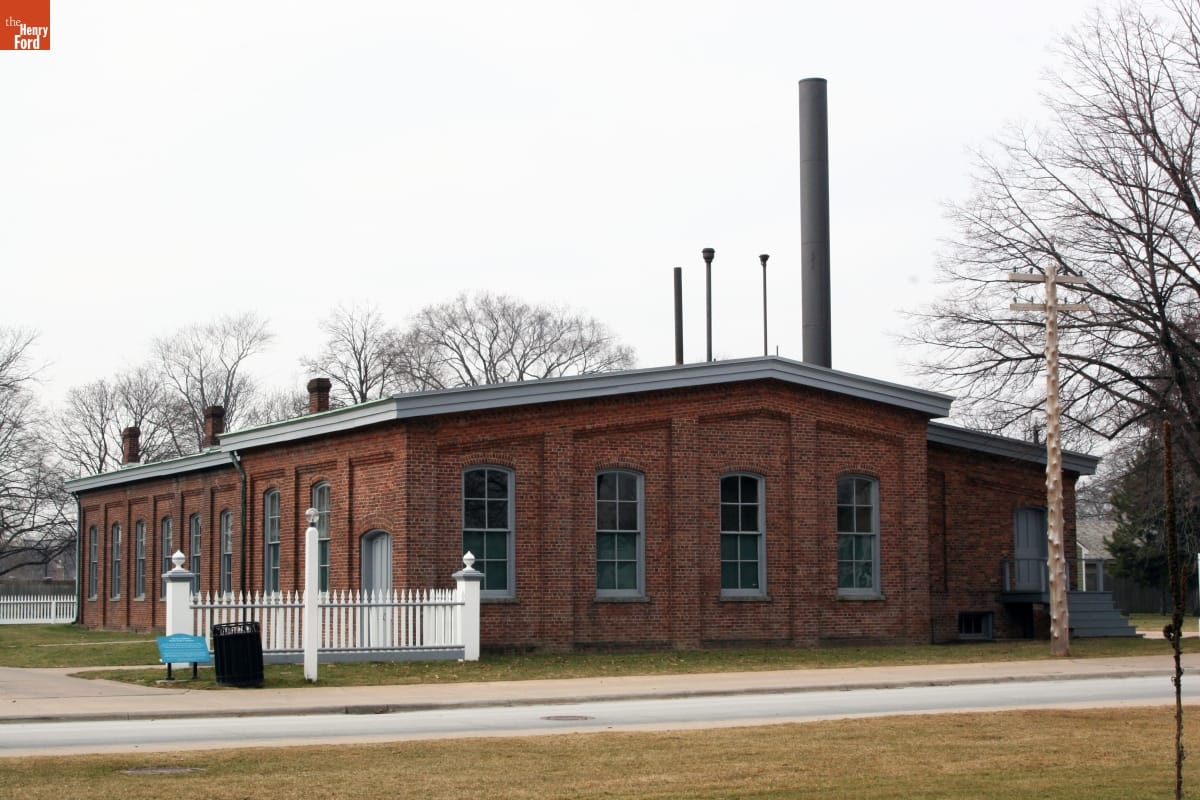 Artifact
Menlo Park Machine Shop
The presence of a machine shop (and of foreman / head machinist John Kruesi) was fundamental to the success of Menlo Park. This well-equipped facility -- built to replace the small machine shop originally installed in the laboratory -- enabled Edison and his associates to not only rapidly prototype iterations of experimental devices but also facilitate their eventual, profitable manufacture.