
1901 Columbia Victoria
THF91321 / 1901 Columbia Victoria
01
Artifact Overview
Early automobiles, even electric-powered ones like this 1901 Columbia, looked like carriages. Batteries located over the front and rear axles powered this victoria. The carriage had a 20- to 30-mile range between charges. The owner, Washington Post publisher John McLean, rode in the covered center while his chauffeur steered from behind.
Artifact Details
Artifact
Automobile
Date Made
1901
Place of Creation
Location
at Henry Ford Museum in Driving America
Object ID
31.282.1
Credit
From the Collections of The Henry Ford. Gift of Edward B. McLean.
Material
Metal
Wood (Plant material)
Leather
Color
Dark green
Olive green
Black (Color)
Dimensions
Height: 84 in
Width: 64.5 in
Length: 133.25 in
Inscriptions
Front hubs: MADE BY COLUMBIA & ELECTRIC VEHICLE CO. / FOR / ELECTRIC / VEHICLE CO. / NEW YORK
On right motor: No. 107816
Specifications
Make & Model: 1901 Columbia Victoria
Maker: Electric Vehicle Company, Hartford, Connecticut
Motor: 80-volt DC
Transmission: none
Height: 84 inches
Wheelbase: 86 inches
Width: 64.5 inches
Overall length: 133.5 inches
Weight: 3250 pounds
Horsepower: 6 at 1620 revolutions per minute
Pounds per horsepower: 541.7
Price: $3,500
Average 1901 wage: $454 per year
Time you'd work to buy this car: about 7 years, 9 months
Keywords |
|---|
02
Related Content
 Set
SetAuto Pioneers
- 33 Artifacts
Sylvester Roper built steam carriages and motorcycles during the latter half of the nineteenth century. His vehicles were not considered practical but became popular attractions at circuses and fairs. Roper had a heart attack at age 73 while riding one of his steam motorcycles. His death made front-page news in Boston, where he lived and worked. Set
SetVehicle Viewer
- 99 Artifacts
Americans didn't invent the automobile, but we embraced it and quickly made it our own. Cars cruise through our music, movies, and dreams. They drive innovation and create frustration. They are objects of beauty and sources of blight. The vehicles in the "Driving America" exhibit reveal how the car reshaped our culture and landscape. The decisions we make now, individually and collectively, will define our automotive future.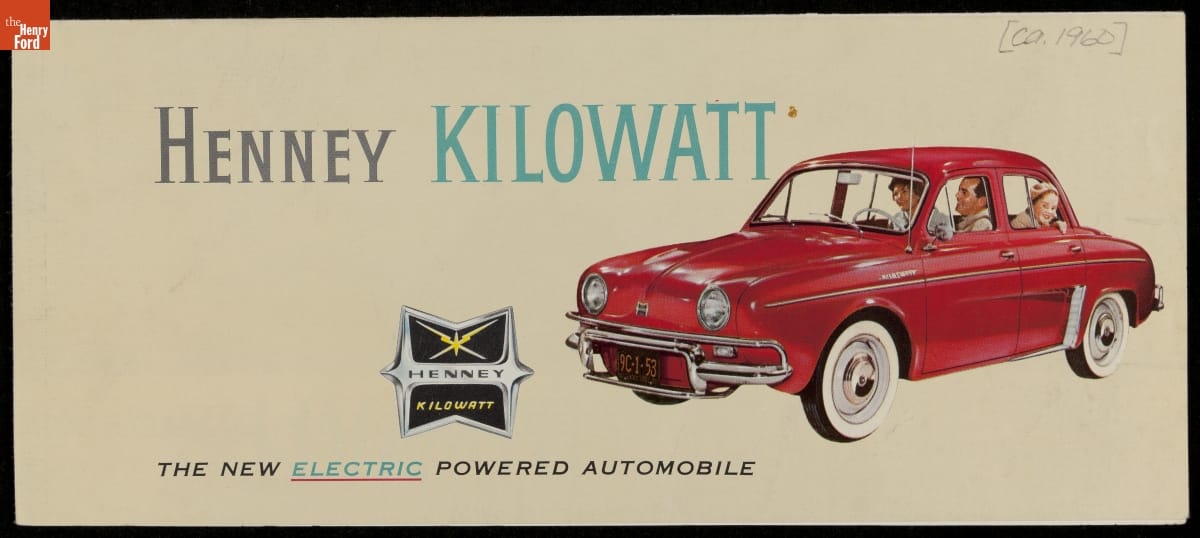 Set
SetElectrics and Hybrids at The Henry Ford
- 26 Artifacts
The Henney Motor Company produced an electric vehicle, based on the French-made Renault Dauphine, in 1959 and 1960. The cruising speed was around 30 miles per hour, with a range of about 40 miles between charges. This sales catalog for the Henney Kilowatt provided answers to questions buyers had about the vehicle.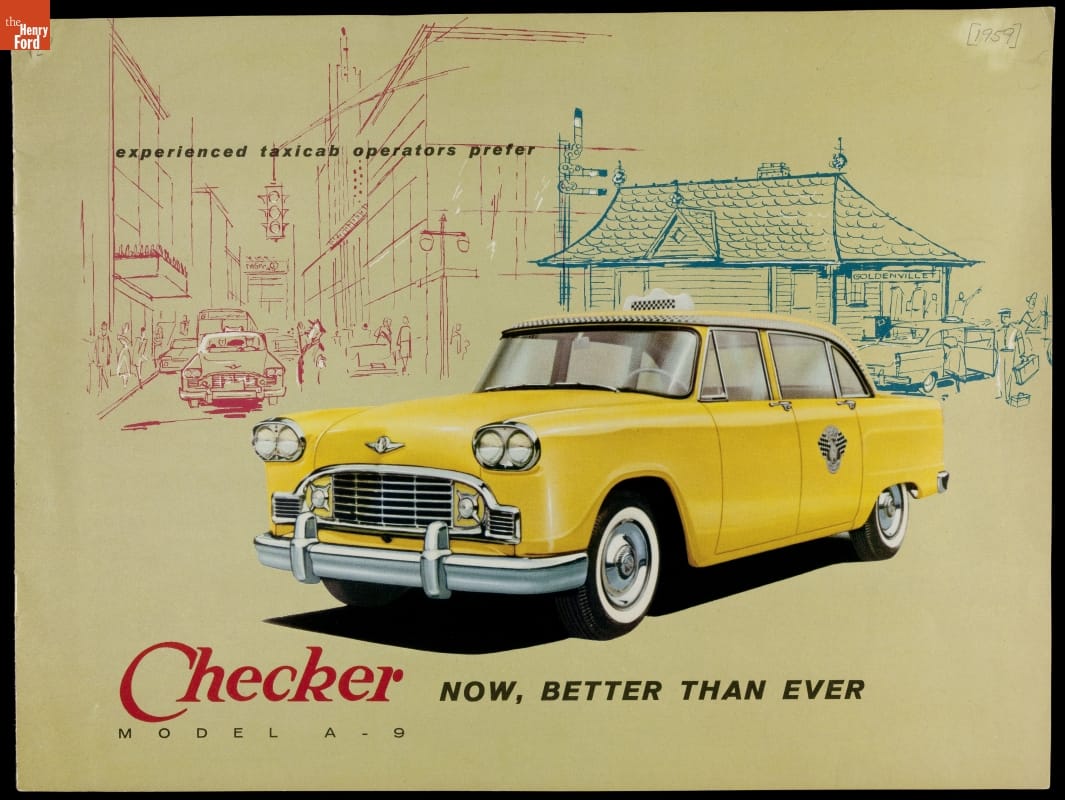 Set
SetTaxicabs
- 19 Artifacts
The taxicab is a fixture in American cities. Unlike buses, subways, and streetcars that run on pre-determined routes and schedules, the cab operates on the rider's terms -- it takes you where you want to go, when you want to go. From horse-drawn cabriolet carriages to specially built sedans, the taxi itself has evolved. But its convenient point-to-point transportation remains unchanged, even as newer ridesharing services compete for customers.