
Notice of an Aviation Meet Featuring the Wright Brothers' Passenger-Carrying Aeroplanes, Columbia, South Carolina, 1913
THF110888 / Notice of an Aviation Meet Featuring the Wright Brothers' Passenger-Carrying Aeroplanes, Columbia, South Carolina, 1913
01
Artifact Overview
The Wright brothers, always cautious when flying their airplanes, were hesitant to participate in stunt-heavy aviation meets. But the public loved seeing daredevil "birdmen" in action, and the Wrights reluctantly formed an exhibition team in 1910. It was a dangerous business, but it spurred interest in aviation and helped sell airplanes.
Artifact Details
Artifact
Advertisement
Date Made
19 November 1913
Subject Date
27 November 1913-29 November 1913
Creators
Place of Creation
Creator Notes
Page from the Columbia Record newspaper, Columia, South Carolina, published by Record Publishing Co.
Collection Title
Location
By Request in the Benson Ford Research Center
Object ID
38.560.33
Credit
From the Collections of The Henry Ford. Gift of Ernest L. Jones.
Material
Newsprint
Dimensions
Height: 21.25 in
Width: 16.75 in
Keywords |
|---|
02
Related Content
 Set
SetBarnstormers
- 20 Artifacts
Barnstorming aerial performers thrilled audiences in the 1920s with death-defying "aerobatic" stunts. Equipped with war-surplus airplanes and steely nerves, they toured the country giving many Americans their first in-person experiences with aviation. Most barnstormers barely eked out a living, but a few found wealth and fame. By decade's end, aging aircraft, fading novelty, and growing government regulation largely ended the barnstorming era.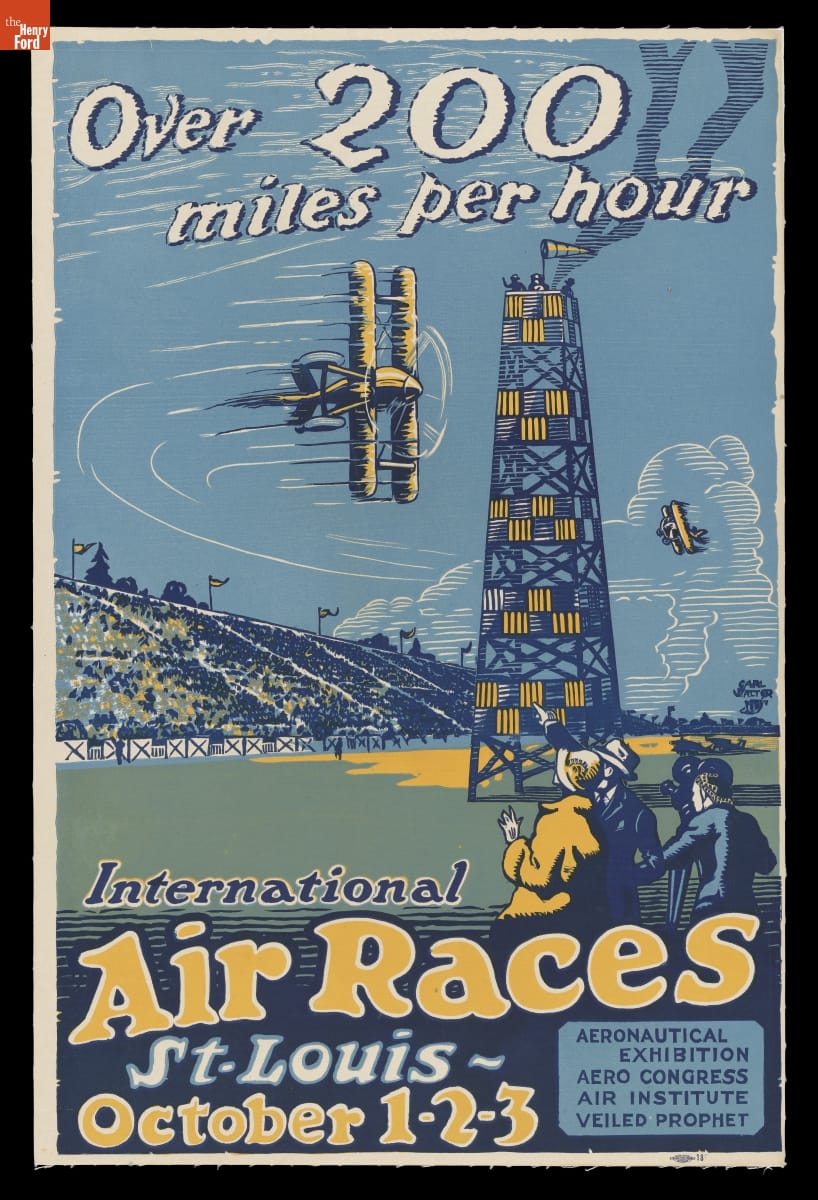 Set
SetExhibition Flying
- 22 Artifacts
Part showmanship and part salesmanship, early aviation meets and air shows improved airplane technology and promoted the aviation industry. Air races celebrated speed, with pilots competing against the clock or against each other on marked courses. Reliability tours focused on stamina, with prizes awarded for dependable flying on specific schedules. Exhibition flying launched great careers for some -- and cut them short for others.