
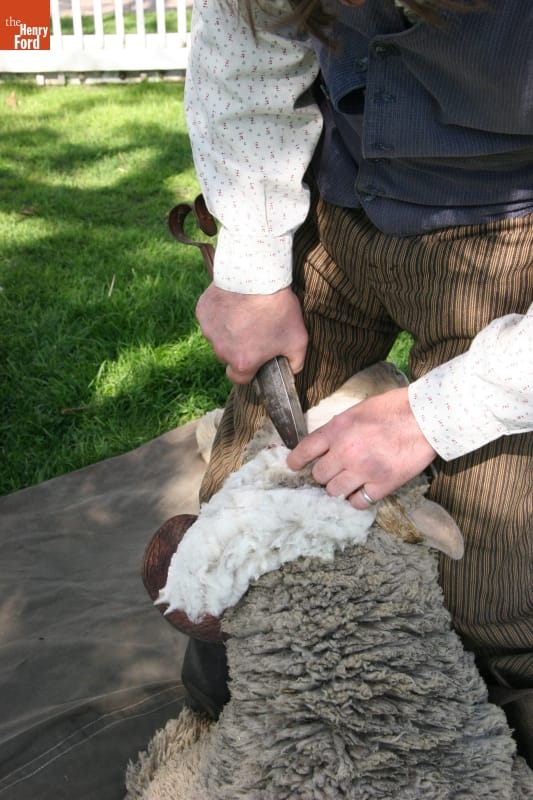
Merino Sheep Ready for Shearing at Firestone Farm in Greenfield Village, April 2014
THF119103 / Merino Sheep Ready for Shearing at Firestone Farm in Greenfield Village, April 2014
01
Artifact Overview
Nineteenth-century wool producers preferred wrinkled Merino sheep. More skin yielded more wool, which shearers carefully cut away using blade shears. Ultimately, electrically powered mechanical shears became more practical. Shearers operating these much faster tools had difficulty navigating around wrinkles, and farmers began breeding out the now undesirable trait. The Merino sheep at Greenfield Village have been selectively bred back to resemble their wrinkly ancestors.
Artifact Details
Artifact
Digital image
Subject Date
15 April 2014
Collection Title
Location
By Request in the Benson Ford Research Center
Object ID
EI.1929.639
Credit
From the Collections of The Henry Ford.
Technique
Digital imaging
Color
Black-and-white (Colors)
Keywords |
|---|
02
Related Content
 Set
SetShearing the Merino Sheep of Firestone Farm
- 25 Artifacts
Heavy coats of fine wool made Merino sheep a popular breed among nineteenth-century wool producers. Every spring, shearers carefully navigated blade shears to remove each sheep's thick fleece -- a process that could take several hours. More than a century later, presenters demonstrate this labor-intensive blade-shearing process at Firestone Farm in Greenfield Village.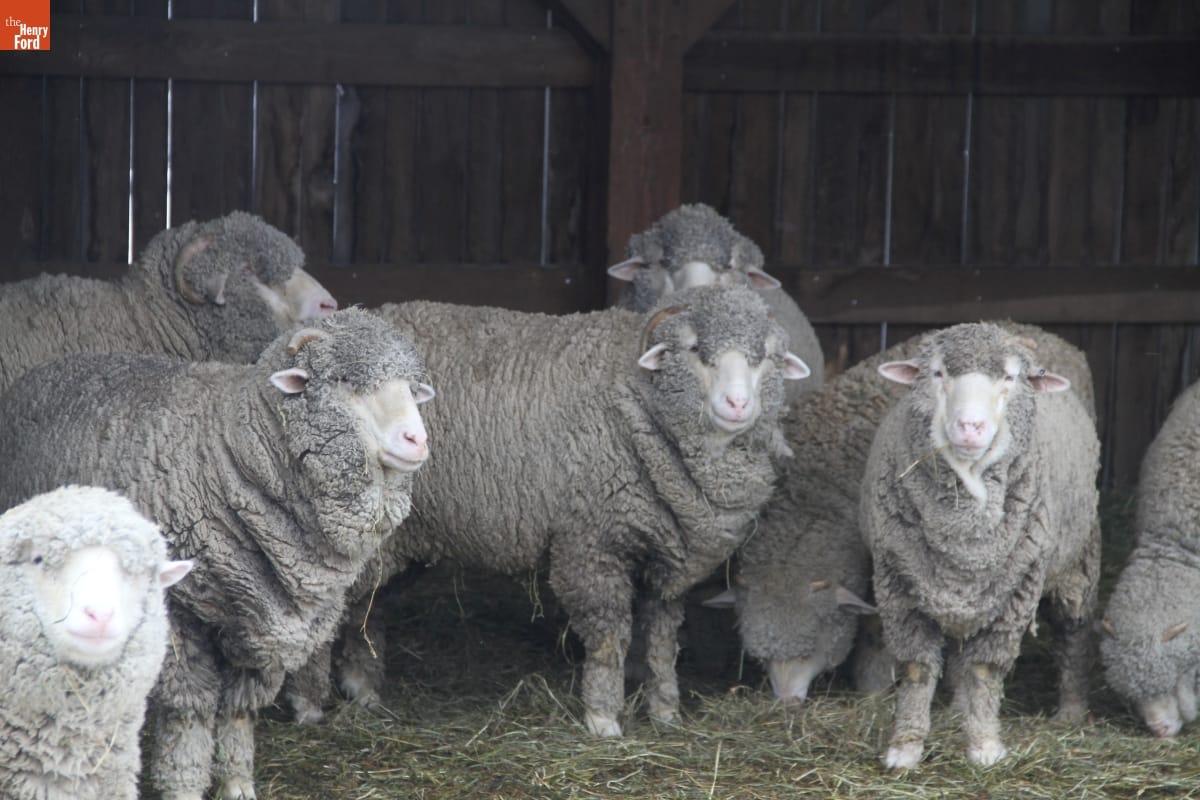 Set
SetSheep
- 12 Artifacts
Sheep supply two items essential for human survival, wool for clothing and meat for food. This makes them a farm asset, but protecting sheep requires vigilance. Sheep are social animals with an instinct to move together as a flock. Shepherds use dogs to help protect their flock and herd animals from pens to pasture and back. The close bond conjures visions of a bucolic rural past, emphasizing human-animal relationships. article
The Henry Ford's Innovation Nation: Merino Sheep
On this week’s episode of The Henry Ford’s Innovation Nation, you’ll learn about Merino sheep. These resources will help you learn even more.