
E. M. Laird's 1915 Exhibition Biplane Flying Near the Armory Building, University of Illinois at Urbana-Champaign, May 12-13, 1916
THF129671 / E. M. Laird's 1915 Exhibition Biplane Flying Near the Armory Building, University of Illinois at Urbana-Champaign, May 12-13, 1916
01
Artifact Overview
Self-taught pilot and engineer Emil Matthew "Matty" Laird built this airplane -- his third -- in 1915. He equipped it with a six-cylinder engine that gave the biplane its nickname: "Boneshaker." Laird flew it in stunt exhibitions across the United States. In 1916, Katherine Stinson took the "Boneshaker" to Japan and China -- where she became the first woman to fly.
Artifact Details
Artifact
Photographic print
Subject Date
12 May 1916 - 13 May 1916
Collection Title
Location
Not on exhibit to the public.
Object ID
36.634.6
Credit
From the Collections of The Henry Ford.
Dimensions
Height: undefined in
Width: undefined in
Keywords |
|---|
02
Related Artifacts
 Artifact
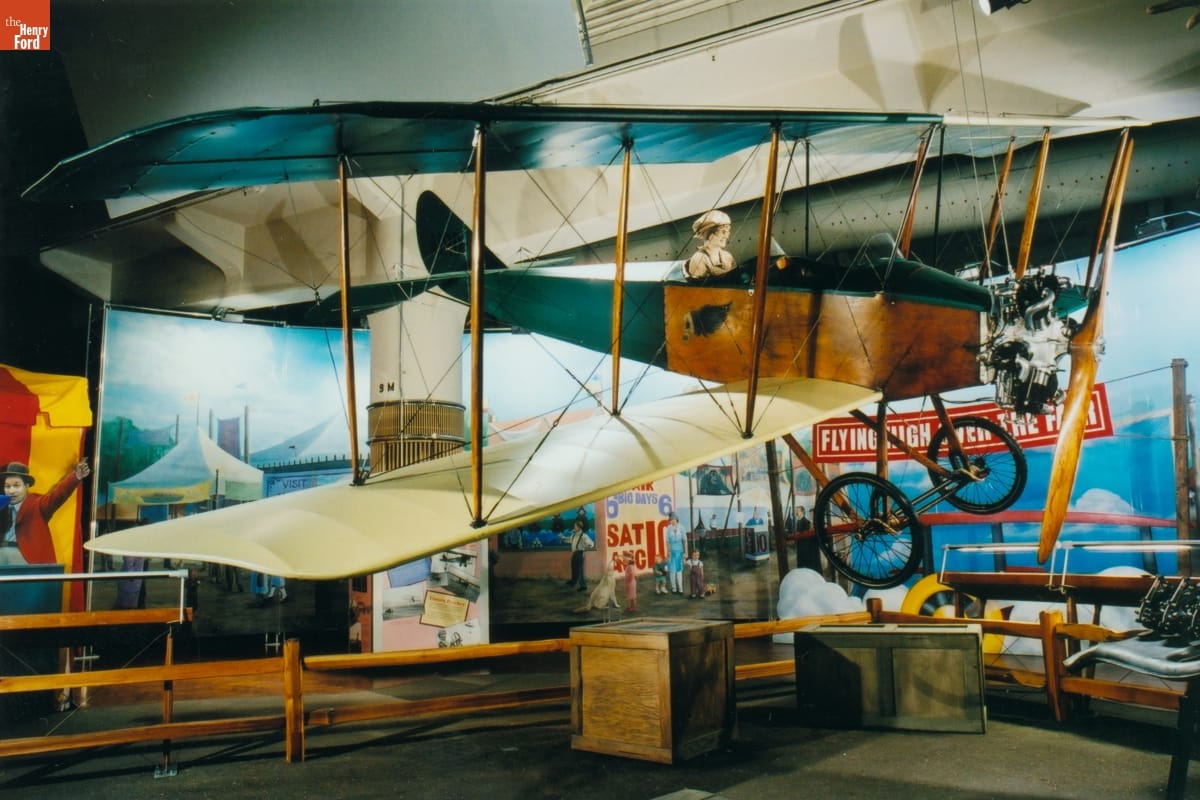
1915 Laird Biplane, "Boneshaker"
This was the third airplane constructed by Matty Laird, a self-taught pilot and aircraft engineer. He used the plane in stunt flying exhibitions from Montana to Maryland. Later the famous aviator Katherine Stinson took the plane to Japan and China, where she was the first woman to fly.
03
Related Content
 Set
SetBarnstormers
- 20 Artifacts
Barnstorming aerial performers thrilled audiences in the 1920s with death-defying "aerobatic" stunts. Equipped with war-surplus airplanes and steely nerves, they toured the country giving many Americans their first in-person experiences with aviation. Most barnstormers barely eked out a living, but a few found wealth and fame. By decade's end, aging aircraft, fading novelty, and growing government regulation largely ended the barnstorming era.