
Henry Ford Driving the 999 Race Car Against Harkness at Grosse Pointe Racetrack, 1903
THF109775 / Henry Ford Driving the 999 Race Car Against Harkness at Grosse Pointe Racetrack, 1903
01
Artifact Overview
Image originally published in the May 1903 issue of Munsey's Magazine captioned, "At full speed a trial brush between Messers [Henry] Ford (car to the left of the picture) and [Harry] Harkness." Less than a month before Ford Motor Company's founding, Henry Ford was still interested in automobile racing and the benefits to be gained in experimenting with parts of chassis, bodies, and engines that could be integrated into his future automobiles. Ford used trial races like this to test his experimental ideas.
Artifact Details
Artifact
Photographic print
Subject Date
1903
Creators
Collection Title
Location
By Request in the Benson Ford Research Center
Object ID
P.188.4778
Credit
From the Collections of The Henry Ford. Gift of Ford Motor Company.
Material
Paper (Fiber product)
Linen (Material)
Technique
Gelatin silver process
Color
Black-and-white (Colors)
Dimensions
Height: 8.5 in
Width: 10.75 in
Keywords |
|---|
02
Related Content
 Set
SetLesson: The Study of Motion Using Artifacts
- 6 Artifacts
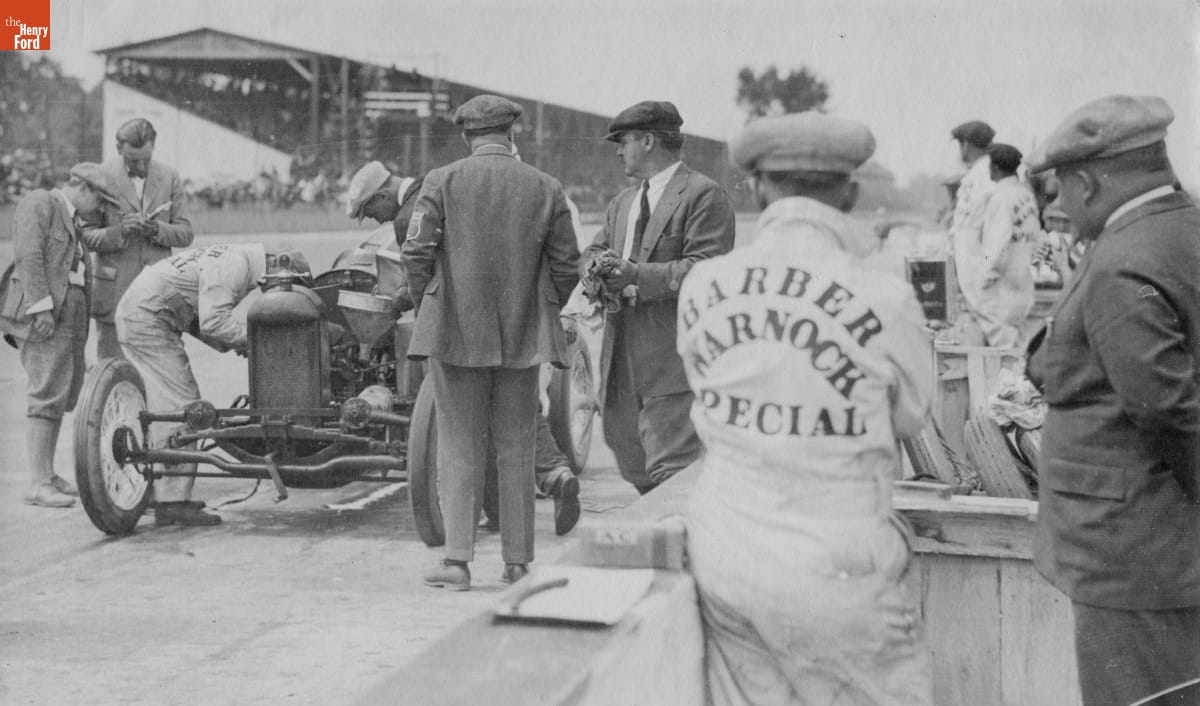
When did Fords use Chevrolet parts? In the 1920s, when brothers Louis and Arthur Chevrolet made special overhead valve cylinder heads for Model Ts. Sold under the brand name Frontenac, they helped racers triple the horsepower of the stock Model T engine. Such "Fronty-Fords" became terrors on the small dirt tracks and in 1923 and 1924 Indianapolis auto dealer Barber-Warnock Ford decided to enter Fronty-Ford powered cars in the Indianapolis 500. Here we see one of the 1924 cars being serviced in the pits. A mechanic with a funnel adds oil, while another mechanic on the opposite side of the car makes an adjustment. Arthur Chevrolet, wearing a tie and a flat cap, wipes his hands in the middle of the picture. Three men in suits, possibly race officials, observe the scene. The Barber-Warnock cars finished fifth in the 1923 race and 14th, 16th, and 17th in 1924.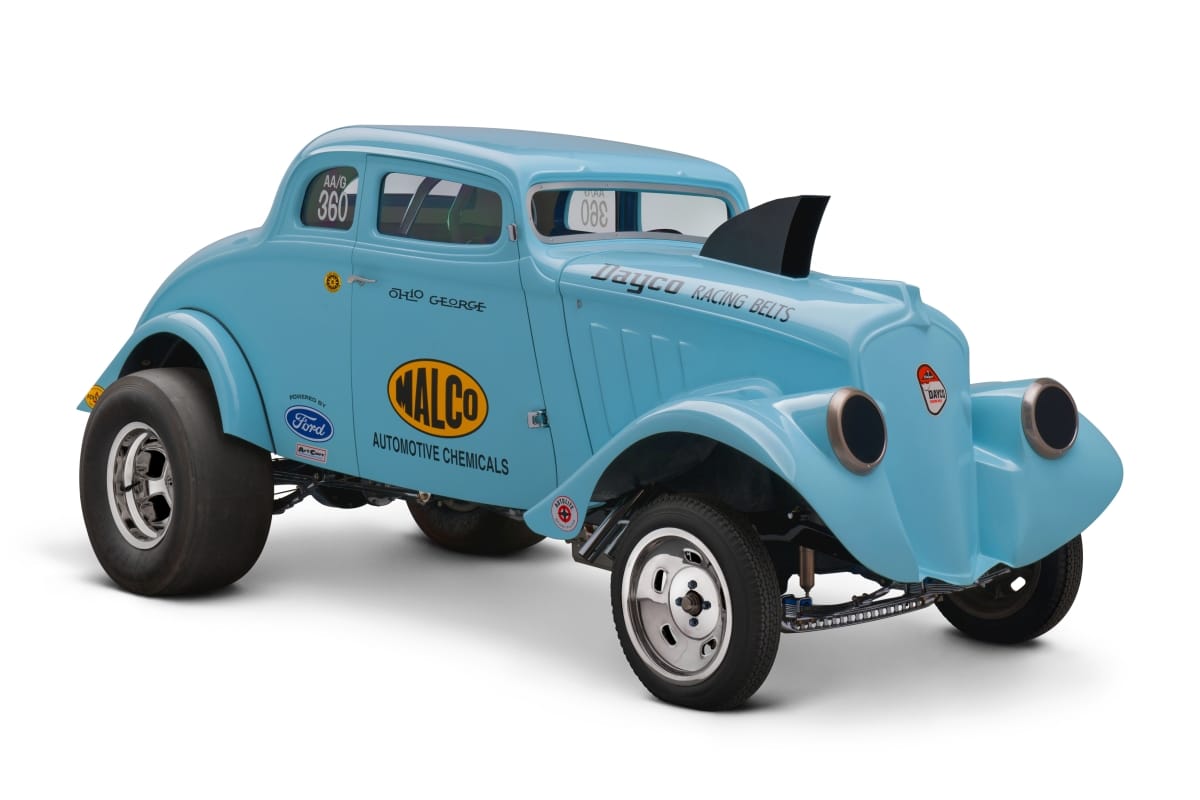 Set
SetLesson: Ground Effects, Innovations and Safety
- 6 Artifacts
When machinist George Montgomery started racing in 1953, all drag racers were amateurs with "real jobs" supporting their hobby. This car helped change all that. Montgomery bought an old Willys in 1958 and built a dragster so successful that promoters started paying him to run at drag strips nationwide. In 1966, Montgomery became one of drag racing's first full-time professional drivers.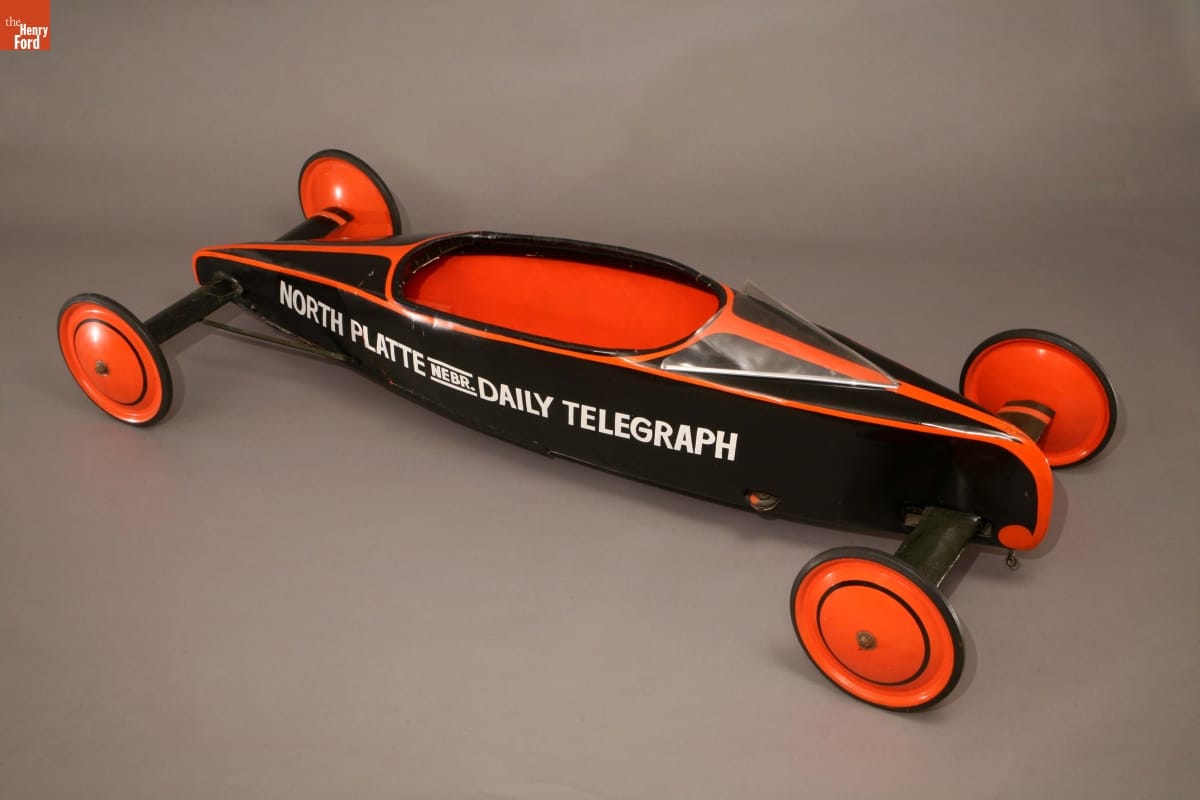 Set
SetLesson: Forces in Automobile Racing
- 13 Artifacts
Mason Colbert placed third with this car in the 1939 All-American Soap Box Derby national championship in Akron, Ohio. The first official derby was held in 1934. Young contestants built their cars from soap boxes, orange crates, and baby carriage wheels. Over the years, designs became more elaborate and materials more sophisticated. But the "fuel" remained the same -- gravity.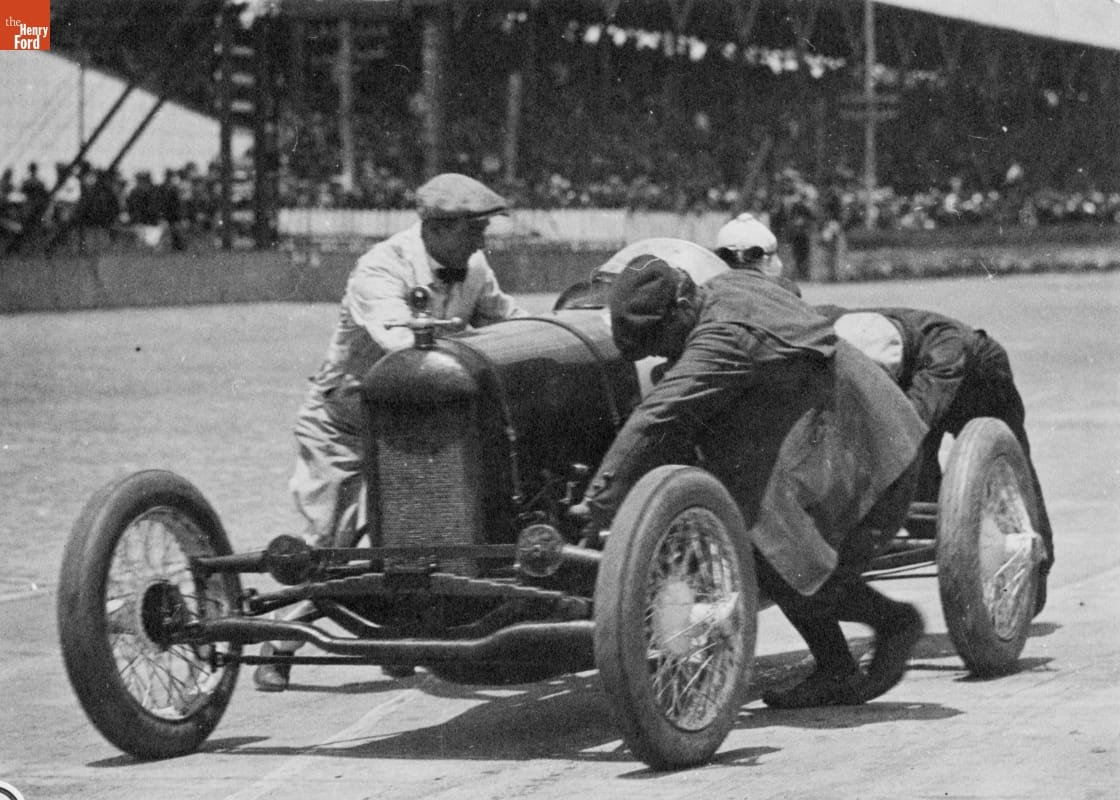 Set
SetLesson: Analysis of Newton’s Laws in Racing
- 8 Artifacts
Hale Barber and Clarence Warnock established the Barber-Warnock Ford dealership in Indianapolis in 1917 and were active supporters of the Indianapolis 500 race on a 2.5-mile oval track originally paved with brick and one of the most popular and well-known races in the country. In the mid-1920s, Barber-Warnock moved from fans and supporters to participants by sponsoring specially built Model Ts. In 1924, Barber-Warnock entered three "specials" built by the Chevrolet brothers -- Louis, Gaston, and Arthur -- under the Frontenac name. Although fairly powerful and fast, the "Fronty Fords" were no match for the rest of the field, finishing a disappointing 14th, 16th, and 17th.