
Search
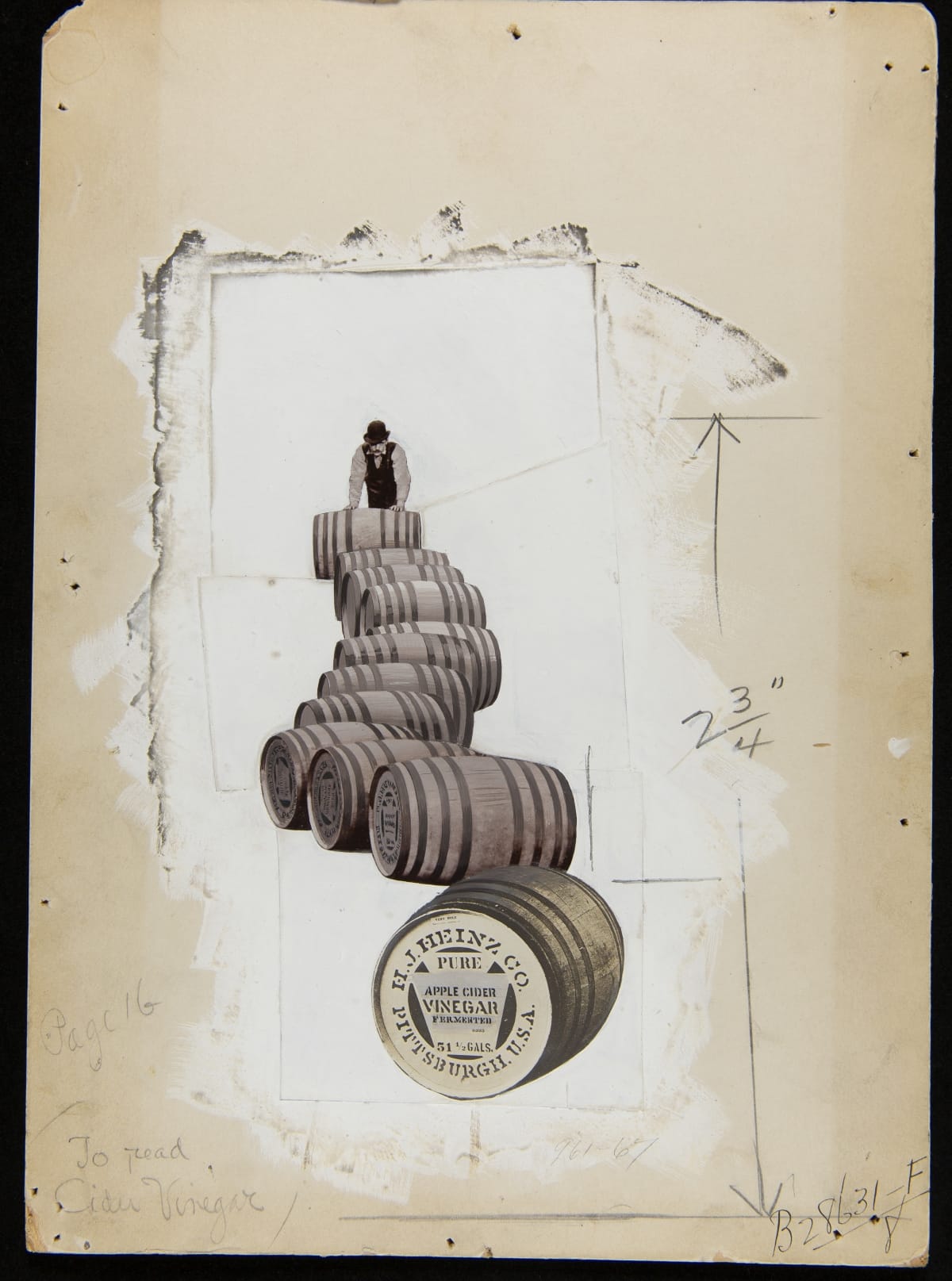
- Advertising Layout for Heinz Apple Cider Vinegar, 1915-1925 - Photographs of the H.J. Heinz factory -- including buildings, employees, and the manufacturing process -- were often taken and then modified for advertising and publications. This advertising layout shows an employee rolling barrels of Heinz vinegar. Each barrel features the H.J. Heinz Company name and the signature "keystone" symbol.
- 1915-1925
- Collections - Artifact
Advertising Layout for Heinz Apple Cider Vinegar, 1915-1925
Photographs of the H.J. Heinz factory -- including buildings, employees, and the manufacturing process -- were often taken and then modified for advertising and publications. This advertising layout shows an employee rolling barrels of Heinz vinegar. Each barrel features the H.J. Heinz Company name and the signature "keystone" symbol.
- Fruit Mill and Press, 1880-1920 -
- 1880-1920
- Collections - Artifact
Fruit Mill and Press, 1880-1920
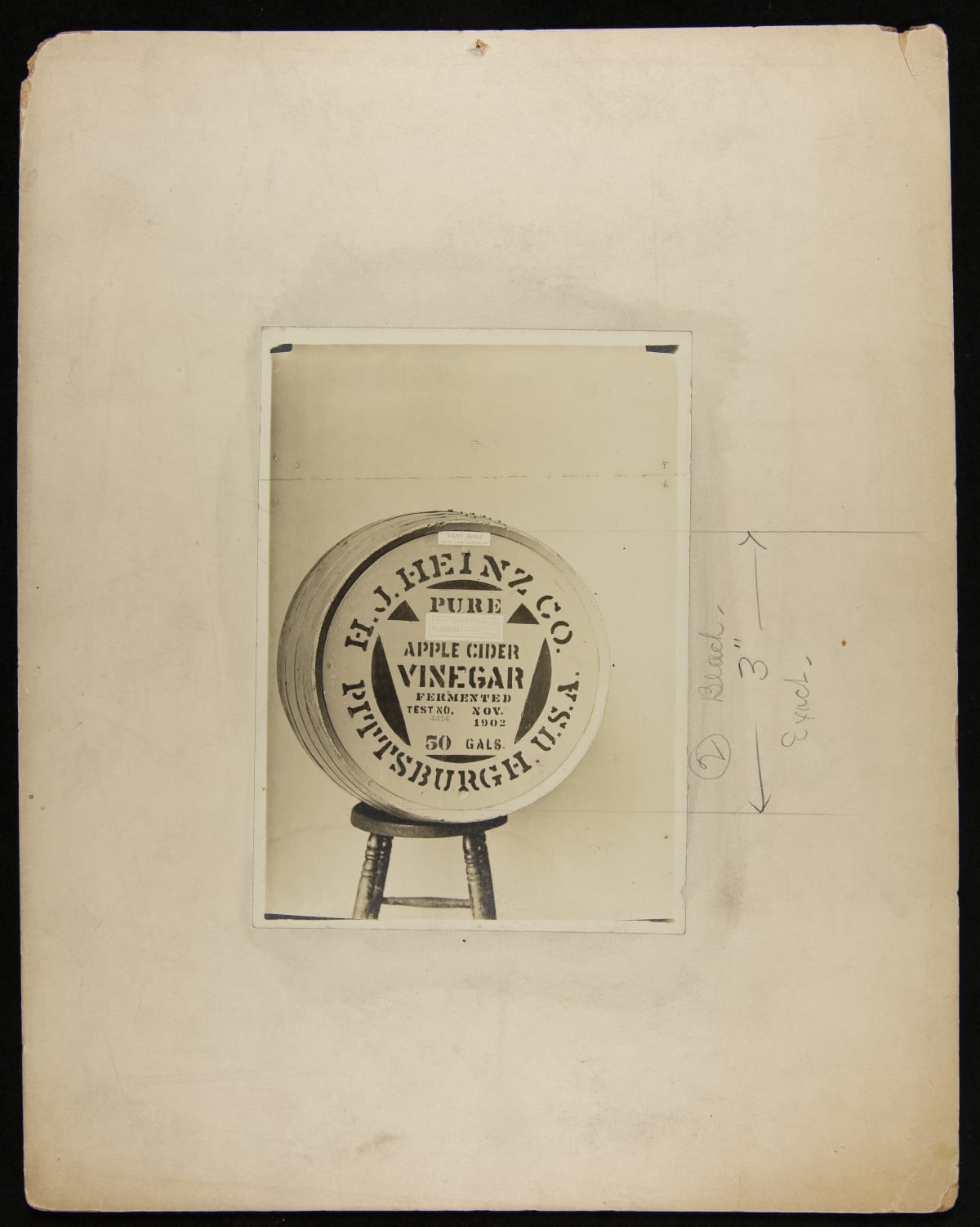
- H. J. Heinz Co. Apple Cider Vinegar Barrel Head, circa 1910 - The H.J. Heinz Company employed ambitious and comprehensive advertising strategies to meet consumers at home, in stores, and everywhere in between. Advertising layouts were a step in the marketing process where the drawing, size, color, and arrangement were taken into consideration before the final advertisement was created. This layout advertised Heinz vinegar, one of the Heinz "57 Varieties."
- circa 1910
- Collections - Artifact
H. J. Heinz Co. Apple Cider Vinegar Barrel Head, circa 1910
The H.J. Heinz Company employed ambitious and comprehensive advertising strategies to meet consumers at home, in stores, and everywhere in between. Advertising layouts were a step in the marketing process where the drawing, size, color, and arrangement were taken into consideration before the final advertisement was created. This layout advertised Heinz vinegar, one of the Heinz "57 Varieties."
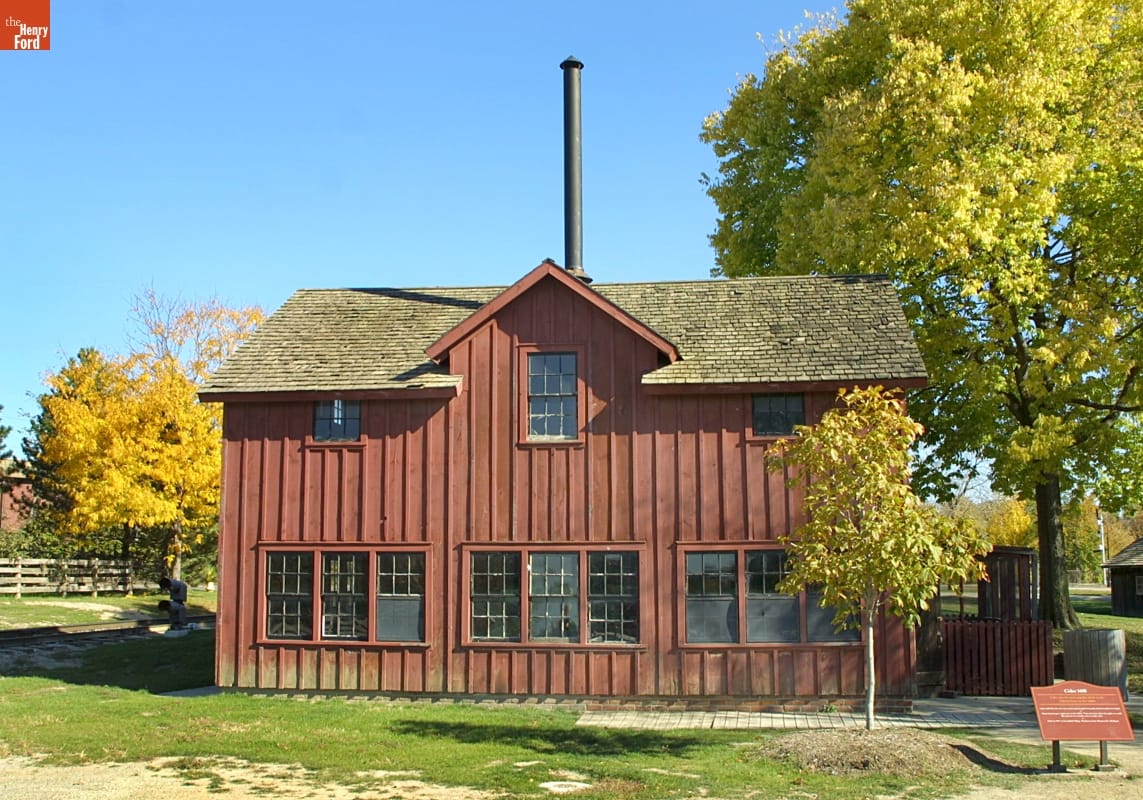
- Cider Mill - The cider mill building was built at Greenfield Village in 1942 to house the cider-making equipment from Martinsville, Michigan. It is built on a bank, so the apples were brought into the building on the second floor, then fed by gravity to the first floor. The building's design is not based on any specific building.
- 1850-1900
- Collections - Artifact
Cider Mill
The cider mill building was built at Greenfield Village in 1942 to house the cider-making equipment from Martinsville, Michigan. It is built on a bank, so the apples were brought into the building on the second floor, then fed by gravity to the first floor. The building's design is not based on any specific building.
- Pouring Apples into Crusher inside the Greenfield Village Cider Mill, October 1967 -
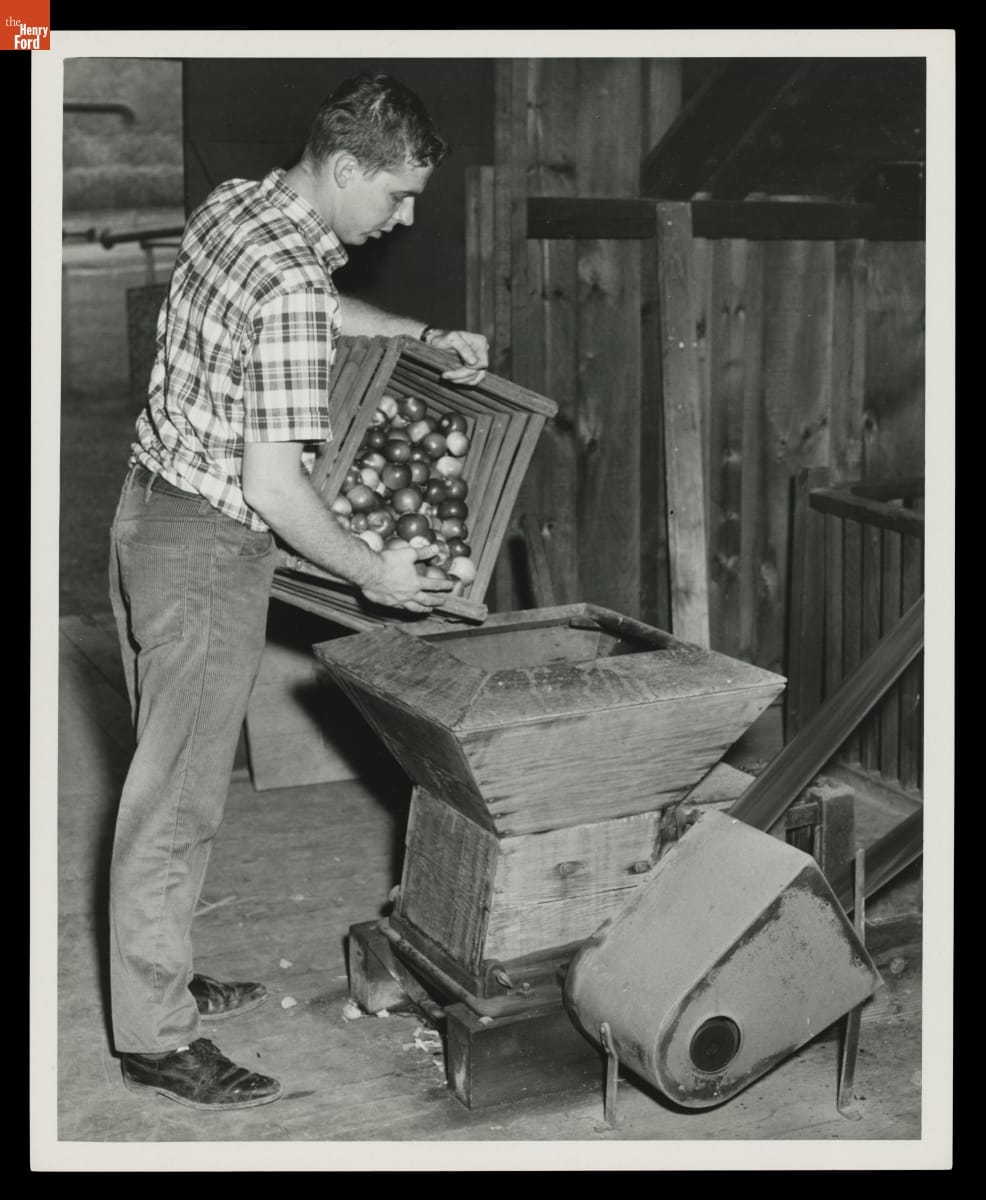
- October 06, 1967
- Collections - Artifact
Pouring Apples into Crusher inside the Greenfield Village Cider Mill, October 1967
- Shoveling Apples in Greenfield Village Cider Mill during "Autumn Harvest," 1981 -
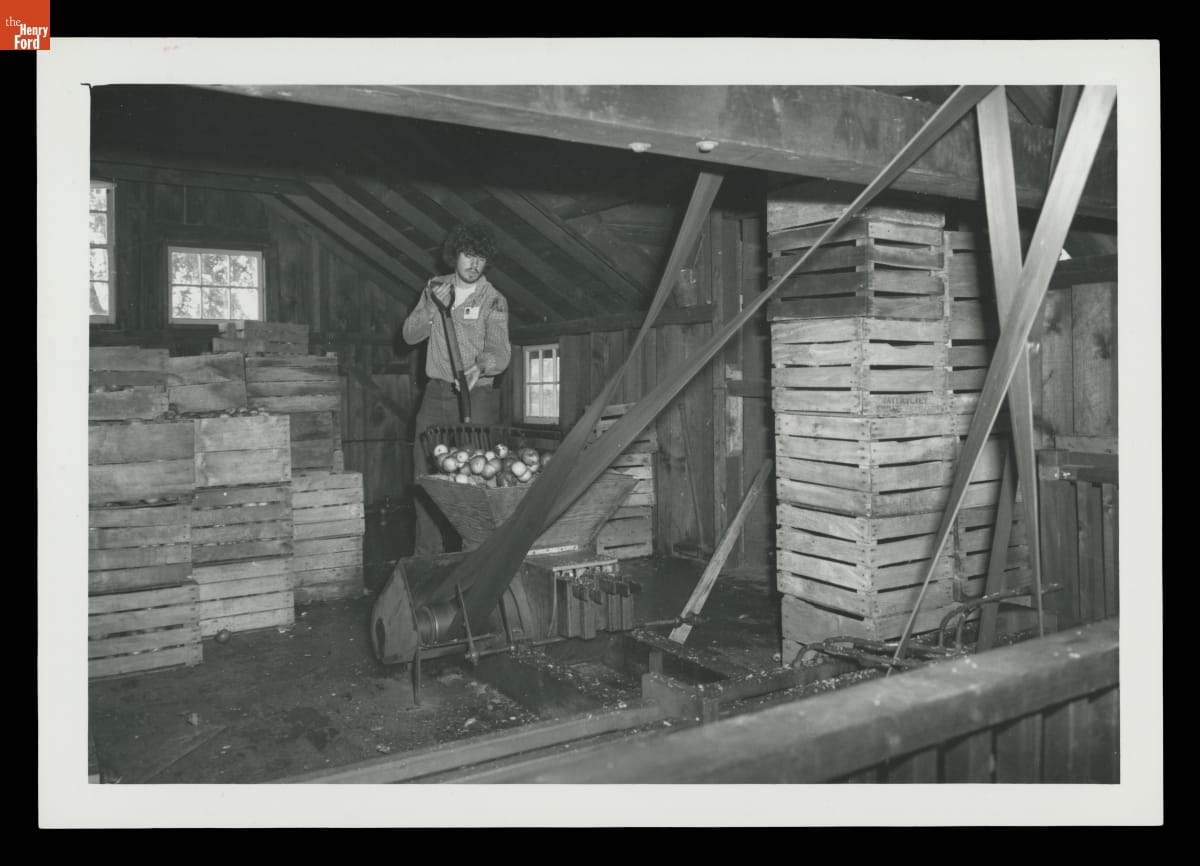
- 1981
- Collections - Artifact
Shoveling Apples in Greenfield Village Cider Mill during "Autumn Harvest," 1981
- Dick Sikorski and Sherman Garrison Load Crushed Apples into the Cider Press at Greenfield Village Cider Mill, October 1967 -
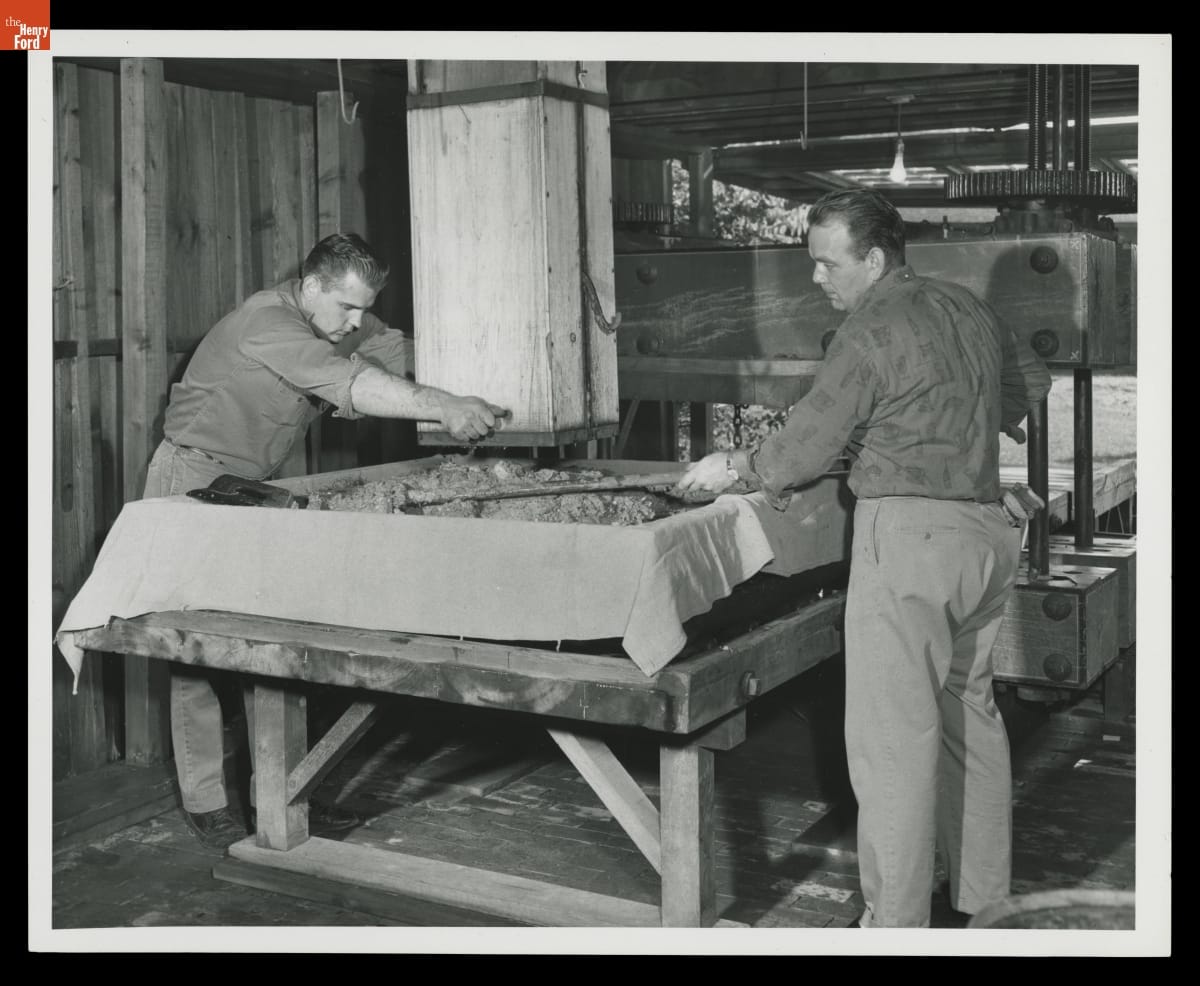
- October 06, 1967
- Collections - Artifact
Dick Sikorski and Sherman Garrison Load Crushed Apples into the Cider Press at Greenfield Village Cider Mill, October 1967
- Wood Engraving, "October," 1854 - Apple cider has long been synonymous with autumn. This 1854 print shows a bountiful apple harvest and cider making. In the background, the horse-powered crusher grinds apples into a pomace. In the foreground, men press the cider from the pomace. While we are more familiar with sweet cider, most cider at that time was hard cider-- fermented to prevent spoilage.
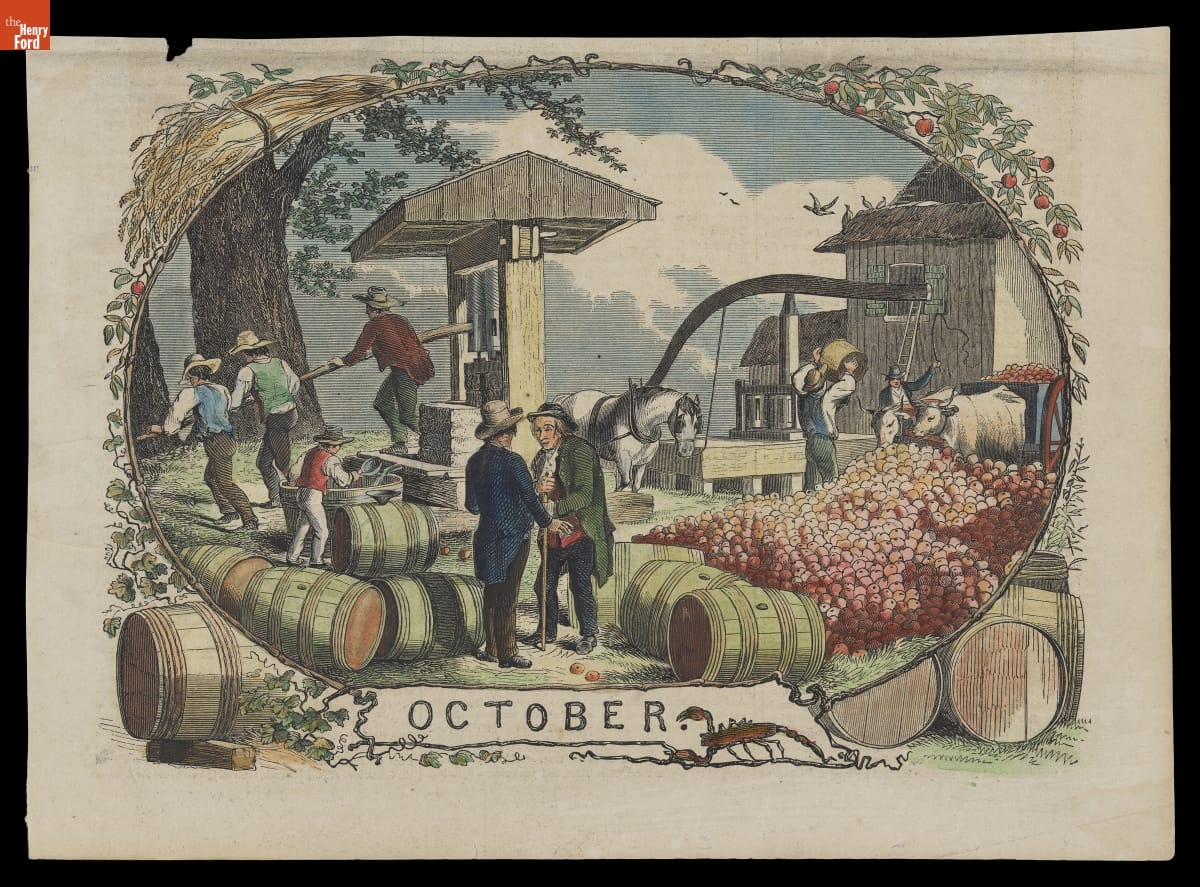
- October 01, 1854
- Collections - Artifact
Wood Engraving, "October," 1854
Apple cider has long been synonymous with autumn. This 1854 print shows a bountiful apple harvest and cider making. In the background, the horse-powered crusher grinds apples into a pomace. In the foreground, men press the cider from the pomace. While we are more familiar with sweet cider, most cider at that time was hard cider-- fermented to prevent spoilage.
- Pressing Cider at Greenfield Village Cider Mill during "Autumn Harvest," 1981 -
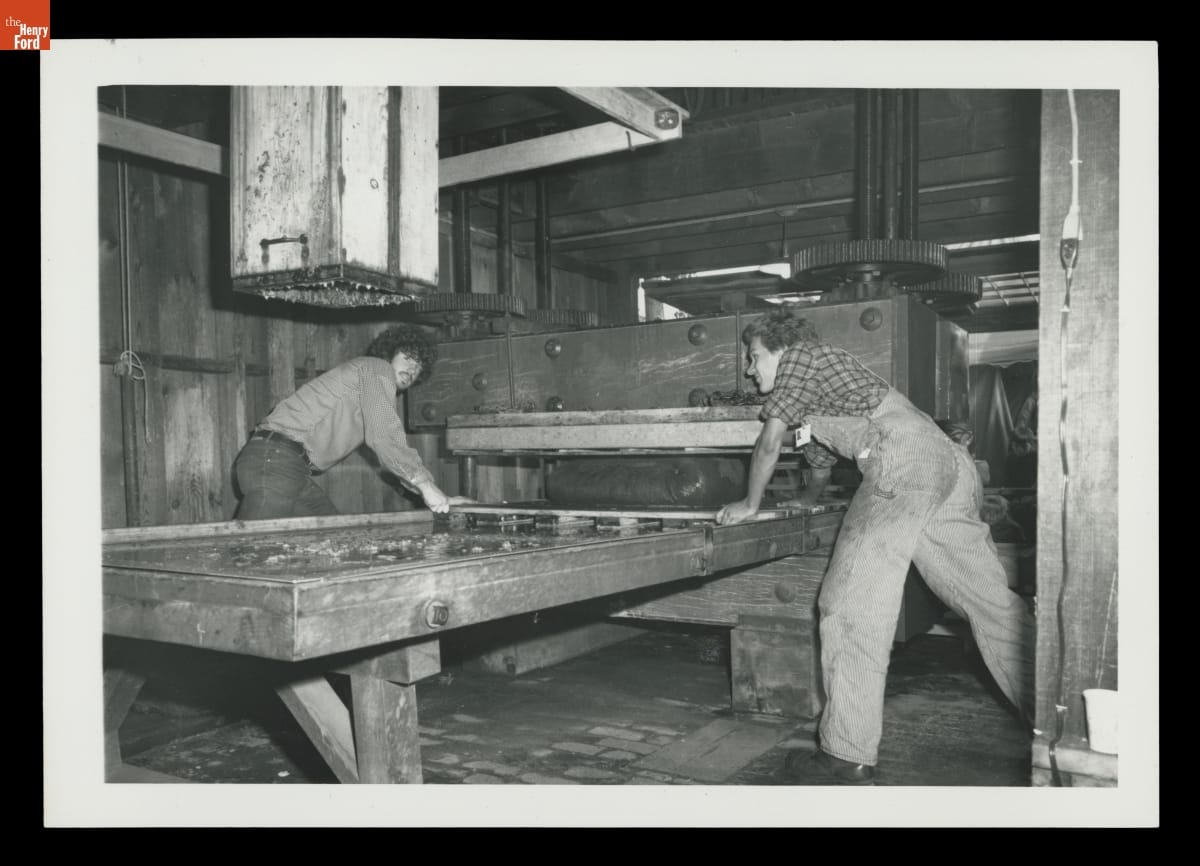
- 1981
- Collections - Artifact
Pressing Cider at Greenfield Village Cider Mill during "Autumn Harvest," 1981
- Guests Watch Cider-Making Process inside Greenfield Village Cider Mill, October 1968 -
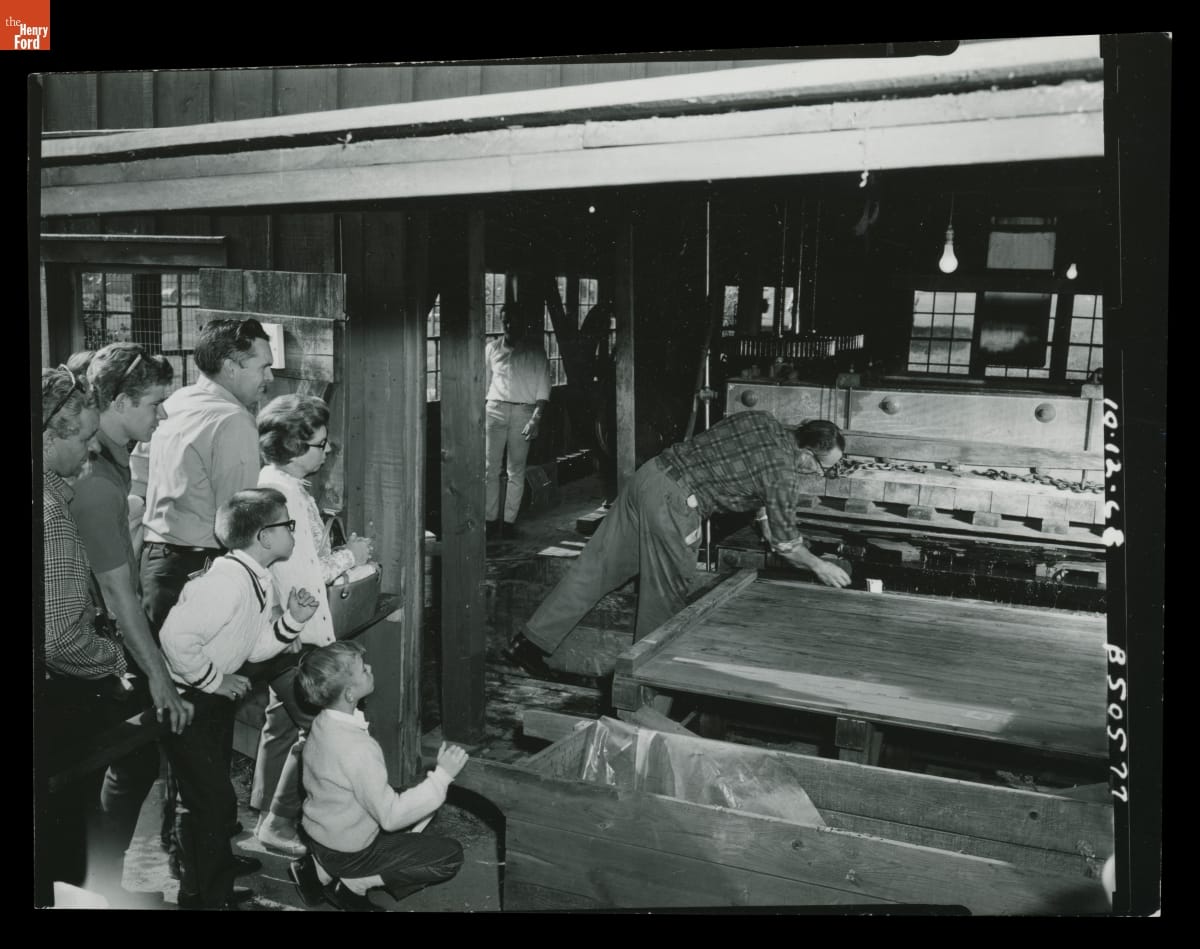
- October 12, 1968
- Collections - Artifact
Guests Watch Cider-Making Process inside Greenfield Village Cider Mill, October 1968