
Search
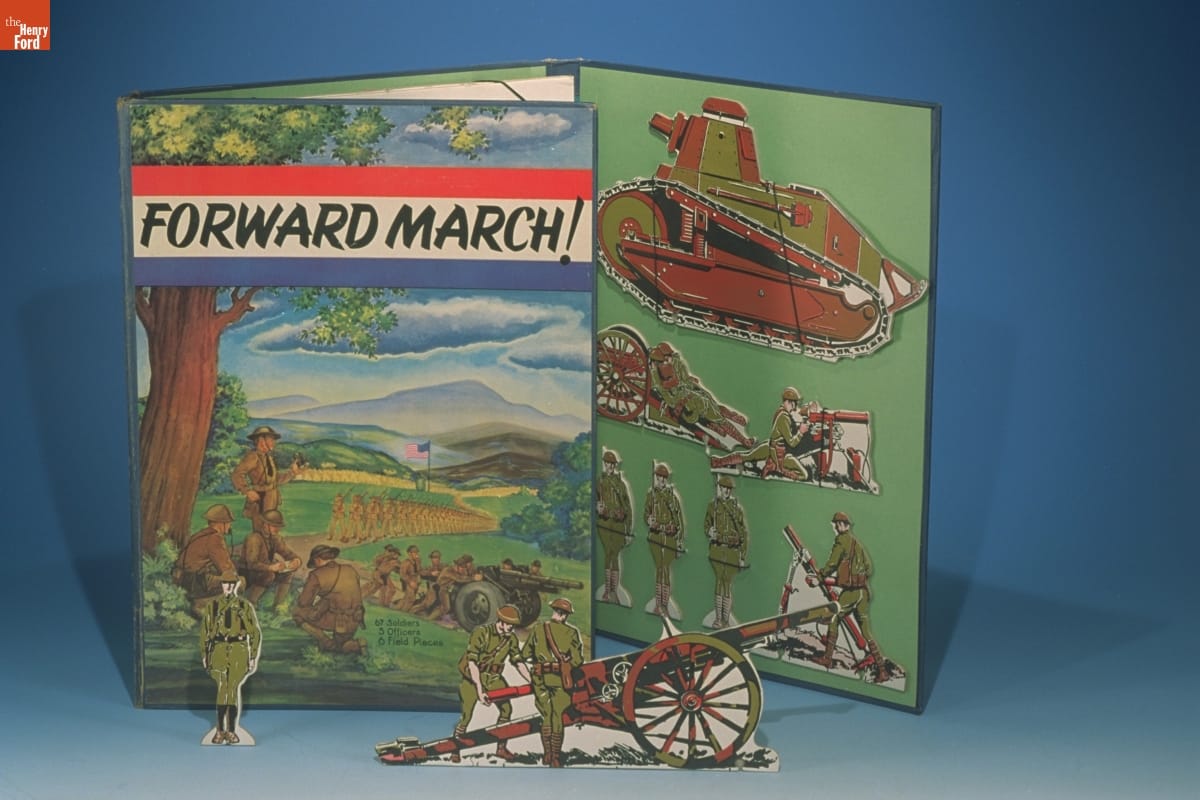
- "Forward March!" Military Play Set, 1941-1945 - Leading game manufacturer Milton Bradley acquired the McLoughlin Bros. publishing firm, known for its pioneering use of color printing technologies, in 1920. The company continued publishing books and other products through its McLoughlin division into the 1940s. This McLoughlin-branded playset included World War I-era soldiers and military equipment.
- 1941-1945
- Collections - Artifact
"Forward March!" Military Play Set, 1941-1945
Leading game manufacturer Milton Bradley acquired the McLoughlin Bros. publishing firm, known for its pioneering use of color printing technologies, in 1920. The company continued publishing books and other products through its McLoughlin division into the 1940s. This McLoughlin-branded playset included World War I-era soldiers and military equipment.
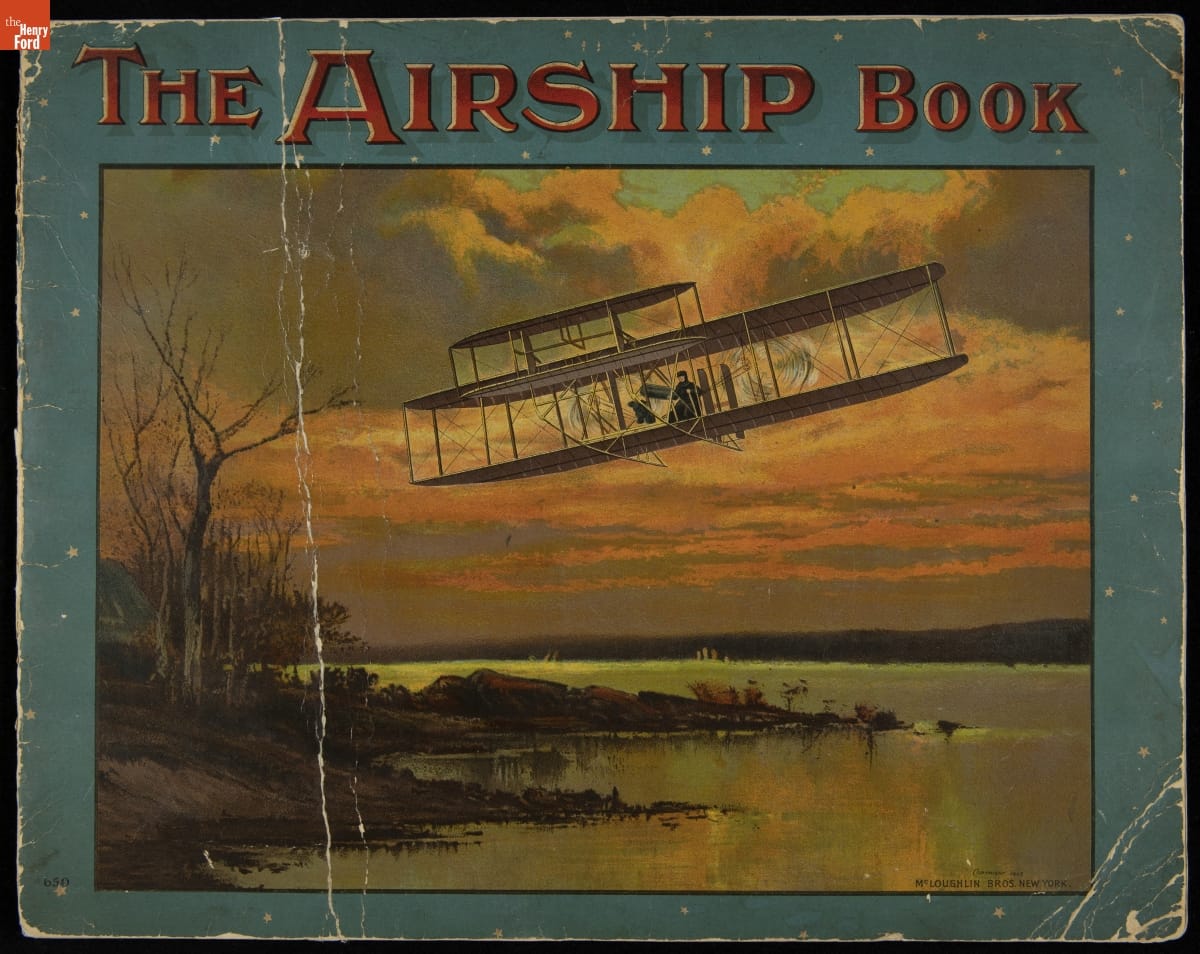
- The Airship Book, 1905 - The McLoughlin Bros. publishing firm produced "The Airship Book" in 1905. It features detailed, brightly colored illustrations of famous balloons, airships, and airplanes. The book represented the highest technology -- both in the fields of color printing and aviation -- but also marked McLoughlin Bros. decline. John McLoughlin, Jr., the company's visionary leader, died the same year it was published.
- 1905
- Collections - Artifact
The Airship Book, 1905
The McLoughlin Bros. publishing firm produced "The Airship Book" in 1905. It features detailed, brightly colored illustrations of famous balloons, airships, and airplanes. The book represented the highest technology -- both in the fields of color printing and aviation -- but also marked McLoughlin Bros. decline. John McLoughlin, Jr., the company's visionary leader, died the same year it was published.
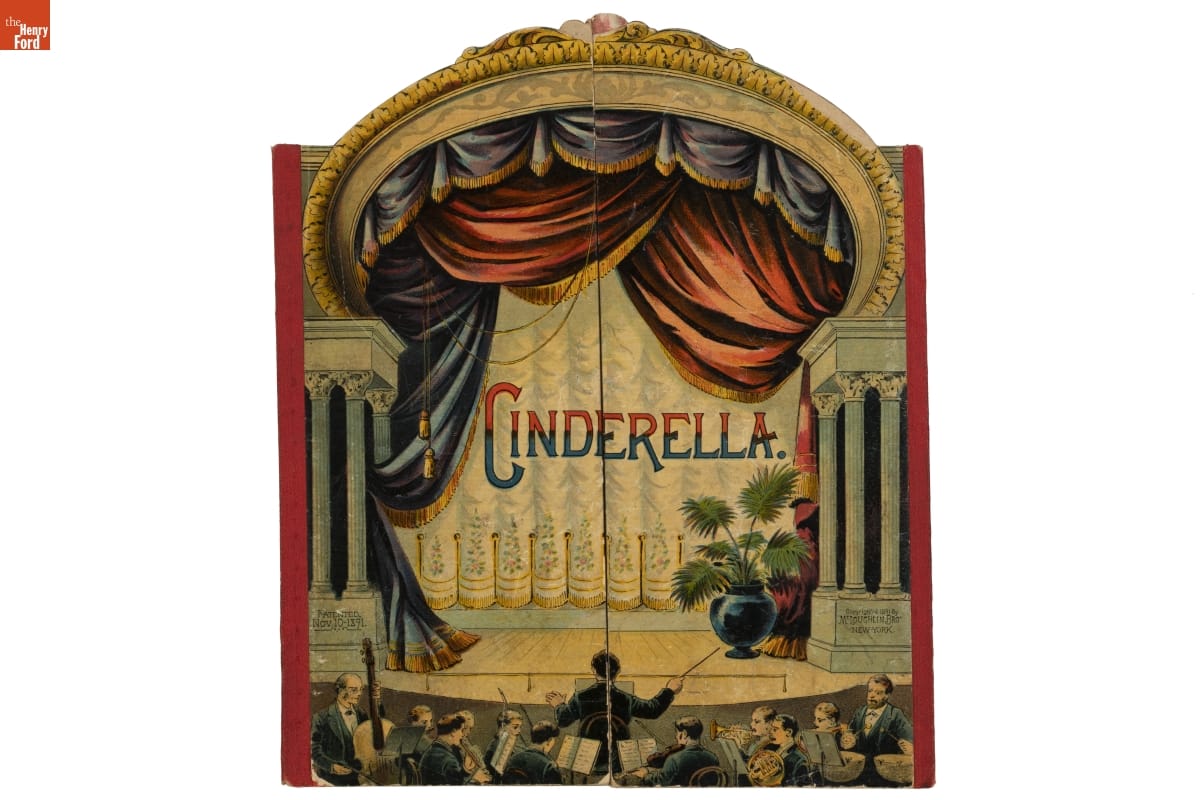
- Fold-out Book, "Cinderella," 1891 - In 1891, the McLoughlin Bros. publishing firm patented this arch-shaped variant of the rectangular "pantomime" books available at the time. Pantomime books depicted a theater during a live stage show. Readers turned the pages to reveal each new scene as a family of theatergoers -- printed behind the cover flaps -- watched the "play" unfold.
- 1891
- Collections - Artifact
Fold-out Book, "Cinderella," 1891
In 1891, the McLoughlin Bros. publishing firm patented this arch-shaped variant of the rectangular "pantomime" books available at the time. Pantomime books depicted a theater during a live stage show. Readers turned the pages to reveal each new scene as a family of theatergoers -- printed behind the cover flaps -- watched the "play" unfold.
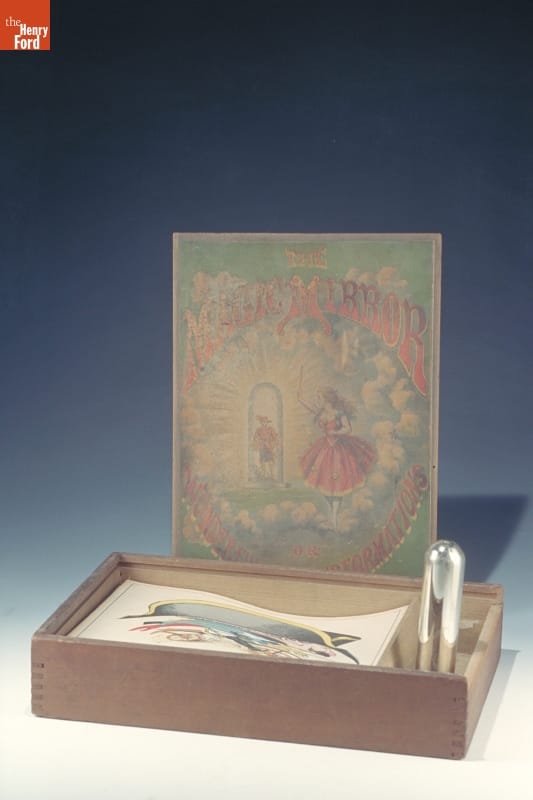
- Magic Mirror Game, 1860-1880 - As color printing technologies improved and became more affordable in the second half of the nineteenth century, many book publishers also began printing toys and games. The McLoughlin Bros. publishing firm produced this game called "The Magic Mirror, or Wonderful Transformations." Users placed a small, shiny optical toy atop distorted images to "magically" transform them into clear reflections of people or animals.
- 1860-1880
- Collections - Artifact
Magic Mirror Game, 1860-1880
As color printing technologies improved and became more affordable in the second half of the nineteenth century, many book publishers also began printing toys and games. The McLoughlin Bros. publishing firm produced this game called "The Magic Mirror, or Wonderful Transformations." Users placed a small, shiny optical toy atop distorted images to "magically" transform them into clear reflections of people or animals.
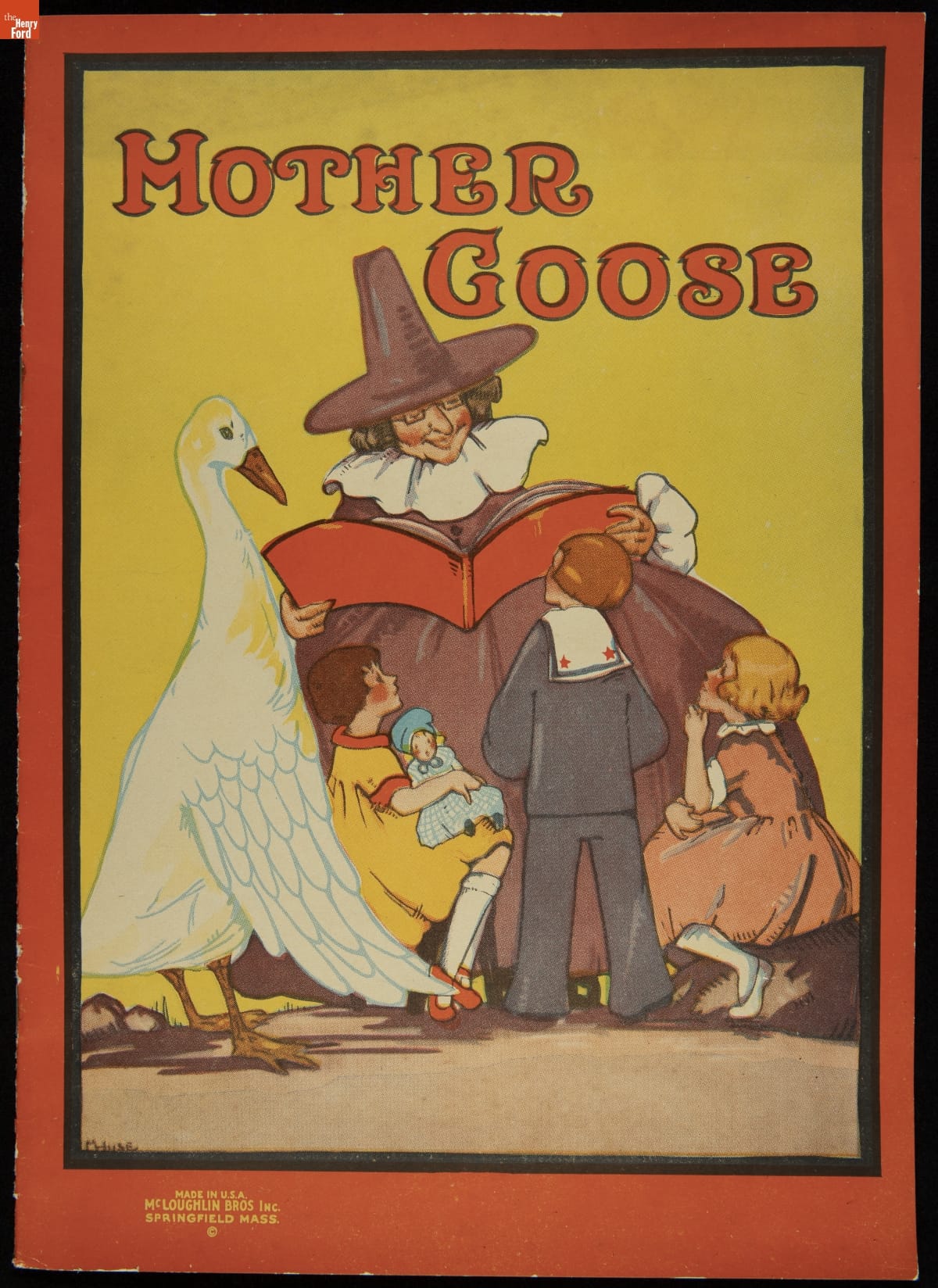
- Mother Goose Rhymes, 1920-1940 - Leading game manufacturer Milton Bradley acquired the McLoughlin Bros. publishing firm, known for its pioneering use of color printing technologies, in 1920. The company continued publishing books -- including this perennial children's favorite, "Mother Goose" -- and other products through its McLoughlin division into the 1940s.
- 1920-1940
- Collections - Artifact
Mother Goose Rhymes, 1920-1940
Leading game manufacturer Milton Bradley acquired the McLoughlin Bros. publishing firm, known for its pioneering use of color printing technologies, in 1920. The company continued publishing books -- including this perennial children's favorite, "Mother Goose" -- and other products through its McLoughlin division into the 1940s.
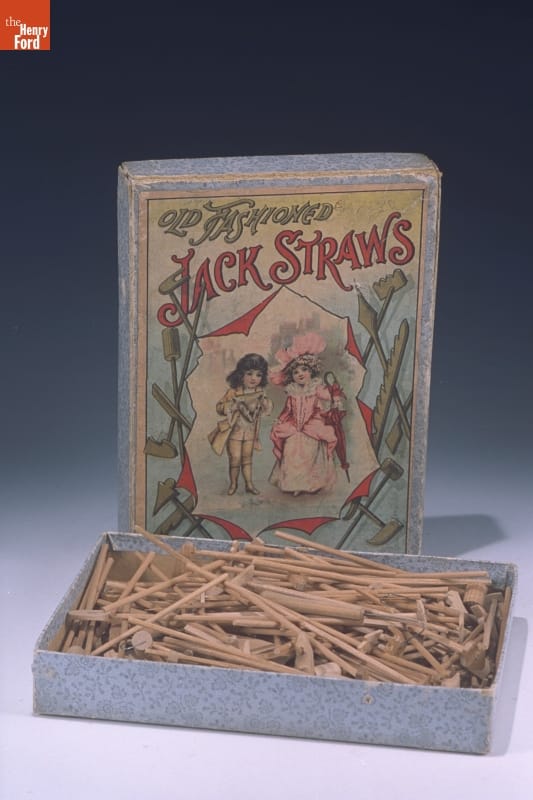
- Old Fashioned Jack Straws, 1890-1895 - Jackstraws, or Pick-Up Sticks, evolved from an ancient Chinese game in which players used a hook to remove one stick at a time from the pile. McLoughlin began in 1828 as a book publisher. By the 1860s, they were producing a large variety of paper dolls and games, and soon became particularly well known for their colorful chromolithography.
- 1890-1895
- Collections - Artifact
Old Fashioned Jack Straws, 1890-1895
Jackstraws, or Pick-Up Sticks, evolved from an ancient Chinese game in which players used a hook to remove one stick at a time from the pile. McLoughlin began in 1828 as a book publisher. By the 1860s, they were producing a large variety of paper dolls and games, and soon became particularly well known for their colorful chromolithography.
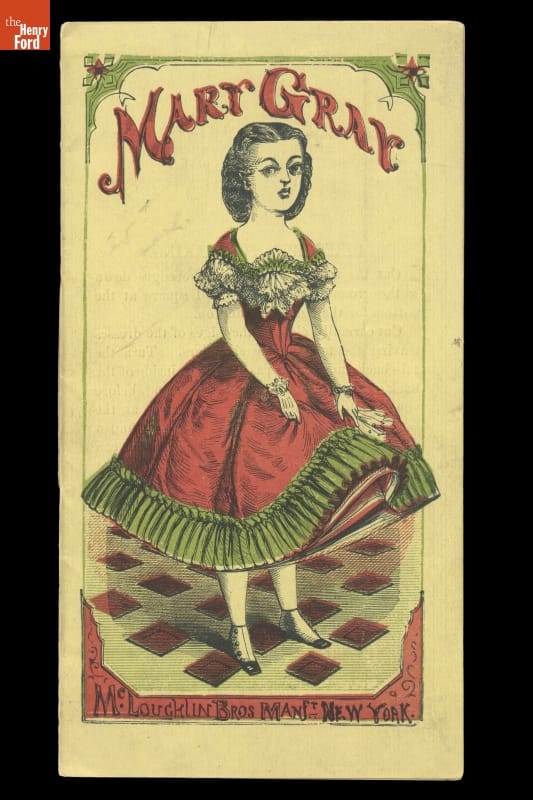
- Mary Gray Paper Doll, 1864-1870 - As color printing technologies improved and became more affordable in the second half of the nineteenth century, many book publishers also began printing playthings. By the 1860s, the McLoughlin Bros. publishing firm had expanded its product line to include games and toys, like paper dolls. McLoughlin's paper dolls reflected current trends and remained popular with consumers longer than other firms' less fashionable versions.
- 1864-1870
- Collections - Artifact
Mary Gray Paper Doll, 1864-1870
As color printing technologies improved and became more affordable in the second half of the nineteenth century, many book publishers also began printing playthings. By the 1860s, the McLoughlin Bros. publishing firm had expanded its product line to include games and toys, like paper dolls. McLoughlin's paper dolls reflected current trends and remained popular with consumers longer than other firms' less fashionable versions.
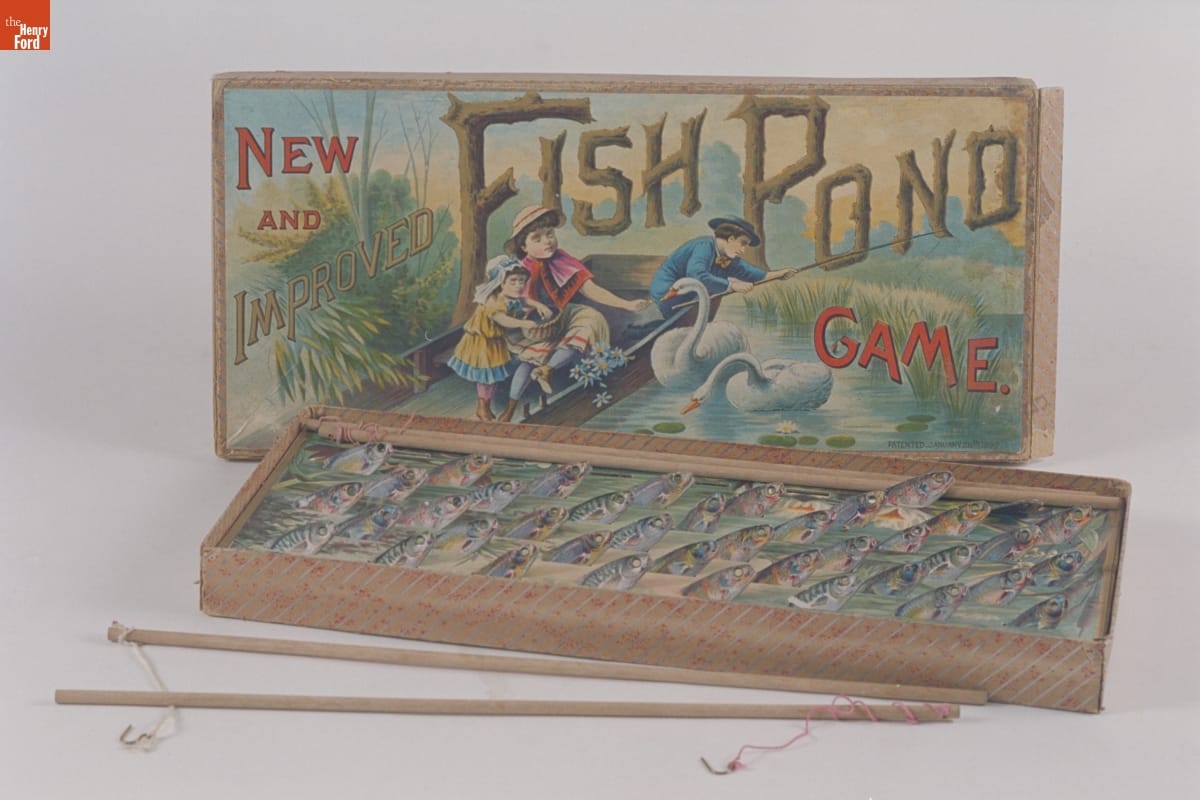
- Fish Pond Game, 1890-1900 - As color printing technologies improved and became more affordable in the second half of the nineteenth century, many book publishers also began printing toys and games. The McLoughlin Bros. publishing firm patented its version of the "fish pond game" in 1890. Using small wooden poles, players hooked multicolored fish from the "pond." A number printed on each fish indicated its value as competitors vied for the best catch.
- 1890-1900
- Collections - Artifact
Fish Pond Game, 1890-1900
As color printing technologies improved and became more affordable in the second half of the nineteenth century, many book publishers also began printing toys and games. The McLoughlin Bros. publishing firm patented its version of the "fish pond game" in 1890. Using small wooden poles, players hooked multicolored fish from the "pond." A number printed on each fish indicated its value as competitors vied for the best catch.
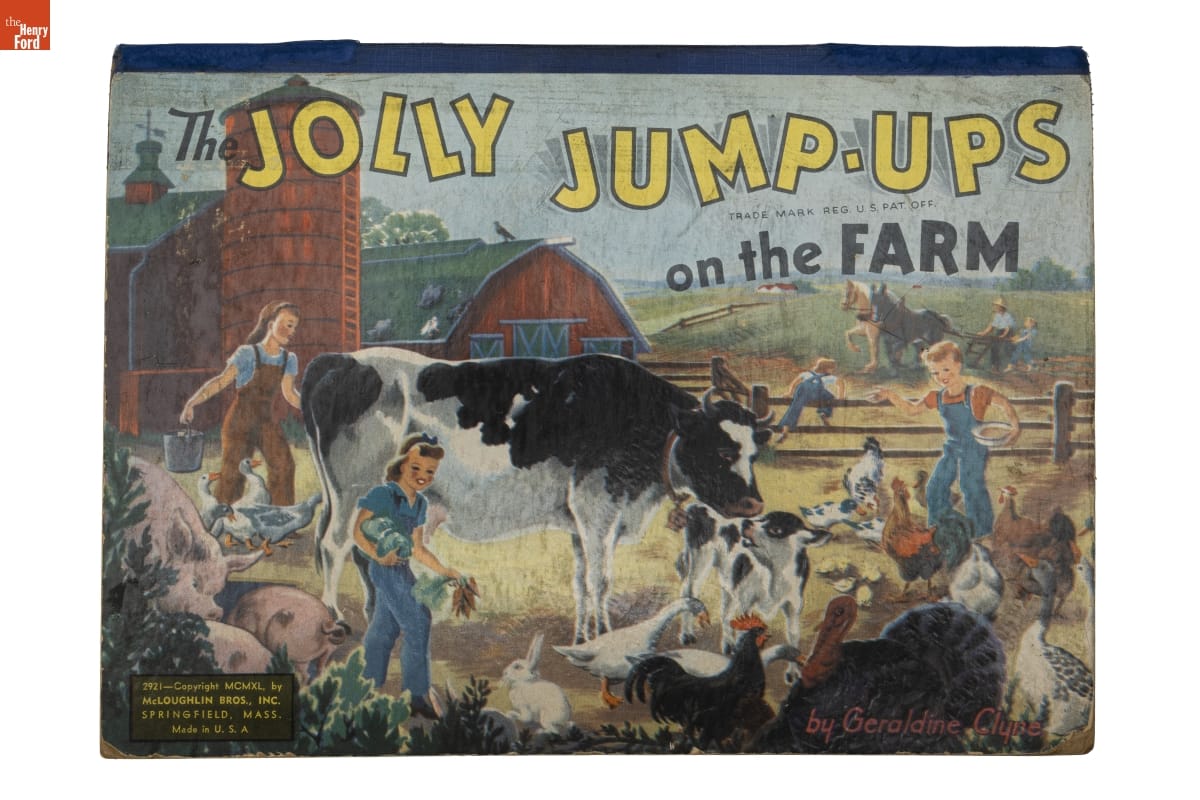
- "The Jolly Jump-Ups on the Farm," 1940 - Geraldine Clyne and her husband created the Jolly Jump-up series of pop-up books from the late 1930s into the 1950s. Their illustrations -- printed, die-cut, and folded from a single paper sheet -- created a 3-dimensional image when readers opened the book. Clyne's stories followed the adventures of the Jump-Up family, like this one about the children's idyllic summer on the farm.
- 1940
- Collections - Artifact
"The Jolly Jump-Ups on the Farm," 1940
Geraldine Clyne and her husband created the Jolly Jump-up series of pop-up books from the late 1930s into the 1950s. Their illustrations -- printed, die-cut, and folded from a single paper sheet -- created a 3-dimensional image when readers opened the book. Clyne's stories followed the adventures of the Jump-Up family, like this one about the children's idyllic summer on the farm.
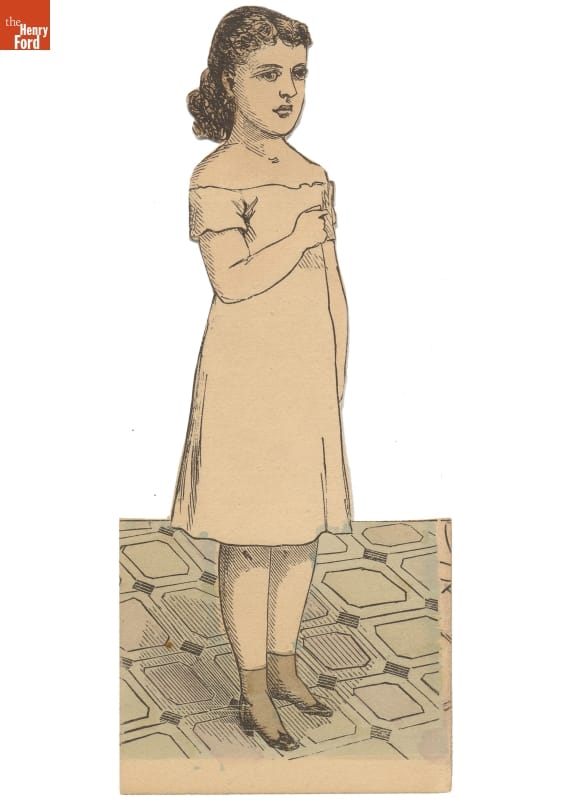
- Paper Doll, "Jeannie," 1864-1870 - As color printing technologies improved and became more affordable in the second half of the nineteenth century, many book publishers also began printing playthings. By the 1860s, the McLoughlin Bros. publishing firm had expanded its product line to include games and toys, like paper dolls. McLoughlin's paper dolls reflected current trends and remained popular with consumers longer than other firms' less fashionable versions.
- 1864-1870
- Collections - Artifact
Paper Doll, "Jeannie," 1864-1870
As color printing technologies improved and became more affordable in the second half of the nineteenth century, many book publishers also began printing playthings. By the 1860s, the McLoughlin Bros. publishing firm had expanded its product line to include games and toys, like paper dolls. McLoughlin's paper dolls reflected current trends and remained popular with consumers longer than other firms' less fashionable versions.