
Search
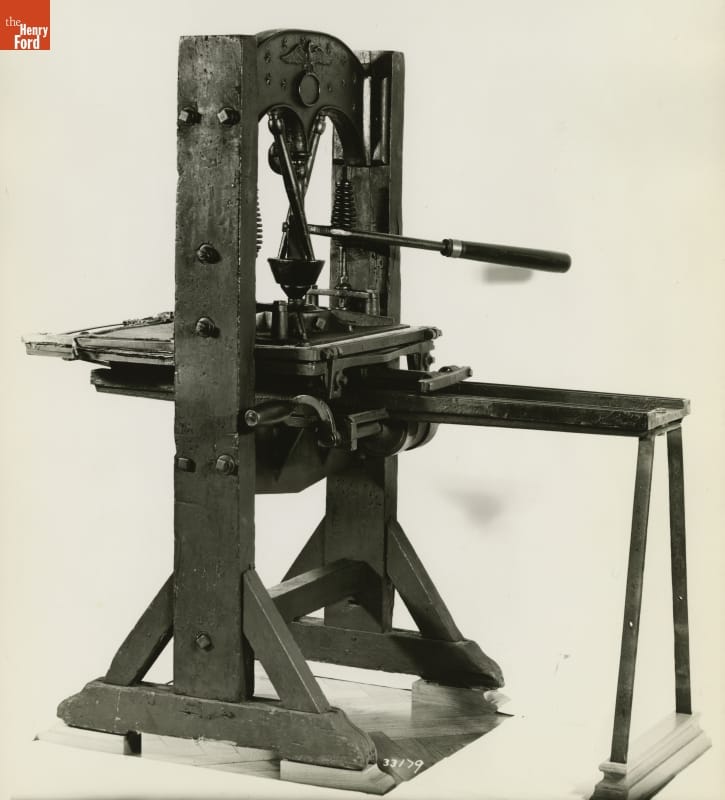
- Stansbury Press, 1821-1825 - Patented by Abraham O. Stansbury in 1821, this press included an innovative "torsion toggle." When the press bar was turned, two inclined rods straightened, exerting pressure on the platen to make a print impression. This particular press was active from the early 1820s into the 1920s, printing early government documents and three different newspapers in Illinois.
- 1821-1825
- Collections - Artifact
Stansbury Press, 1821-1825
Patented by Abraham O. Stansbury in 1821, this press included an innovative "torsion toggle." When the press bar was turned, two inclined rods straightened, exerting pressure on the platen to make a print impression. This particular press was active from the early 1820s into the 1920s, printing early government documents and three different newspapers in Illinois.
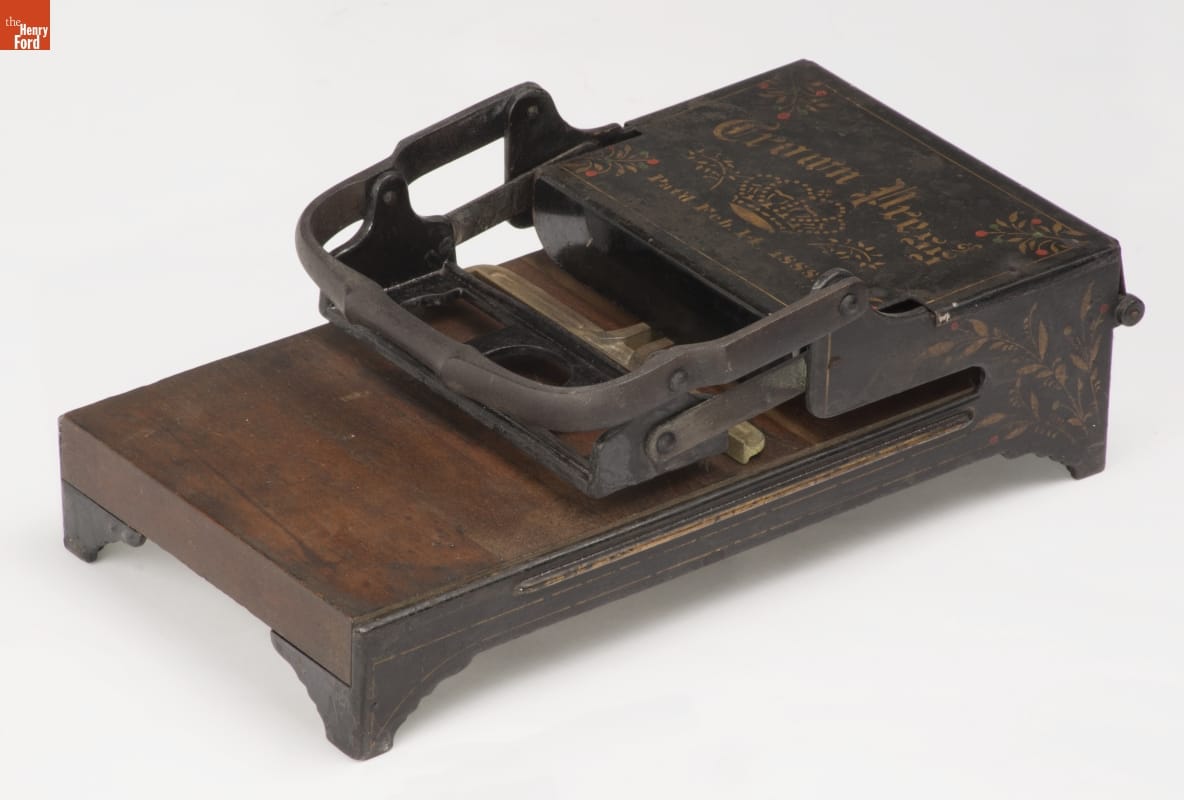
- Crown Tabletop Letterpress, circa 1890 -
- circa 1890
- Collections - Artifact
Crown Tabletop Letterpress, circa 1890
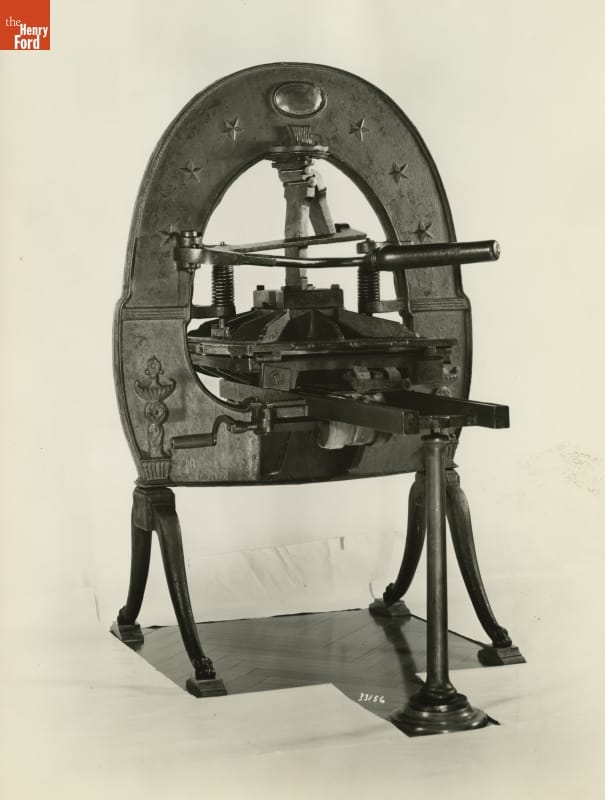
- Washington Press, Used by the Hostetter Company - This press represents the original form of the Washington Hand Press. It established two innovations in printing history: a lightened metal frame for easier transport, and a toggle-joint mechanism to create impressions. This press was used by the Hostetter Company in Pittsburgh. As proprietors of "medicinal" tonics with high alcohol content, the company was successful during the Temperance and Civil War eras.
- circa 1825
- Collections - Artifact
Washington Press, Used by the Hostetter Company
This press represents the original form of the Washington Hand Press. It established two innovations in printing history: a lightened metal frame for easier transport, and a toggle-joint mechanism to create impressions. This press was used by the Hostetter Company in Pittsburgh. As proprietors of "medicinal" tonics with high alcohol content, the company was successful during the Temperance and Civil War eras.
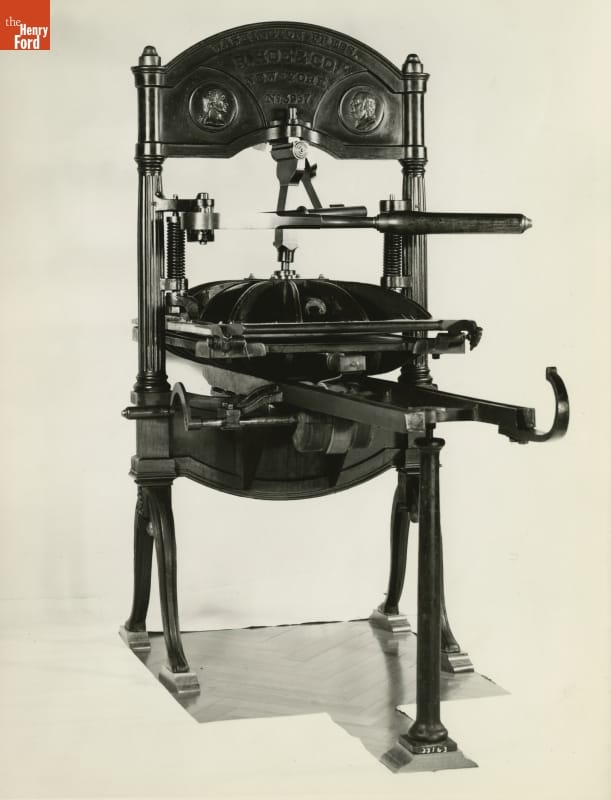
- Washington Press, Used at the Cranbrook Academy of Art - The Washington Press established two innovations in printing history: a lightened metal frame for easier transport, and a toggle-joint mechanism to create impressions. Over 6000 of these rugged hand presses were sold between 1835-1902; many specialist printers continue to use them today. This press was donated by George Booth, <em>Detroit News</em> publisher and founder of the Cranbrook Educational Community.
- 1840-1850
- Collections - Artifact
Washington Press, Used at the Cranbrook Academy of Art
The Washington Press established two innovations in printing history: a lightened metal frame for easier transport, and a toggle-joint mechanism to create impressions. Over 6000 of these rugged hand presses were sold between 1835-1902; many specialist printers continue to use them today. This press was donated by George Booth, Detroit News publisher and founder of the Cranbrook Educational Community.
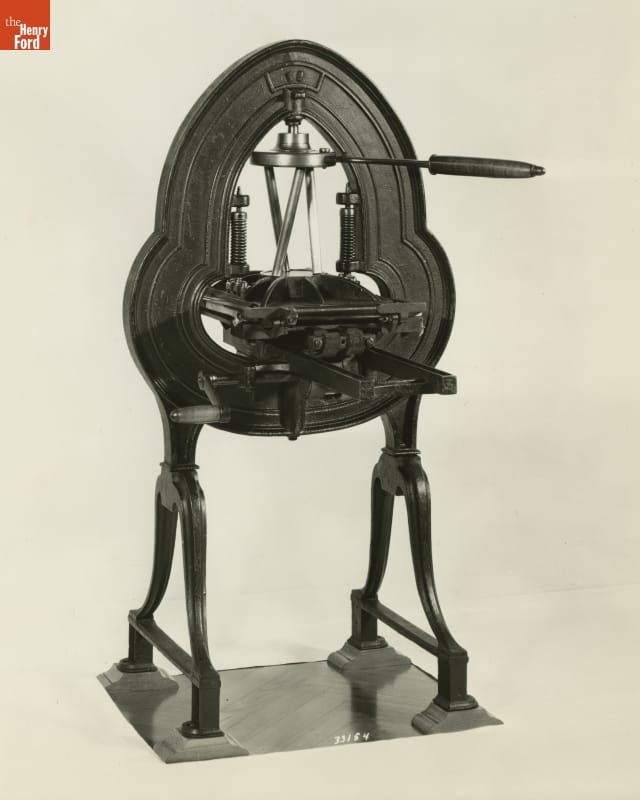
- Stansbury Press, 1867-1885 - Patented by Abraham O. Stansbury in 1821, this press included an innovative "torsion toggle." When the press bar was turned, three inclined rods straightened, exerting pressure on the platen to make a print impression. The spring-loaded platen returned to its starting position once the print was made.
- 1867-1885
- Collections - Artifact
Stansbury Press, 1867-1885
Patented by Abraham O. Stansbury in 1821, this press included an innovative "torsion toggle." When the press bar was turned, three inclined rods straightened, exerting pressure on the platen to make a print impression. The spring-loaded platen returned to its starting position once the print was made.
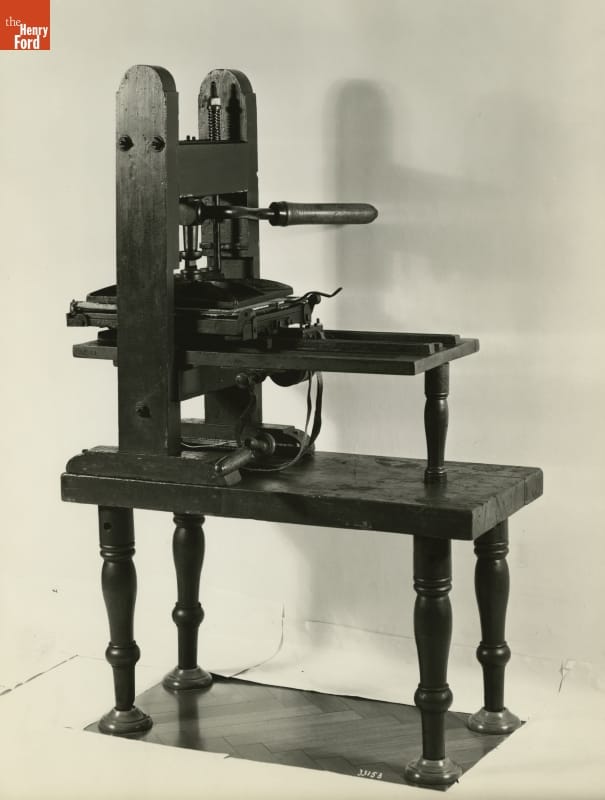
- Ramage Press, 1850-1860 - Adam Ramage of Philadelphia was the first well-known press maker in America, in business from 1800-1850. He improved upon older wooden presses, using iron for the bed and platen, and a larger screw mechanism. Its low cost and small size made the Ramage popular as a proofing and job press. This "foolscap" press was made by Ramage's successor, Frederick Bronstrup.
- 1850-1860
- Collections - Artifact
Ramage Press, 1850-1860
Adam Ramage of Philadelphia was the first well-known press maker in America, in business from 1800-1850. He improved upon older wooden presses, using iron for the bed and platen, and a larger screw mechanism. Its low cost and small size made the Ramage popular as a proofing and job press. This "foolscap" press was made by Ramage's successor, Frederick Bronstrup.
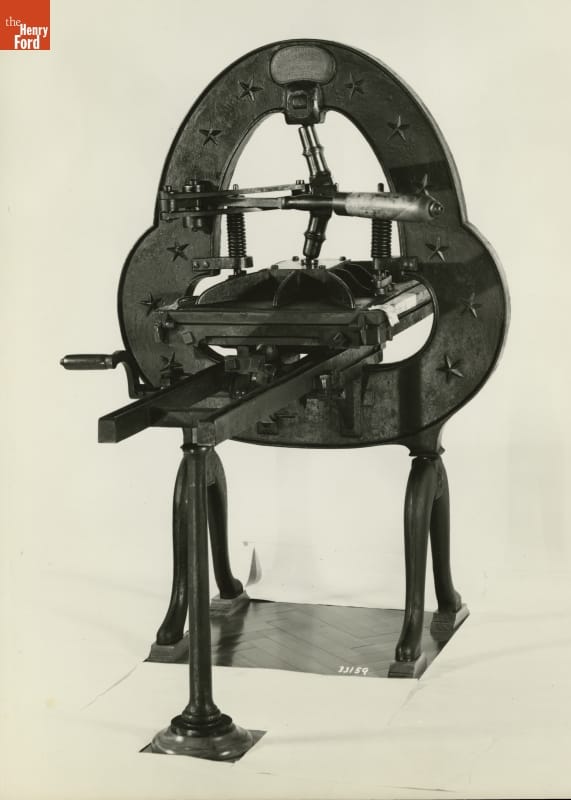
- Smith Press, 1824-1835 - This was the first all-iron press model built by manufacturers R. Hoe & Co. of New York. It was also the very last press made in its series before being succeeded by the Washington Press. This particular press belonged to C.C. Beavers, who used it to print the <em>Ridgeway News</em> (until 1889) and <em>Mecklenburg Times</em> (until 1929) in Virginia.
- 1824-1835
- Collections - Artifact
Smith Press, 1824-1835
This was the first all-iron press model built by manufacturers R. Hoe & Co. of New York. It was also the very last press made in its series before being succeeded by the Washington Press. This particular press belonged to C.C. Beavers, who used it to print the Ridgeway News (until 1889) and Mecklenburg Times (until 1929) in Virginia.
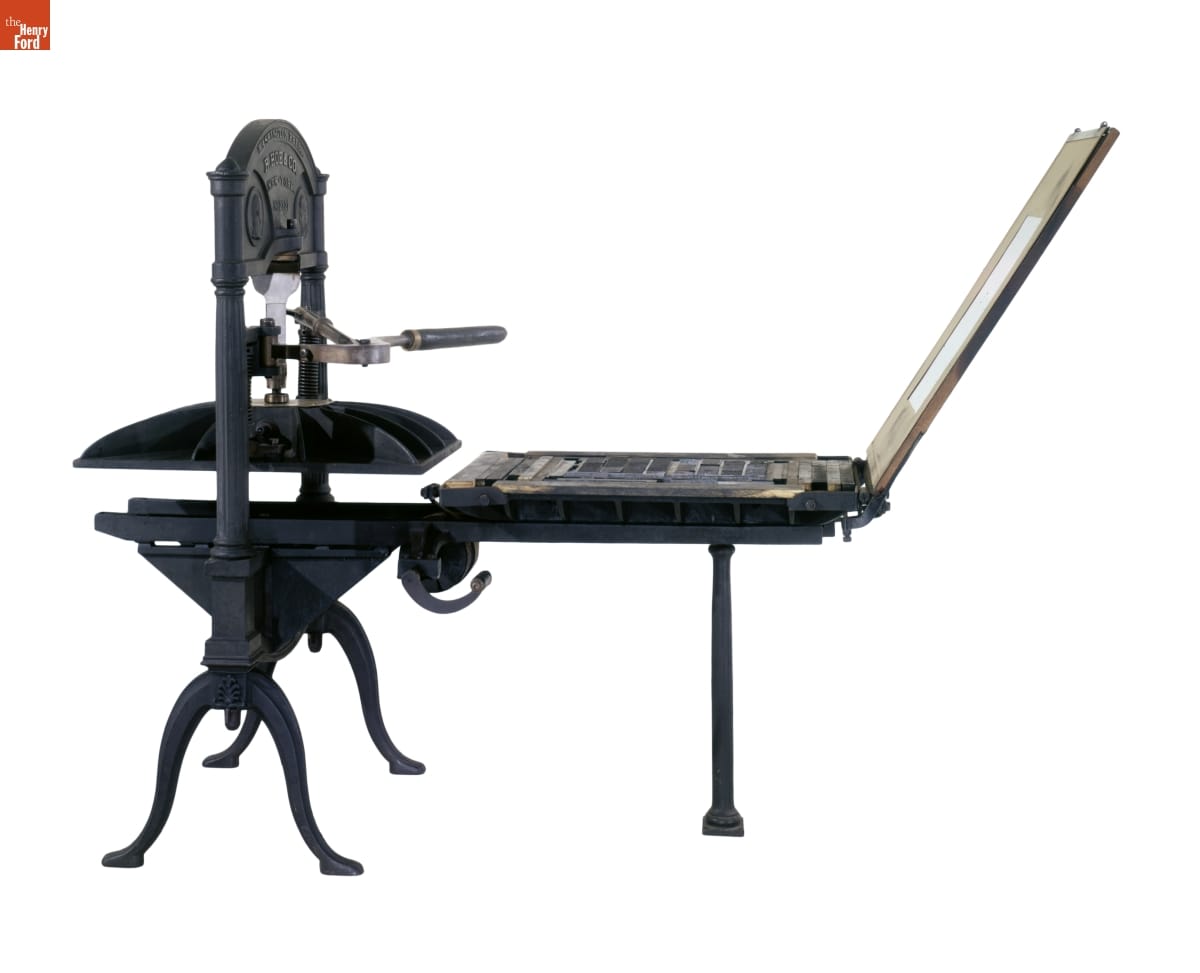
- Washington Press, circa 1848 - This peripatetic press was used to print newspapers in the 19th-century American West. Washington hand presses were rugged and extremely popular; this one crossed the Isthmus of Panama on its way from New Orleans to California's gold fields. In 1851, the press's owner, John Judson Ames, started San Diego's first newspaper. The press also printed newspapers in San Bernardino and Independence, California, and in Aurora, Nevada.
- circa 1848
- Collections - Artifact
Washington Press, circa 1848
This peripatetic press was used to print newspapers in the 19th-century American West. Washington hand presses were rugged and extremely popular; this one crossed the Isthmus of Panama on its way from New Orleans to California's gold fields. In 1851, the press's owner, John Judson Ames, started San Diego's first newspaper. The press also printed newspapers in San Bernardino and Independence, California, and in Aurora, Nevada.
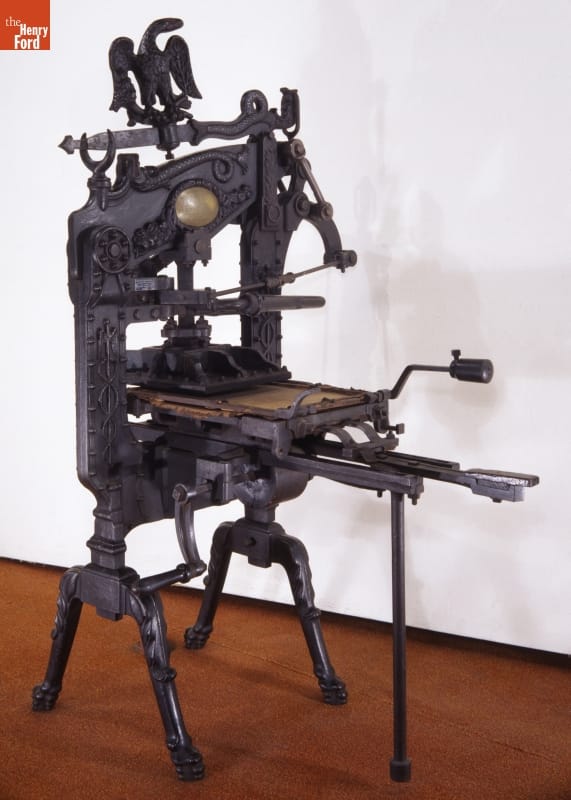
- Columbian Press, 1857 - This ornate cast iron hand press paid homage to America, but sold best in England. George Clymer developed the press and its ingenious system of levers in Philadelphia in 1813. He named it "Columbian" and decorated it with an eagle (which also served as counterweight), a horn of plenty, and other symbols of American prosperity. Our Columbian was made in England in 1857, after Clymer's death.
- 1857
- Collections - Artifact
Columbian Press, 1857
This ornate cast iron hand press paid homage to America, but sold best in England. George Clymer developed the press and its ingenious system of levers in Philadelphia in 1813. He named it "Columbian" and decorated it with an eagle (which also served as counterweight), a horn of plenty, and other symbols of American prosperity. Our Columbian was made in England in 1857, after Clymer's death.
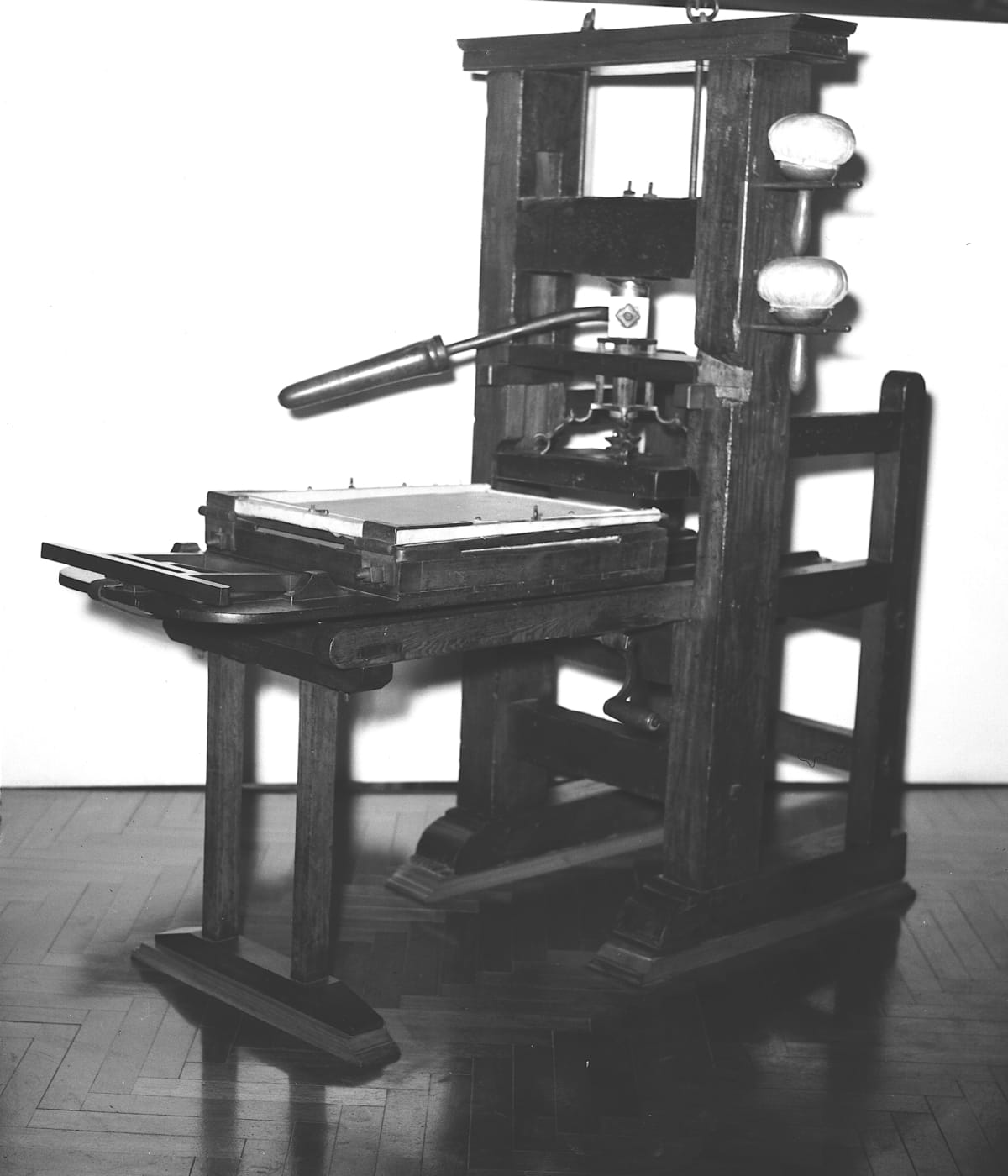
- Ramage Hand-lever Printing Press, circa 1809 - This hand-operated printing press is one of the oldest remaining in the United States. America's premier press maker, Adam Ramage, made it in Philadelphia in about 1809. He was the first American to improve printing presses and began a tradition of American innovations in printing press design. With this press, two journeymen printers printed about 250 one-sided sheets per hour.
- circa 1809
- Collections - Artifact
Ramage Hand-lever Printing Press, circa 1809
This hand-operated printing press is one of the oldest remaining in the United States. America's premier press maker, Adam Ramage, made it in Philadelphia in about 1809. He was the first American to improve printing presses and began a tradition of American innovations in printing press design. With this press, two journeymen printers printed about 250 one-sided sheets per hour.