
Search
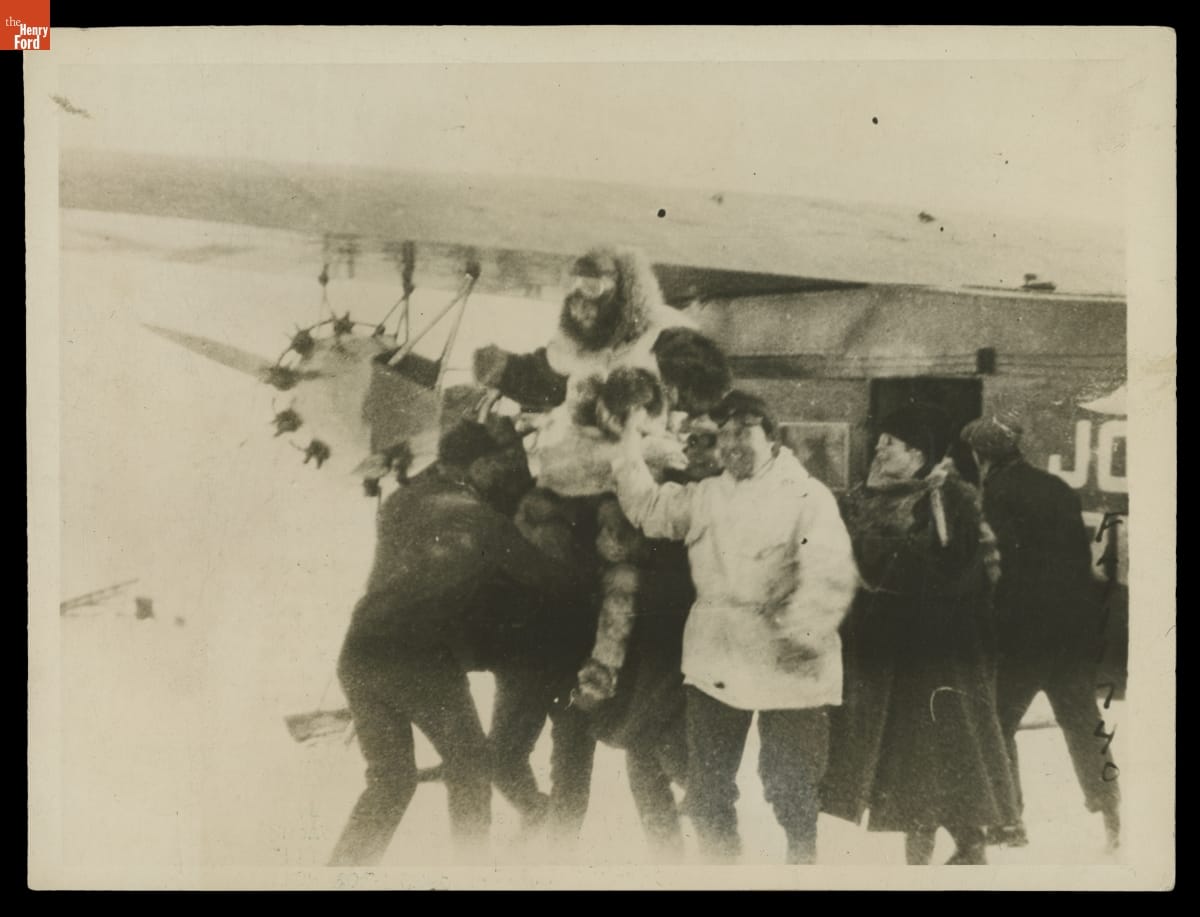
- Richard E. Byrd, Floyd Bennett, and Others Celebrate the Arctic Expedition beside the Fokker Airplane, the "Josephine Ford," June 2, 1926 - On May 9, 1926, explorer Richard Byrd and pilot Floyd Bennett flew toward the North Pole in a Fokker F.VII Tri-Motor airplane. Edsel Ford provided considerable financial support to the expedition, and Byrd named his airplane <em>Josephine Ford</em> to honor Mr. Ford's young daughter. Though Byrd is generally credited with reaching the pole, controversy remains.
- June 02, 1926
- Collections - Artifact
Richard E. Byrd, Floyd Bennett, and Others Celebrate the Arctic Expedition beside the Fokker Airplane, the "Josephine Ford," June 2, 1926
On May 9, 1926, explorer Richard Byrd and pilot Floyd Bennett flew toward the North Pole in a Fokker F.VII Tri-Motor airplane. Edsel Ford provided considerable financial support to the expedition, and Byrd named his airplane Josephine Ford to honor Mr. Ford's young daughter. Though Byrd is generally credited with reaching the pole, controversy remains.
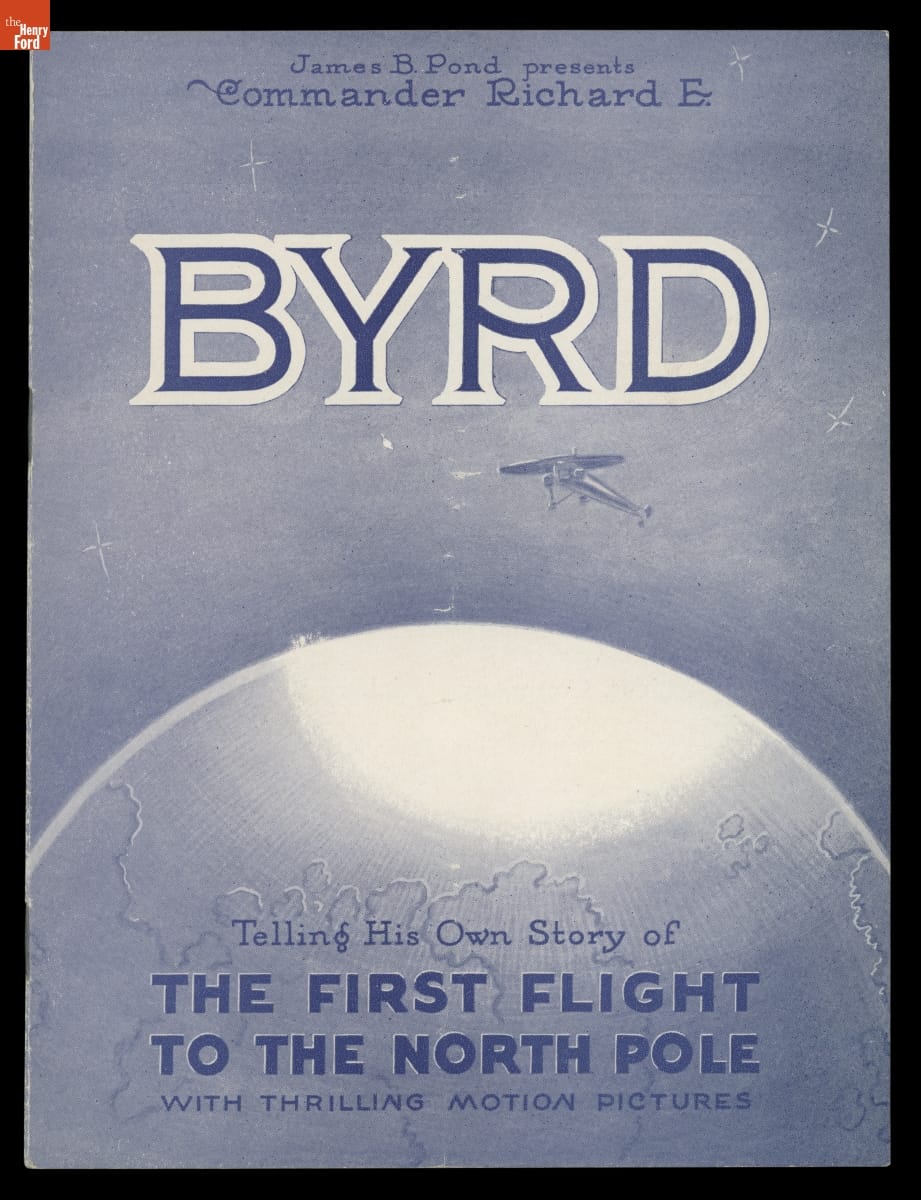
- Commander Richard E. Byrd: Telling His Own Story of the First Flight to the North Pole, June 25, 1926 - On May 9, 1926, explorer Richard Byrd and pilot Floyd Bennett flew toward the North Pole in the Fokker Tri-Motor <em>Josephine Ford</em>. Following their flight, Byrd and Bennett returned to the United States as heroes, and Byrd presented lectures recounting the polar journey. Though Byrd is generally credited with success, controversy remains over whether he reached the actual pole.
- June 25, 1926
- Collections - Artifact
Commander Richard E. Byrd: Telling His Own Story of the First Flight to the North Pole, June 25, 1926
On May 9, 1926, explorer Richard Byrd and pilot Floyd Bennett flew toward the North Pole in the Fokker Tri-Motor Josephine Ford. Following their flight, Byrd and Bennett returned to the United States as heroes, and Byrd presented lectures recounting the polar journey. Though Byrd is generally credited with success, controversy remains over whether he reached the actual pole.
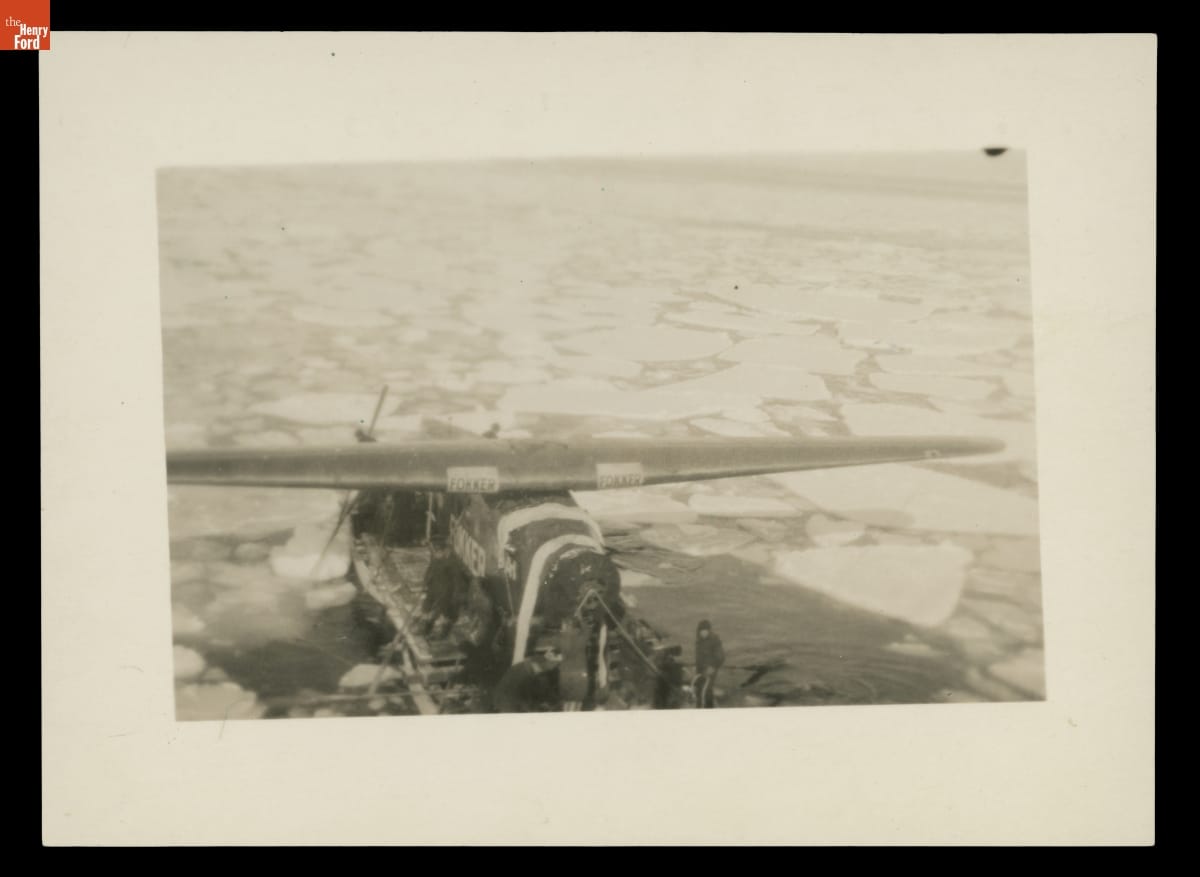
- The Fokker Airplane "Josephine Ford" in the Water during the Byrd Arctic Expedition, 1926 - Richard Byrd led an expedition to the Arctic in 1926, highlighted by a North Pole flight on May 9. When Byrd's ship <em>Chantier</em> arrived at Spitzbergen, Norway -- his base of operations -- a disabled vessel blocked the harbor's single pier. Undiscouraged, Byrd's crew built a raft from several small boats. They moved Byrd's airplane <em>Josephine Ford</em> ashore on their makeshift ferry.
- 1926
- Collections - Artifact
The Fokker Airplane "Josephine Ford" in the Water during the Byrd Arctic Expedition, 1926
Richard Byrd led an expedition to the Arctic in 1926, highlighted by a North Pole flight on May 9. When Byrd's ship Chantier arrived at Spitzbergen, Norway -- his base of operations -- a disabled vessel blocked the harbor's single pier. Undiscouraged, Byrd's crew built a raft from several small boats. They moved Byrd's airplane Josephine Ford ashore on their makeshift ferry.
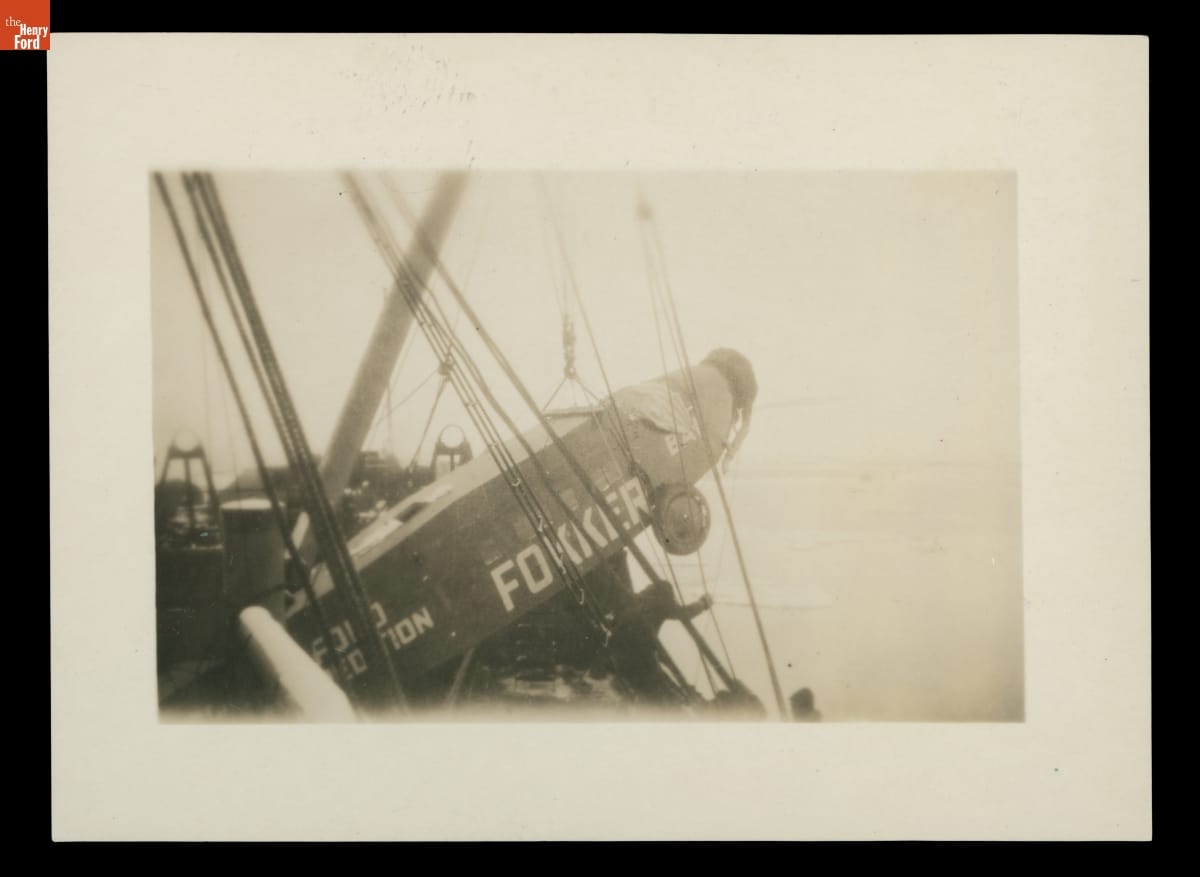
- The Fokker Airplane "Josephine Ford" during the Byrd Arctic Expedition, 1926 - Richard Byrd led an expedition to the Arctic in 1926, highlighted by a North Pole flight on May 9. When Byrd's ship <em>Chantier</em> arrived at Spitzbergen, Norway -- his base of operations -- a disabled vessel blocked the harbor's single pier. Undiscouraged, Byrd's crew built a raft from several small boats. They moved Byrd's airplane <em>Josephine Ford</em> ashore on their makeshift ferry.
- 1926
- Collections - Artifact
The Fokker Airplane "Josephine Ford" during the Byrd Arctic Expedition, 1926
Richard Byrd led an expedition to the Arctic in 1926, highlighted by a North Pole flight on May 9. When Byrd's ship Chantier arrived at Spitzbergen, Norway -- his base of operations -- a disabled vessel blocked the harbor's single pier. Undiscouraged, Byrd's crew built a raft from several small boats. They moved Byrd's airplane Josephine Ford ashore on their makeshift ferry.
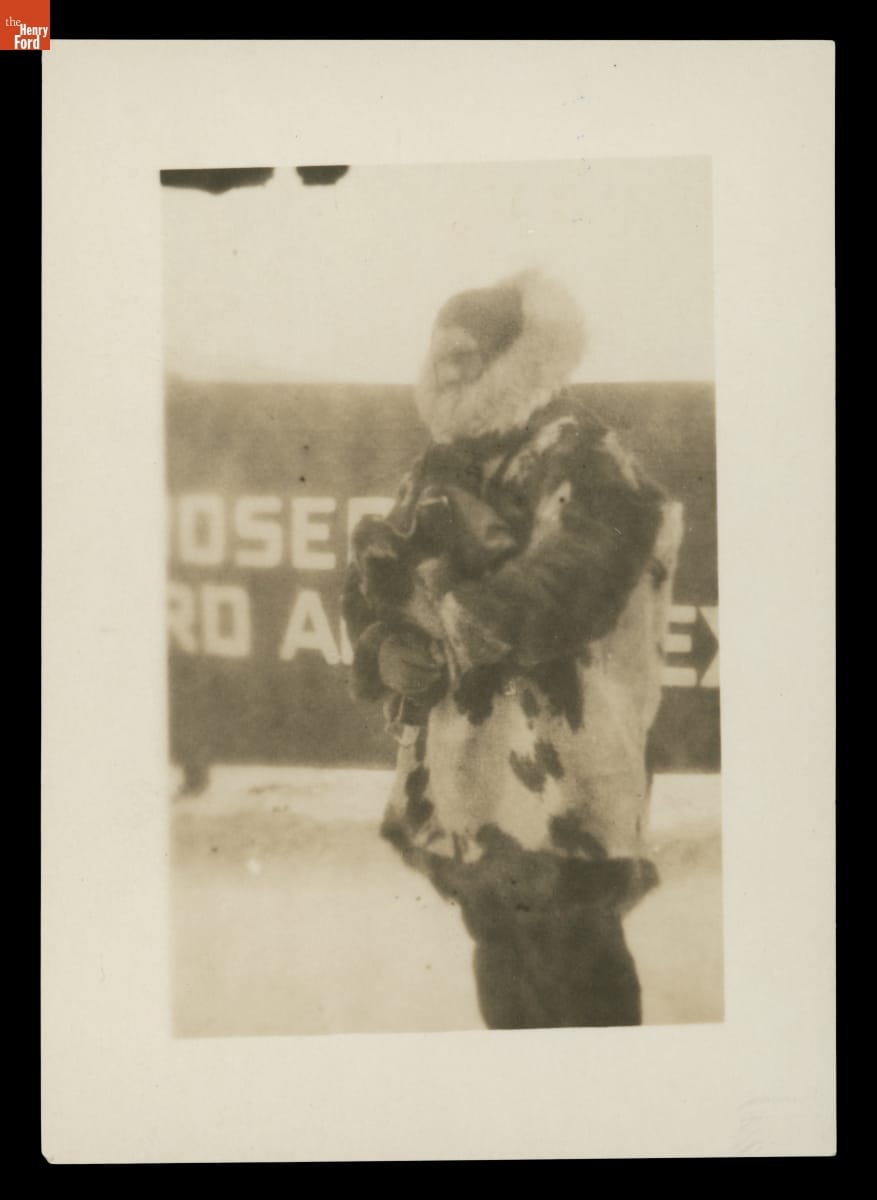
- Floyd Bennett with the Fokker Airplane, "Josephine Ford," during the Arctic Expedition, 1926 - Floyd Bennett enlisted in the U.S. Navy in 1917 and learned to fly. He joined explorer Richard Byrd on a trek to Greenland in 1925, and he piloted the <em>Josephine Ford</em> when it carried Byrd and Bennett toward the North Pole in 1926. Bennett died from pneumonia in 1928 -- his condition worsened by a selfless attempt to rescue stranded flyers.
- 1926
- Collections - Artifact
Floyd Bennett with the Fokker Airplane, "Josephine Ford," during the Arctic Expedition, 1926
Floyd Bennett enlisted in the U.S. Navy in 1917 and learned to fly. He joined explorer Richard Byrd on a trek to Greenland in 1925, and he piloted the Josephine Ford when it carried Byrd and Bennett toward the North Pole in 1926. Bennett died from pneumonia in 1928 -- his condition worsened by a selfless attempt to rescue stranded flyers.
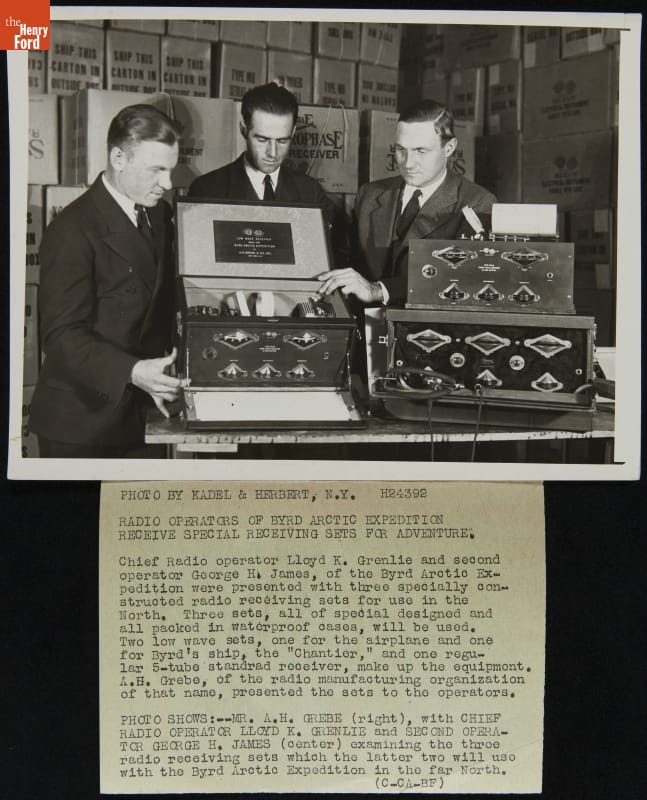
- A. H. Grebe Presents Radio Operators with Radio Receivers for Use on the Byrd Arctic Expedition, 1926 - Richard E. Byrd led an expedition to the Arctic in 1926, highlighted by a flight toward the North Pole on May 9. Special shortwave radio equipment allowed members of Byrd's team to communicate between their support ship, <em>Chantier</em>, and their Fokker Tri-Motor airplane, <em>Josephine Ford</em>. Though Byrd is generally credited with reaching the pole, controversy remains.
- 1926
- Collections - Artifact
A. H. Grebe Presents Radio Operators with Radio Receivers for Use on the Byrd Arctic Expedition, 1926
Richard E. Byrd led an expedition to the Arctic in 1926, highlighted by a flight toward the North Pole on May 9. Special shortwave radio equipment allowed members of Byrd's team to communicate between their support ship, Chantier, and their Fokker Tri-Motor airplane, Josephine Ford. Though Byrd is generally credited with reaching the pole, controversy remains.
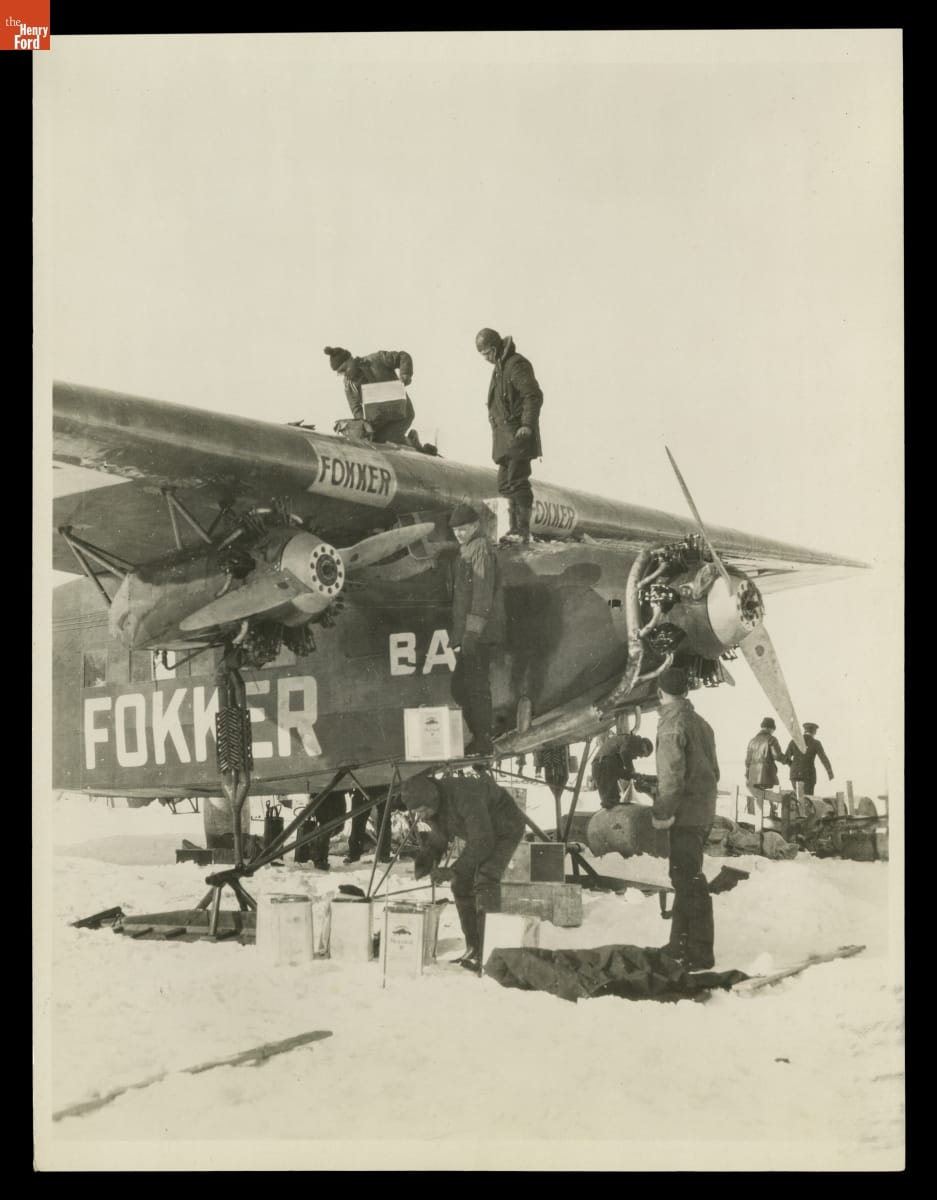
- Crew Member Adding Fuel to the "Josephine Ford," the Fokker Airplane Flown on the Byrd Arctic Expedition, 1926 - On May 9, 1926, explorer Richard Byrd and pilot Floyd Bennett flew toward the North Pole in a Fokker F.VII Tri-Motor airplane. Edsel Ford provided considerable financial support to the expedition, and Byrd named his airplane <em>Josephine Ford</em> to honor Mr. Ford's young daughter. Though Byrd is generally credited with reaching the pole, controversy remains.
- 1926
- Collections - Artifact
Crew Member Adding Fuel to the "Josephine Ford," the Fokker Airplane Flown on the Byrd Arctic Expedition, 1926
On May 9, 1926, explorer Richard Byrd and pilot Floyd Bennett flew toward the North Pole in a Fokker F.VII Tri-Motor airplane. Edsel Ford provided considerable financial support to the expedition, and Byrd named his airplane Josephine Ford to honor Mr. Ford's young daughter. Though Byrd is generally credited with reaching the pole, controversy remains.
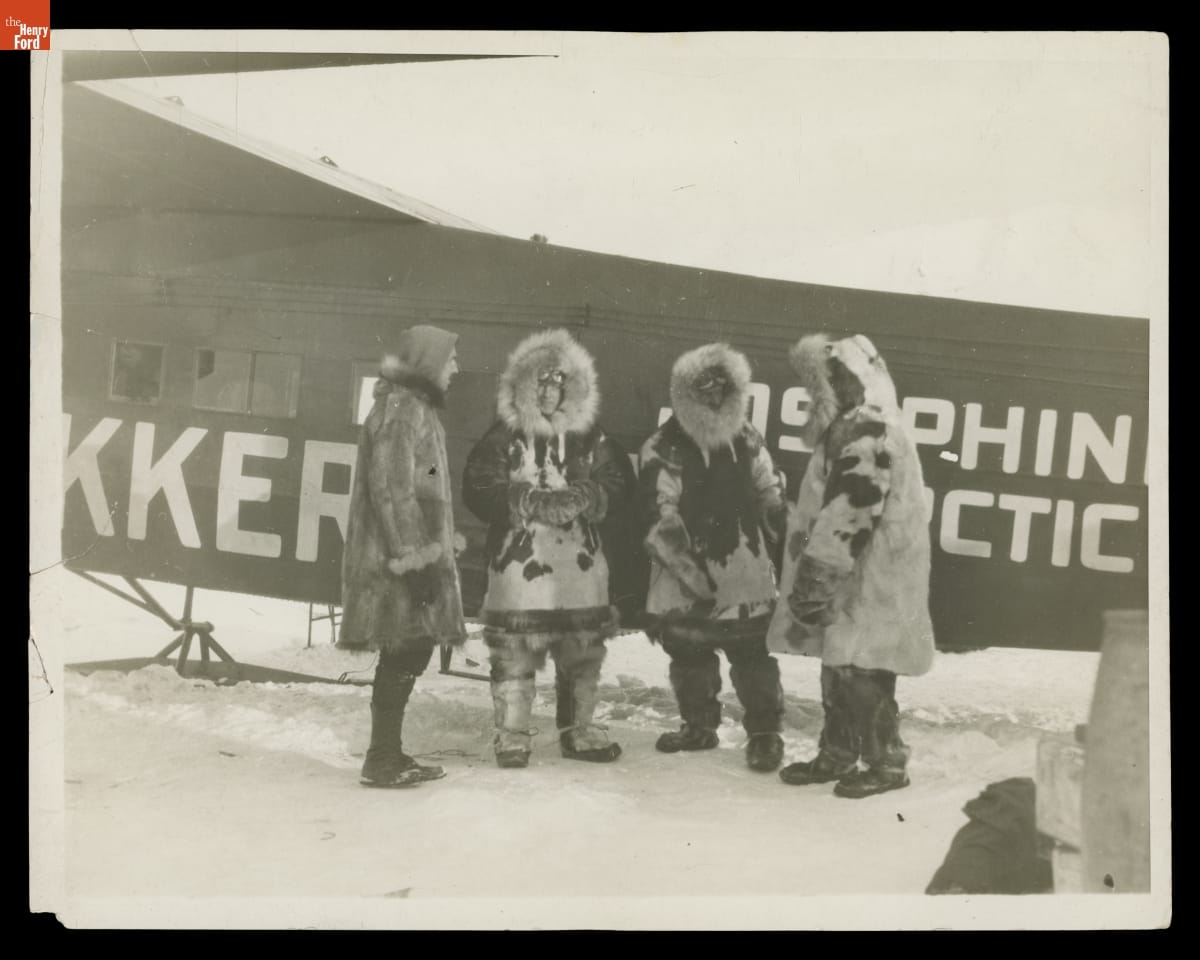
- Four Members of the Byrd Arctic Expedition Crew in Front of the Fokker Airplane, the "Josephine Ford," May 1926 - On May 9, 1926, explorer Richard Byrd and pilot Floyd Bennett flew toward the North Pole in a Fokker F.VII Tri-Motor airplane. Edsel Ford provided considerable financial support to the expedition, and Byrd named his airplane <em>Josephine Ford</em> to honor Mr. Ford's young daughter. Though Byrd is generally credited with reaching the pole, controversy remains.
- May 01, 1926
- Collections - Artifact
Four Members of the Byrd Arctic Expedition Crew in Front of the Fokker Airplane, the "Josephine Ford," May 1926
On May 9, 1926, explorer Richard Byrd and pilot Floyd Bennett flew toward the North Pole in a Fokker F.VII Tri-Motor airplane. Edsel Ford provided considerable financial support to the expedition, and Byrd named his airplane Josephine Ford to honor Mr. Ford's young daughter. Though Byrd is generally credited with reaching the pole, controversy remains.
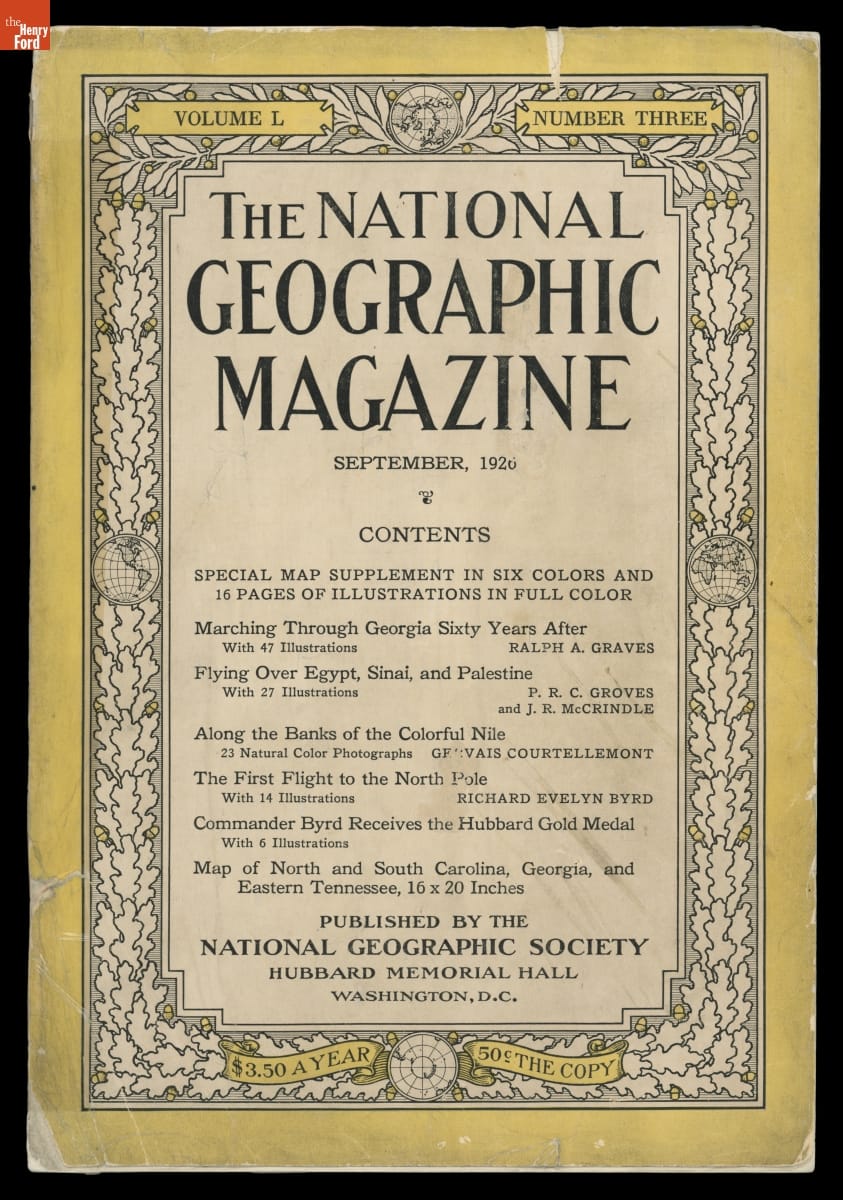
- The National Geographic Magazine, Volume L, Number Three, September 1926 - On May 9, 1926, explorer Richard Byrd and pilot Floyd Bennett took off from Spitzbergen, Norway, on a round-trip flight toward the North Pole in the Fokker Tri-Motor <em>Josephine Ford</em>. Byrd recounted their journey in the September 1926 issue of <em>National Geographic</em>. Though Byrd is generally credited with success, controversy remains over whether he and Bennett reached the actual pole.
- September 01, 1926
- Collections - Artifact
The National Geographic Magazine, Volume L, Number Three, September 1926
On May 9, 1926, explorer Richard Byrd and pilot Floyd Bennett took off from Spitzbergen, Norway, on a round-trip flight toward the North Pole in the Fokker Tri-Motor Josephine Ford. Byrd recounted their journey in the September 1926 issue of National Geographic. Though Byrd is generally credited with success, controversy remains over whether he and Bennett reached the actual pole.
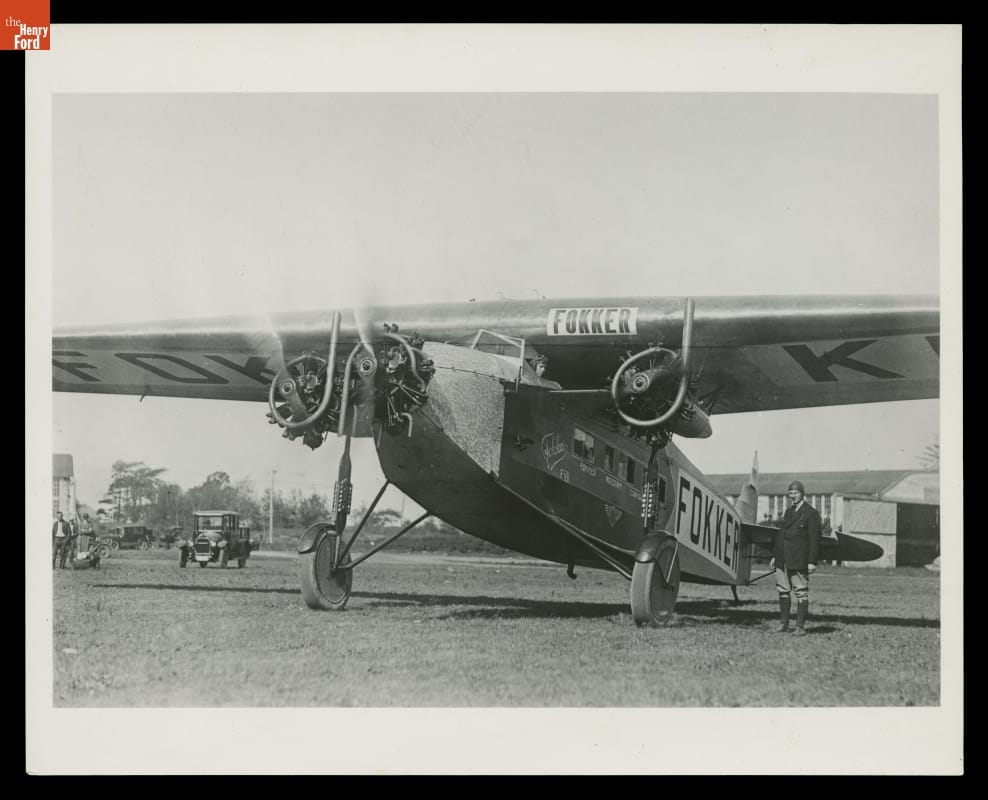
- 1925 Fokker F. VII Tri-Motor Airplane at the National Air Tour, Ford Airport, Dearborn, Michigan - Dutch aircraft designer Anthony Fokker set himself apart at the Ford-sponsored 1925 National Air Tour. While other manufacturers participated with single-engine airplanes, Fokker entered a tri-motor craft in the competition. Fokker saw great publicity value in the tour and had the "FOKKER" name painted prominently on his airplane. With their increased range and dependability, Fokker Tri-Motors became popular with early airlines.
- October 04, 1925
- Collections - Artifact
1925 Fokker F. VII Tri-Motor Airplane at the National Air Tour, Ford Airport, Dearborn, Michigan
Dutch aircraft designer Anthony Fokker set himself apart at the Ford-sponsored 1925 National Air Tour. While other manufacturers participated with single-engine airplanes, Fokker entered a tri-motor craft in the competition. Fokker saw great publicity value in the tour and had the "FOKKER" name painted prominently on his airplane. With their increased range and dependability, Fokker Tri-Motors became popular with early airlines.