
Search
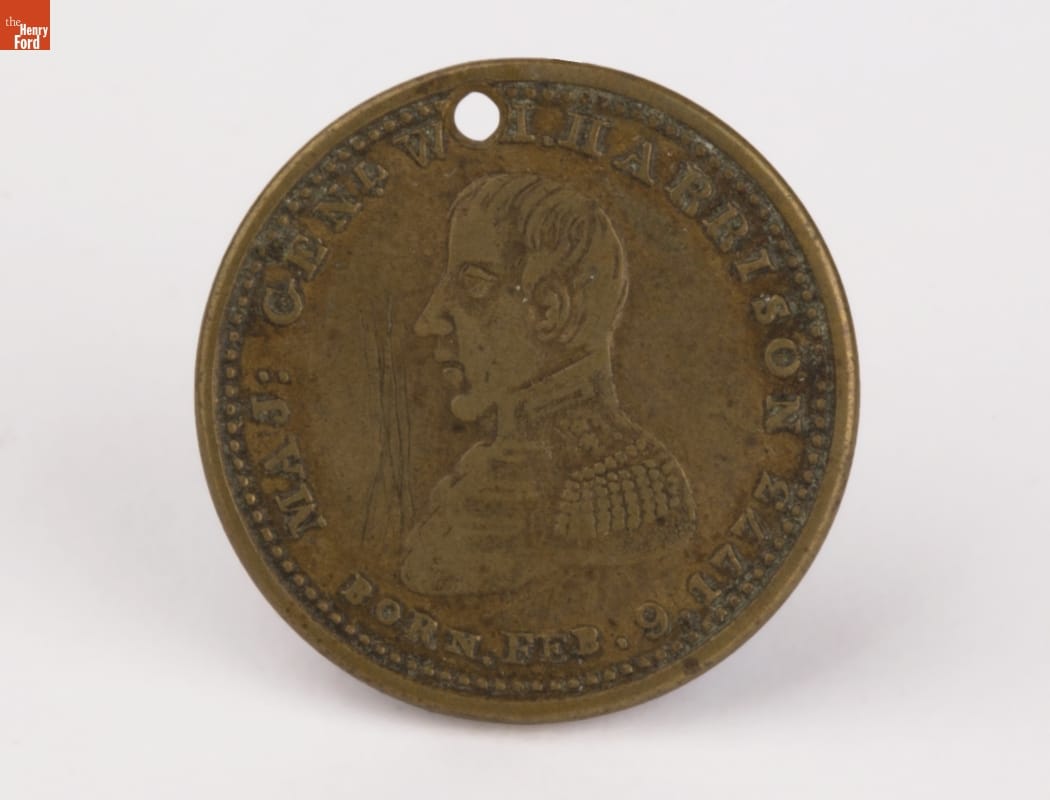
- William Henry Harrison Campaign Medal, 1840 - William Henry Harrison gained national fame in 1811 when he defeated a band of Native Americans at Tippecanoe near present-day Lafayette, Indiana. Though Harrison retired from the army in 1814, most Americans remembered his military service. When he ran for president in 1840, campaign slogans, songs and materials, such as this coin, constantly referred to Harrison as Tippecanoe.
- 1840
- Collections - Artifact
William Henry Harrison Campaign Medal, 1840
William Henry Harrison gained national fame in 1811 when he defeated a band of Native Americans at Tippecanoe near present-day Lafayette, Indiana. Though Harrison retired from the army in 1814, most Americans remembered his military service. When he ran for president in 1840, campaign slogans, songs and materials, such as this coin, constantly referred to Harrison as Tippecanoe.
- Music Sheet Cover, "Arouse Ye, Patriot Whigs!," 1840 -

- 1840
- Collections - Artifact
Music Sheet Cover, "Arouse Ye, Patriot Whigs!," 1840
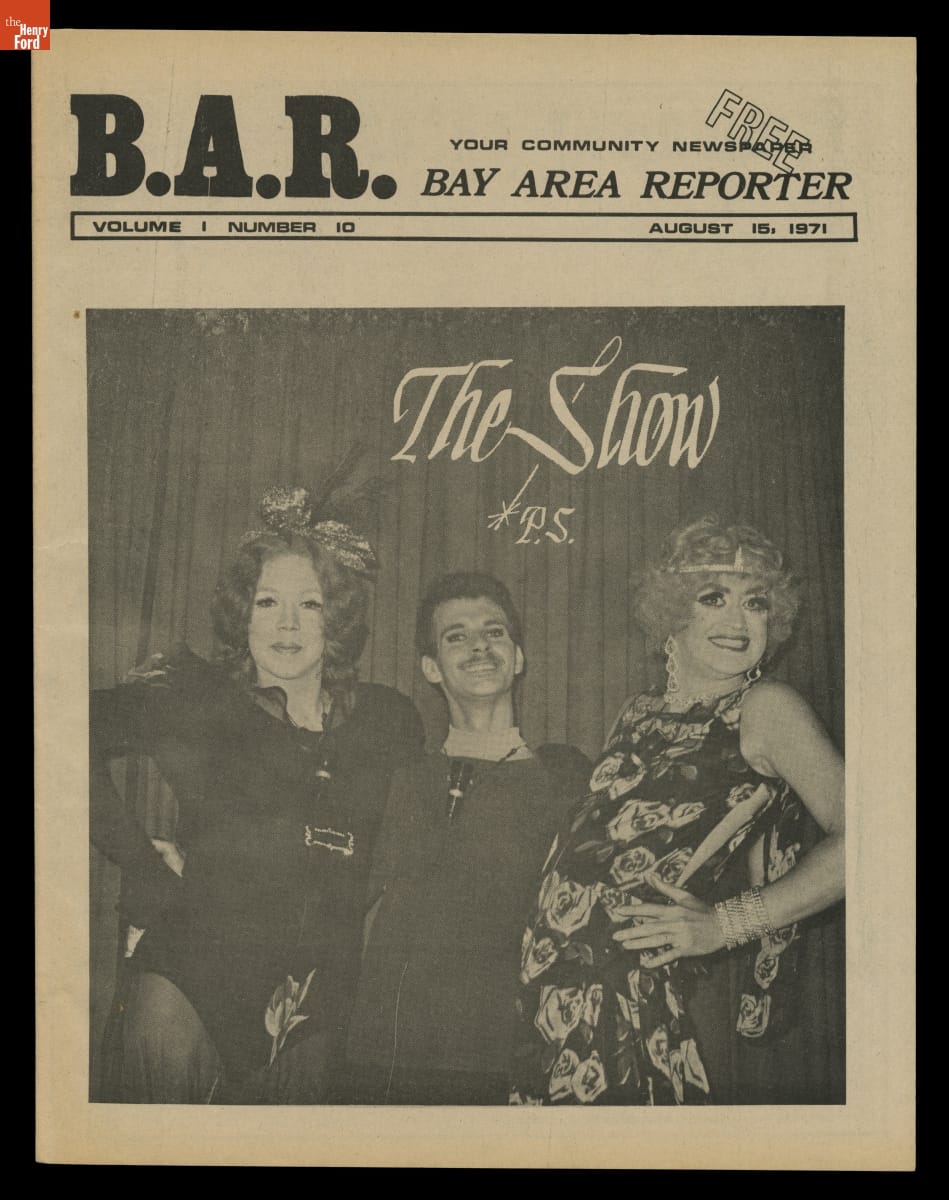
- "B.A.R.: Bay Area Reporter," Volume 1, Number 10, August 15, 1971 -
- August 15, 1971
- Collections - Artifact
"B.A.R.: Bay Area Reporter," Volume 1, Number 10, August 15, 1971
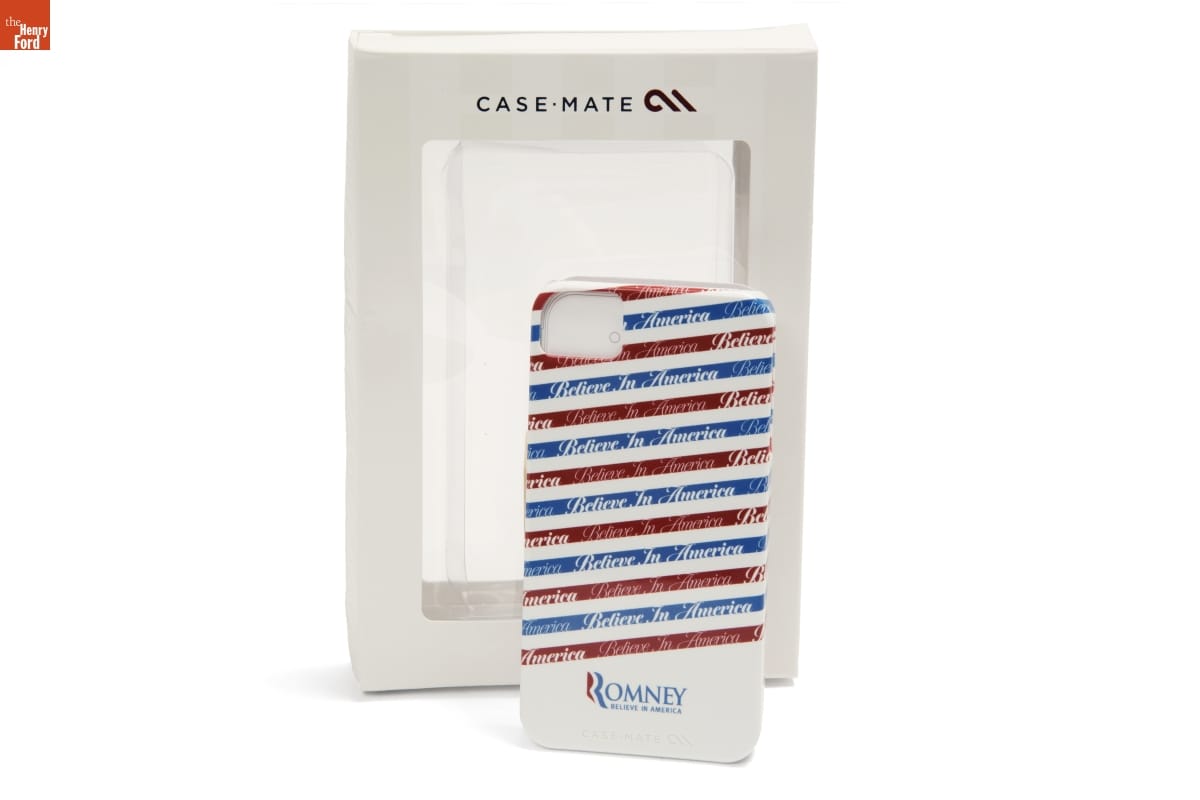
- Romney "Believe in America" iPhone Case, 2012 - Former Massachusetts governor Mitt Romney faced a field of Republican luminaries in a bruising intraparty campaign to become the Party's 2012 Presidential nominee. Republican delegates formally nominated Romney after a long primary campaign. Romney chose Wisconsin U.S. Representative Paul Ryan as his running mate. Their ticket lost to the Democratic incumbents, President Barack Obama and Vice President Joseph Biden.
- 2012
- Collections - Artifact
Romney "Believe in America" iPhone Case, 2012
Former Massachusetts governor Mitt Romney faced a field of Republican luminaries in a bruising intraparty campaign to become the Party's 2012 Presidential nominee. Republican delegates formally nominated Romney after a long primary campaign. Romney chose Wisconsin U.S. Representative Paul Ryan as his running mate. Their ticket lost to the Democratic incumbents, President Barack Obama and Vice President Joseph Biden.
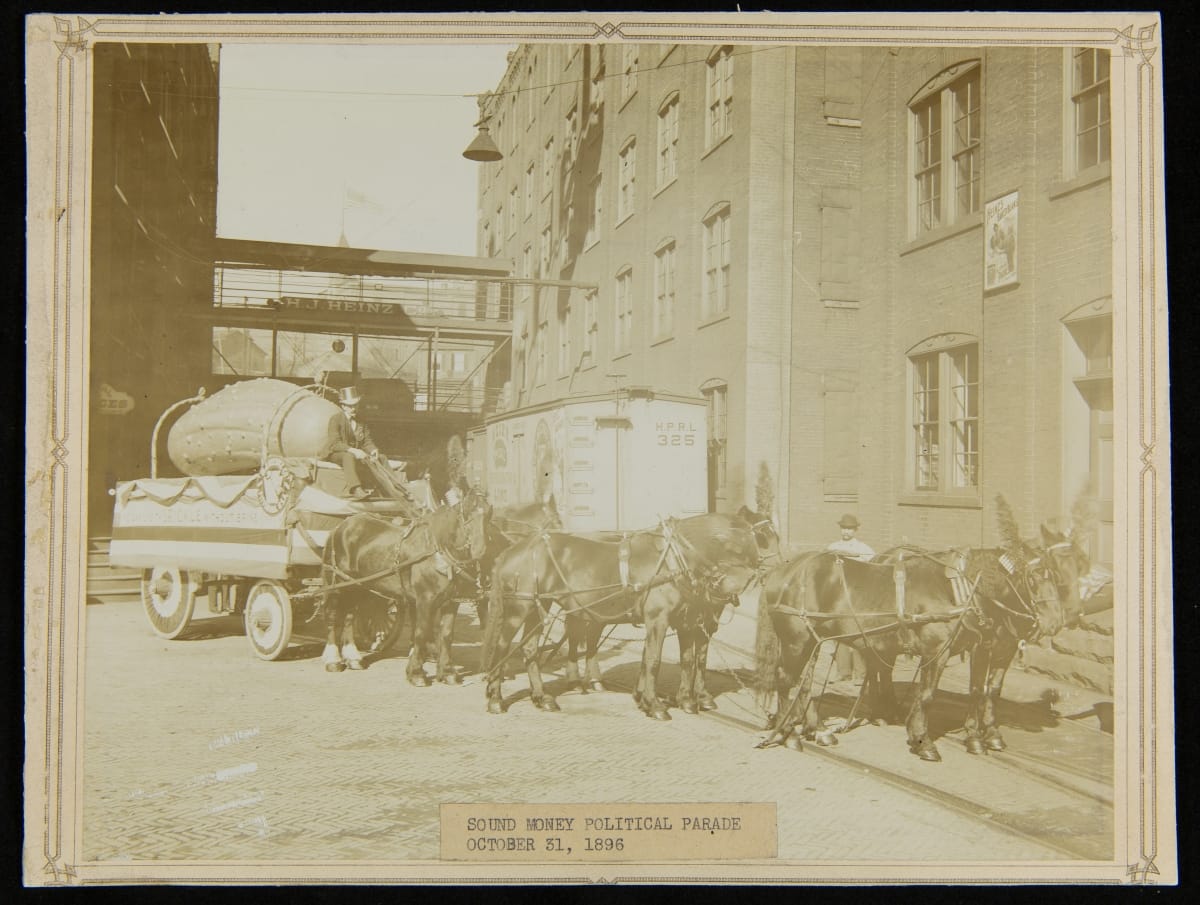
- Heinz Float for the Sound Money Political Parade in Pittsburgh, Pennsylvania, October 31, 1896 - During the 1896 election campaign, "Sound Money" political parades were held in San Francisco and New York City in support of presidential candidate William McKinley. The H.J. Heinz Company participated in the parade held in New York with this float featuring a giant pickle. McKinley would go on to defeat candidate William Jennings Bryan to become President.
- October 31, 1896
- Collections - Artifact
Heinz Float for the Sound Money Political Parade in Pittsburgh, Pennsylvania, October 31, 1896
During the 1896 election campaign, "Sound Money" political parades were held in San Francisco and New York City in support of presidential candidate William McKinley. The H.J. Heinz Company participated in the parade held in New York with this float featuring a giant pickle. McKinley would go on to defeat candidate William Jennings Bryan to become President.
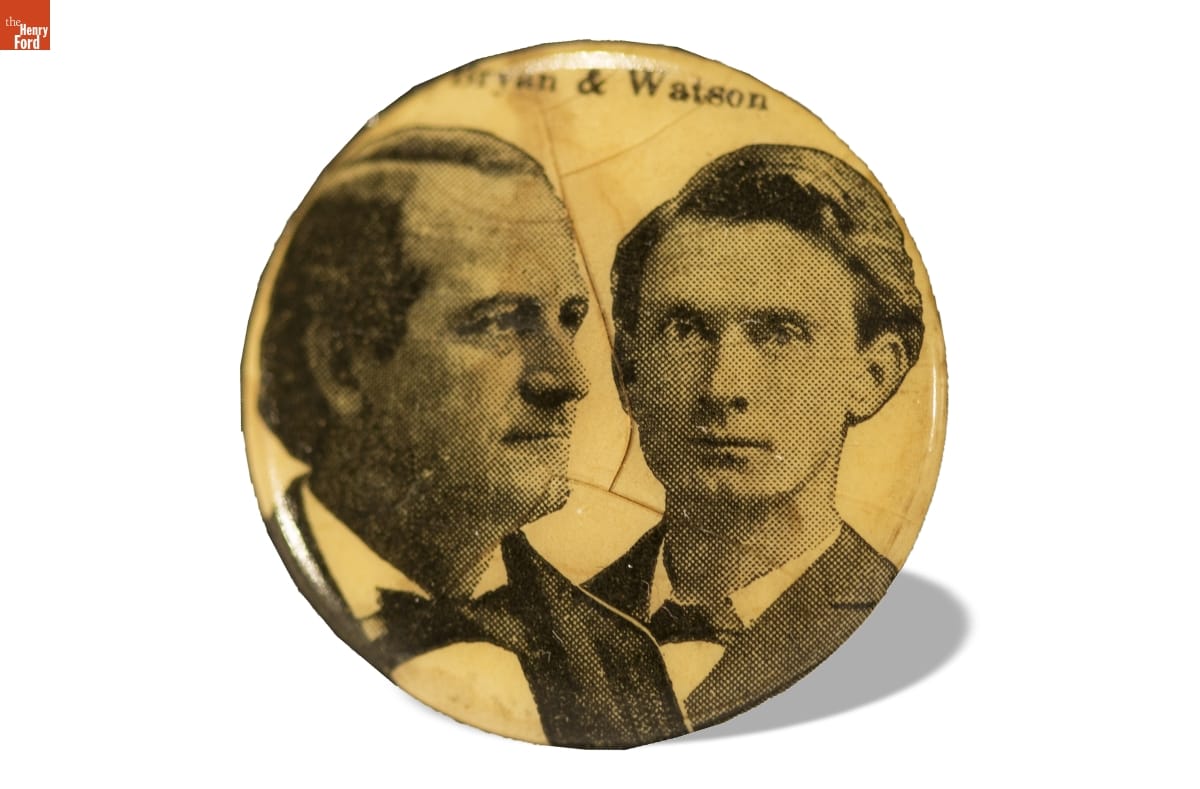
- Bryan-Watson Campaign Button, 1896 - In 1896, William Jennings Bryan captured both the Democratic and Populist Party's presidential nominations. Each party, however, nominated their own vice presidential candidates. The Democrats chose Arthur Sewall. The Populists chose Thomas E. Watson--pictured with Bryan on this campaign button. Neither ticket won. Bryan lost to the Republican nominee, William McKinley.
- 1896
- Collections - Artifact
Bryan-Watson Campaign Button, 1896
In 1896, William Jennings Bryan captured both the Democratic and Populist Party's presidential nominations. Each party, however, nominated their own vice presidential candidates. The Democrats chose Arthur Sewall. The Populists chose Thomas E. Watson--pictured with Bryan on this campaign button. Neither ticket won. Bryan lost to the Republican nominee, William McKinley.
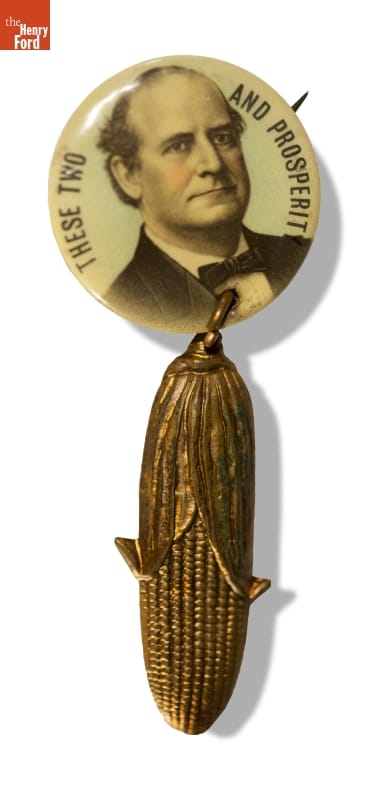
- William Bryan Campaign Button, 1908 - William Jennings Bryan made his third and last attempt to become president in 1908. Bryan and his running mate, Indiana Senator John Kern, tried to distinguish themselves from their Republican opponents by championing a variety of domestic reforms. It didn't work. Voters chose the safe, well-qualified William Howard Taft -- President Roosevelt's hand-picked successor.
- 1908
- Collections - Artifact
William Bryan Campaign Button, 1908
William Jennings Bryan made his third and last attempt to become president in 1908. Bryan and his running mate, Indiana Senator John Kern, tried to distinguish themselves from their Republican opponents by championing a variety of domestic reforms. It didn't work. Voters chose the safe, well-qualified William Howard Taft -- President Roosevelt's hand-picked successor.
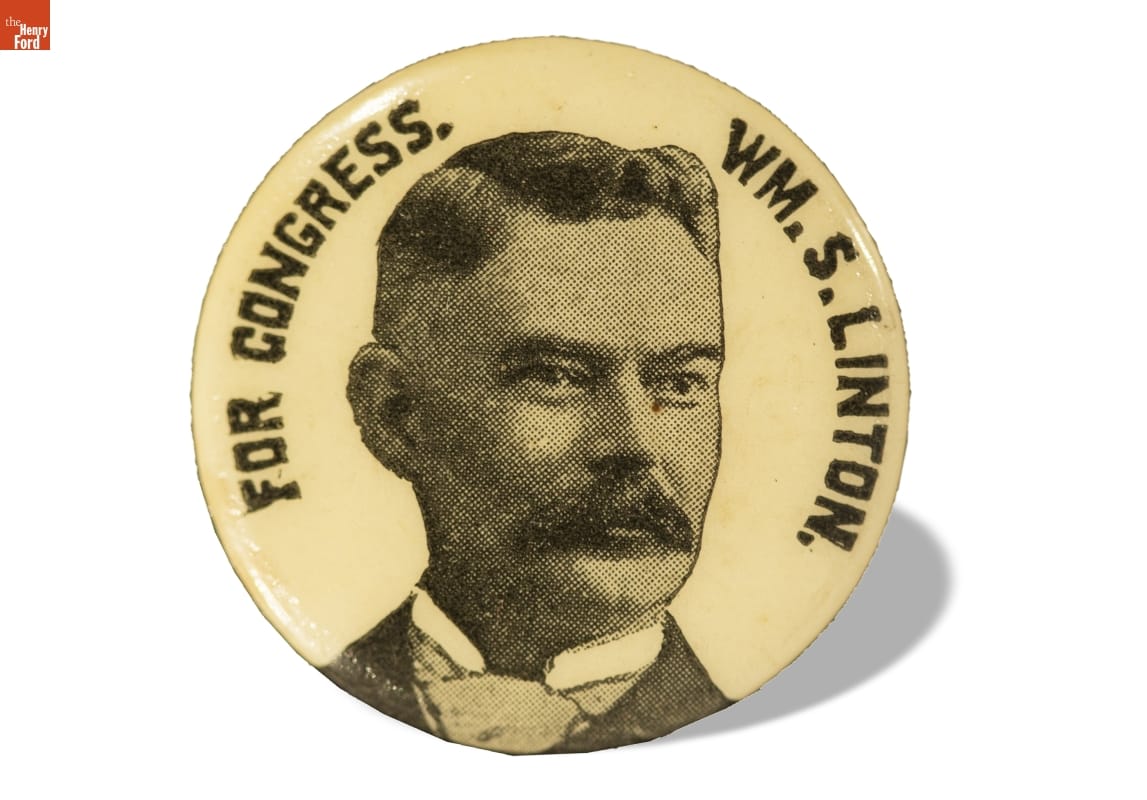
- William Linton Campaign Button, 1896 -
- 1896
- Collections - Artifact
William Linton Campaign Button, 1896
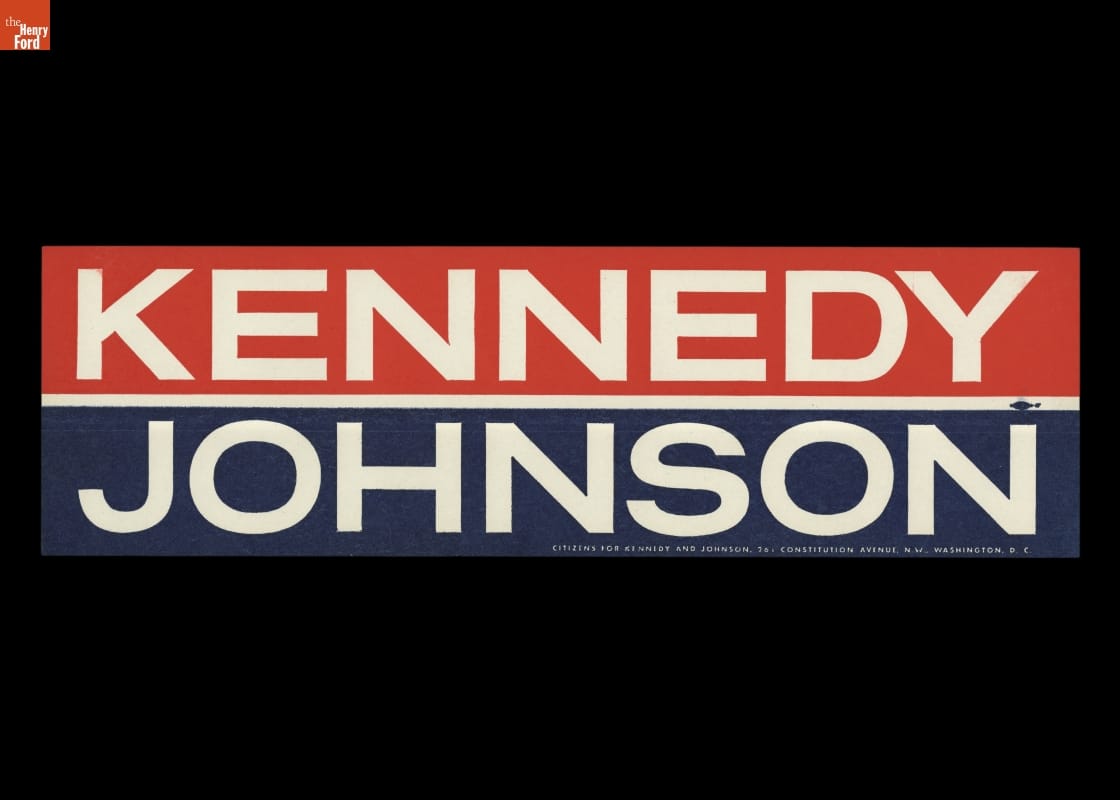
- Political Campaign Bumper Sticker, "Kennedy / Johnson," 1960 - This bumper sticker was produced for the 1960 Kennedy-Johnson presidential campaign. After John F. Kennedy defeated Texas Senator Lyndon B. Johnson in the 1960 Democratic primary, Kennedy named Johnson as his running mate. Johnson's addition brought on board an experienced old-school politician, and also provided a better chance of victory in the key swing states.
- 1960
- Collections - Artifact
Political Campaign Bumper Sticker, "Kennedy / Johnson," 1960
This bumper sticker was produced for the 1960 Kennedy-Johnson presidential campaign. After John F. Kennedy defeated Texas Senator Lyndon B. Johnson in the 1960 Democratic primary, Kennedy named Johnson as his running mate. Johnson's addition brought on board an experienced old-school politician, and also provided a better chance of victory in the key swing states.
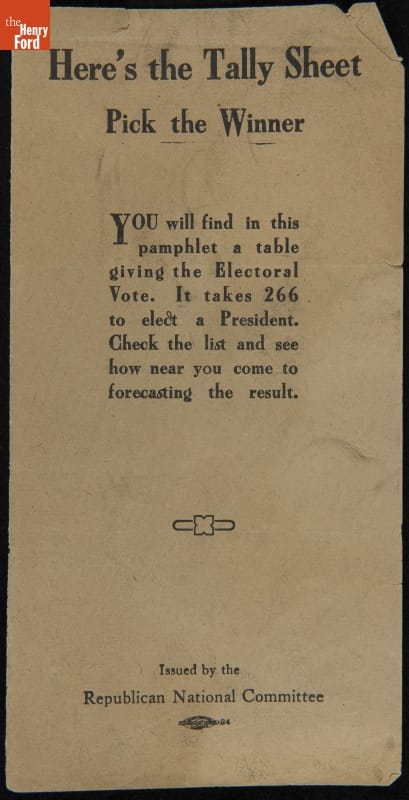
- "Here's the Tally Sheet Pick the Winner," 1916 Presidential Election - In 1916, Republicans nominated Charles Evans Hughes for president. Hughes, an Associate Justice of the Supreme Court, appealed to Republican leaders looking to unite the party after its conservative-progressive split in 1912. This brochure touted Hughes' progressive labor record--a tactic to lure voters away from Democrat Woodrow Wilson, the equally progressive incumbent president. It almost worked--Hughes narrowly lost.
- 1916
- Collections - Artifact
"Here's the Tally Sheet Pick the Winner," 1916 Presidential Election
In 1916, Republicans nominated Charles Evans Hughes for president. Hughes, an Associate Justice of the Supreme Court, appealed to Republican leaders looking to unite the party after its conservative-progressive split in 1912. This brochure touted Hughes' progressive labor record--a tactic to lure voters away from Democrat Woodrow Wilson, the equally progressive incumbent president. It almost worked--Hughes narrowly lost.