
Search
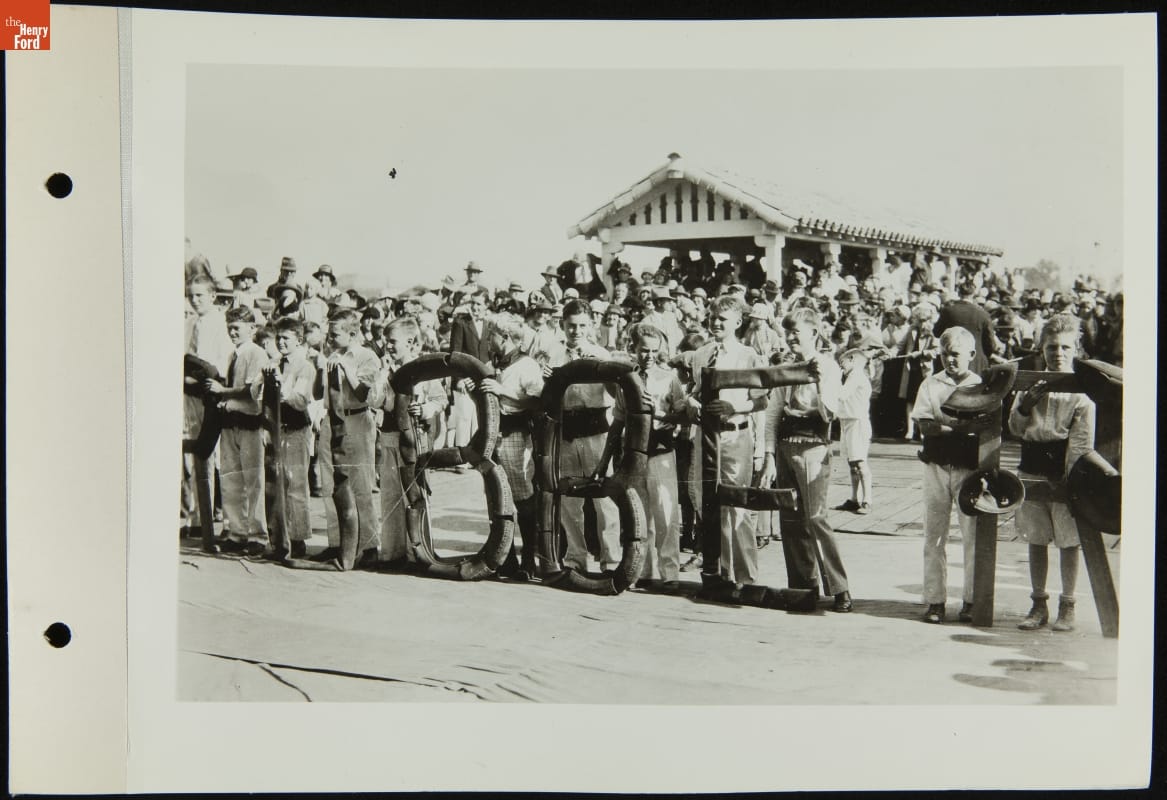
- Thomas Edison's 81st Birthday at Fort Myers, Florida, Site of Rubber Plant Experimentation, 1928 - In the 1920s, Thomas Edison began his search for a home-grown source of rubber. The U.S. imported rubber from Southeast Asia and the East Indies and Edison wanted a ready source in case America's supply was cut off. Edison experimented with a variety of plants at his Fort Myers, Florida, and West Orange, New Jersey, laboratories. Goldenrod proved most promising.
- February 11, 1928
- Collections - Artifact
Thomas Edison's 81st Birthday at Fort Myers, Florida, Site of Rubber Plant Experimentation, 1928
In the 1920s, Thomas Edison began his search for a home-grown source of rubber. The U.S. imported rubber from Southeast Asia and the East Indies and Edison wanted a ready source in case America's supply was cut off. Edison experimented with a variety of plants at his Fort Myers, Florida, and West Orange, New Jersey, laboratories. Goldenrod proved most promising.
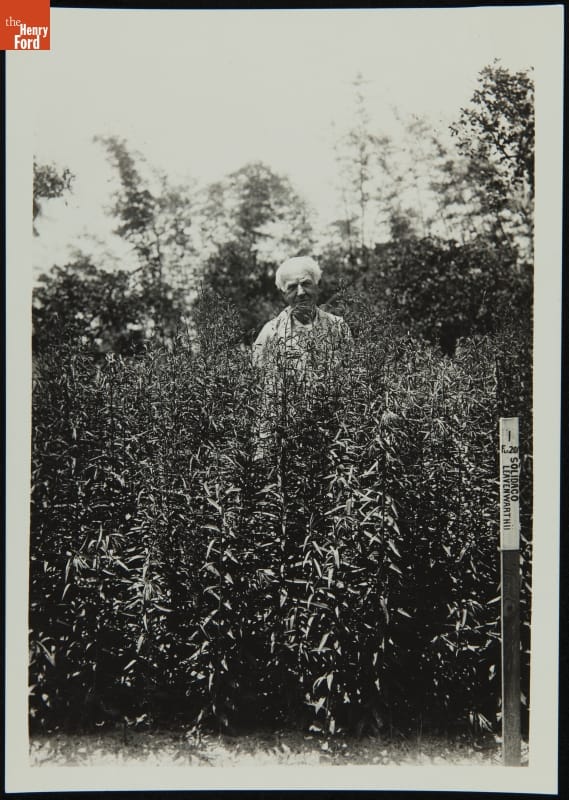
- Thomas Edison Experimenting with Goldenrod as an Alternative Source of Rubber, Florida, 1929 - In the 1920s, Thomas Edison began his search for a home-grown source of rubber. The U.S. imported rubber from Southeast Asia and the East Indies and Edison wanted a ready source in case America's supply was cut off. Edison experimented with a variety of plants at his Fort Myers, Florida, and West Orange, New Jersey, laboratories. Goldenrod proved most promising.
- May 26, 1929
- Collections - Artifact
Thomas Edison Experimenting with Goldenrod as an Alternative Source of Rubber, Florida, 1929
In the 1920s, Thomas Edison began his search for a home-grown source of rubber. The U.S. imported rubber from Southeast Asia and the East Indies and Edison wanted a ready source in case America's supply was cut off. Edison experimented with a variety of plants at his Fort Myers, Florida, and West Orange, New Jersey, laboratories. Goldenrod proved most promising.
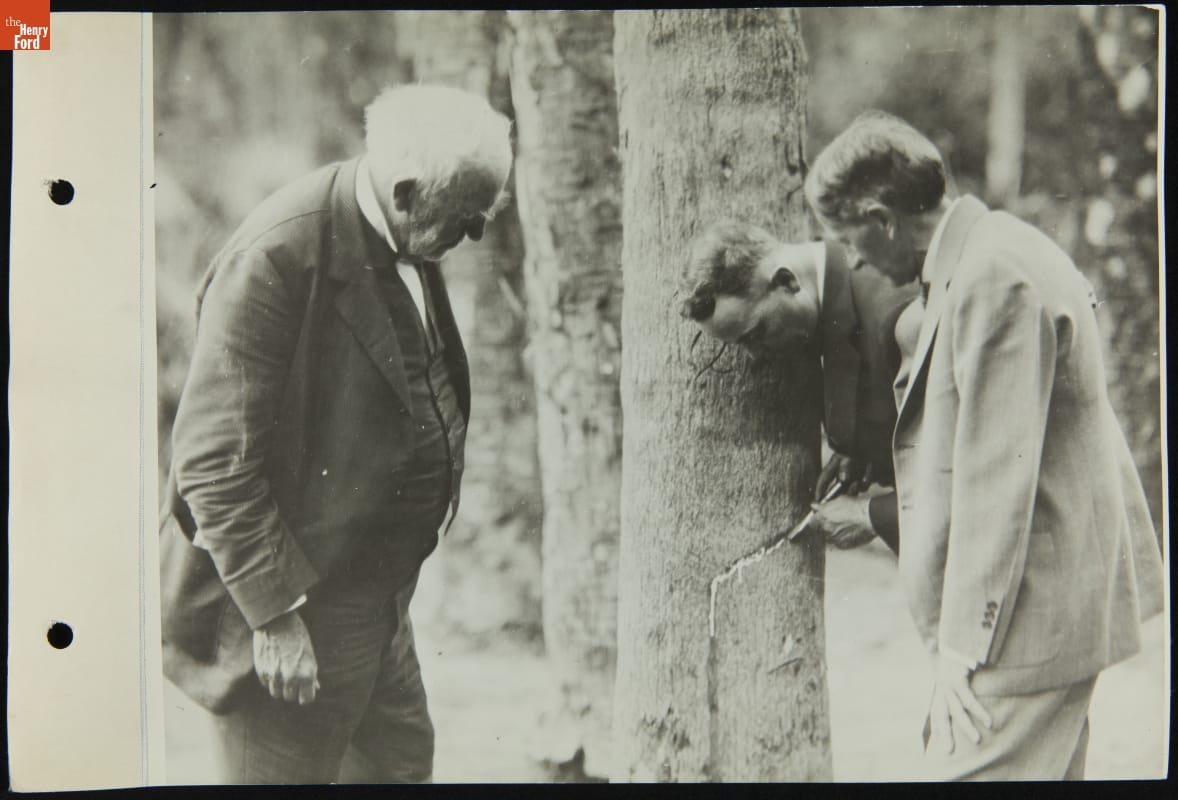
- Thomas Edison, Harvey Firestone and M. A. Cheek Tapping a Rubber-Producing Tree, Florida, 1925 - In the 1920s, Thomas Edison began his search for a home-grown source of rubber. The U.S. imported rubber from Southeast Asia and the East Indies and Edison wanted a ready source in case America's supply was cut off. Edison experimented with a variety of plants at his Fort Myers, Florida, and West Orange, New Jersey, laboratories. Goldenrod proved most promising.
- 1925
- Collections - Artifact
Thomas Edison, Harvey Firestone and M. A. Cheek Tapping a Rubber-Producing Tree, Florida, 1925
In the 1920s, Thomas Edison began his search for a home-grown source of rubber. The U.S. imported rubber from Southeast Asia and the East Indies and Edison wanted a ready source in case America's supply was cut off. Edison experimented with a variety of plants at his Fort Myers, Florida, and West Orange, New Jersey, laboratories. Goldenrod proved most promising.
- Thomas Edison's Fort Myers Laboratory - This well-equipped laboratory enabled Edison to carry on his investigations even as he seemed to seek a break from business and other matters. The first building to be completed in Greenfield Village, it had a second experimental life, offering seclusion to a select group of Ford Motor Company engineers tasked with developing the Ford V-8 engine in the early 1930s.

- 1885
- Collections - Artifact
Thomas Edison's Fort Myers Laboratory
This well-equipped laboratory enabled Edison to carry on his investigations even as he seemed to seek a break from business and other matters. The first building to be completed in Greenfield Village, it had a second experimental life, offering seclusion to a select group of Ford Motor Company engineers tasked with developing the Ford V-8 engine in the early 1930s.
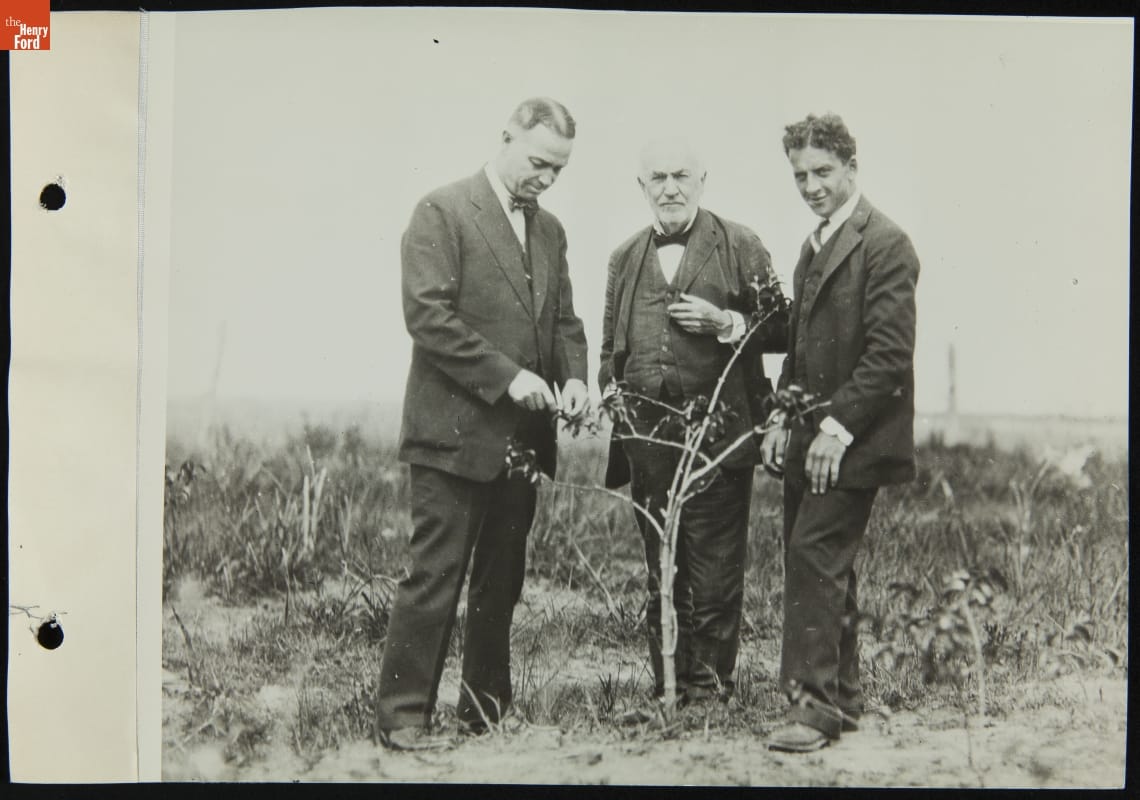
- Thomas Edison with M. A. Cheek and Russell Firestone in La Belle, Florida, 1925 - In the 1920s, Thomas Edison began his search for a home-grown source of rubber. The U.S. imported rubber from Southeast Asia and the East Indies and Edison wanted a ready source in case America's supply was cut off. Edison experimented with a variety of plants at his Fort Myers, Florida, and West Orange, New Jersey, laboratories. Goldenrod proved most promising.
- 1925
- Collections - Artifact
Thomas Edison with M. A. Cheek and Russell Firestone in La Belle, Florida, 1925
In the 1920s, Thomas Edison began his search for a home-grown source of rubber. The U.S. imported rubber from Southeast Asia and the East Indies and Edison wanted a ready source in case America's supply was cut off. Edison experimented with a variety of plants at his Fort Myers, Florida, and West Orange, New Jersey, laboratories. Goldenrod proved most promising.
- Goldenrod Plantings at the Edison Botanic Research Laboratory, Fort Myers, Florida, February 28, 1934 - In the 1920s, Thomas Edison began his search for a home-grown source of rubber. The U.S. imported rubber from Southeast Asia and the East Indies and Edison wanted a ready source in case America's supply was cut off. Edison experimented with a variety of plants at his Fort Myers, Florida, and West Orange, New Jersey, laboratories. Goldenrod proved most promising.
- February 28, 1934
- Collections - Artifact
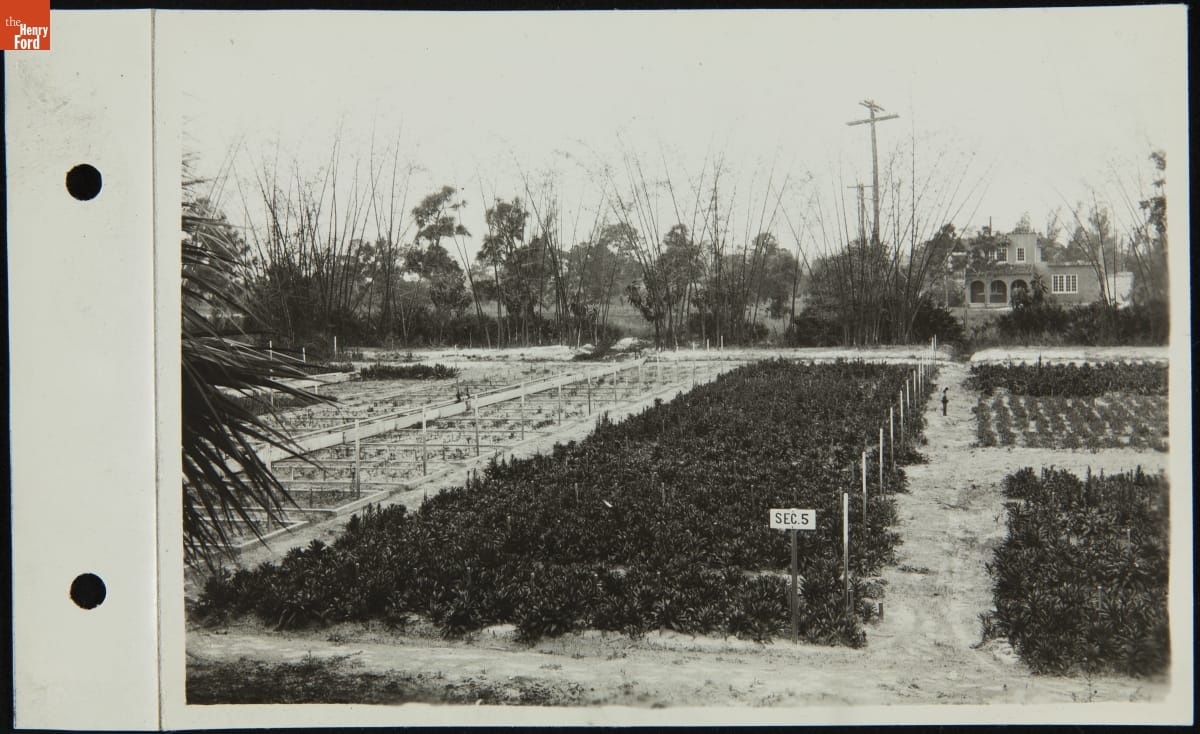
Goldenrod Plantings at the Edison Botanic Research Laboratory, Fort Myers, Florida, February 28, 1934
In the 1920s, Thomas Edison began his search for a home-grown source of rubber. The U.S. imported rubber from Southeast Asia and the East Indies and Edison wanted a ready source in case America's supply was cut off. Edison experimented with a variety of plants at his Fort Myers, Florida, and West Orange, New Jersey, laboratories. Goldenrod proved most promising.
- Demonstrating the Rubber Making Process, Ford Building, California Pacific International Exposition, San Diego, 1935 - Through the 1930s, Ford Motor Company poured resources into exhibitions at regional and world's fairs. Henry Ford believed strongly in the educational value of such displays, and a corporate presence at the fairs benefitted public relations. Ford's popular exhibits and demonstrations -- pictured here in the 1935 California Pacific International Exposition Ford Building -- generated lots of publicity.
- 1935
- Collections - Artifact
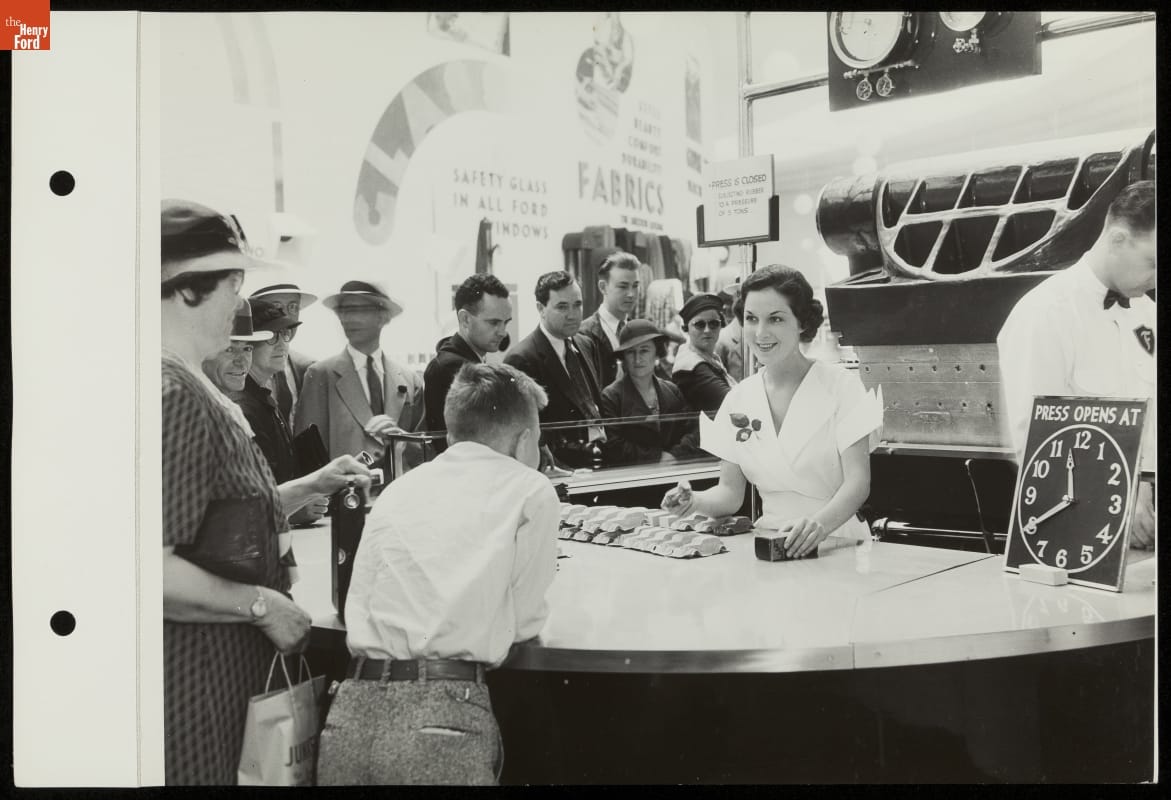
Demonstrating the Rubber Making Process, Ford Building, California Pacific International Exposition, San Diego, 1935
Through the 1930s, Ford Motor Company poured resources into exhibitions at regional and world's fairs. Henry Ford believed strongly in the educational value of such displays, and a corporate presence at the fairs benefitted public relations. Ford's popular exhibits and demonstrations -- pictured here in the 1935 California Pacific International Exposition Ford Building -- generated lots of publicity.
- Letter from Thomas Edison to Henry Ford regarding Rubber Plant Experiments, September 20, 1923 -
- September 20, 1923
- Collections - Artifact
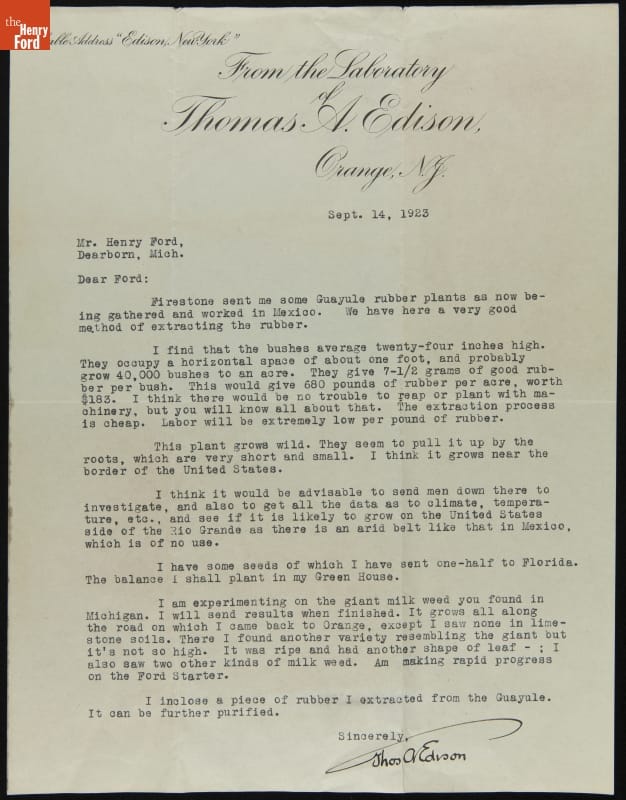
Letter from Thomas Edison to Henry Ford regarding Rubber Plant Experiments, September 20, 1923
- Correspondence between J.C. Alves de Lima and the Office of Henry Ford regarding Specimen Shipment, September - October, 1925 -
- 22 September 1925-03 October 1925
- Collections - Artifact
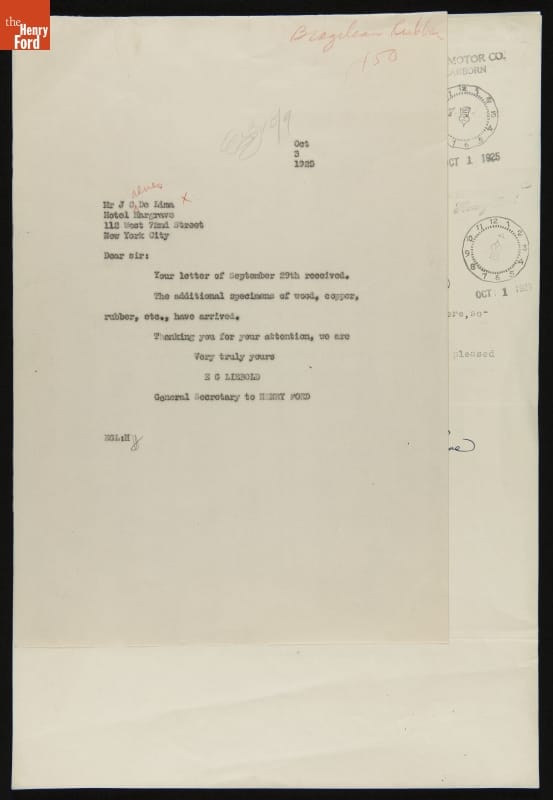
Correspondence between J.C. Alves de Lima and the Office of Henry Ford regarding Specimen Shipment, September - October, 1925
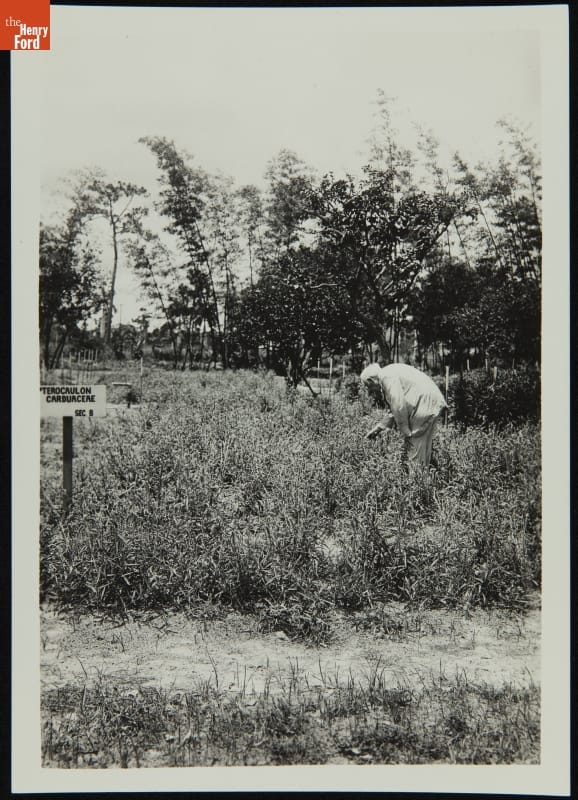
- Thomas Edison Experimenting to Find an Alternative Source of Rubber, Florida, 1929 - In the 1920s, Thomas Edison began his search for a home-grown source of rubber. The U.S. imported rubber from Southeast Asia and the East Indies and Edison wanted a ready source in case America's supply was cut off. Edison experimented with a variety of plants at his Fort Myers, Florida, and West Orange, New Jersey, laboratories. Goldenrod proved most promising.
- May 26, 1929
- Collections - Artifact
Thomas Edison Experimenting to Find an Alternative Source of Rubber, Florida, 1929
In the 1920s, Thomas Edison began his search for a home-grown source of rubber. The U.S. imported rubber from Southeast Asia and the East Indies and Edison wanted a ready source in case America's supply was cut off. Edison experimented with a variety of plants at his Fort Myers, Florida, and West Orange, New Jersey, laboratories. Goldenrod proved most promising.