
Search
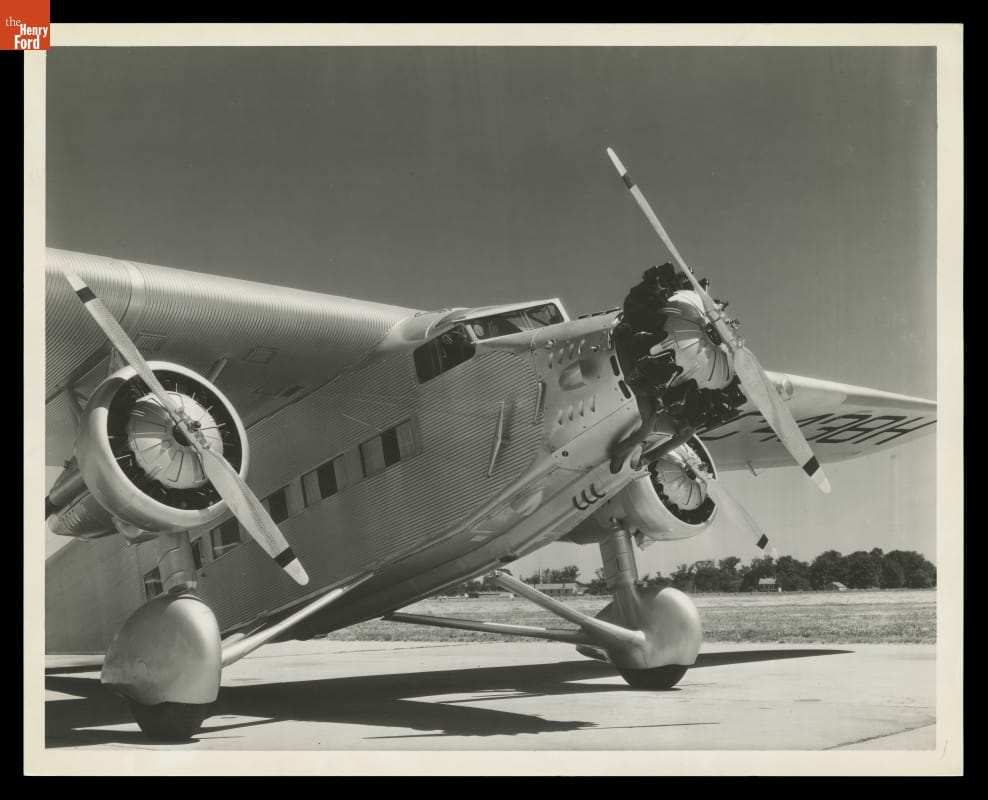
- Ford Tri-Motor 5-AT-112 Airplane at Ford Airport, 1932 - In 1928, the Stout Metal Airplane Company, a division of Ford Motor Company, introduced a new airliner. The 5-AT was faster and more powerful than its popular predecessor, the 4-AT. It had a longer wingspan and higher passenger capacity, and became the most successful all-metal, multi-engine passenger plane in the country. Virtually all existing airlines flew Ford 5-ATs.
- June 24, 1932
- Collections - Artifact
Ford Tri-Motor 5-AT-112 Airplane at Ford Airport, 1932
In 1928, the Stout Metal Airplane Company, a division of Ford Motor Company, introduced a new airliner. The 5-AT was faster and more powerful than its popular predecessor, the 4-AT. It had a longer wingspan and higher passenger capacity, and became the most successful all-metal, multi-engine passenger plane in the country. Virtually all existing airlines flew Ford 5-ATs.
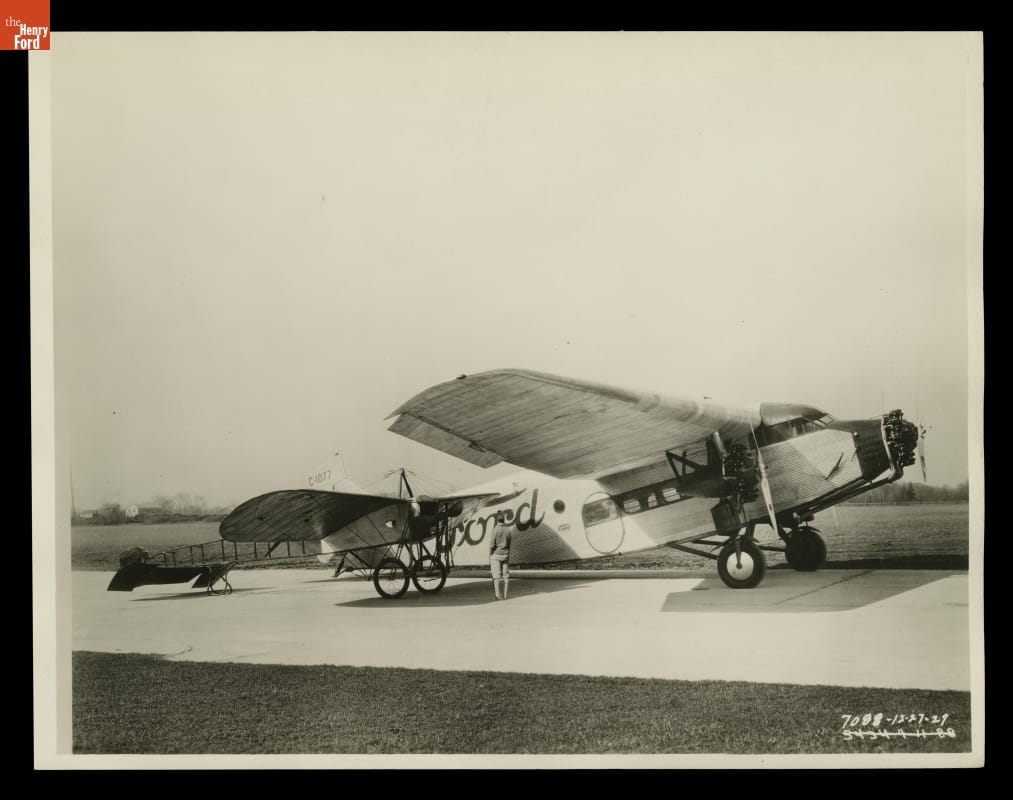
- Ford Trimotor 4-AT-10 and Bleriot Airplane at Ford Airport, Dearborn, Michigan, April 1928 - Two generations of aircraft contrasted at Ford Airport. The smaller Bleriot XI was of the type flown by French pilot Louis Bleriot across the English Channel in 1909. Its wood frame and fabric-covered surfaces were light but fragile. The larger Ford Trimotor was of a design built from 1926 to 1933. Its metal construction and three motors suggested strength and safety.
- April 11, 1928
- Collections - Artifact
Ford Trimotor 4-AT-10 and Bleriot Airplane at Ford Airport, Dearborn, Michigan, April 1928
Two generations of aircraft contrasted at Ford Airport. The smaller Bleriot XI was of the type flown by French pilot Louis Bleriot across the English Channel in 1909. Its wood frame and fabric-covered surfaces were light but fragile. The larger Ford Trimotor was of a design built from 1926 to 1933. Its metal construction and three motors suggested strength and safety.
- Photograph Album of the H. J. Heinz Company War Production Division, circa 1945 - Company photograph albums are often reminders of the company's history, significant moments in time, and the employees who worked there. This album, compiled by the H.J. Heinz Company, includes text and photographs describing the company's involvement in producing airplane parts during World War II.
- circa 1945
- Collections - Artifact
Photograph Album of the H. J. Heinz Company War Production Division, circa 1945
Company photograph albums are often reminders of the company's history, significant moments in time, and the employees who worked there. This album, compiled by the H.J. Heinz Company, includes text and photographs describing the company's involvement in producing airplane parts during World War II.
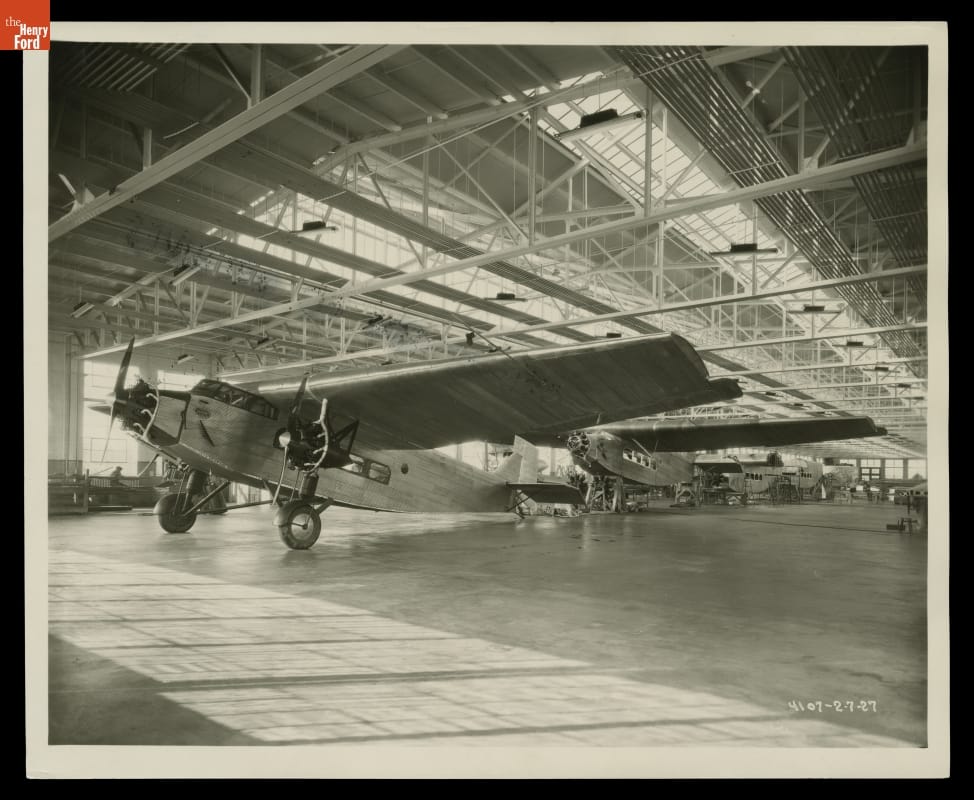
- Ford Tri-Motor Airplane Assembly Line, Dearborn, Michigan, 1927 - Henry Ford attempted to apply automobile assembly line techniques to the manufacture of airplanes, and to build them in large numbers. Monthly production peaked at 25 planes in June 1929. The Great Depression forced Ford to re-focus on his core auto business, and the company's commercial aircraft production ended in May 1933.
- February 07, 1927
- Collections - Artifact
Ford Tri-Motor Airplane Assembly Line, Dearborn, Michigan, 1927
Henry Ford attempted to apply automobile assembly line techniques to the manufacture of airplanes, and to build them in large numbers. Monthly production peaked at 25 planes in June 1929. The Great Depression forced Ford to re-focus on his core auto business, and the company's commercial aircraft production ended in May 1933.
- Loading the 1956 Cadillac Presidential Limousine into C-130 Hercules Transport Plane, 1964 - Around 1960, the United States Secret Service began using one of Lockheed's versatile C-130 Hercules transport aircraft to carry presidential vehicles. This was faster and more direct than shipping state cars ahead of the President via railcar or boat -- though loading lengthy automobiles into the plane's cargo compartment was a persistent challenge.
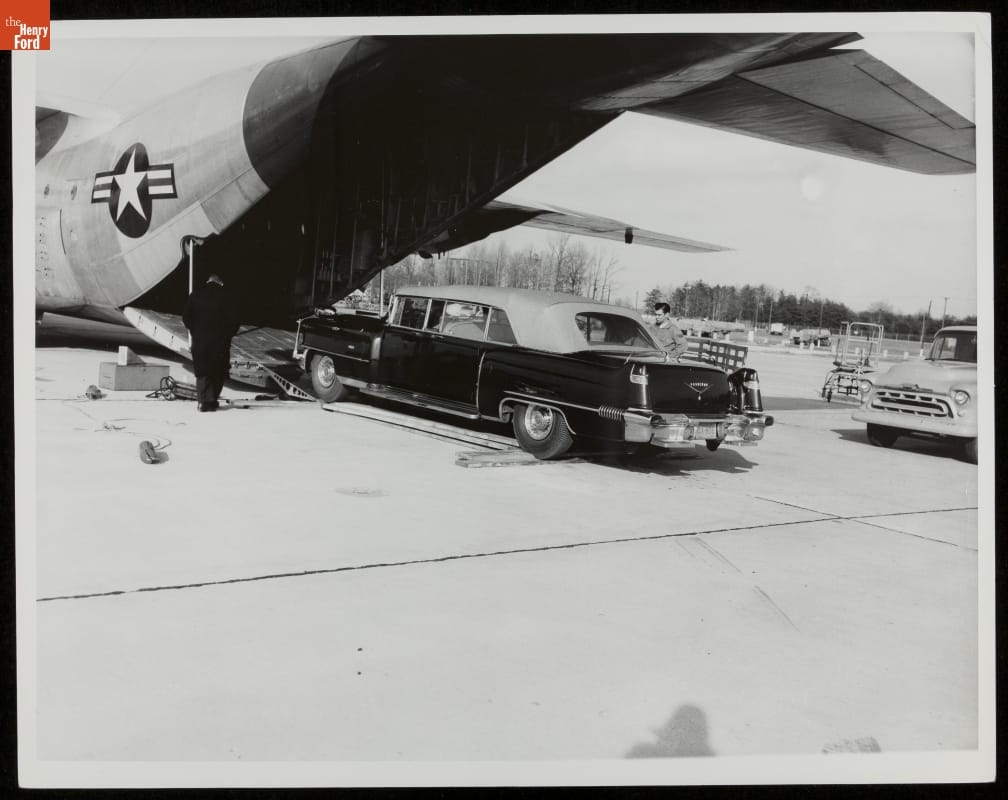
- August 21, 1964
- Collections - Artifact
Loading the 1956 Cadillac Presidential Limousine into C-130 Hercules Transport Plane, 1964
Around 1960, the United States Secret Service began using one of Lockheed's versatile C-130 Hercules transport aircraft to carry presidential vehicles. This was faster and more direct than shipping state cars ahead of the President via railcar or boat -- though loading lengthy automobiles into the plane's cargo compartment was a persistent challenge.
- Preparing to Load the 1950 Lincoln "Bubble-Top" and 1956 Cadillac Presidential Limousines into Cargo Hold of C-130 Hercules Transport Plane, circa 1960 - Around 1960, the United States Secret Service began using one of Lockheed's versatile C-130 Hercules transport aircraft to carry presidential vehicles. This was faster and more direct than shipping state cars ahead of the President via railcar or boat -- though loading lengthy automobiles into the plane's cargo compartment was a persistent challenge.
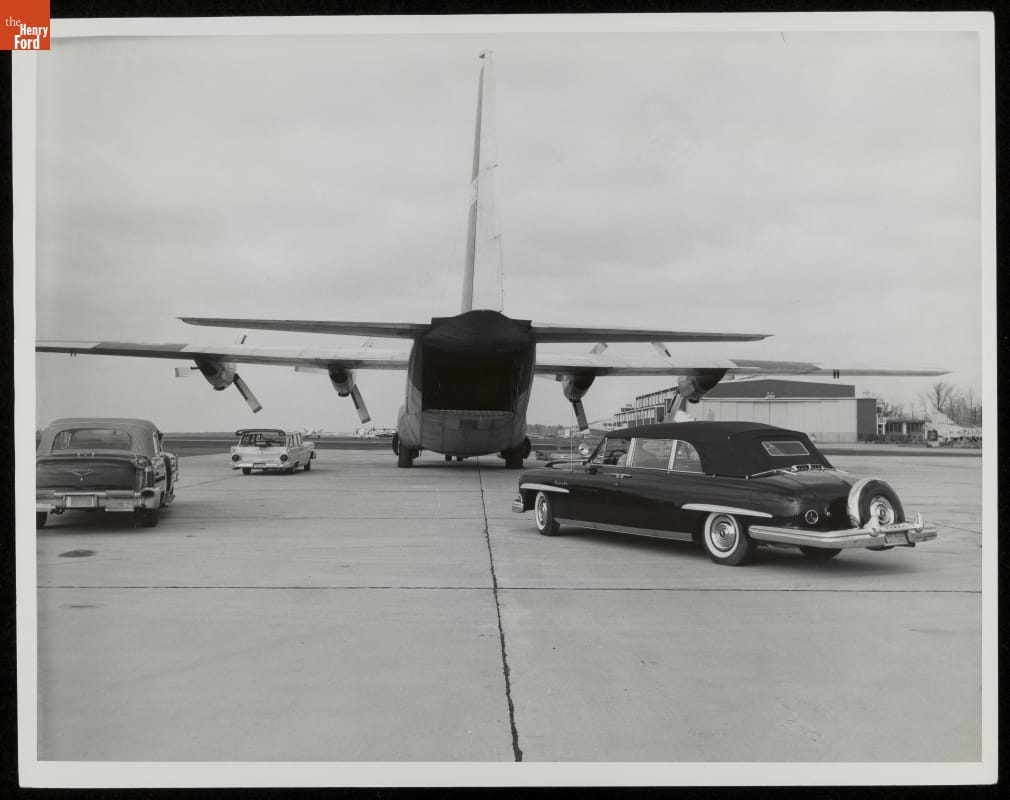
- circa 1960
- Collections - Artifact
Preparing to Load the 1950 Lincoln "Bubble-Top" and 1956 Cadillac Presidential Limousines into Cargo Hold of C-130 Hercules Transport Plane, circa 1960
Around 1960, the United States Secret Service began using one of Lockheed's versatile C-130 Hercules transport aircraft to carry presidential vehicles. This was faster and more direct than shipping state cars ahead of the President via railcar or boat -- though loading lengthy automobiles into the plane's cargo compartment was a persistent challenge.
- Lockheed C-130 Hercules Airplane Used to Transport Presidential Vehicles, Andrews Air Force Base, circa 1960 - Around 1960, the United States Secret Service began using one of Lockheed's versatile C-130 Hercules transport aircraft to carry presidential vehicles. This was faster and more direct than shipping state cars ahead of the President via railcar or boat -- though loading lengthy automobiles into the plane's cargo compartment was a persistent challenge.
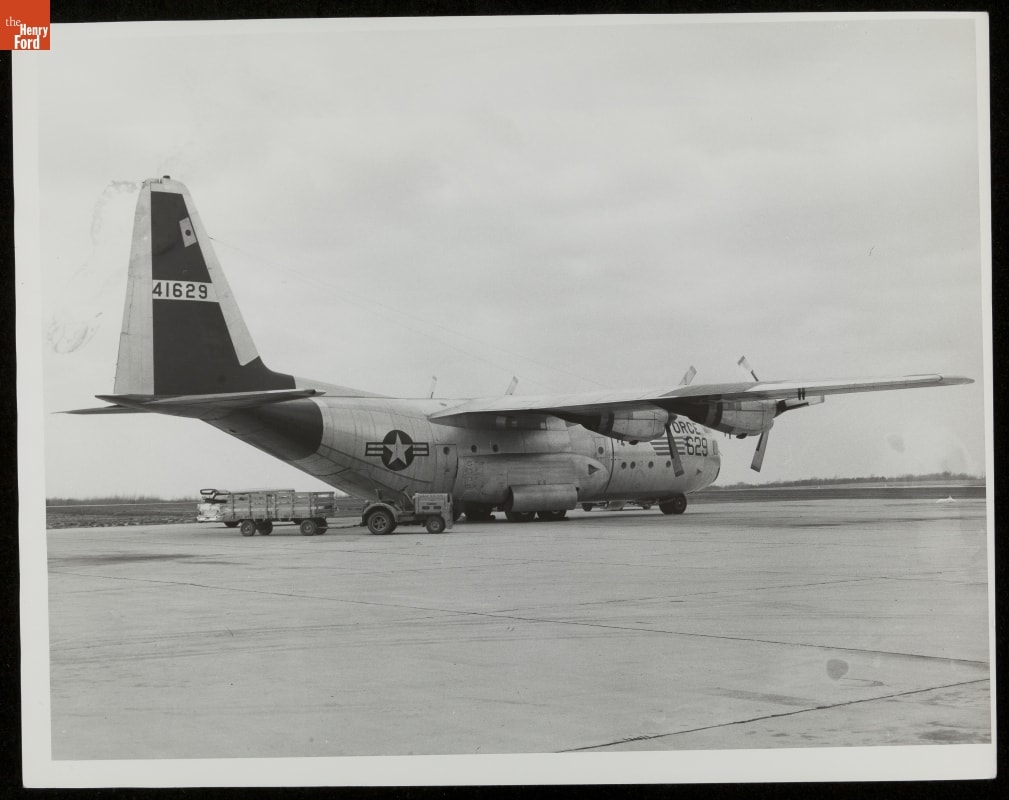
- circa 1960
- Collections - Artifact
Lockheed C-130 Hercules Airplane Used to Transport Presidential Vehicles, Andrews Air Force Base, circa 1960
Around 1960, the United States Secret Service began using one of Lockheed's versatile C-130 Hercules transport aircraft to carry presidential vehicles. This was faster and more direct than shipping state cars ahead of the President via railcar or boat -- though loading lengthy automobiles into the plane's cargo compartment was a persistent challenge.
- Ford Tri-Motor 4-AT-13 Airplane by Passenger Terminal at Ford Airport, December 1927 - Model 4-AT airliners were designed and built by the Stout Metal Airplane Company, a division of Ford Motor Company. The all-metal, multi-engine planes earned a reputation for being rugged and dependable. From the late 1920s into the 1930s, they were the backbone of the scheduled airline industry. The 4-ATs eased public concerns about the safety of air travel and revolutionized commercial aviation.
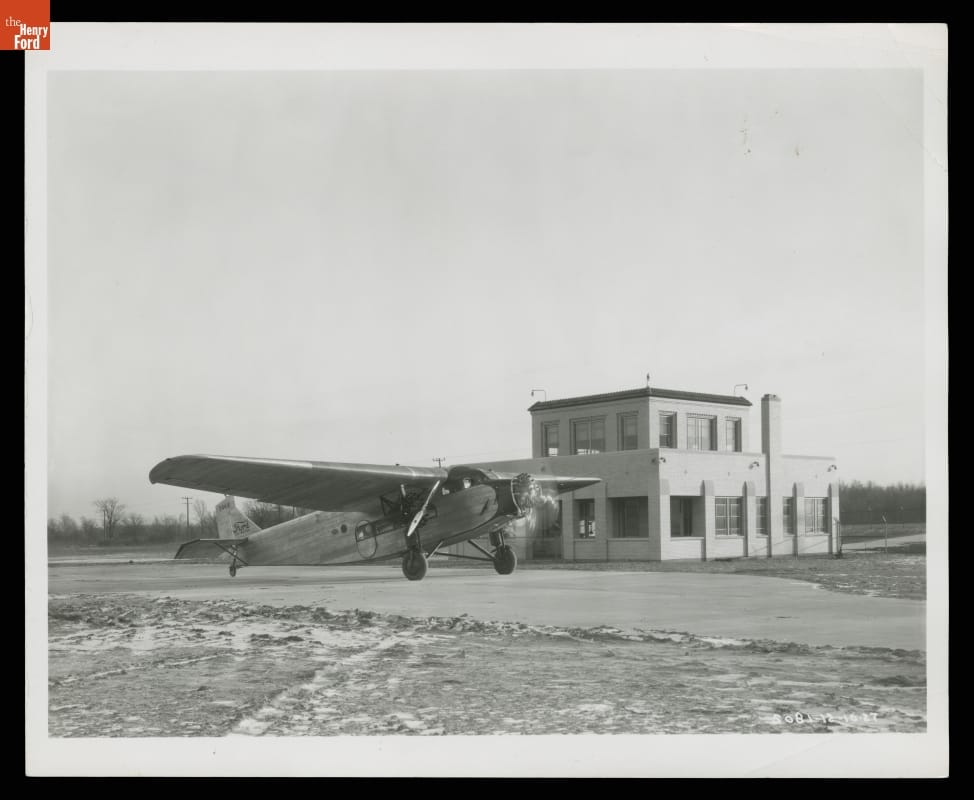
- December 10, 1927
- Collections - Artifact
Ford Tri-Motor 4-AT-13 Airplane by Passenger Terminal at Ford Airport, December 1927
Model 4-AT airliners were designed and built by the Stout Metal Airplane Company, a division of Ford Motor Company. The all-metal, multi-engine planes earned a reputation for being rugged and dependable. From the late 1920s into the 1930s, they were the backbone of the scheduled airline industry. The 4-ATs eased public concerns about the safety of air travel and revolutionized commercial aviation.
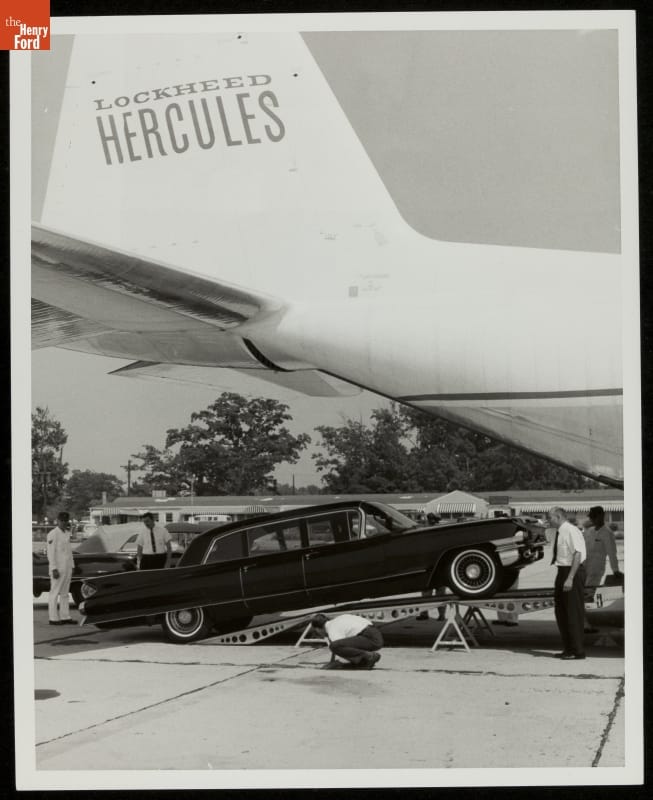
- Loading 1964 Cadillac Presidential Limousine into C-130 Hercules Transport Plane, Andrews Air Force Base, 1964 - Around 1960, the United States Secret Service began using one of Lockheed's versatile C-130 Hercules transport aircraft to carry presidential vehicles. This was faster and more direct than shipping state cars ahead of the President via railcar or boat -- though loading lengthy automobiles into the plane's cargo compartment was a persistent challenge.
- August 21, 1964
- Collections - Artifact
Loading 1964 Cadillac Presidential Limousine into C-130 Hercules Transport Plane, Andrews Air Force Base, 1964
Around 1960, the United States Secret Service began using one of Lockheed's versatile C-130 Hercules transport aircraft to carry presidential vehicles. This was faster and more direct than shipping state cars ahead of the President via railcar or boat -- though loading lengthy automobiles into the plane's cargo compartment was a persistent challenge.
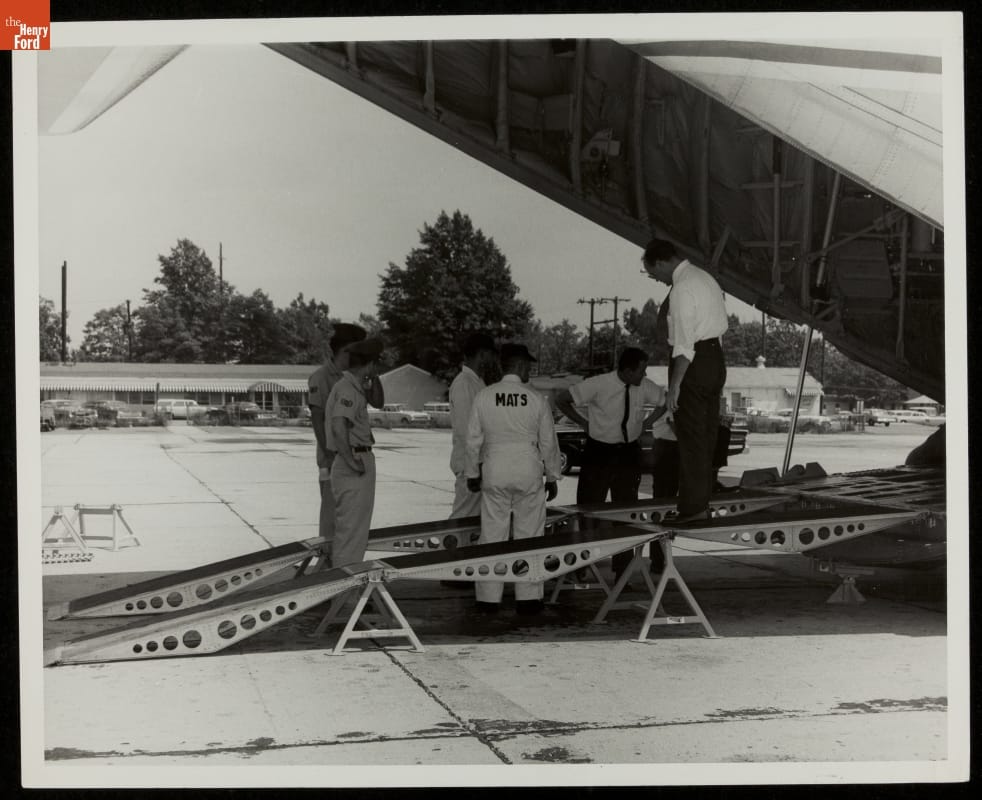
- Inspecting C-130 Hercules Transport Plane Loading Ramps, Andrews Air Force Base, 1964 - Around 1960, the United States Secret Service began using one of Lockheed's versatile C-130 Hercules transport aircraft to carry presidential vehicles. This was faster and more direct than shipping state cars ahead of the President via railcar or boat -- though loading lengthy automobiles into the plane's cargo compartment was a persistent challenge.
- August 21, 1964
- Collections - Artifact
Inspecting C-130 Hercules Transport Plane Loading Ramps, Andrews Air Force Base, 1964
Around 1960, the United States Secret Service began using one of Lockheed's versatile C-130 Hercules transport aircraft to carry presidential vehicles. This was faster and more direct than shipping state cars ahead of the President via railcar or boat -- though loading lengthy automobiles into the plane's cargo compartment was a persistent challenge.