
Steam Cars
Share
share
Steam-powered automobiles were popular with early buyers. Steam was safe, reliable, and familiar. People had decades of experience with it in trains and boats, and even in experimental road vehicles. But early steam cars required constant care and attention--and up to 30 minutes to start. Automated quick-firing boilers solved these problems, but not before more efficient gasoline engines dominated the market and made steam cars obsolete.
THF277046
Cugnot Steam Wagon, Built 1770, on Exhibit at the New York Museum of Science and Industry
French military engineer Nicolas-Joseph Cugnot designed his three-wheeled, steam-powered dray to haul cannons. While it could carry five tons at two miles per hour, Cugnot's unwieldy wagon was difficult to steer, and its inefficient boiler limited the dray's operating time to about 15 minutes. Unimpressed, French officials did not approve Cugnot's steam wagon for military use.
View ArtifactTHF91158
1865 Roper Steam Carriage
This vehicle is the oldest surviving American automobile. In the 1860s, a small steam carriage running under its own power -- without horses! -- was so startling that people paid to see it driven. It was a curiosity, not transportation. By the time its inventor, Sylvester Roper, died in 1896, new innovators were transforming horseless carriages from curiosities into practical vehicles.
View ArtifactTHF277028
Sylvester Roper with Steam Carriage
Massachusetts machinist Sylvester Roper built several steam-powered carriages and motorcycles years before automobiles -- as we know them -- appeared. Roper never produced his vehicles commercially. Instead, they were exhibited at circuses and fairs, where crowds marveled at the self-propelled contraptions. Steamboats and steam locomotives were common, but steam-powered carriages were genuine novelties.
View ArtifactTHF90342
1899 Locomobile Runabout
This steam-powered runabout, by Locomobile, was built from designs by twin brothers F.E. and F.O. Stanley. These early vehicles were fast, cheap, and relatively uncomplicated. However, fuel needs, excessive water consumption, and other inherent problems dogged the lightweight steamer. In 1902 Locomobile began production of a gasoline internal combustion engine. The company phased out its steam-powered vehicles in 1904.
View ArtifactTHF212211
Advertisement for the Reading Steam Carriage, Steam Vehicle Company of America, 1900
The Steam Vehicle Company of America, in operation from 1900 to 1902, named its steam-powered "Reading" model in honor of Reading, Pennsylvania, where the car was conceived. This advertisement promotes the Reading's durability and design. It also touts the model's quiet operation and minimal exhaust -- two virtues not shared by gasoline-powered cars at the time.
View ArtifactTHF91139
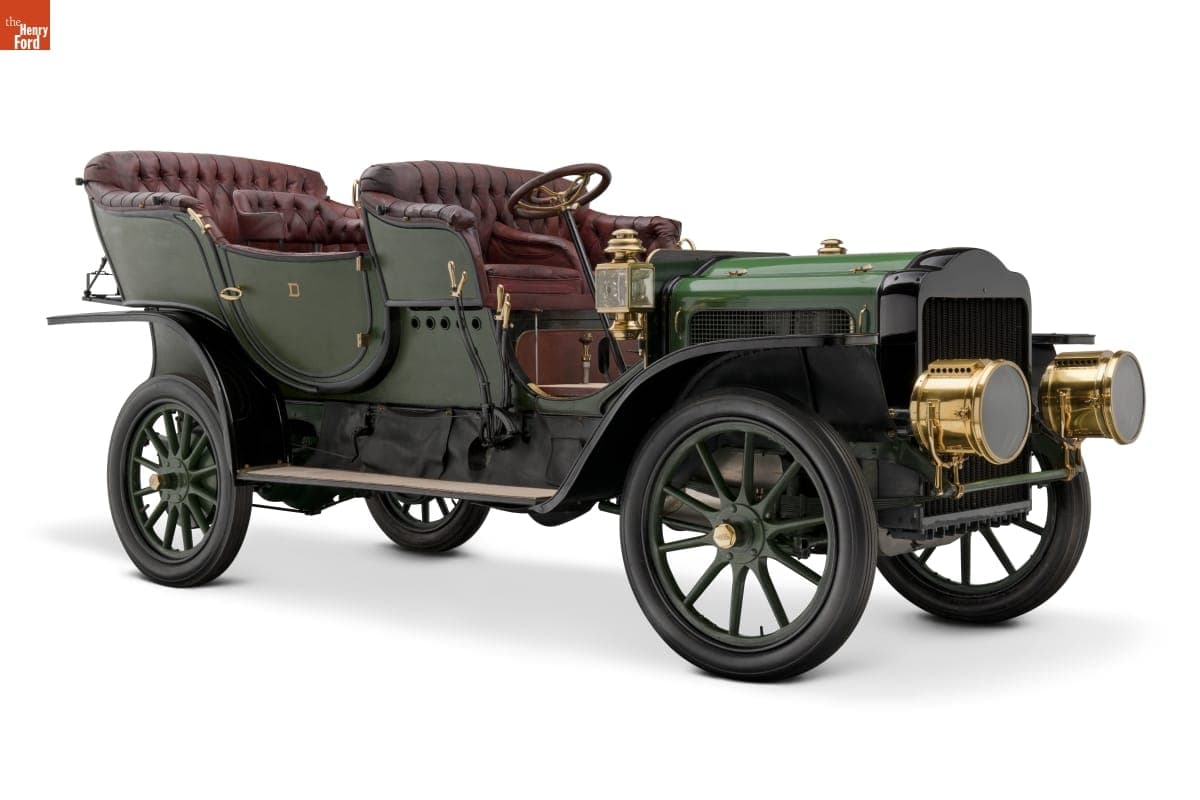
1907 White Model G Steam Touring Car
Steam powered 19th-century America. Some early car manufacturers used this familiar technology to power their vehicles. The White Company was one of the best. Several well-known Americans purchased White steamers and President Taft included one in the first presidential car fleet. White, unlike other manufacturers of steam cars, shifted to gasoline-powered automobiles. It made its last steamer in 1911.
View ArtifactTHF103747
Instructions for 1904 White Steam Touring Car
If you had never run a steam engine before, how would you know how to operate a steam-powered vehicle? This 1904 instruction manual helped owners navigate the ins and outs of the White Steam Touring car. Numbered illustrations, parts lists, and "how-to" instructions familiarize drivers with their new vehicle.
View ArtifactTHF205644
1904 White Steamer Stopped to Take on Water from a Horse Trough
Steam engines powered the earliest cars, and steam vehicles outsold gasoline-powered cars into the 1900s. Steam power was safe, reliable, and familiar to Americans, although the range of steam-powered automobiles was limited by the amount of fuel and water they could carry. This resourceful driver stopped for water at a horse trough, part of the existing transportation infrastructure.
View ArtifactTHF88312
1910 Stanley Steamer Model 60 Runabout
Brothers Francis and Freelan Stanley built their first steam car in 1897, when the ideal automobile power source was an open question. Gasoline became the favorite by the mid-1910s, but Stanley Motor Carriage Company -- formed in 1902 -- stuck with steam until the firm went out of business in 1924. Today, Stanley is the best remembered of the early steam makes.
View ArtifactTHF87080
1924 Doble Steam Touring Car
Some automakers continued with alternate power sources even after gasoline engines became dominant. Doble Steam Motors of Emeryville, California, produced the world's most sophisticated steam cars. Electric ignition cut warm-up time to 90 seconds. Condensers captured and reused exhaust steam. Top speed exceeded 90 miles per hour. But fallout from a fraudulent stock sale forced Doble to close in 1931.
View ArtifactTHF103722
"Lear Vapordyne" by Lear Motors Corporation, 1969
In the 1960s, aviation pioneer Bill Lear made the last serious effort to develop steam vehicles. This 1969 brochure for the Lear Vapordyne highlights steam's potential. Vehicles envisioned included buses and passenger cars. Lear also worked on a steam-powered race car. It never raced.
View Artifact

