
Remembering Dave Friedman (1939-2026)
| Written by | |
|---|---|
| Published | 3/6/2026 |
Remembering Dave Friedman (1939-2026)
| Written by | |
|---|---|
| Published | 3/6/2026 |
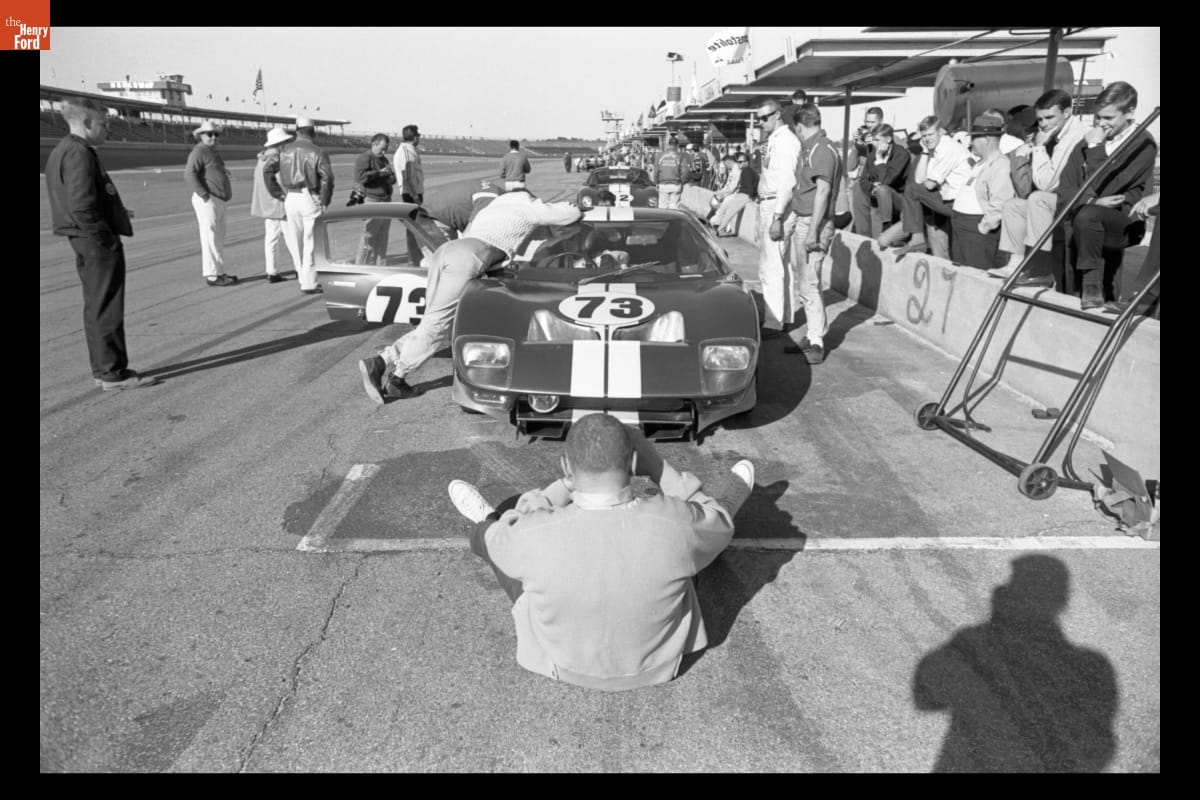
Dave Friedman captures a shot of the Ken Miles/Lloyd Ruby Ford GT40 at the 1965 Daytona Continental. / THF130564
We are deeply saddened by the passing of photographer Dave Friedman late February 2026. His death is a loss to fans of American motorsport, but he leaves behind an unmatched photographic legacy. Born in 1939 to a movie producer and a silent film actress, Friedman seemed destined for a life behind the camera. After serving in the United States Navy, Friedman began attending and photographing amateur sports car races in the Los Angeles area. He crossed paths with many young drivers, including Carroll Shelby, who would redefine professional racing in the 1960s. Soon, Shelby hired young Friedman as staff photographer for his budding Shelby American racing team. There, Friedman would go on to document the design and development of some of racing’s most dominant cars like the Shelby Cobra, the King Cobra, and the Cobra Daytona Coupe.
In 1965, Friedman followed his parents’ footsteps more closely when he began work at 20th Century Fox as an assistant cameraman, followed by years shooting on-set still photos for various productions. Even with his work in Hollywood, he continued to shoot auto races at legendary California tracks like Laguna Seca and Riverside. Friedman also maintained his professional ties with Shelby American, and he attended some of the biggest endurance races in the world including the 24 Hours of Daytona, the 12 Hours of Sebring, and France’s renowned 24 Hours of Le Mans. Friedman was there when Shelby and Ford triumphed at Le Mans with the GT40 Mark II in 1966, and again with the Mark IV in 1967.
It’s fair to say that Friedman not only documented racing history, he lived it. His photos and experiences inspired him to write more than 30 books on auto racing covering seemingly every form of the sport including Formula One, Can-Am, Trans-Am, drag racing, stock car racing, and the sports car races where he captured some of his best-known images.
Friedman earned praise and recognition for all elements of his career. He was elected to the Motion Picture Academy of Arts and Sciences – a rare feat for a still photographer – and nominated for the Motorsports Hall of Fame of America. Friedman continued to pursue his passion for motorsport into the 1990s, when he refocused his lens on a different art form: classical ballet. The Henry Ford acquired the Dave Friedman Collection of racing images and memorabilia in 2009, and it remains the core of the museum’s motorsport photography collection.
In tribute to Dave Friedman’s incredible life and work, we share some of our favorite photographs from his collection.
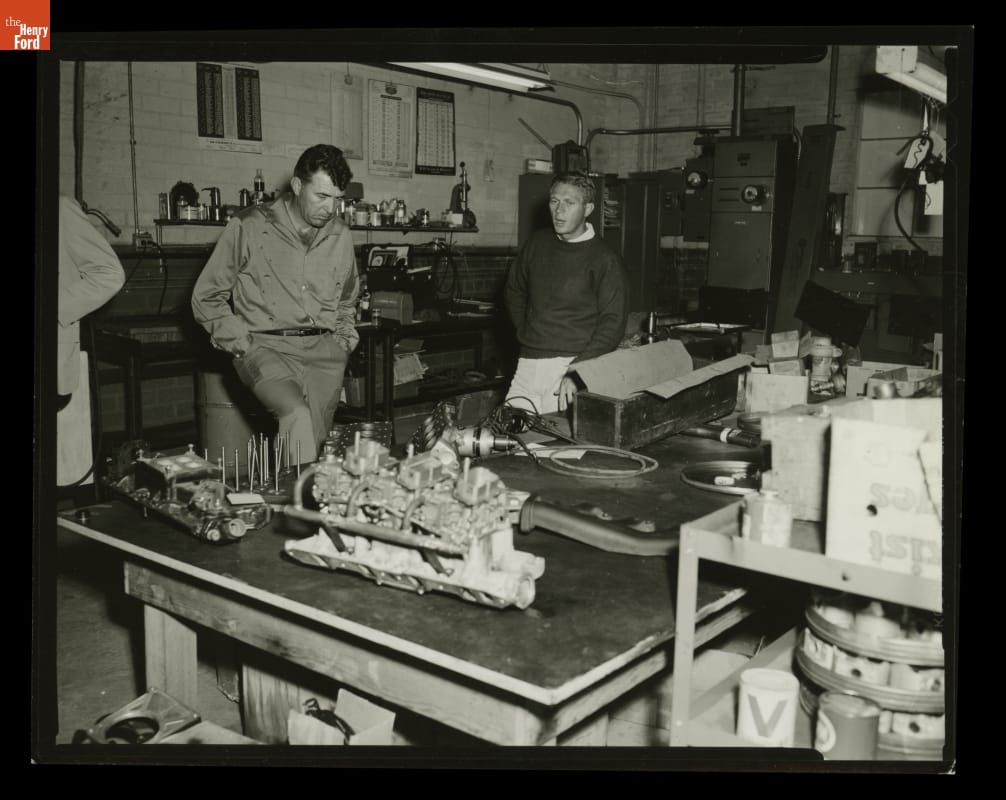
You never knew who might drop by the Shelby American shop. Actor (and racer) Steve McQueen (right) chatted with Carroll Shelby in 1963. / THF132298
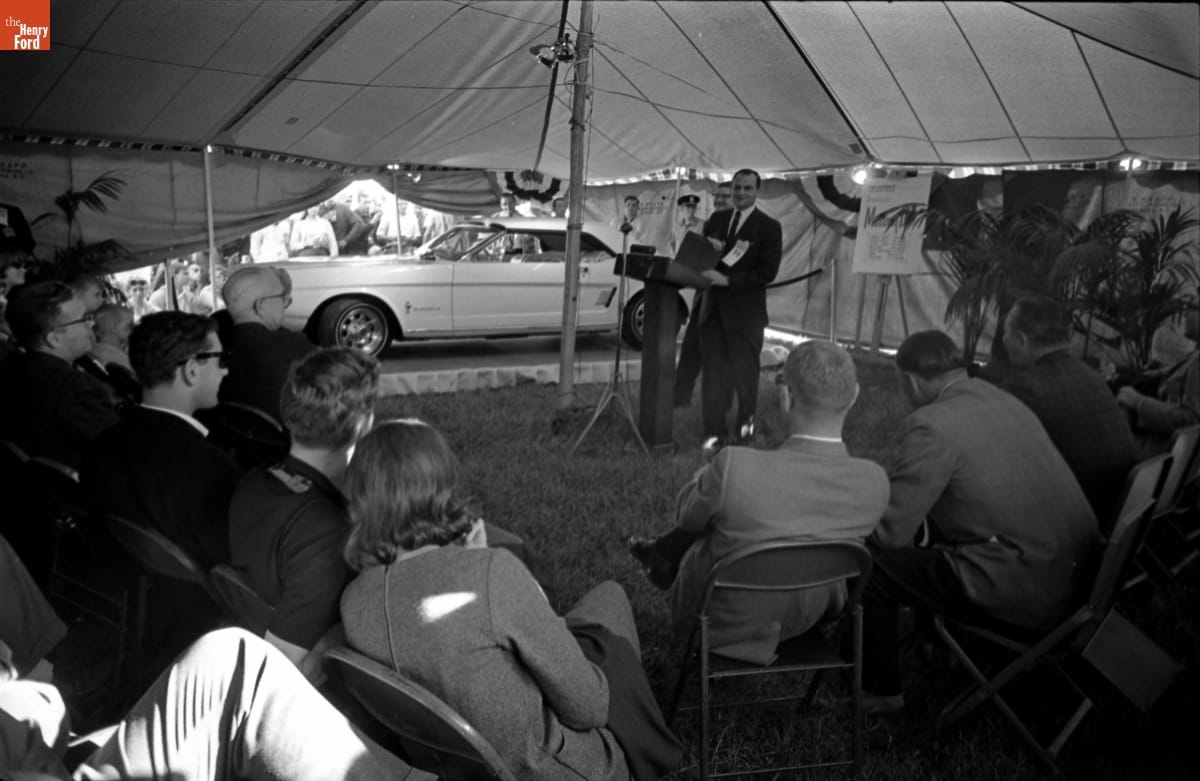
Marketing is a big part of racing. Here’s Ford vice president Lee Iacocca introducing the Mustang II concept car at Watkins Glen in October 1963. The sensational production Mustang was just six months away. / THF264132
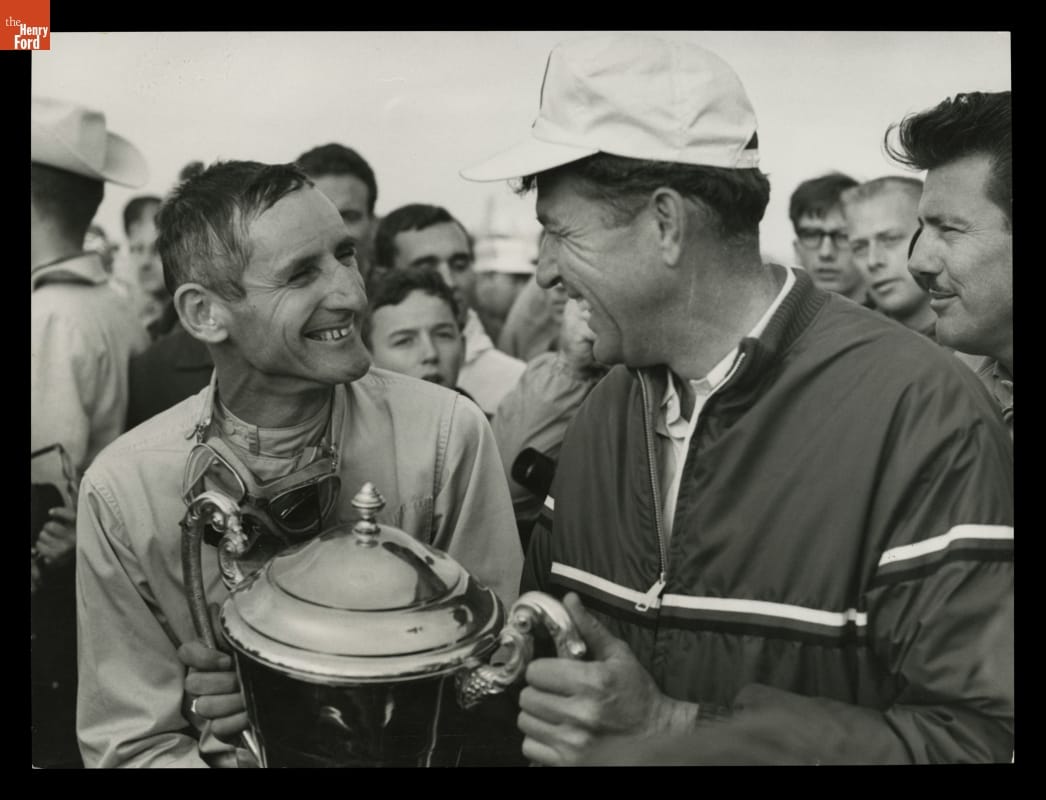
Fans of the 2019 film Ford v Ferrari will recognize this scene of Ken Miles (left) and Carroll Shelby after Miles’s class victory at the 1964 Bridgehampton 500. A similar shot from a slightly different angle leads off the film’s end credits. / THF119475
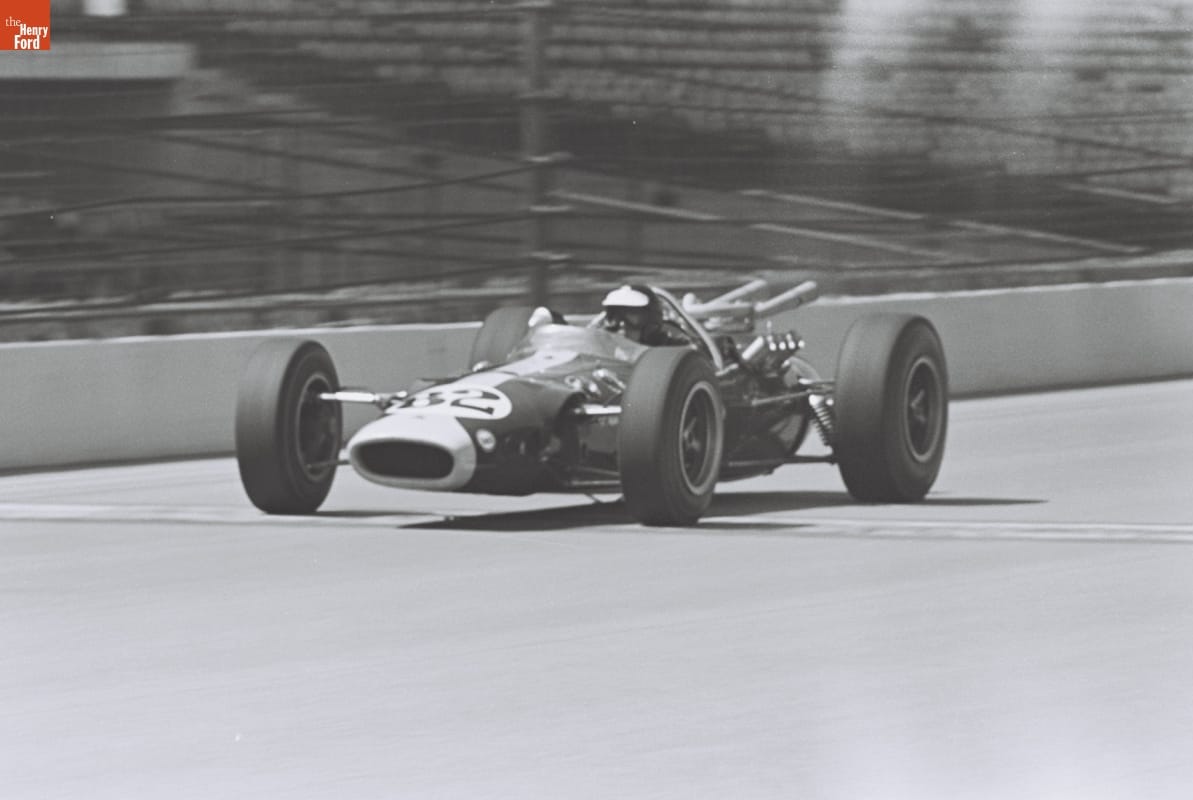
Driver Jimmy Clark and constructor Colin Chapman changed the Indianapolis 500 forever in 1965 when they earned the victory with their rear-engine, F1-inspired Lotus-Ford Type 38. Friedman captured Clark and his innovative car on the track. / indianapolis50005-65_0696
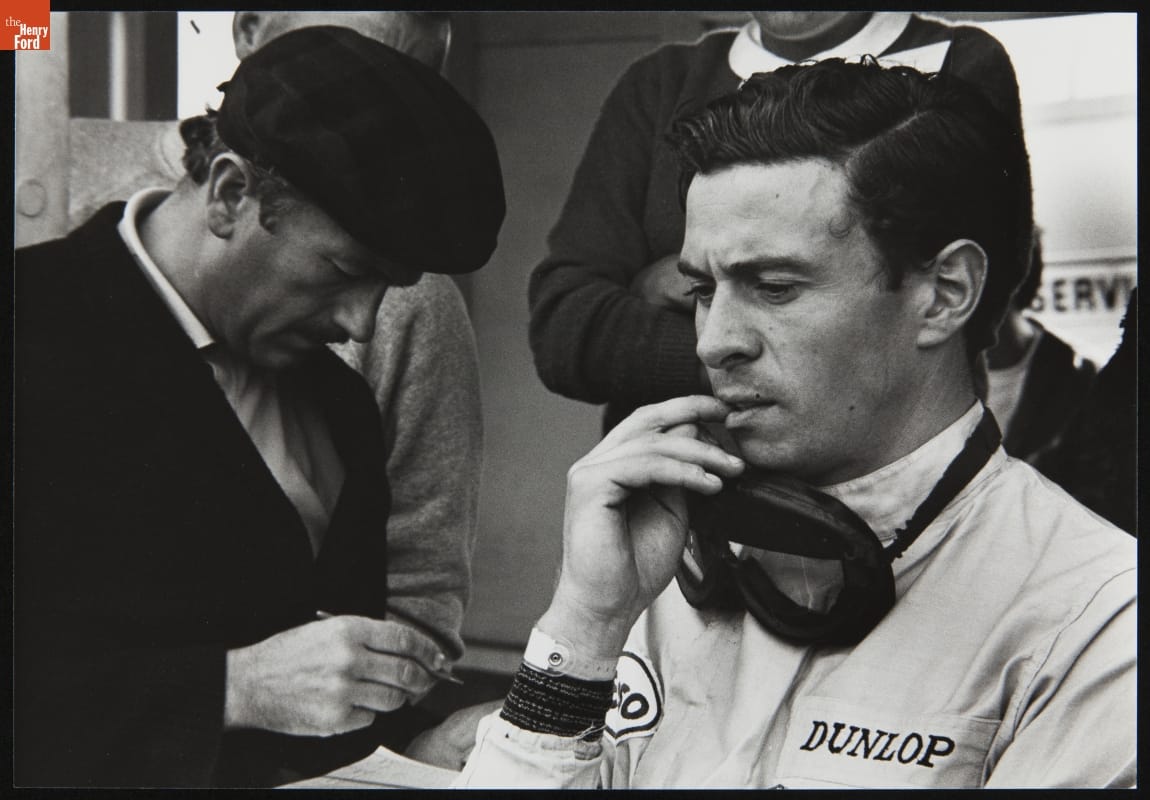
Chapman (left) and Clark were a formidable team, winning Formula One driver championships and constructor titles together in 1963 and 1965. Doubtless they’d have earned more together if not for Clark’s death in a 1968 racing crash. Friedman caught them here at the 1965 U.S. Grand Prix at Watkins Glen. / THF241455
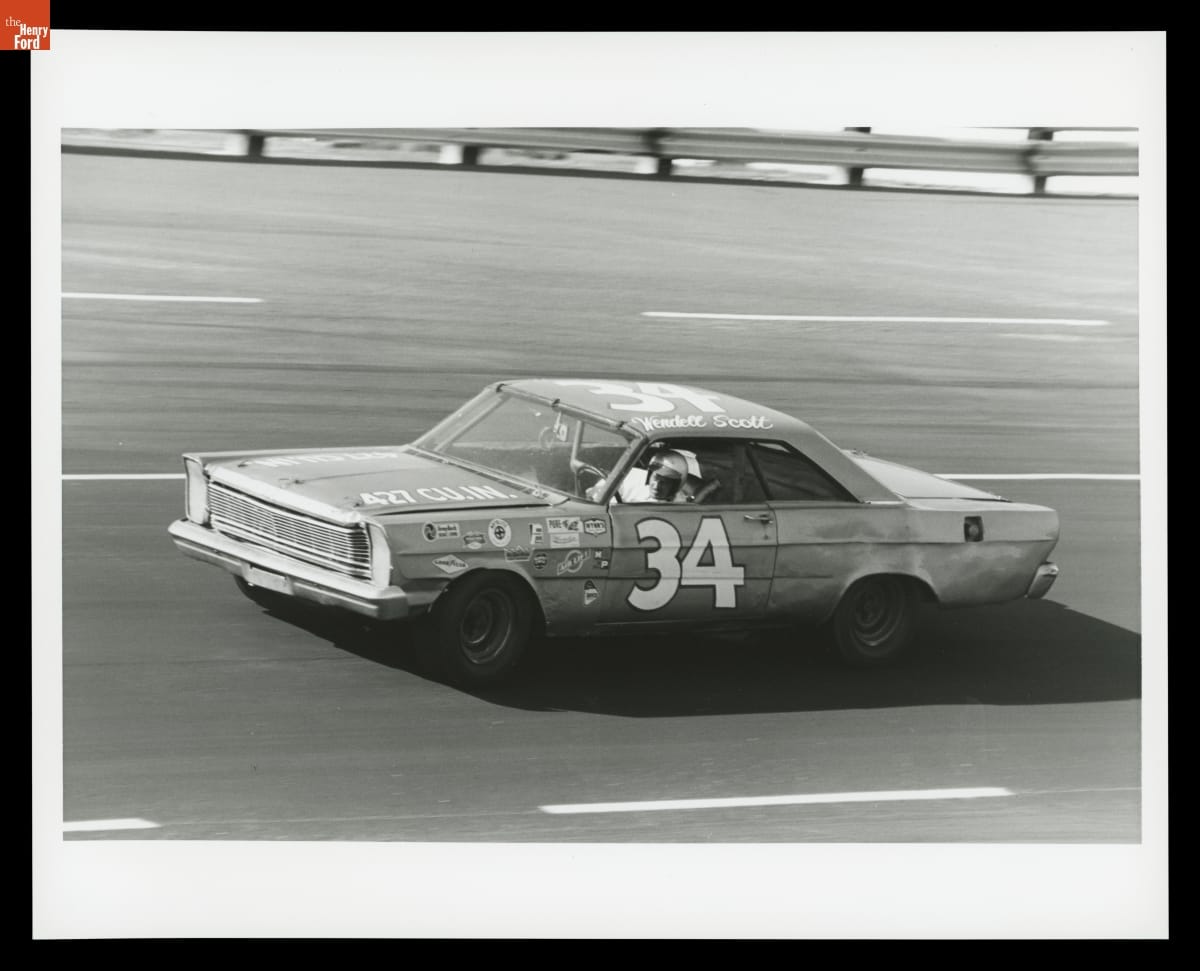
Wendell Scott broke NASCAR’s color barrier and in 1963 became the first Black driver to win a Grand National (today’s Cup Series) race. In 1966, he piloted the #34 Ford Galaxie in the Daytona 500. / THF146962
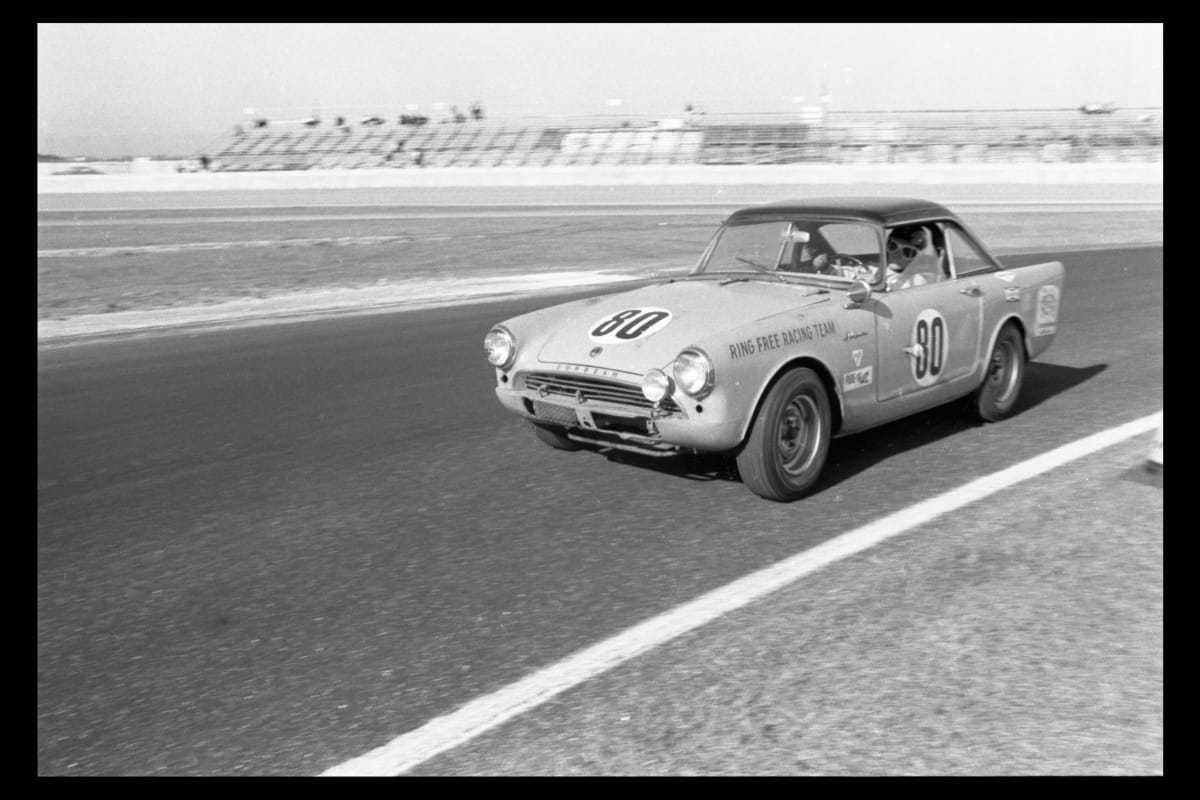
Suzy Dietrich, Janet Guthrie and Donna Mae Mims competed at the 24 Hours of Daytona in 1966. They co-drove the #30 Sunbeam Alpine for the cleverly named Ring Free Racing Team. / THF124292
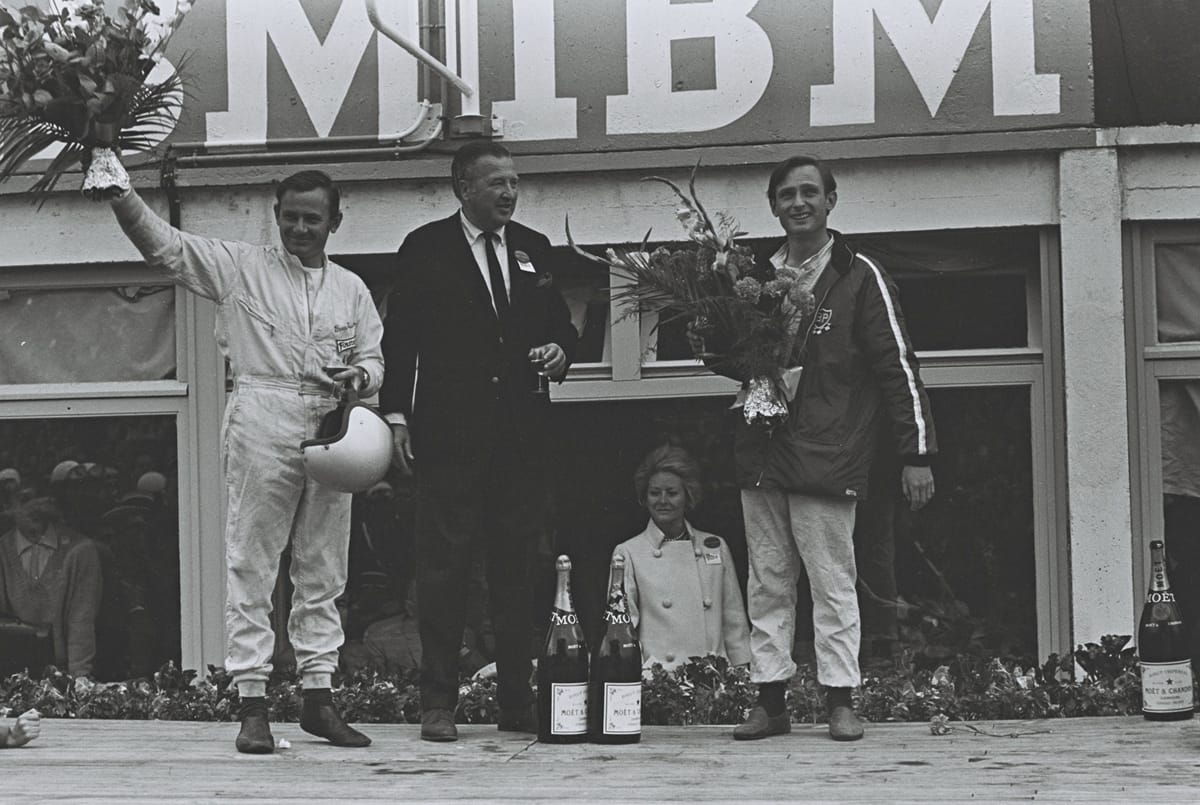
Ford Motor Company CEO Henry Ford II celebrated with drivers Bruce McLaren (left) and Chris Amon (right) after their victory at Le Mans in 1966. It was a personal triumph for Mr. Ford, who proved that his company could challenge and defeat Ferrari on the Italian automaker’s favored turf. / lemans06-66_369
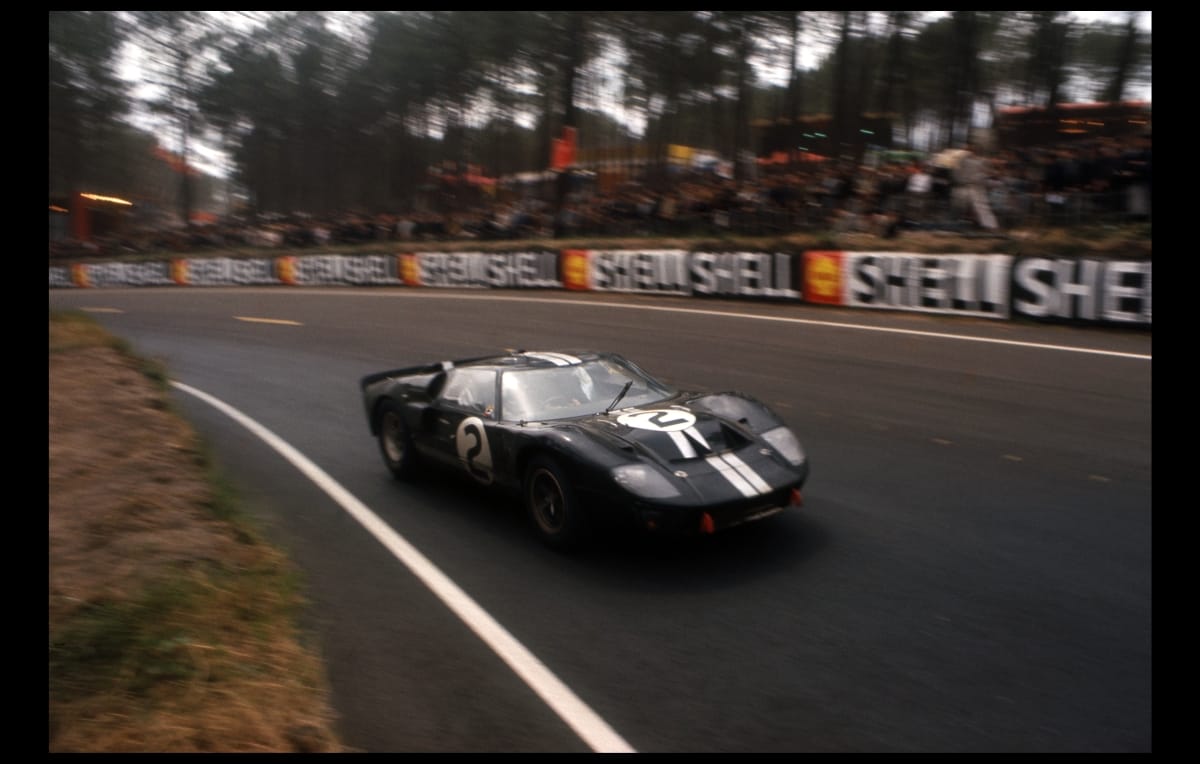
Most of the Dave Friedman collection is black and white – standard for motorsport press photos in the 1960s – making his color photos all the more striking. This shot captured the winning Ford GT40 Mark II at Le Mans in 1966. / THF136068
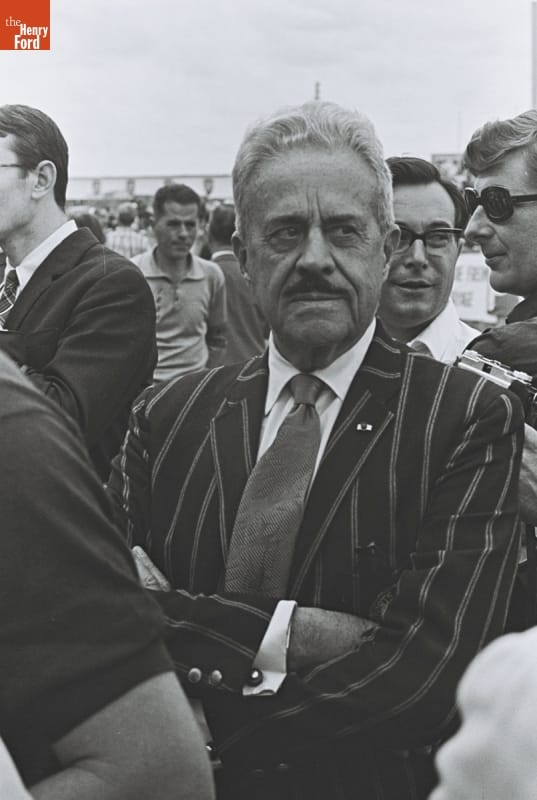
Le Mans attracted luminaries from all fields. Friedman caught this portrait of industrial designer Raymond Loewy at the 1966 race. / lemans06-66_049
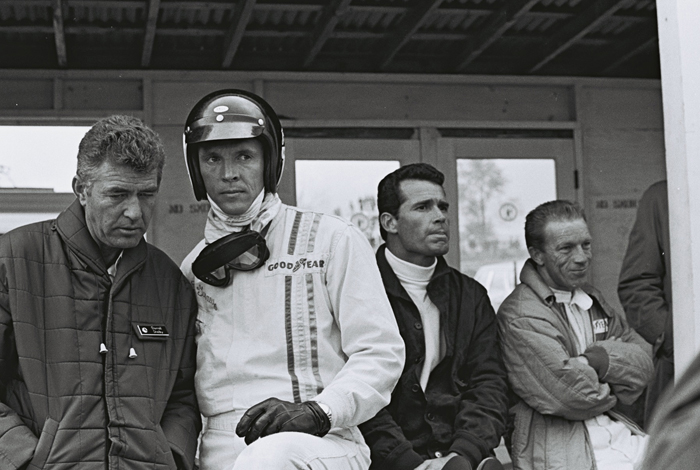
Carroll Shelby (left) and Dan Gurney in conversation at Watkins Glen in 1966. They were joined by actor (and racer) James Garner and driver Richie Ginther. / 1966USGPWatkinsGlen_023
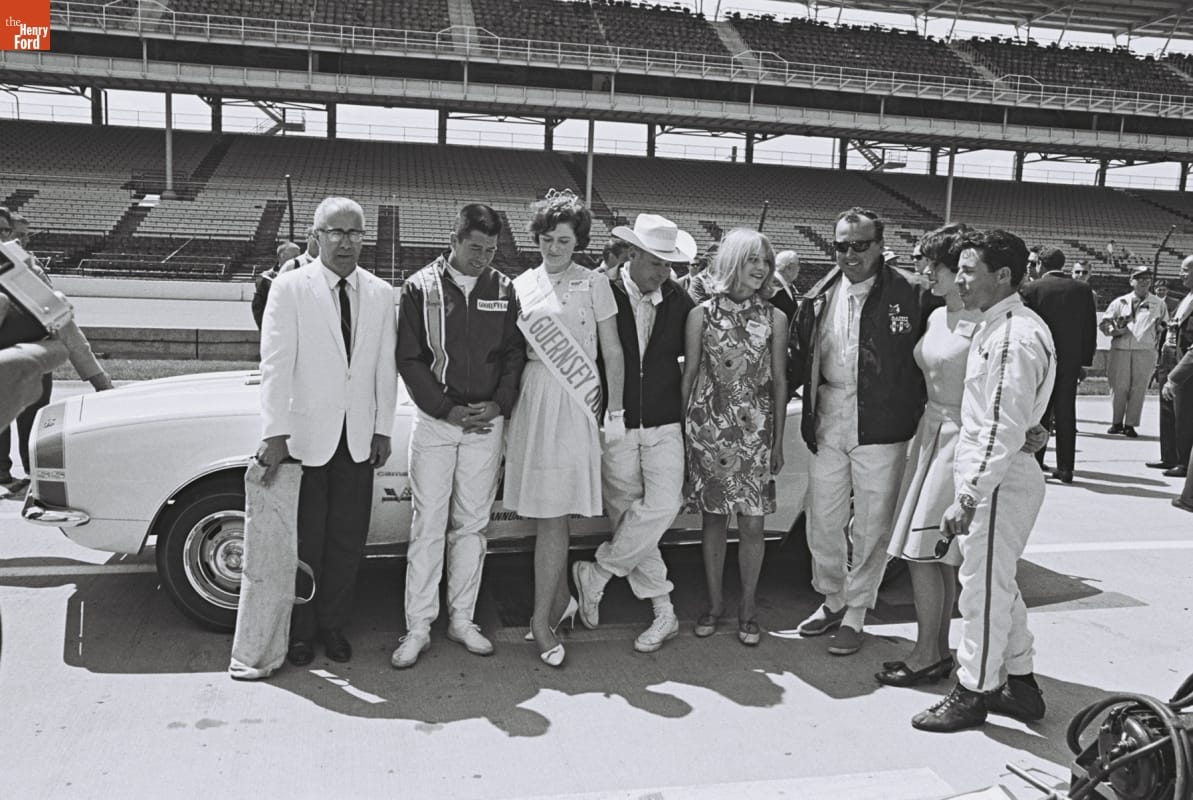
Some consider 1967 as the greatest group of drivers ever assembled for the Indianapolis 500. There was no shortage of talent in this Friedman photo showing (left to right) Roger McCluskey, Lloyd Ruby, A.J. Foyt, and Mario Andretti posing with the Guernsey Queen. Foyt took the checkered flag that year – the third of his four Indy 500 wins. / indianapolis50005-67_0553
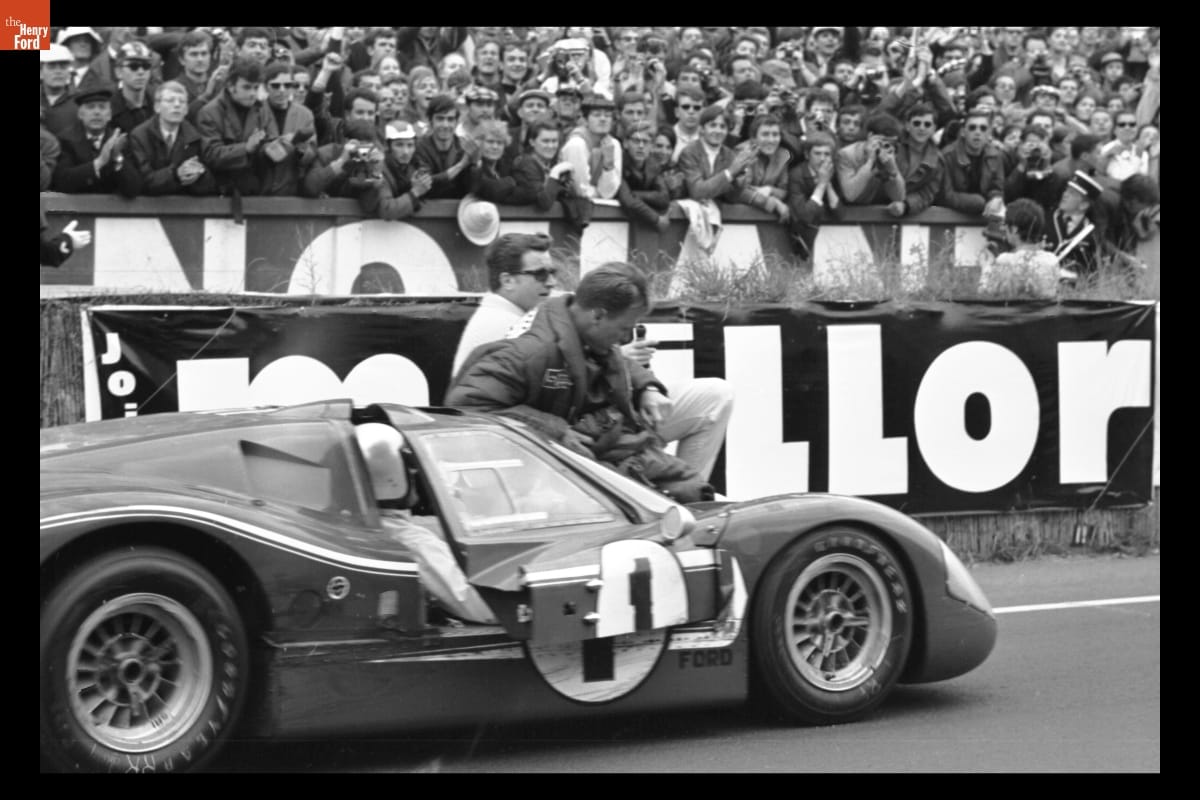
Ford and Friedman both returned to Le Mans in 1967. Dan Gurney and A.J. Foyt earned Ford a second consecutive victory with the #1 Mark IV. In this shot, Foyt is at the wheel while Gurney rides the windshield on their way to celebrate the win. / THF127989
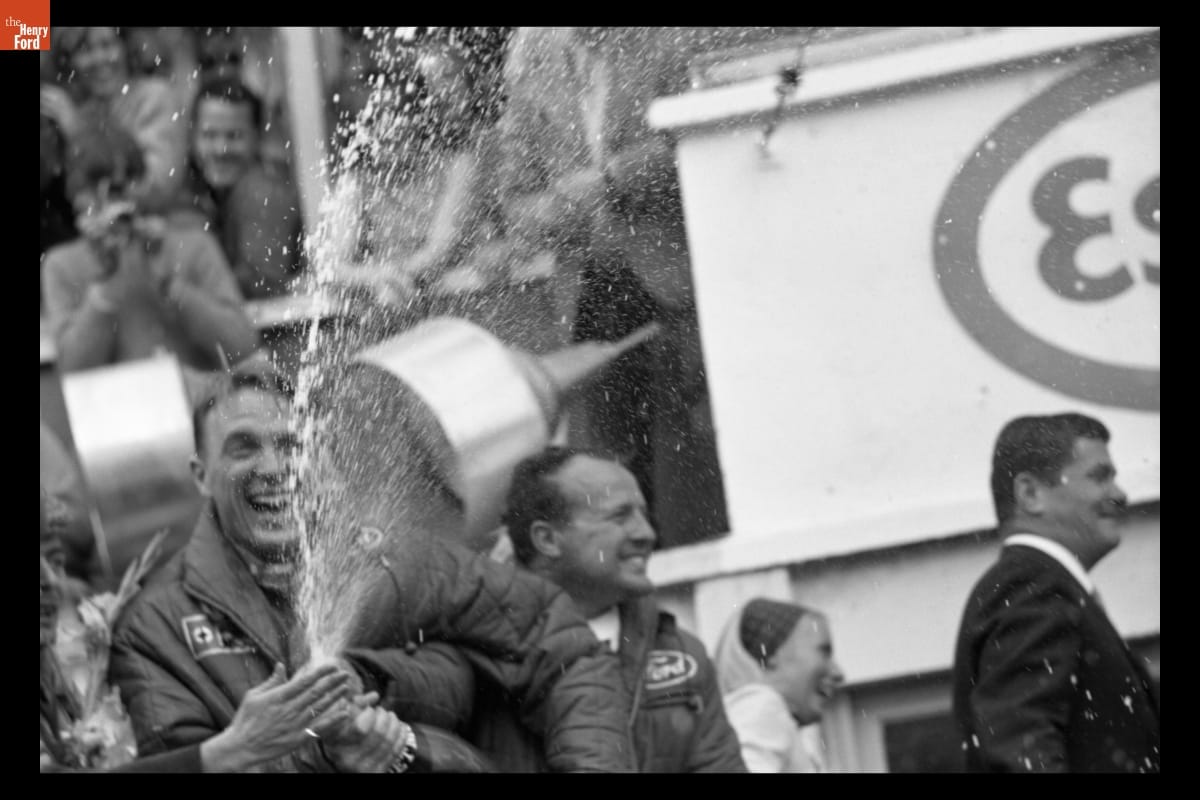
Gurney and Foyt were given congratulatory champagne. Gurney impulsively shook the bottle and sprayed its contents over everyone. In that moment, he invented a new victory tradition that spread to all sports. Like so much other racing history in that pivotal decade, Dave Friedman was there to document it. / THF127983
Dave Friedman’s photography will survive, and thanks to his work and the care he took to preserve it, a golden age in American motorsport will live on too. Learn more about the The Henry Ford’s Dave Friedman Collection here, or explore much of the collection on our Digital Collections page here or at Flickr here.
Matt Anderson is curator of transportation at The Henry Ford.
Keywords | |
|---|---|
Themes |