
Detroit News Clipping from March 14, 1954, "Hot Dog Wagon a Bright Spot of Old Detroit"
THF126047 / Detroit News Clipping from March 14, 1954, "Hot Dog Wagon a Bright Spot of Old Detroit"
01
Artifact Overview
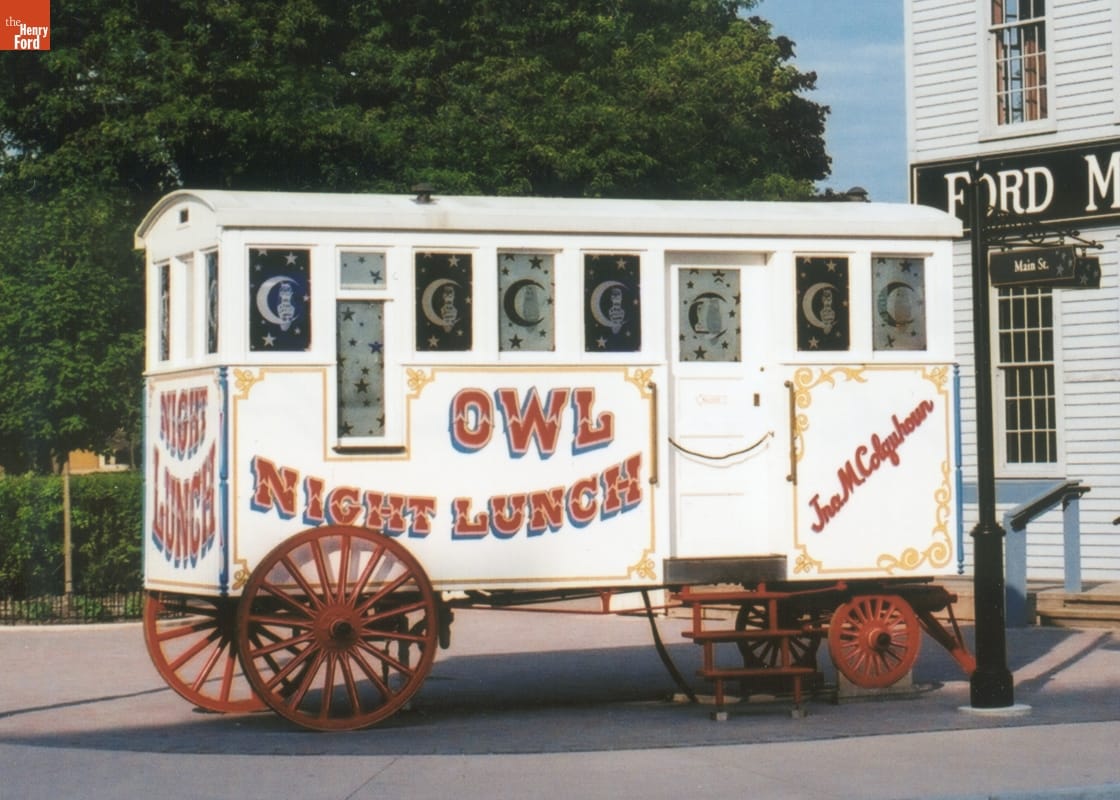
Night lunch wagons became popular in the 1890s. These horse-drawn "restaurants on wheels" served simple, affordable food like hot dogs after regular restaurants closed for the night. The Owl Night Lunch wagon pictured here operated in Detroit until 1926, when a city ordinance banned lunch wagons. Henry Ford, who had patronized the Owl as a young engineer, acquired it for Greenfield Village in 1927.
Artifact Details
Artifact
Clipping (Information artifact)
Date Made
14 March 1954
Subject Date
14 March 1954
Creators
Place of Creation
Collection Title
Location
By Request in the Benson Ford Research Center
Object ID
EI.186.13
Credit
From the Collections of The Henry Ford.
Material
Paper (Fiber product)
Technique
Printing (Process)
Photomechanical processes
Color
Black-and-white (Colors)
Dimensions
Height: 8.375 in (varies)
Width: 11.5 in (varies)
Keywords |
|---|
02
Related Artifacts
 Artifact
Owl Night Lunch Wagon Used by Henry Ford, circa 1890
The Henry Ford's Owl Night Lunch wagon is thought to be the last remaining horse-drawn lunch wagon in America. It served food to nighttime workers in downtown Detroit, and attracted such diverse clientele as reporters, politicians, policemen, factory workers, and supposedly even underworld characters! Among its customers was Henry Ford, a young engineer working at Edison Illuminating Company during the 1890s.
03
Related Content
 Set
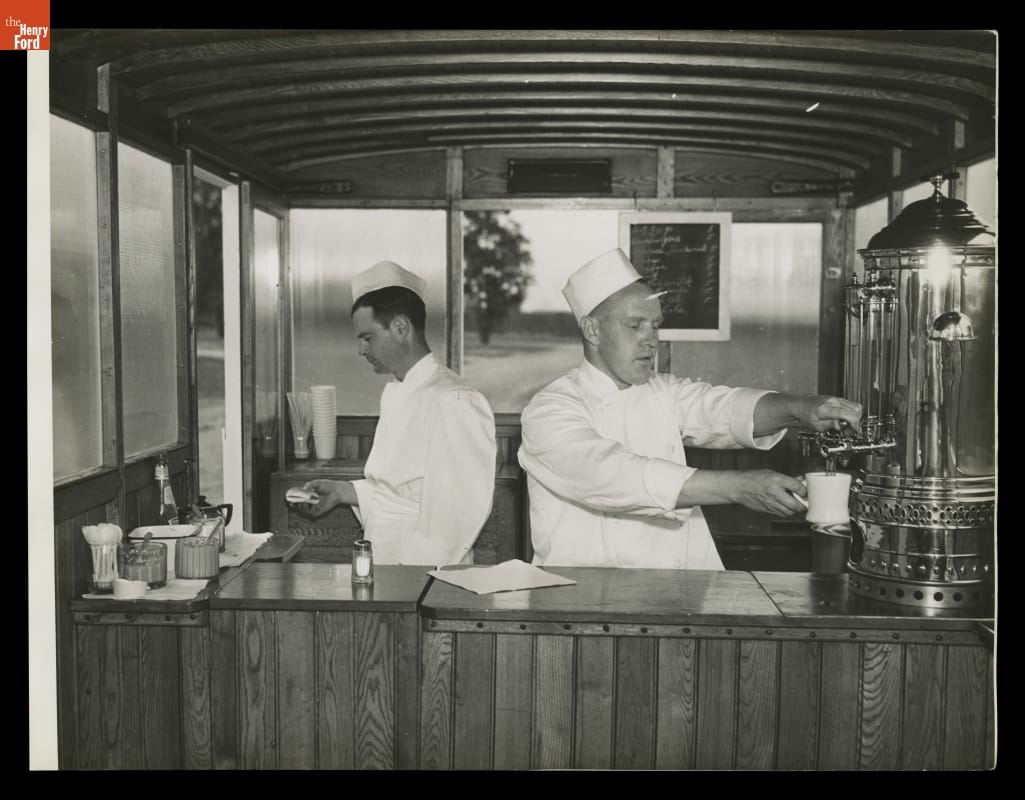
SetHenry Ford’s Owl Night Lunch Wagon
- 12 Artifacts
The Henry Ford's Owl Night Lunch wagon served nighttime workers in Detroit in the late 19th and early 20th centuries. Among its customers was Henry Ford, a young engineer working at Edison Illuminating Company during the 1890s. Ford acquired the Owl in 1927 and moved it to Greenfield Village, where it served as the first food service operation.