
Search
- Luggage Tag, 1955-1965 -
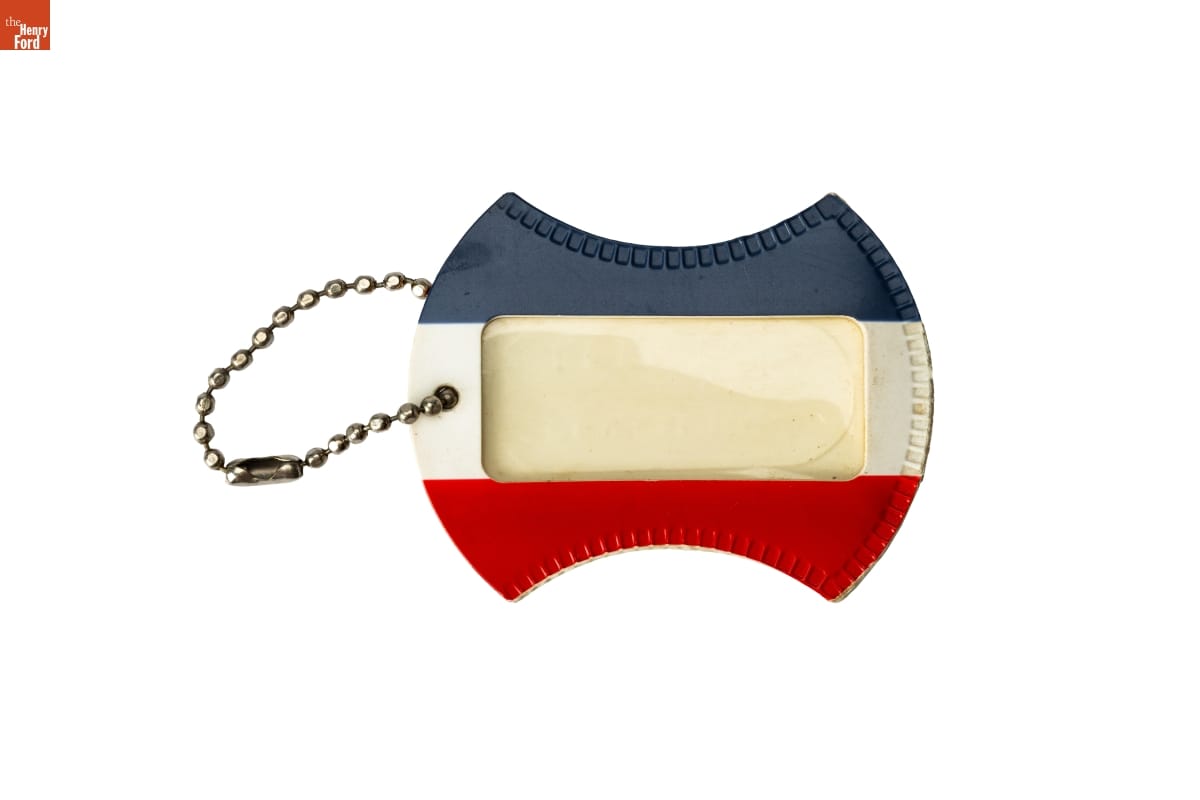
- 1955-1965
- Collections - Artifact
Luggage Tag, 1955-1965
- Luggage Tag, 1955-1965 -
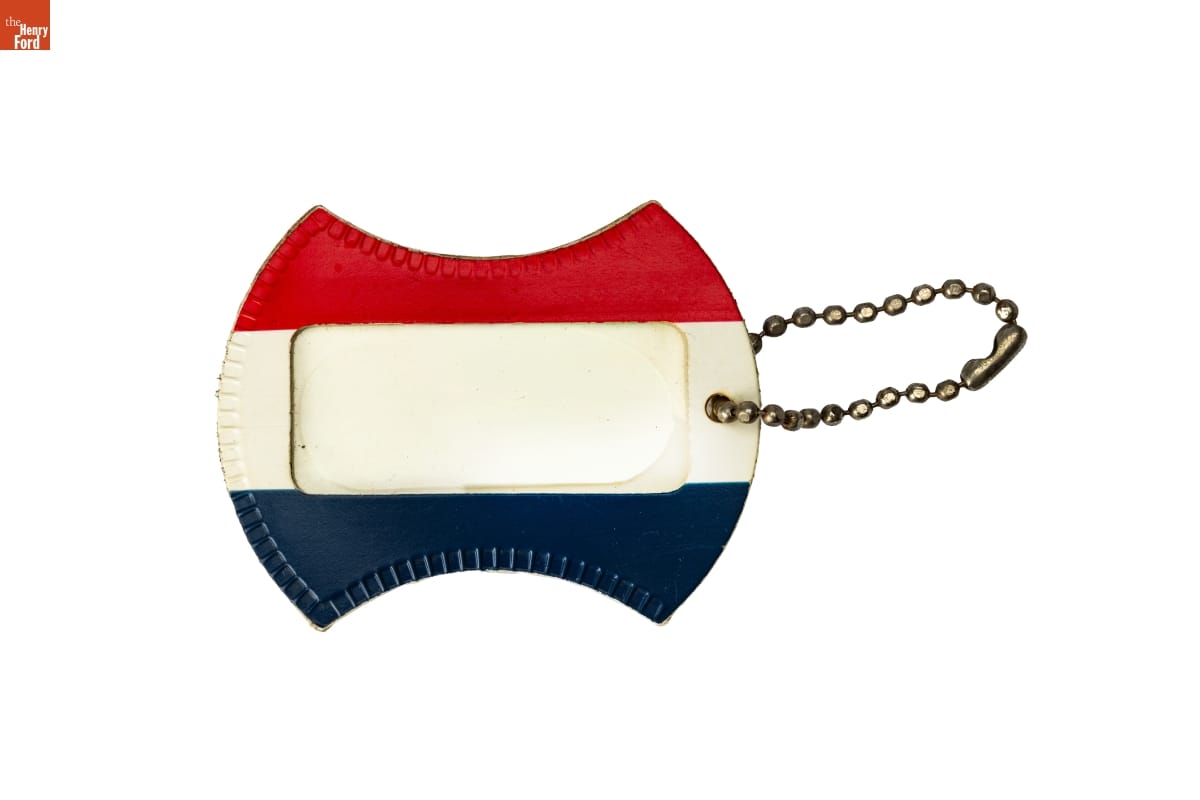
- 1955-1965
- Collections - Artifact
Luggage Tag, 1955-1965
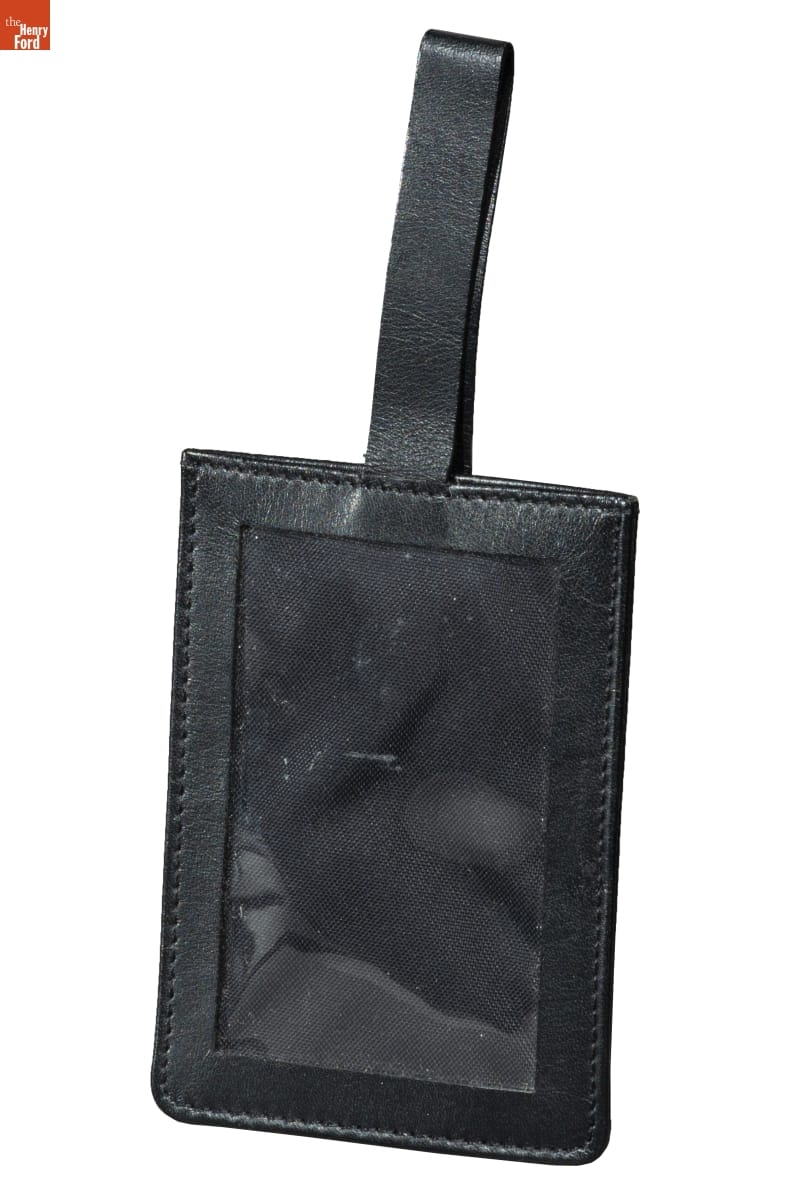
- Luggage Tag Holder, 2010 - Starting in the early 1980s--and already established as an internationally recognized architect--Michael Graves began to pursue a parallel career as a product designer. Over the following three and a half decades he and his collaborators designed everything from humble household goods to limited edition luxury items for clients as diverse as Steuben, Alessi, Target, J. C. Penney, and Disney.
- 2010
- Collections - Artifact
Luggage Tag Holder, 2010
Starting in the early 1980s--and already established as an internationally recognized architect--Michael Graves began to pursue a parallel career as a product designer. Over the following three and a half decades he and his collaborators designed everything from humble household goods to limited edition luxury items for clients as diverse as Steuben, Alessi, Target, J. C. Penney, and Disney.
- Zero Halliburton Pursuit Aluminum Luggage, 2020-2021 -
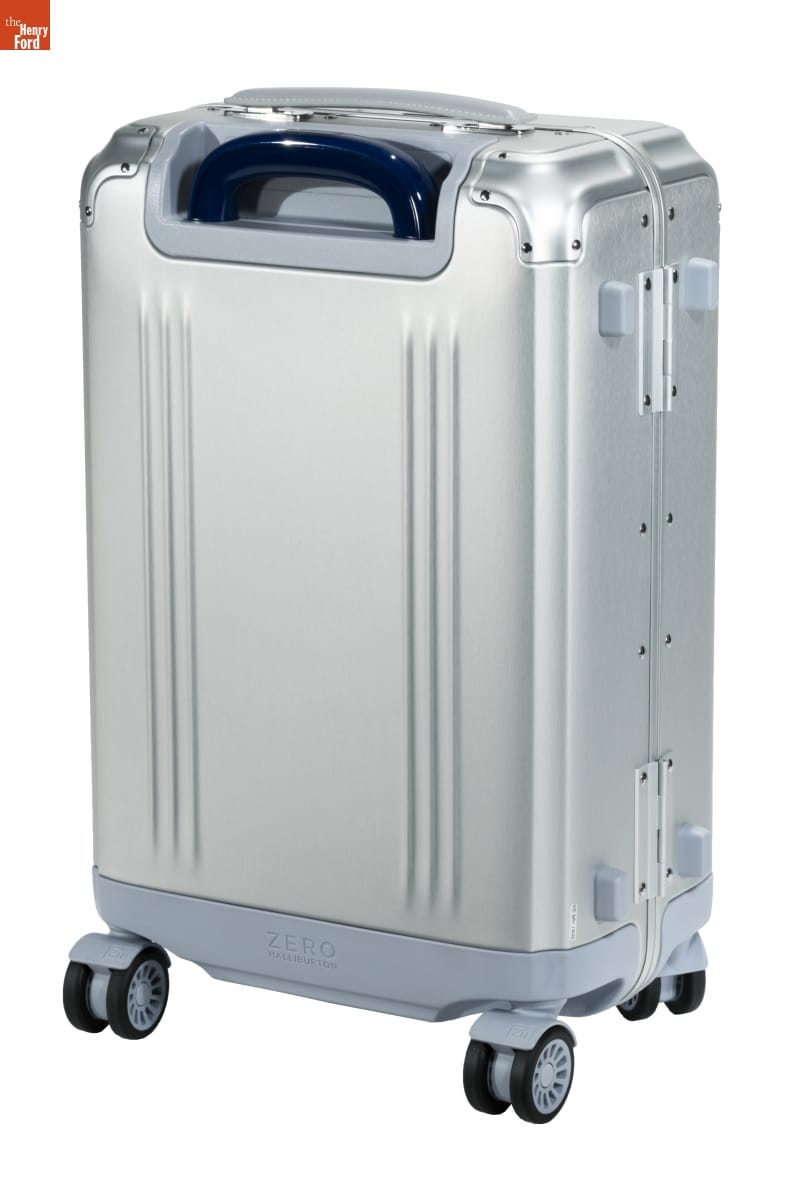
- 2020-2021
- Collections - Artifact
Zero Halliburton Pursuit Aluminum Luggage, 2020-2021
- Drawing, "Luggage Carrier Rack Assembly," Ford Automobile, January 1937 - The Ford Motor Company created over a million parts drawings from 1903 to 1957. Many of these drawings specify engineering requirements for the components of Ford-made vehicles--including automobiles, trucks, tractors, military vehicles and Tri-motor airplanes. Others document assembly components, stages of casting and forging, or experimental designs. Beginning in the 1940s, Ford transferred the drawings to microfilm.
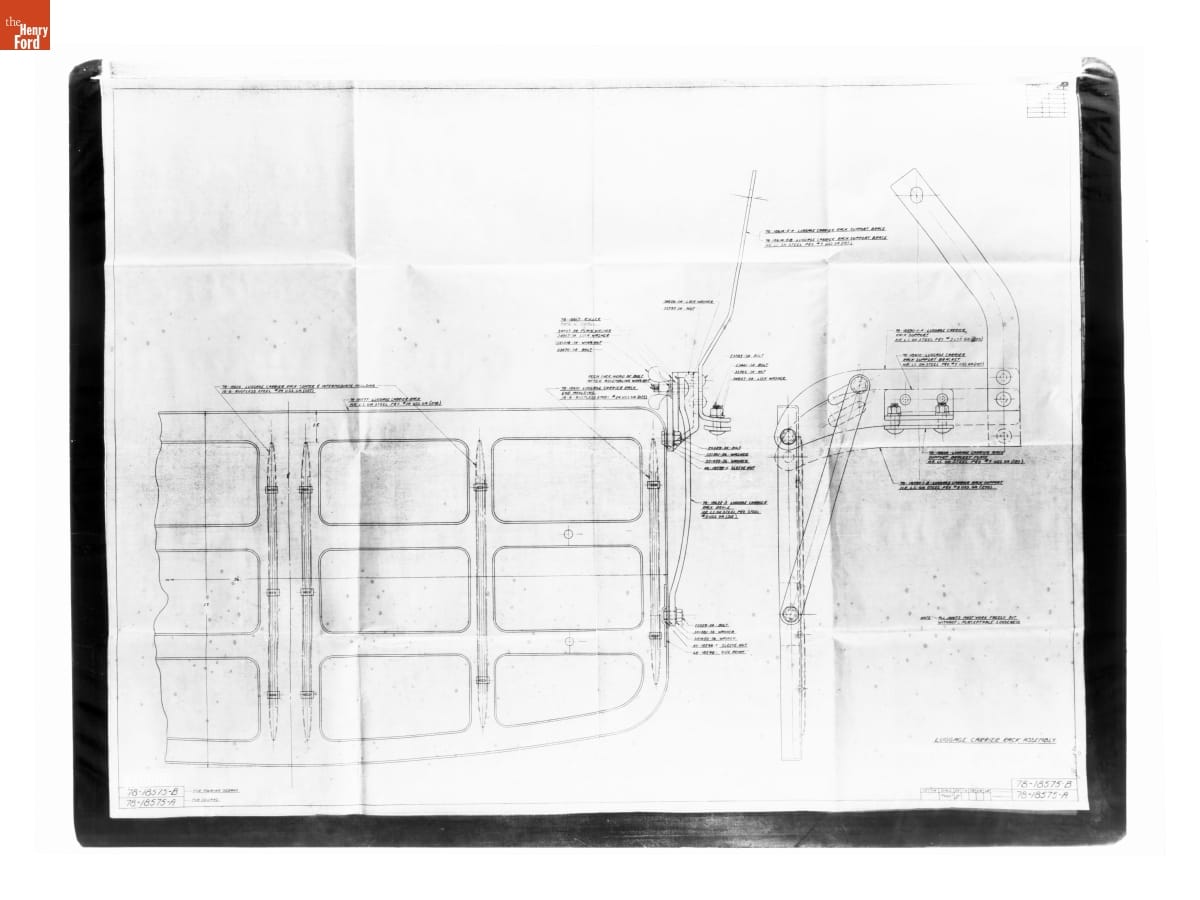
- January 20, 1937
- Collections - Artifact
Drawing, "Luggage Carrier Rack Assembly," Ford Automobile, January 1937
The Ford Motor Company created over a million parts drawings from 1903 to 1957. Many of these drawings specify engineering requirements for the components of Ford-made vehicles--including automobiles, trucks, tractors, military vehicles and Tri-motor airplanes. Others document assembly components, stages of casting and forging, or experimental designs. Beginning in the 1940s, Ford transferred the drawings to microfilm.
- Drawing, "Pad - Luggage Compartment Door Handle," December 21, 1951 - The Ford Motor Company created over a million parts drawings from 1903 to 1957. Many of these drawings specify engineering requirements for the components of Ford-made vehicles--including automobiles, trucks, tractors, military vehicles and Tri-motor airplanes. Others document assembly components, stages of casting and forging, or experimental designs. Beginning in the 1940s, Ford transferred the drawings to microfilm.
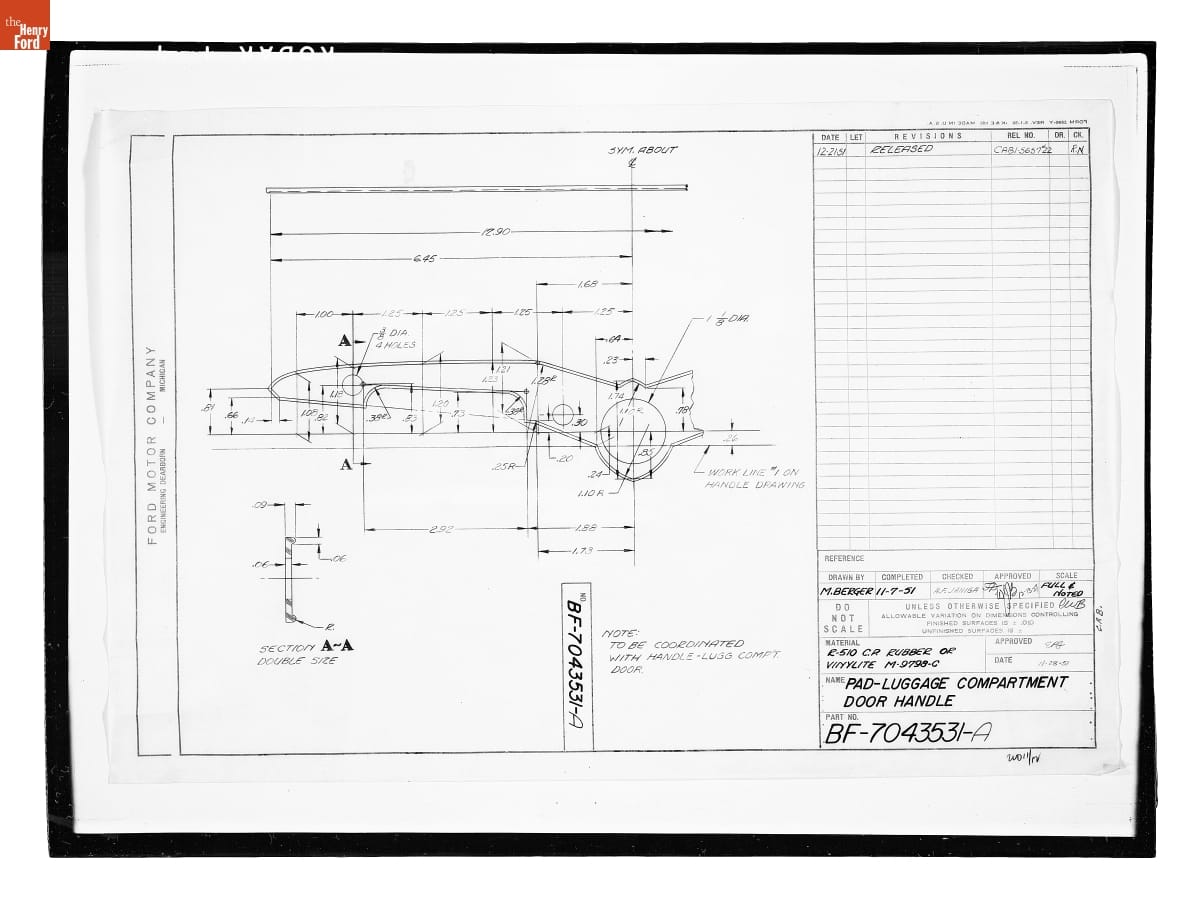
- December 21, 1951
- Collections - Artifact
Drawing, "Pad - Luggage Compartment Door Handle," December 21, 1951
The Ford Motor Company created over a million parts drawings from 1903 to 1957. Many of these drawings specify engineering requirements for the components of Ford-made vehicles--including automobiles, trucks, tractors, military vehicles and Tri-motor airplanes. Others document assembly components, stages of casting and forging, or experimental designs. Beginning in the 1940s, Ford transferred the drawings to microfilm.
- Enclosed Bollee Automobile with Luggage Rack, 1900-1910 - Leon Bollee Automobiles was established in Le Mans, France, in 1895 and produced vehicles until 1931. The company's founder and namesake, Leon Bollee, made another significant contribution to transportation history. He befriended Wilbur Wright during Wright's successful demonstration flights near Le Mans in 1908. Bollee offered Wright the use of his factory and mechanics for the duration of the flights.
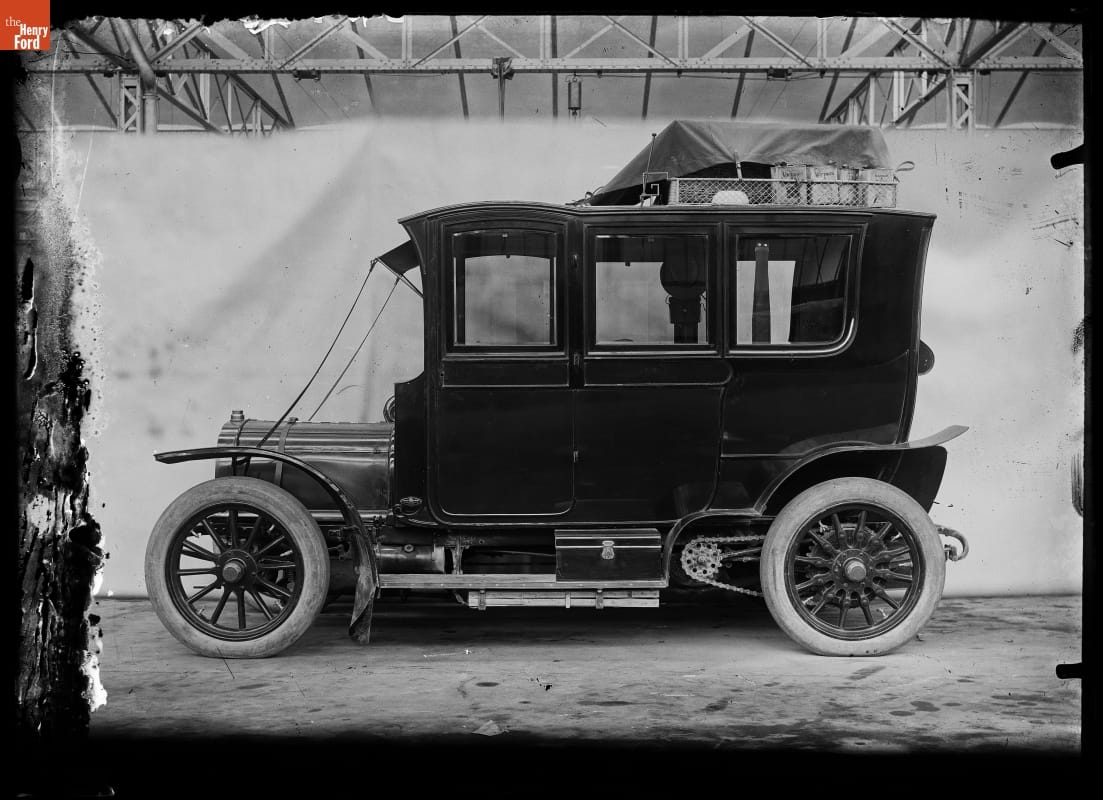
- circa 1900-circa 1910
- Collections - Artifact
Enclosed Bollee Automobile with Luggage Rack, 1900-1910
Leon Bollee Automobiles was established in Le Mans, France, in 1895 and produced vehicles until 1931. The company's founder and namesake, Leon Bollee, made another significant contribution to transportation history. He befriended Wilbur Wright during Wright's successful demonstration flights near Le Mans in 1908. Bollee offered Wright the use of his factory and mechanics for the duration of the flights.
- Drawing, "Luggage Carrier Rack Assembly," Ford Automobile, February 12, 1937 - The Ford Motor Company created over a million parts drawings from 1903 to 1957. Many of these drawings specify engineering requirements for the components of Ford-made vehicles--including automobiles, trucks, tractors, military vehicles and Tri-motor airplanes. Others document assembly components, stages of casting and forging, or experimental designs. Beginning in the 1940s, Ford transferred the drawings to microfilm.
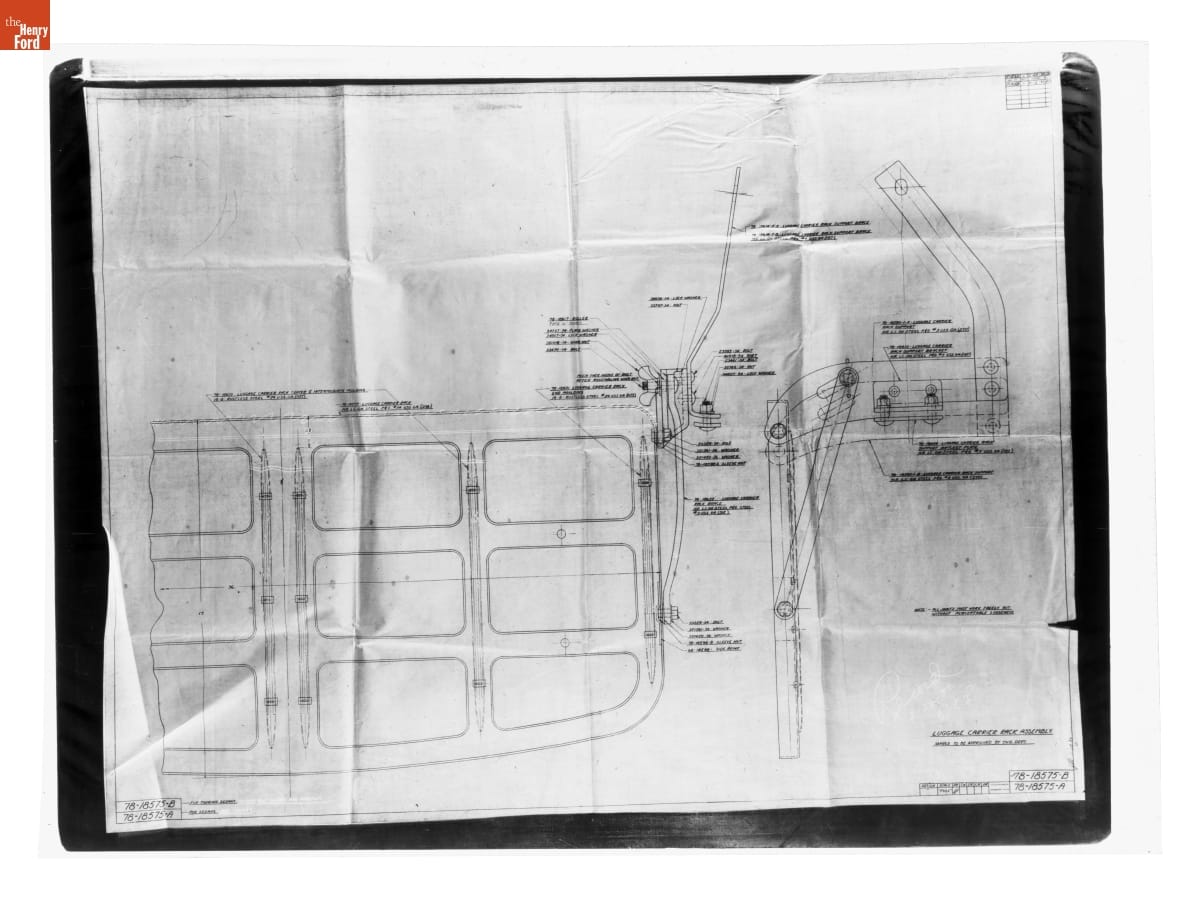
- February 12, 1937
- Collections - Artifact
Drawing, "Luggage Carrier Rack Assembly," Ford Automobile, February 12, 1937
The Ford Motor Company created over a million parts drawings from 1903 to 1957. Many of these drawings specify engineering requirements for the components of Ford-made vehicles--including automobiles, trucks, tractors, military vehicles and Tri-motor airplanes. Others document assembly components, stages of casting and forging, or experimental designs. Beginning in the 1940s, Ford transferred the drawings to microfilm.
- Drawing, "Weatherstrip, Luggage Compartment Door," Ford Automobile, August 21, 1956 - The Ford Motor Company created over a million parts drawings from 1903 to 1957. Many of these drawings specify engineering requirements for the components of Ford-made vehicles--including automobiles, trucks, tractors, military vehicles and Tri-motor airplanes. Others document assembly components, stages of casting and forging, or experimental designs. Beginning in the 1940s, Ford transferred the drawings to microfilm.
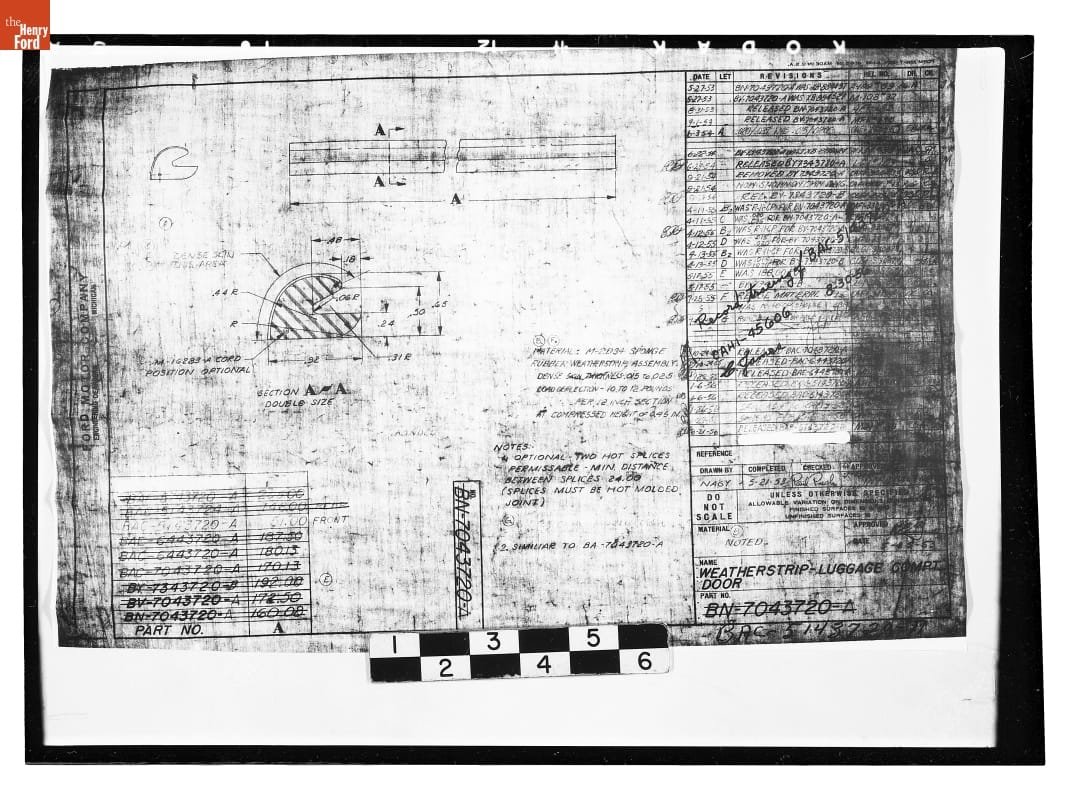
- August 21, 1956
- Collections - Artifact
Drawing, "Weatherstrip, Luggage Compartment Door," Ford Automobile, August 21, 1956
The Ford Motor Company created over a million parts drawings from 1903 to 1957. Many of these drawings specify engineering requirements for the components of Ford-made vehicles--including automobiles, trucks, tractors, military vehicles and Tri-motor airplanes. Others document assembly components, stages of casting and forging, or experimental designs. Beginning in the 1940s, Ford transferred the drawings to microfilm.
- Drawing, "Luggage Carrier Rack Assembly," Ford Automobile, April 1, 1937 - The Ford Motor Company created over a million parts drawings from 1903 to 1957. Many of these drawings specify engineering requirements for the components of Ford-made vehicles--including automobiles, trucks, tractors, military vehicles and Tri-motor airplanes. Others document assembly components, stages of casting and forging, or experimental designs. Beginning in the 1940s, Ford transferred the drawings to microfilm.
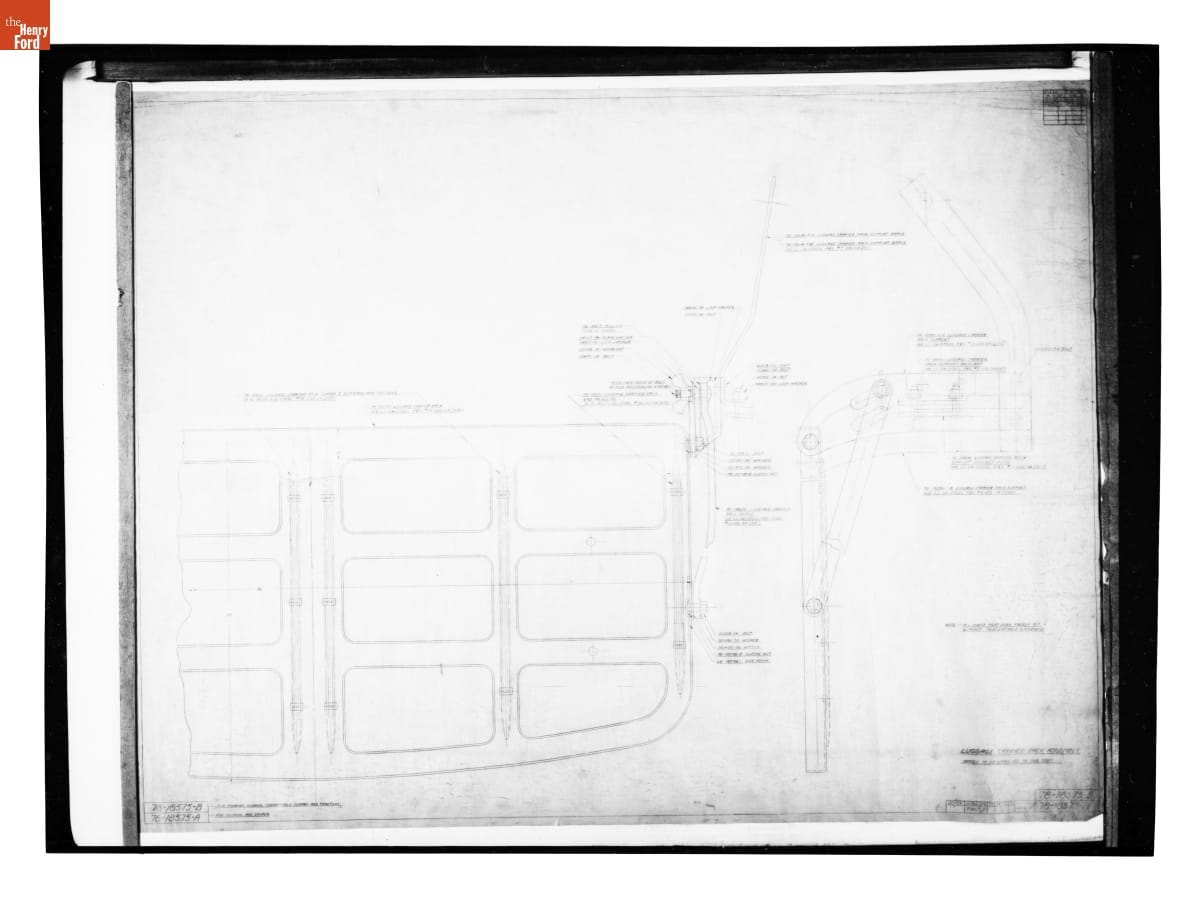
- April 01, 1937
- Collections - Artifact
Drawing, "Luggage Carrier Rack Assembly," Ford Automobile, April 1, 1937
The Ford Motor Company created over a million parts drawings from 1903 to 1957. Many of these drawings specify engineering requirements for the components of Ford-made vehicles--including automobiles, trucks, tractors, military vehicles and Tri-motor airplanes. Others document assembly components, stages of casting and forging, or experimental designs. Beginning in the 1940s, Ford transferred the drawings to microfilm.