
Search
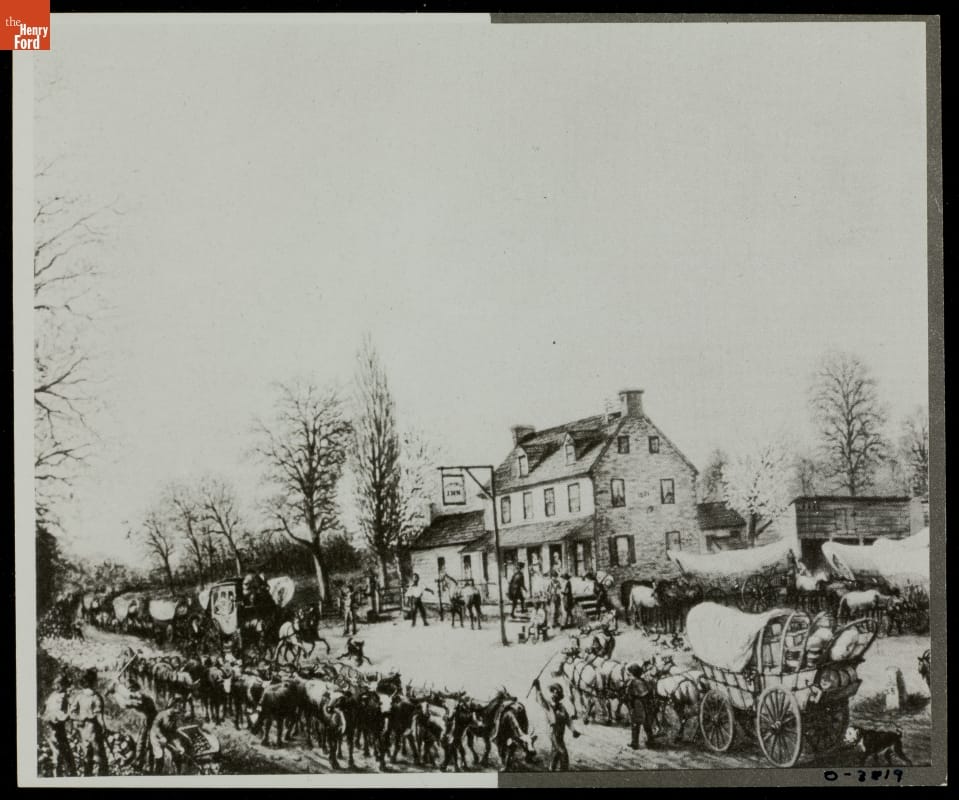
- Stage Coaches and Conestoga Wagons in Front of an Inn (Photograph of a Drawing), circa 1840 - In the 1800s, long-distance travelers often rode public coaches "in stages," jostling along rough country roads with mail, freight, and other passengers. Every few hours, the coach would stop to change horses. Inns served as popular stagecoach stops where weary travelers could find meals, lodging, and conversation. This illustration depicts a variety of traffic at the Fairview Inn near Baltimore, Maryland.
- circa 1840
- Collections - Artifact
Stage Coaches and Conestoga Wagons in Front of an Inn (Photograph of a Drawing), circa 1840
In the 1800s, long-distance travelers often rode public coaches "in stages," jostling along rough country roads with mail, freight, and other passengers. Every few hours, the coach would stop to change horses. Inns served as popular stagecoach stops where weary travelers could find meals, lodging, and conversation. This illustration depicts a variety of traffic at the Fairview Inn near Baltimore, Maryland.
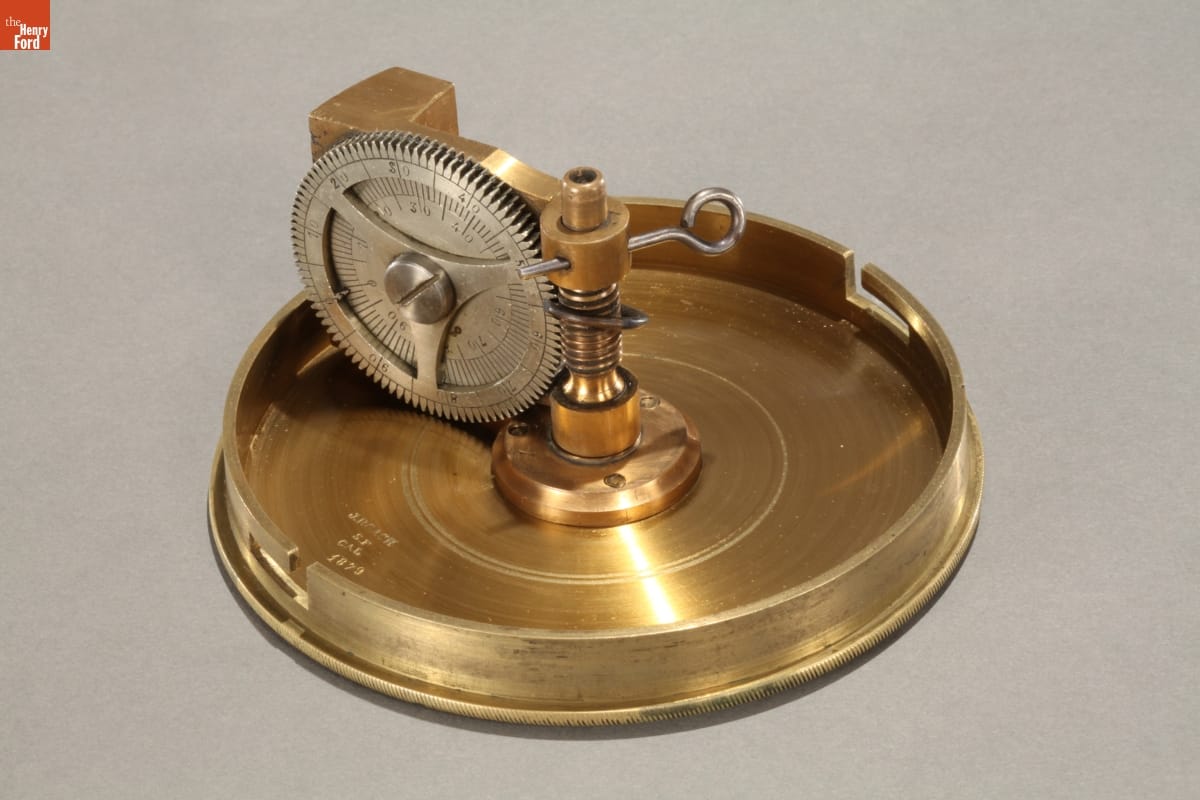
- Stagecoach Odometer, 1879 - This stagecoach odometer, built by San Francisco inventor John Roach in 1879, counted wheel revolutions to register the distance a coach traveled. Stagecoach lines used the information to calculate speed and how much to pay operators. The odometer was secured on the wheel hub and protected by a leather cover.
- 1879
- Collections - Artifact
Stagecoach Odometer, 1879
This stagecoach odometer, built by San Francisco inventor John Roach in 1879, counted wheel revolutions to register the distance a coach traveled. Stagecoach lines used the information to calculate speed and how much to pay operators. The odometer was secured on the wheel hub and protected by a leather cover.
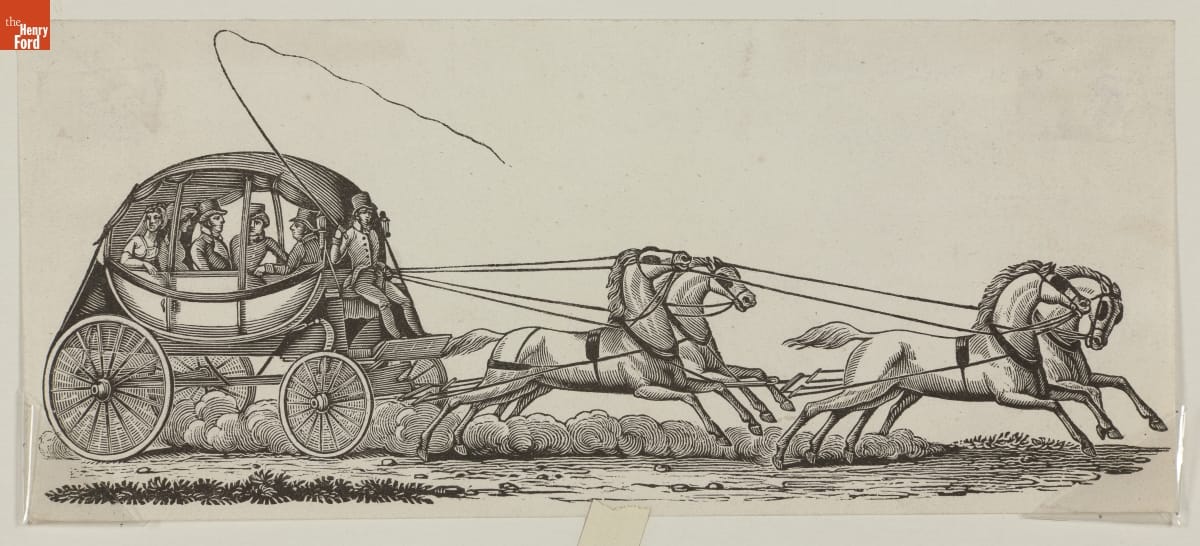
- Engraving, Stagecoach, 1825-1830 - Before railroads, long-distance travelers often rode in public coaches. They would jostle along rough country roads with mail, freight, and other passengers "in stages," stopping every few hours to change horses. This image depicting a loaded stagecoach in transit was drawn and engraved by Philadelphia artist Alexander Robb.
- 1825-1830
- Collections - Artifact
Engraving, Stagecoach, 1825-1830
Before railroads, long-distance travelers often rode in public coaches. They would jostle along rough country roads with mail, freight, and other passengers "in stages," stopping every few hours to change horses. This image depicting a loaded stagecoach in transit was drawn and engraved by Philadelphia artist Alexander Robb.
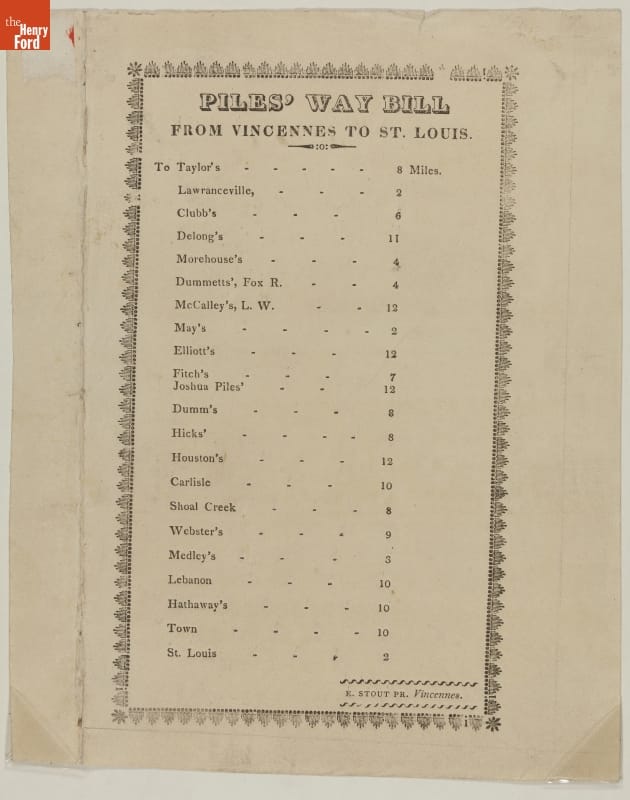
- Waybill for Piles Stagecoach Line from Vincennes, Indiana to St. Louis, Missouri, circa 1825 - This circa 1825 waybill lists the distances in miles between taverns along Piles' stage coach line between Vincennes, Indiana, and St. Louis, Missouri.
- circa 1825
- Collections - Artifact
Waybill for Piles Stagecoach Line from Vincennes, Indiana to St. Louis, Missouri, circa 1825
This circa 1825 waybill lists the distances in miles between taverns along Piles' stage coach line between Vincennes, Indiana, and St. Louis, Missouri.
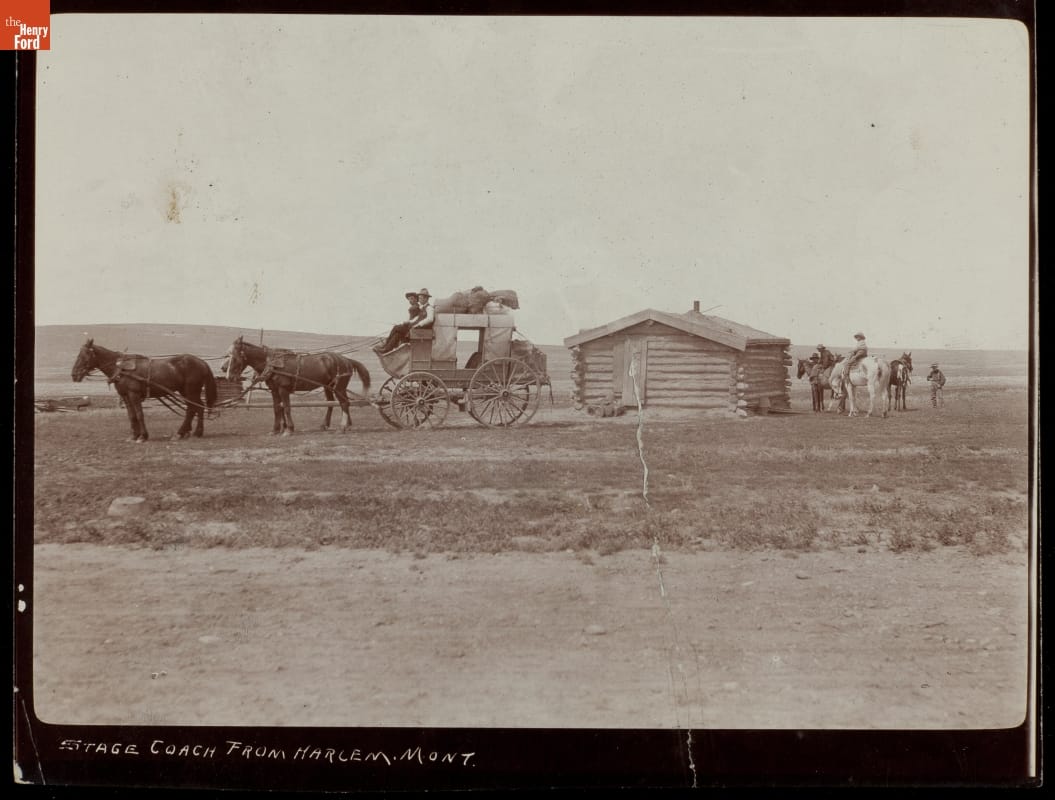
- Stagecoach, Harlem, Montana, circa 1900 - Discomfort, loneliness, and the ever-present danger of being robbed while jostling through the open West on a stagecoach can be easily imagined in this Detroit Publishing Company photograph of an outpost in northern Montana. But before railroads spanned the continent, many relied on stage lines for mail delivery and long-distance transportation.
- circa 1900
- Collections - Artifact
Stagecoach, Harlem, Montana, circa 1900
Discomfort, loneliness, and the ever-present danger of being robbed while jostling through the open West on a stagecoach can be easily imagined in this Detroit Publishing Company photograph of an outpost in northern Montana. But before railroads spanned the continent, many relied on stage lines for mail delivery and long-distance transportation.
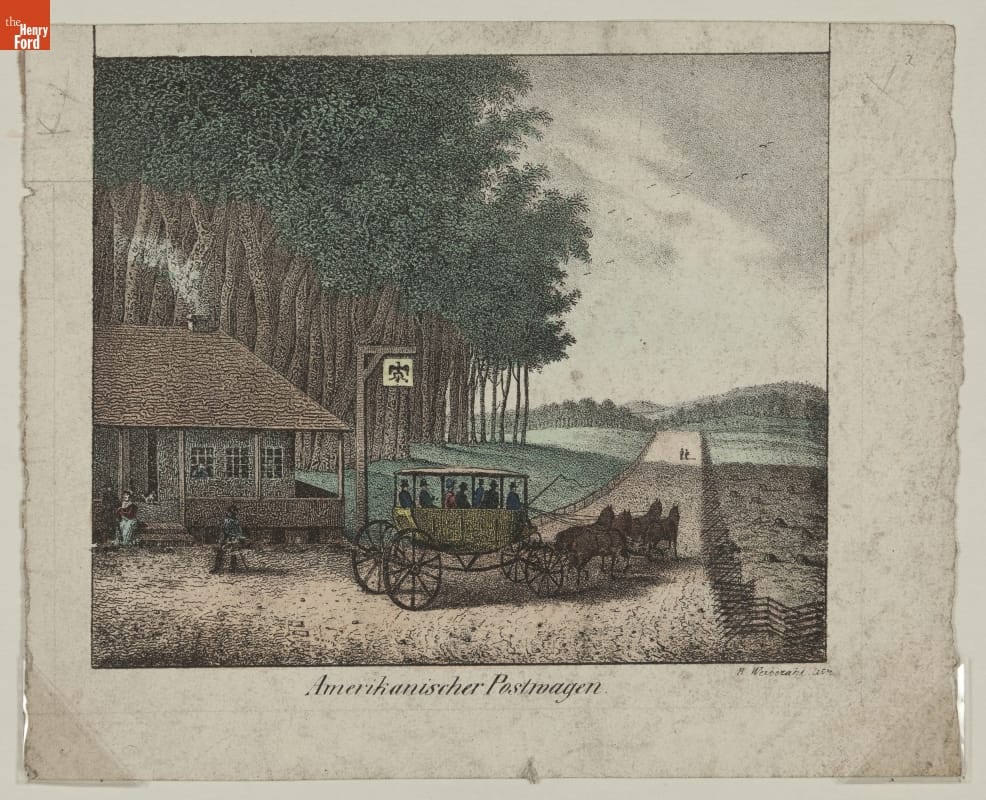
- Roadside Taverns - Stage wagons were light and open, though not as comfortable as later Concord stagecoaches. They could go about five miles per hour, barring bad weather or road obstructions. The gaily painted signboards of roadside taverns beckoned weary travelers, promising rest, meals, and a chance to catch up on news. Stage wagon drivers used the stop to care for their horses.
- May 26, 2015
- Collections - Set
Roadside Taverns
Stage wagons were light and open, though not as comfortable as later Concord stagecoaches. They could go about five miles per hour, barring bad weather or road obstructions. The gaily painted signboards of roadside taverns beckoned weary travelers, promising rest, meals, and a chance to catch up on news. Stage wagon drivers used the stop to care for their horses.
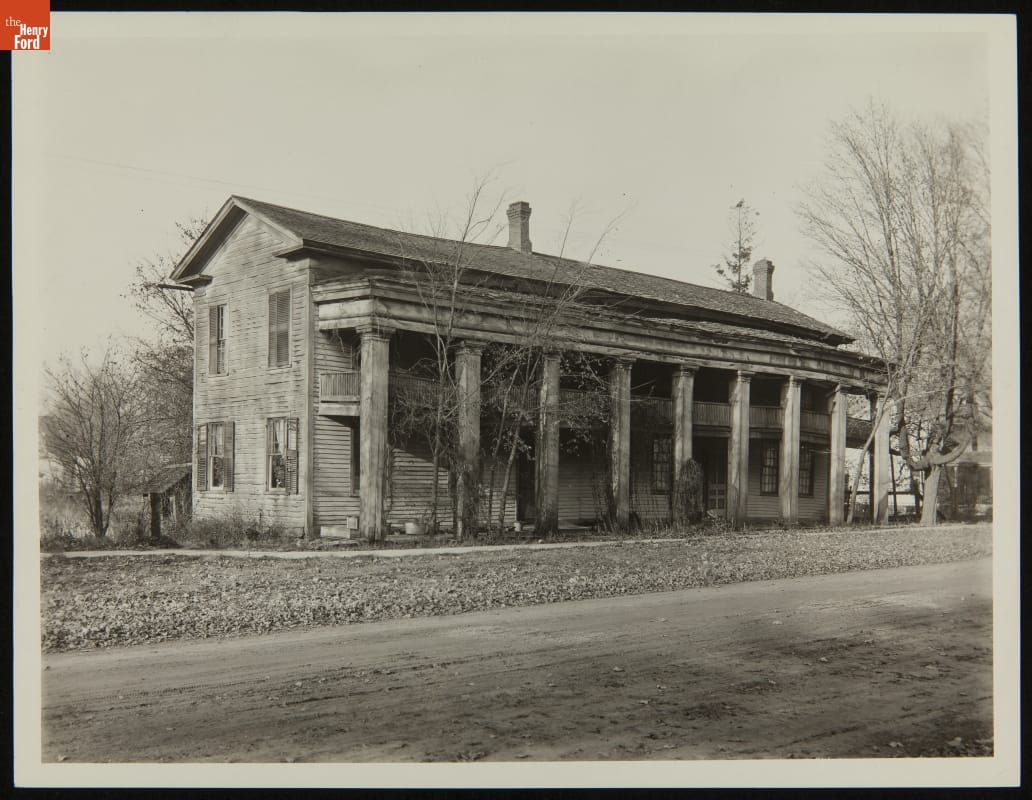
- Past Lives of the Eagle Tavern - This tavern, constructed 1831-2 in Clinton, Michigan, was originally a stagecoach stop on the Detroit-to-Chicago road. In 1927, Henry Ford purchased the run-down building from resident Ella Smith -- the daughter of Walter Smith, who had run the hostelry as Smith's Hotel between 1868 and 1896. Moved to Greenfield Village, the restored and renamed Clinton Inn opened in 1929.
- May 26, 2015
- Collections - Set
Past Lives of the Eagle Tavern
This tavern, constructed 1831-2 in Clinton, Michigan, was originally a stagecoach stop on the Detroit-to-Chicago road. In 1927, Henry Ford purchased the run-down building from resident Ella Smith -- the daughter of Walter Smith, who had run the hostelry as Smith's Hotel between 1868 and 1896. Moved to Greenfield Village, the restored and renamed Clinton Inn opened in 1929.
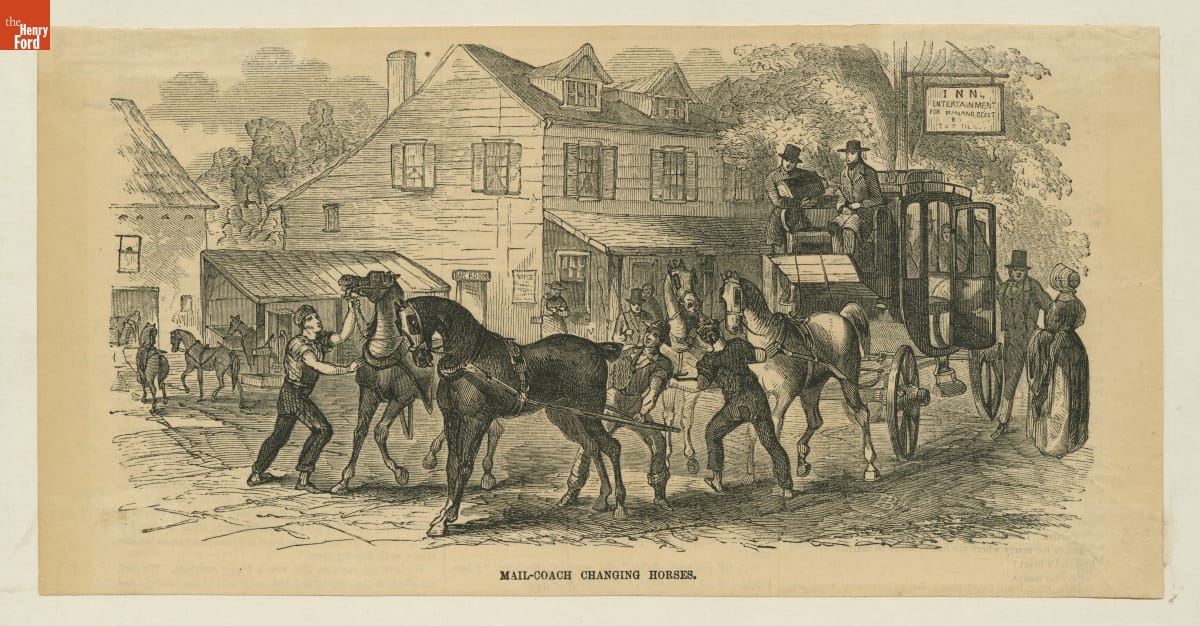
- Mail Coaches Changing Horses at a New England Tavern, 1855 - This wood engraving depicts a typical mid-19th-century travel scene. Traveling by stagecoach meant being jostled on rough country roads and stopping every few hours to change horses. Travelers squeezed into coaches and roadside inns with strangers.
- 1855
- Collections - Artifact
Mail Coaches Changing Horses at a New England Tavern, 1855
This wood engraving depicts a typical mid-19th-century travel scene. Traveling by stagecoach meant being jostled on rough country roads and stopping every few hours to change horses. Travelers squeezed into coaches and roadside inns with strangers.
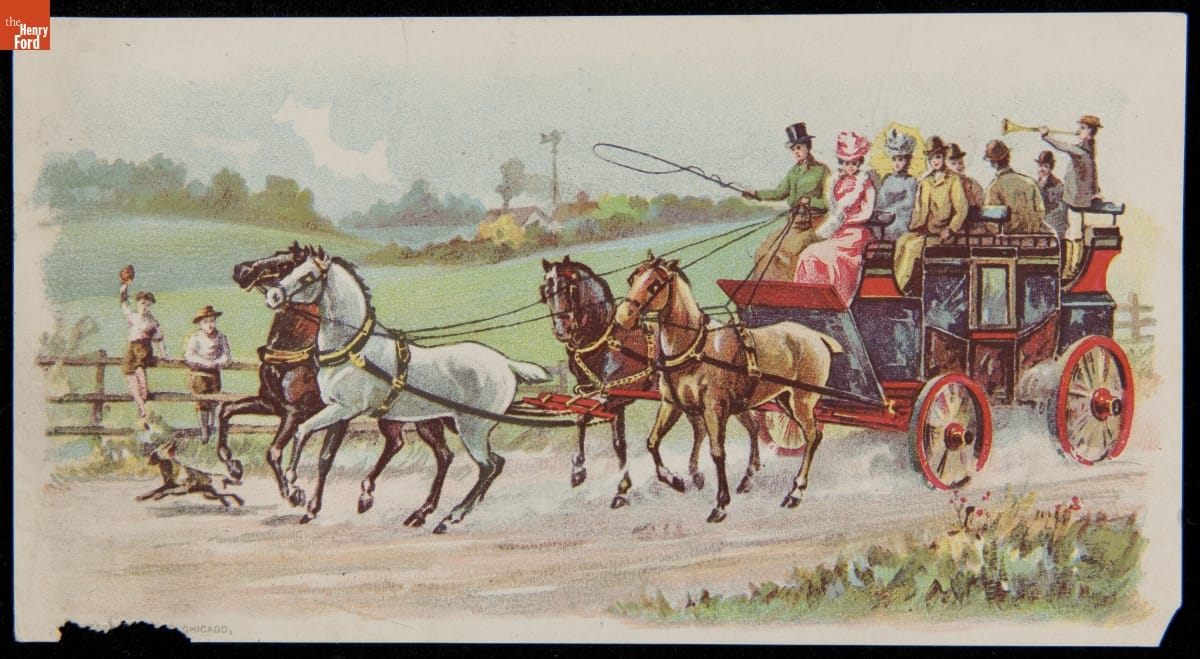
- Stagecoach Travel - In the last third of the nineteenth century, an unprecedented variety of consumer goods and services flooded the American market. Advertisers, armed with new methods of color printing, bombarded potential customers with trade cards. Americans enjoyed and often saved the vibrant little advertisements found in product packages or distributed by local merchants. Many survive as historical records of commercialism in the United States.
- May 26, 2015
- Collections - Set
Stagecoach Travel
In the last third of the nineteenth century, an unprecedented variety of consumer goods and services flooded the American market. Advertisers, armed with new methods of color printing, bombarded potential customers with trade cards. Americans enjoyed and often saved the vibrant little advertisements found in product packages or distributed by local merchants. Many survive as historical records of commercialism in the United States.
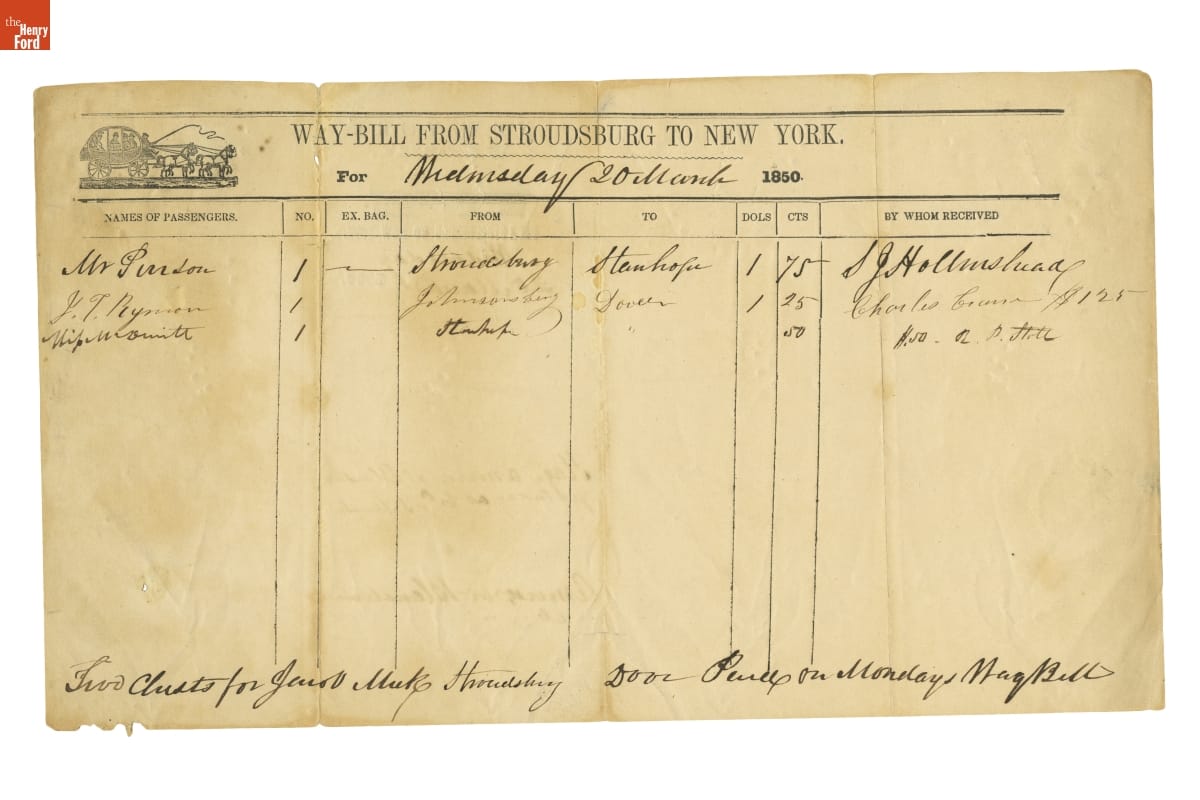
- Waybill for Stroudsburg-New York Line Stagecoach, 1850 - Waybills helped nineteenth-century stage lines keep track of fares and passengers. For each journey, company agents would fill out passenger names, destinations, number of seats and collected fares. Additional notes sometimes listed types of baggage or other special instructions. This waybill documents a trip from Stroudsburg to New York in March 1850.
- March 20, 1850
- Collections - Artifact
Waybill for Stroudsburg-New York Line Stagecoach, 1850
Waybills helped nineteenth-century stage lines keep track of fares and passengers. For each journey, company agents would fill out passenger names, destinations, number of seats and collected fares. Additional notes sometimes listed types of baggage or other special instructions. This waybill documents a trip from Stroudsburg to New York in March 1850.