
Search
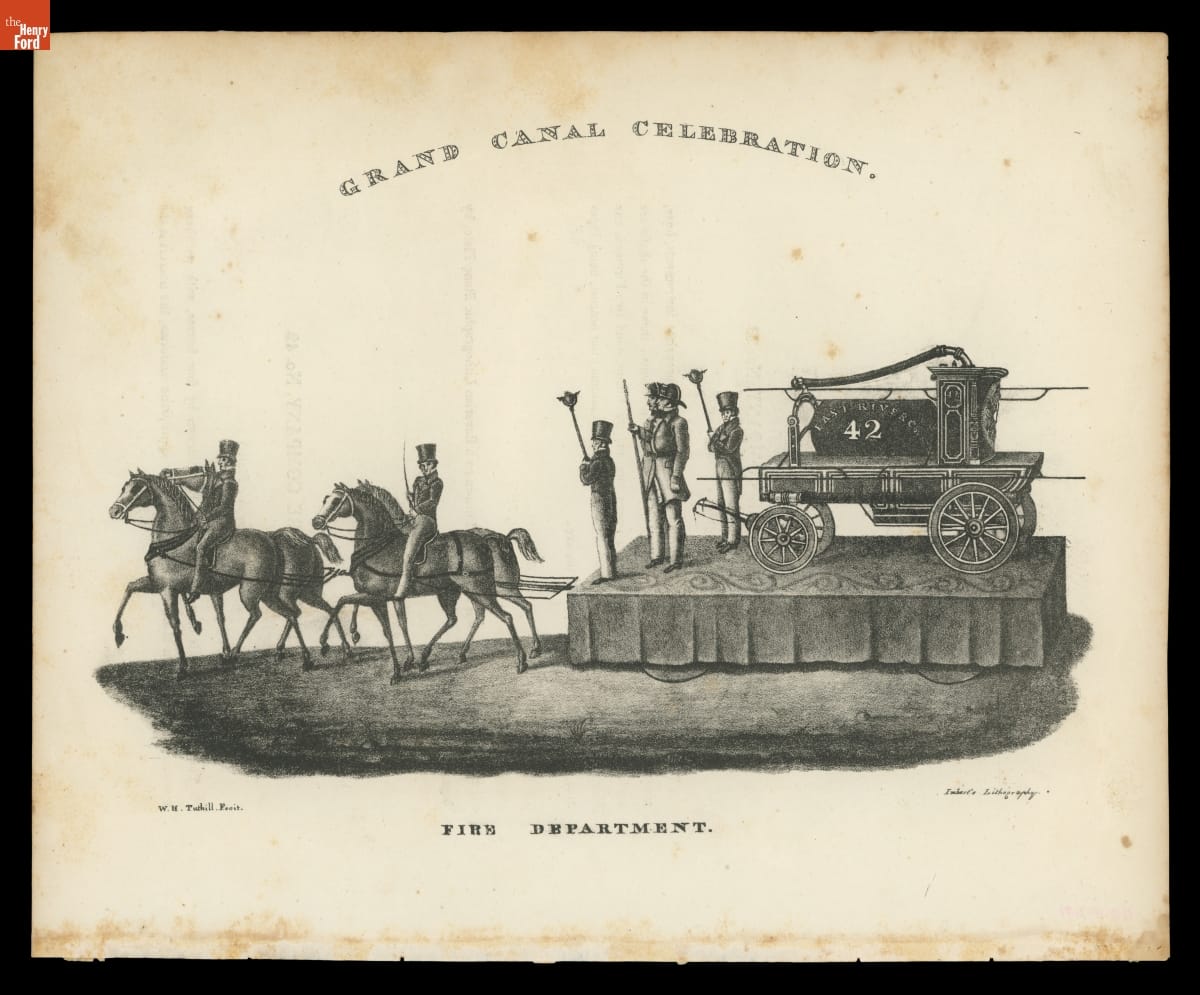
- Lithograph, "Grand Canal Celebration, Fire Department," November 4, 1825 - The Erie Canal connected the Hudson River and New York City with Lake Erie and the Upper Midwest. Its completion in 1825 was cause for grand celebrations up and down the canal's 363-mile length. This lithograph shows a fire department participating in a parade to commemorate the canal's opening.
- November 04, 1825
- Collections - Artifact
Lithograph, "Grand Canal Celebration, Fire Department," November 4, 1825
The Erie Canal connected the Hudson River and New York City with Lake Erie and the Upper Midwest. Its completion in 1825 was cause for grand celebrations up and down the canal's 363-mile length. This lithograph shows a fire department participating in a parade to commemorate the canal's opening.
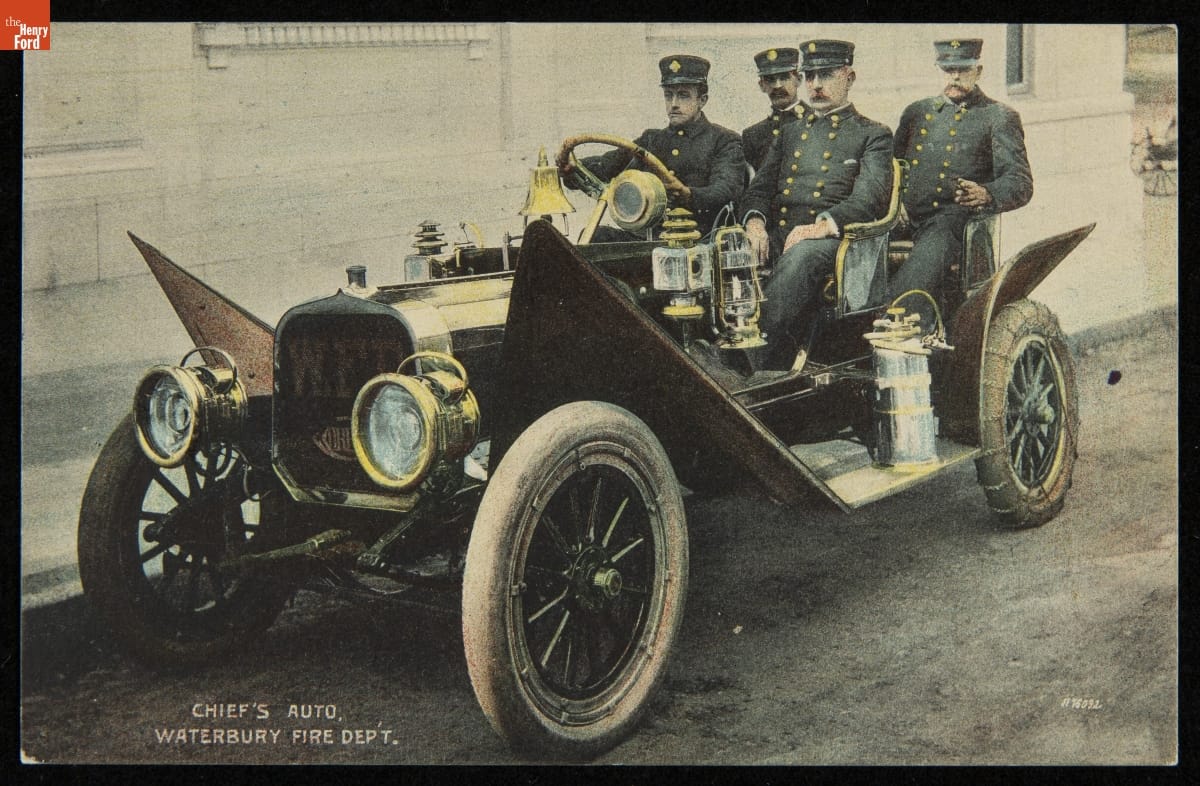
- Postcard, "Chief's Auto, Waterbury Fire Dept.," 1912 - Fire departments, eager to eliminate the costs and complications of horses, were quick to adopt motor vehicles. In addition to motorized pumpers and trucks, many departments purchased automobiles for use by fire chiefs. With a car, a fire chief and staff could travel swiftly to the scene of a fire.
- February 28, 1912
- Collections - Artifact
Postcard, "Chief's Auto, Waterbury Fire Dept.," 1912
Fire departments, eager to eliminate the costs and complications of horses, were quick to adopt motor vehicles. In addition to motorized pumpers and trucks, many departments purchased automobiles for use by fire chiefs. With a car, a fire chief and staff could travel swiftly to the scene of a fire.
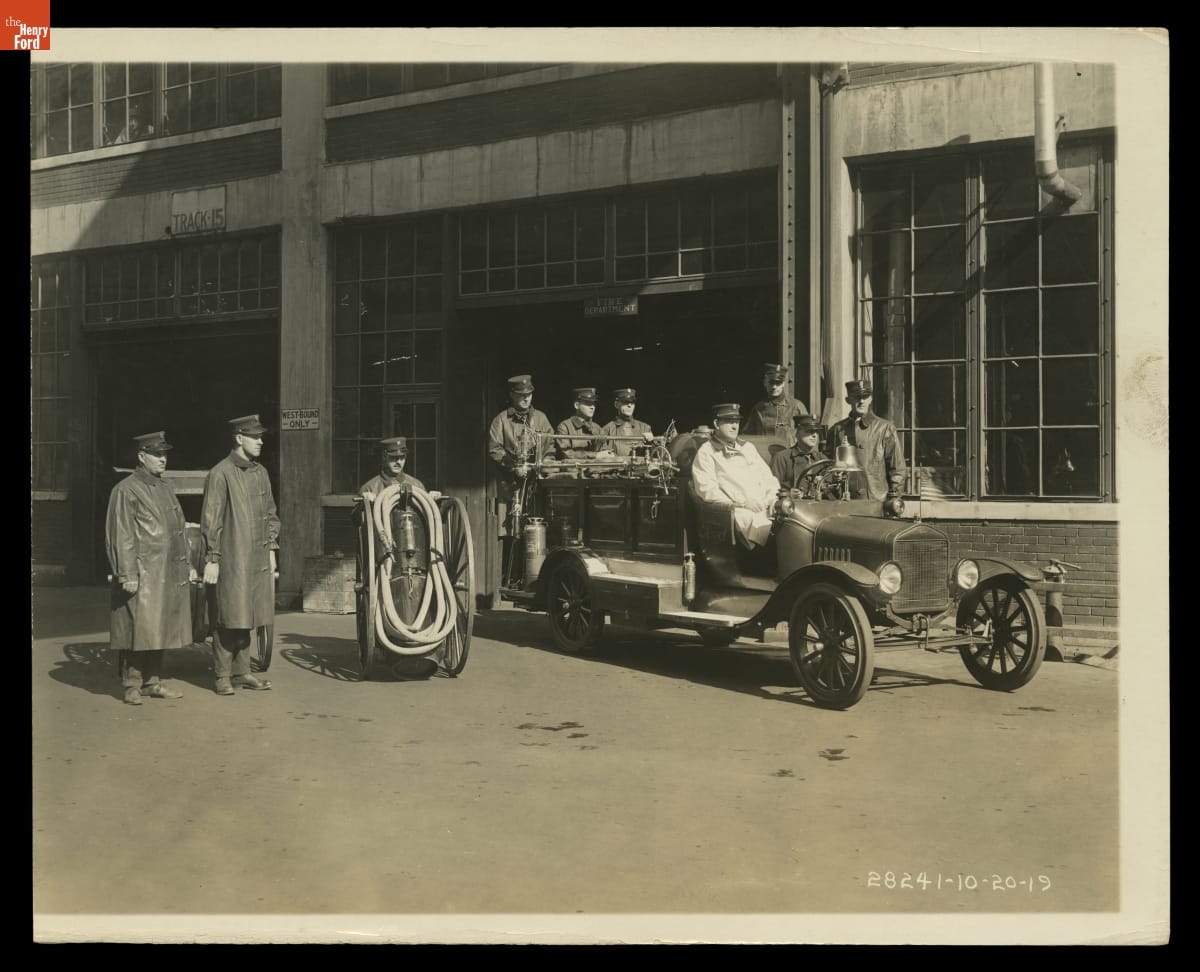
- Ford Highland Park Fire Department, October 20, 1919 - Fire was a constant threat to factories and industrial facilities. Large plants often operated their own fire departments to protect from the danger. Ford Motor Company maintained a fire department at its Highland Park plant near Detroit, Michigan. Naturally, Ford's department used Model T fire trucks.
- October 20, 1919
- Collections - Artifact
Ford Highland Park Fire Department, October 20, 1919
Fire was a constant threat to factories and industrial facilities. Large plants often operated their own fire departments to protect from the danger. Ford Motor Company maintained a fire department at its Highland Park plant near Detroit, Michigan. Naturally, Ford's department used Model T fire trucks.
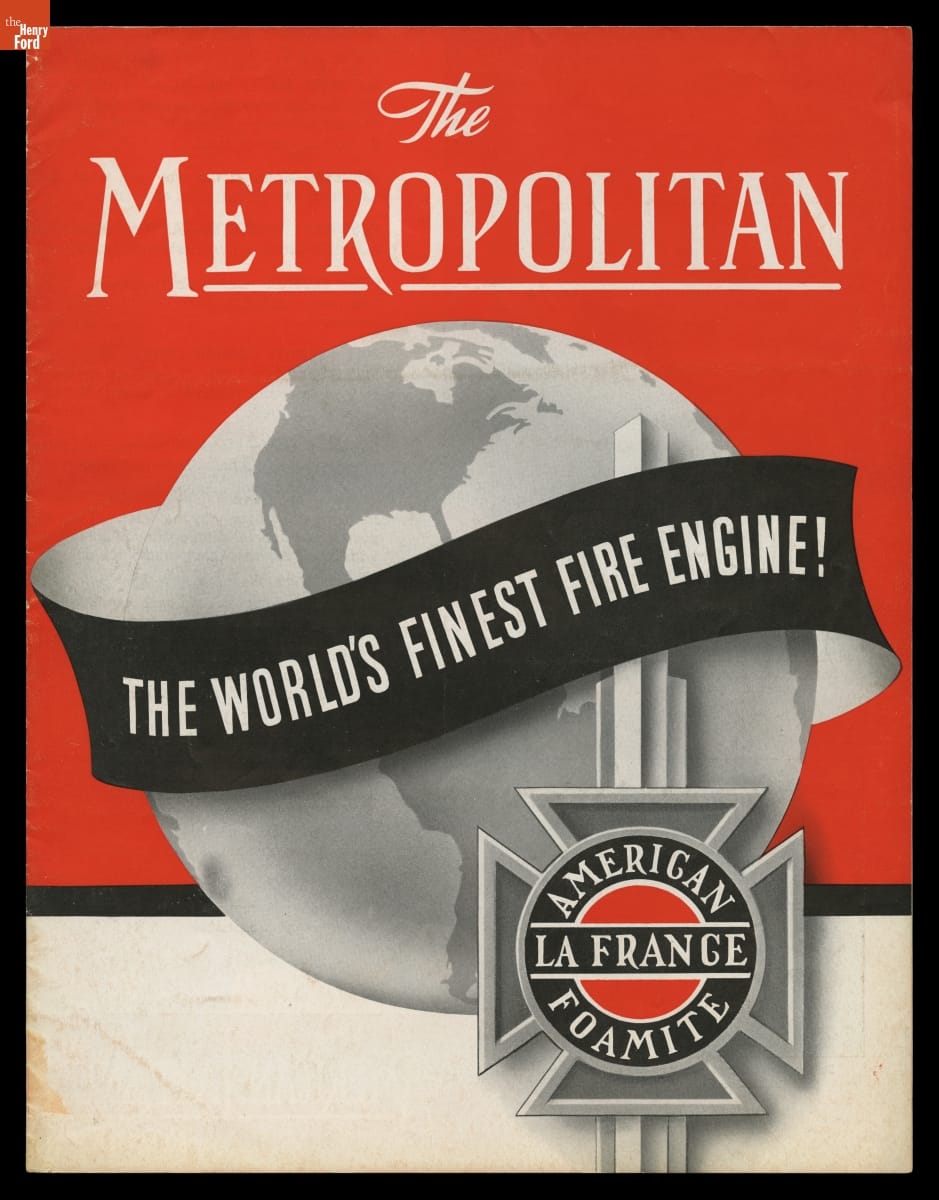
- American-LaFrance and Foamite Corporation Catalog, "The Metropolitan: The World's Finest Fire Engine!," 1938 - American LaFrance was formed in 1873 to produce hand-powered firefighting equipment. The company built its first motorized fire apparatus in 1907. American LaFrance grew into one of the largest manufacturers of fire engines and emergency vehicles in the United States and -- under the Foamite name -- Canada. After several changes in ownership, American LaFrance ended operations in 2014.
- 1938
- Collections - Artifact
American-LaFrance and Foamite Corporation Catalog, "The Metropolitan: The World's Finest Fire Engine!," 1938
American LaFrance was formed in 1873 to produce hand-powered firefighting equipment. The company built its first motorized fire apparatus in 1907. American LaFrance grew into one of the largest manufacturers of fire engines and emergency vehicles in the United States and -- under the Foamite name -- Canada. After several changes in ownership, American LaFrance ended operations in 2014.
- John C. Howard Livery & Sale Stables, Washington, D.C., April 1865 - The horse was central to most forms of urban travel in the United States during the 1800s. This substantial fire-resistant brick building lodged many horses needed for carriages, coaches, and firefighting vehicles in Washington, D.C. This stable became infamous during the investigation into President Abraham Lincoln's assassination because confederate spy and conspirator, John H. Surratt, boarded his horses here.
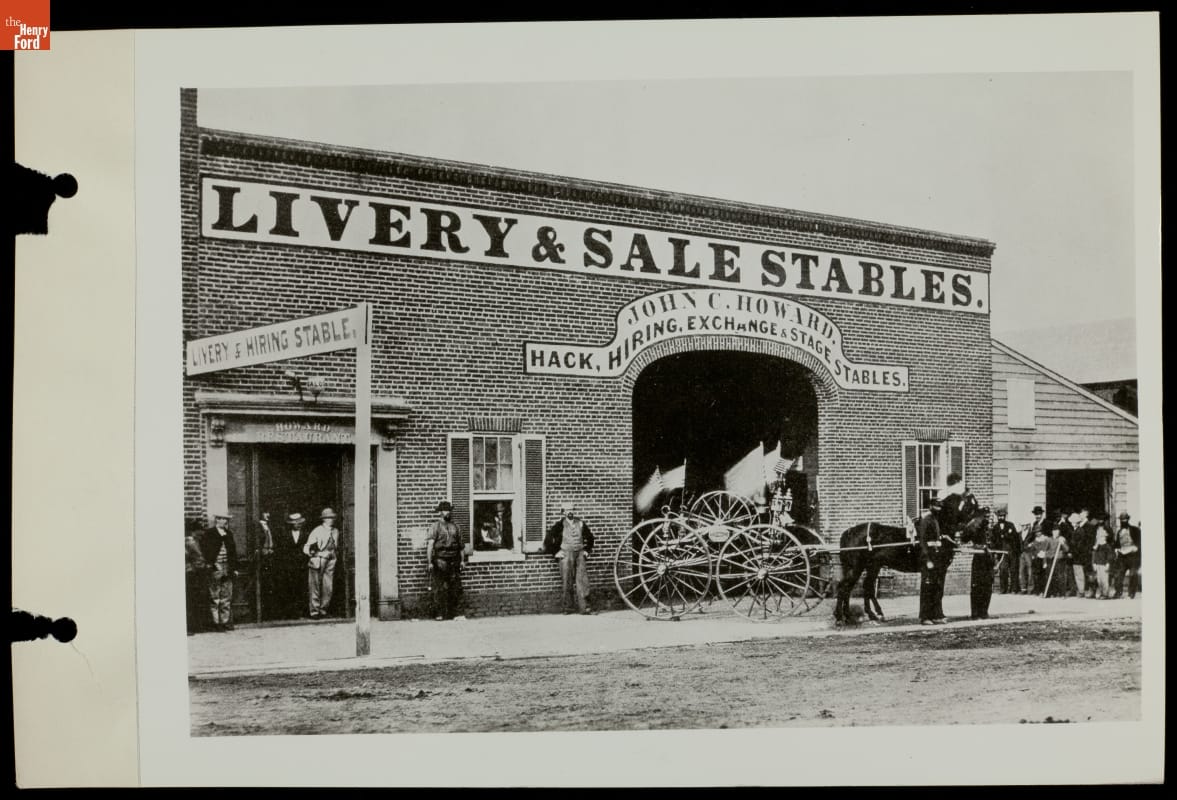
- April 01, 1865
- Collections - Artifact
John C. Howard Livery & Sale Stables, Washington, D.C., April 1865
The horse was central to most forms of urban travel in the United States during the 1800s. This substantial fire-resistant brick building lodged many horses needed for carriages, coaches, and firefighting vehicles in Washington, D.C. This stable became infamous during the investigation into President Abraham Lincoln's assassination because confederate spy and conspirator, John H. Surratt, boarded his horses here.
- Fire Hat, circa 1890 - No piece of equipment symbolizes a firefighter's dangerous work like the fire helmet. Its hard shell protects from falling debris, and its oversized brim directs water away from the neck. Early helmets were made from leather, while later versions featured metal shells. Modern helmets use lightweight composite materials, but they retain the familiar shape.
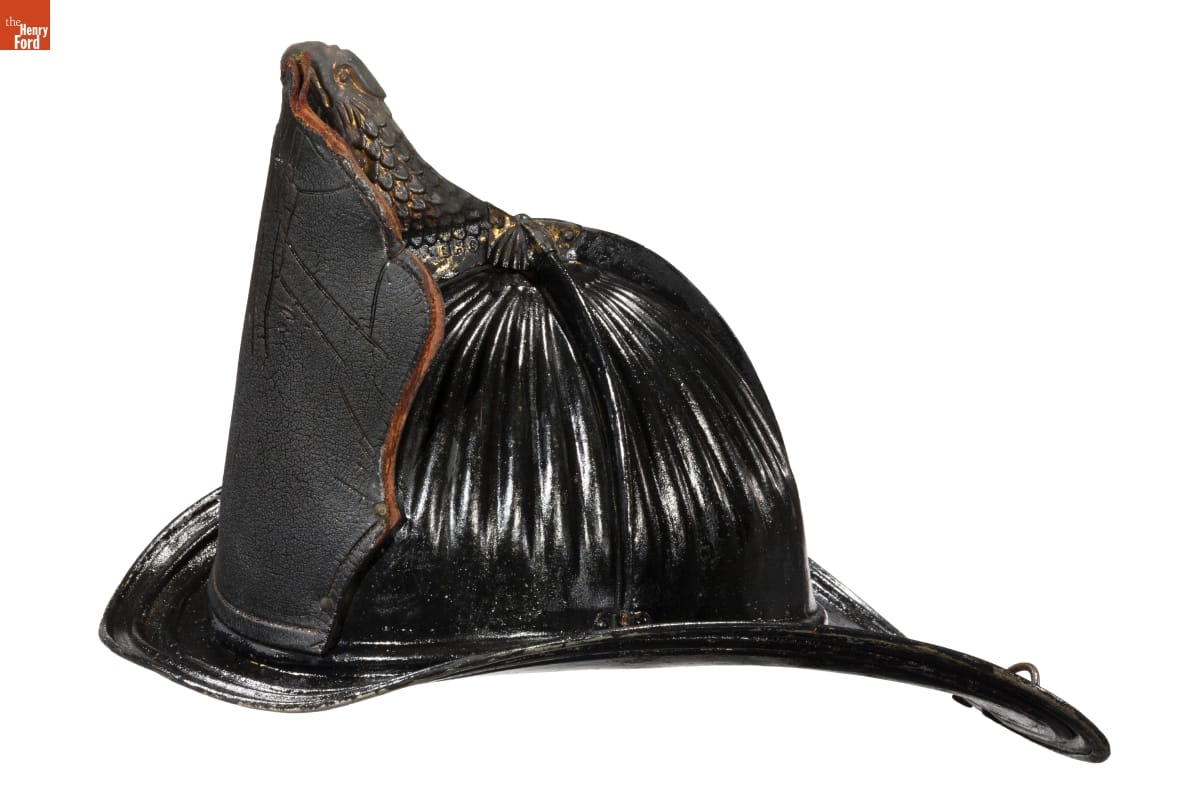
- circa 1890
- Collections - Artifact
Fire Hat, circa 1890
No piece of equipment symbolizes a firefighter's dangerous work like the fire helmet. Its hard shell protects from falling debris, and its oversized brim directs water away from the neck. Early helmets were made from leather, while later versions featured metal shells. Modern helmets use lightweight composite materials, but they retain the familiar shape.
- American-LaFrance and Foamite Corporation Catalog, "Rescue Aerials: There is Safety in Steel," circa 1942 - American LaFrance was formed in 1873 to produce hand-powered firefighting equipment. The company built its first motorized fire apparatus in 1907. American LaFrance grew into one of the largest manufacturers of fire engines and emergency vehicles in the United States and -- under the Foamite name -- Canada. After several changes in ownership, American LaFrance ended operations in 2014.
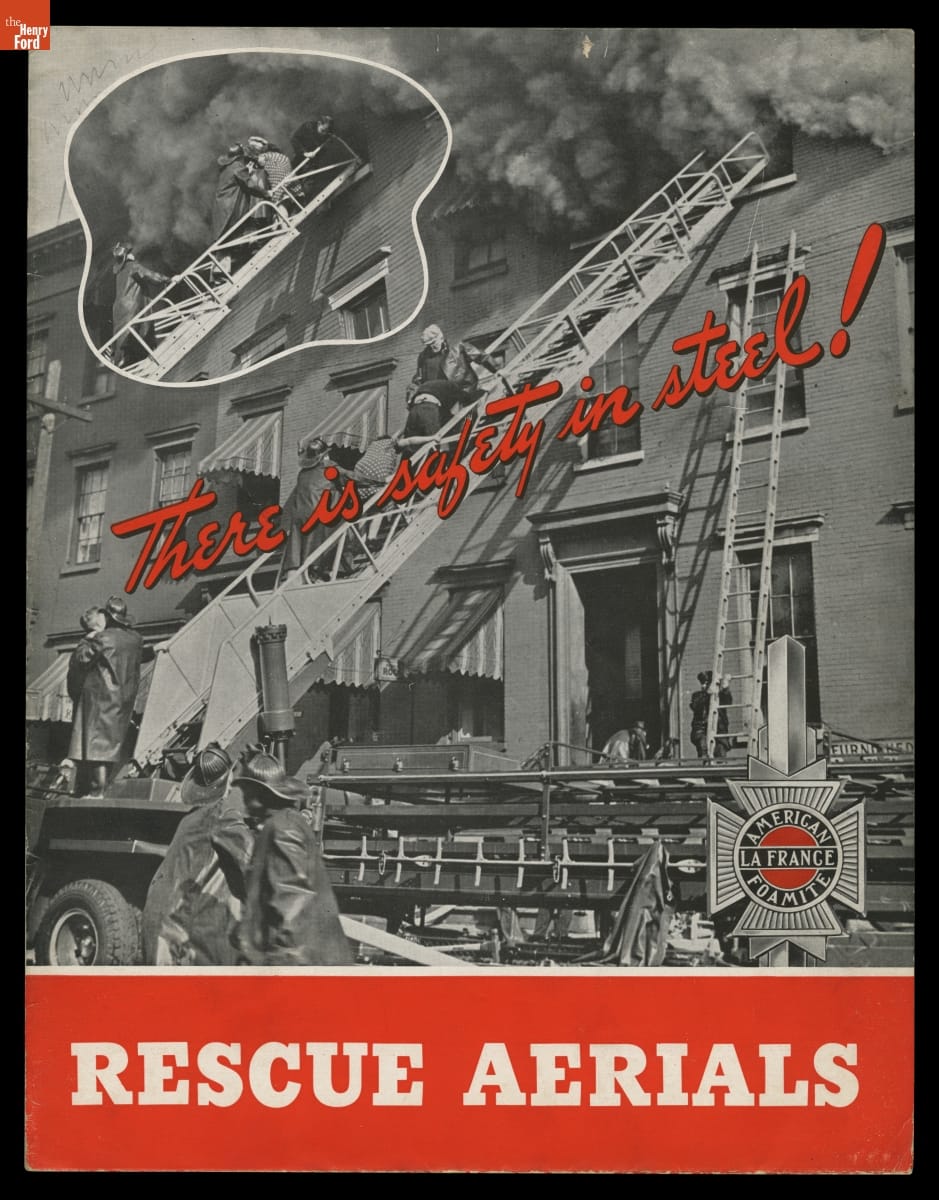
- circa 1942
- Collections - Artifact
American-LaFrance and Foamite Corporation Catalog, "Rescue Aerials: There is Safety in Steel," circa 1942
American LaFrance was formed in 1873 to produce hand-powered firefighting equipment. The company built its first motorized fire apparatus in 1907. American LaFrance grew into one of the largest manufacturers of fire engines and emergency vehicles in the United States and -- under the Foamite name -- Canada. After several changes in ownership, American LaFrance ended operations in 2014.
- Model of a Firefighter's Water Tower, circa 1900 - Water is the primary tool for fighting most fires. Water vaporizes when it contacts fire, and that process robs the fire of oxygen. Vaporization also absorbs heat from the fire and from potential fuel sources. This model illustrates a mobile tower, from about 1900, that firefighters used to elevate their spray nozzles and direct water where it was needed most.
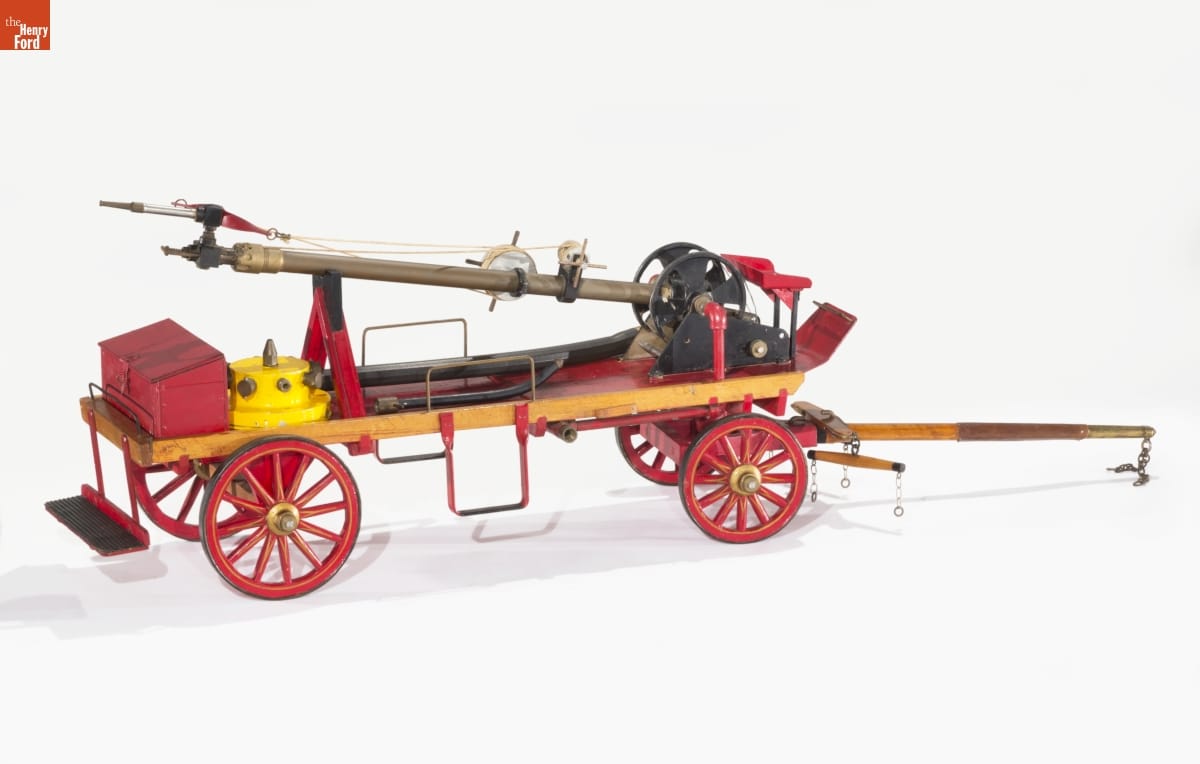
- circa 1900
- Collections - Artifact
Model of a Firefighter's Water Tower, circa 1900
Water is the primary tool for fighting most fires. Water vaporizes when it contacts fire, and that process robs the fire of oxygen. Vaporization also absorbs heat from the fire and from potential fuel sources. This model illustrates a mobile tower, from about 1900, that firefighters used to elevate their spray nozzles and direct water where it was needed most.
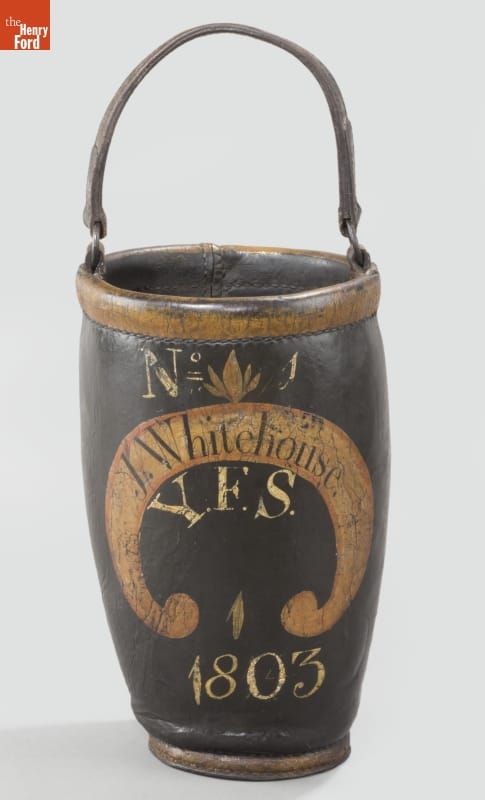
- Fire Bucket, 1803 - Many home and business owners in colonial and early America kept leather fire buckets in case of emergency. When a fire broke out in the community, owners tossed their buckets into the street, where firefighters and local citizens used them to carry water to put out the fire. Buckets decorated with names, initials and numbers helped owners identify their buckets after the fire had been extinguished.
- 1803
- Collections - Artifact
Fire Bucket, 1803
Many home and business owners in colonial and early America kept leather fire buckets in case of emergency. When a fire broke out in the community, owners tossed their buckets into the street, where firefighters and local citizens used them to carry water to put out the fire. Buckets decorated with names, initials and numbers helped owners identify their buckets after the fire had been extinguished.
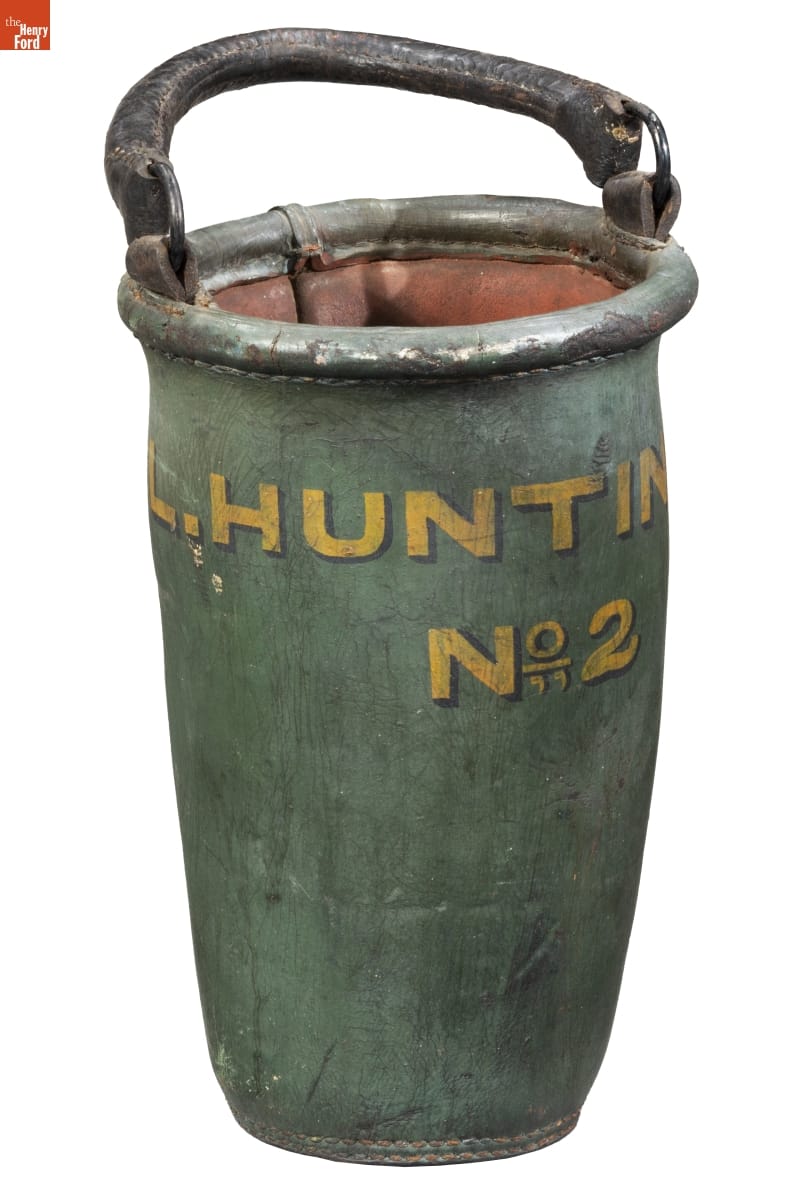
- Fire Bucket, Used by Levi Huntington, circa 1795 - Many home and business owners in colonial and early America kept leather fire buckets in case of emergency. When a fire broke out in the community, owners tossed their buckets into the street, where firefighters and local citizens used them to carry water to put out the fire. Buckets decorated with names, initials and numbers helped owners identify their buckets after the fire had been extinguished.
- circa 1795
- Collections - Artifact
Fire Bucket, Used by Levi Huntington, circa 1795
Many home and business owners in colonial and early America kept leather fire buckets in case of emergency. When a fire broke out in the community, owners tossed their buckets into the street, where firefighters and local citizens used them to carry water to put out the fire. Buckets decorated with names, initials and numbers helped owners identify their buckets after the fire had been extinguished.