
The Railroad Roundhouse
Share
share
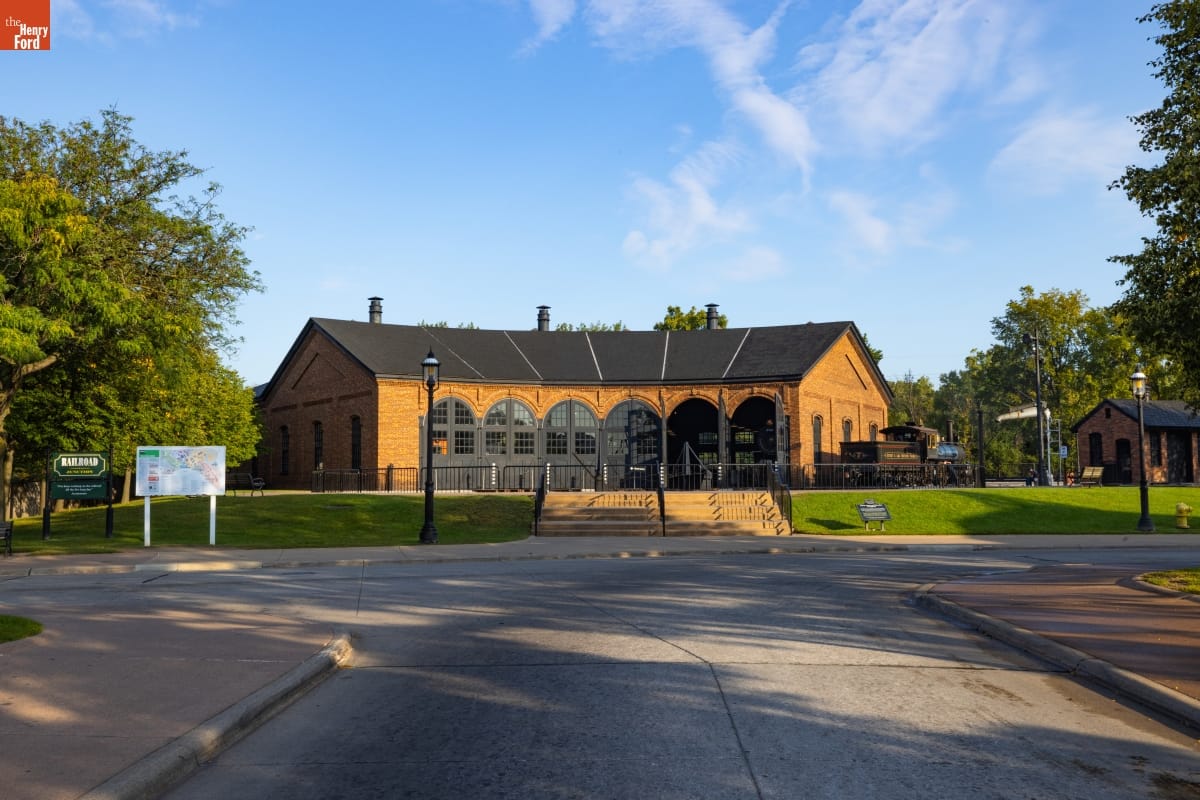
Steam locomotives required constant maintenance from an army of skilled and unskilled workers, and the roundhouse is where that work took place.
THF806026
Detroit Toledo & Milwaukee Roundhouse
Steam locomotives required constant maintenance from an army of skilled and unskilled workers, and the roundhouse is where that work took place. This roundhouse was built in 1884 in Marshall, Michigan, for the Detroit, Toledo & Milwaukee Railroad. Today it services the locomotives and equipment of Greenfield Village's Weiser Railroad.
View ArtifactDetroit Toledo & Milwaukee Roundhouse, Original Site, Marshall, Michigan, 1890-1900
This photograph shows the Detroit, Toledo & Milwaukee Roundhouse in its original location in Marshall, Michigan. The roundhouse's crew is posed in front of the building. Steam locomotives required constant maintenance from an army of skilled and unskilled workers, and the roundhouse is where that work took place.
View ArtifactDetroit, Toledo & Ironton Railroad "South Yards" Roundhouse Barrel Storage, Flat Rock, Michigan, 1924
Steam locomotives required constant maintenance from an army of skilled and unskilled workers, and the roundhouse is where that work took place. This roundhouse at Flat Rock, Michigan, served the Detroit, Toledo & Ironton Railroad. The DT&I operated a 378-mile mainline between Detroit, Michigan, and Ironton, Ohio.
View ArtifactDetroit, Toledo & Ironton Railroad Roundhouse and Yards, Jackson, Ohio, 1924
Steam locomotives required constant maintenance from an army of skilled and unskilled workers, and the roundhouse is where that work took place. This roundhouse at Jackson, Ohio, served the Detroit, Toledo & Ironton Railroad. The DT&I operated a 378-mile mainline between Detroit, Michigan, and Ironton, Ohio.
View ArtifactDetroit, Toledo & Ironton Railroad Roundhouse Interior, Ironton, Ohio, 1923
Steam locomotives required constant maintenance from an army of skilled and unskilled workers, and the roundhouse is where that work took place. This roundhouse at Ironton, Ohio, served the Detroit, Toledo & Ironton Railroad. The DT&I operated a 378-mile mainline between Detroit, Michigan, and Ironton, Ohio.
View ArtifactDetroit, Toledo & Ironton Railroad Roundhouse Interior, Ironton, Ohio, 1923
Steam locomotives required constant maintenance from an army of skilled and unskilled workers, and the roundhouse is where that work took place. This roundhouse at Ironton, Ohio, served the Detroit, Toledo & Ironton Railroad. The DT&I operated a 378-mile mainline between Detroit, Michigan, and Ironton, Ohio.
View ArtifactDetroit, Toledo & Ironton Railroad Roundhouse, South Yards, Flat Rock, Michigan, May 1924
Steam locomotives required constant maintenance from an army of skilled and unskilled workers, and the roundhouse is where that work took place. This roundhouse at Flat Rock, Michigan, served the Detroit, Toledo & Ironton Railroad. The DT&I operated a 378-mile mainline between Detroit, Michigan, and Ironton, Ohio.
View ArtifactDetroit, Toledo & Ironton Railroad Roundhouse, Ironton, Ohio, 1923
Steam locomotives required constant maintenance from an army of skilled and unskilled workers, and the roundhouse is where that work took place. This roundhouse at Ironton, Ohio, served the Detroit, Toledo & Ironton Railroad. The DT&I operated a 378-mile mainline between Detroit, Michigan, and Ironton, Ohio.
View ArtifactDetroit, Toledo & Ironton Railroad Roundhouse, Ironton, Ohio, 1923
Steam locomotives required constant maintenance from an army of skilled and unskilled workers, and the roundhouse is where that work took place. This roundhouse at Ironton, Ohio, served the Detroit, Toledo & Ironton Railroad. The DT&I operated a 378-mile mainline between Detroit, Michigan, and Ironton, Ohio.
View ArtifactEngine on Turntable at the Detroit, Toledo & Ironton Railroad Roundhouse, Jackson, Ohio, 1924
Steam locomotives required constant maintenance from an army of skilled and unskilled workers, and the roundhouse is where that work took place. This roundhouse at Jackson, Ohio, served the Detroit, Toledo & Ironton Railroad. The DT&I operated a 378-mile mainline between Detroit, Michigan, and Ironton, Ohio.
View ArtifactEngine Smoke Consumer at the Detroit, Toledo & Ironton Railroad Roundhouse, Jackson, Ohio, 1924
Steam locomotives required constant maintenance from an army of skilled and unskilled workers, and the roundhouse is where that work took place. This roundhouse at Jackson, Ohio, served the Detroit, Toledo & Ironton Railroad. The DT&I operated a 378-mile mainline between Detroit, Michigan, and Ironton, Ohio.
View ArtifactEngine Smoke Consumer at the Detroit, Toledo & Ironton Railroad Roundhouse, Jackson, Ohio, 1924
Steam locomotives required constant maintenance from an army of skilled and unskilled workers, and the roundhouse is where that work took place. This roundhouse at Jackson, Ohio, served the Detroit, Toledo & Ironton Railroad. The DT&I operated a 378-mile mainline between Detroit, Michigan, and Ironton, Ohio.
View ArtifactLockers and Lunch Area inside the Detroit, Toledo & Ironton Railroad Roundhouse in Flat Rock, Michigan, 1943
Steam locomotives required constant maintenance and the roundhouse is where that work took place. An army of skilled and unskilled workers, like this unidentified man at the Detroit, Toledo & Ironton Railroad's Jackson, Ohio, roundhouse, kept locomotives in good running condition. The DT&I operated a 378-mile mainline between Detroit, Michigan, and Ironton, Ohio.
View Artifact"Old Charles River" Locomotive, South Sudbury, Massachusetts, 1881
Railroad workers posed with a 4-4-0 American-type steam locomotive for this photograph taken in Massachusetts in 1881. The locomotive sat in front of a two-stall engine shed. "Roundhouse" became the common name on American railroads for any building in which locomotives were serviced and maintained -- whether the building was round or not.
View ArtifactLocomotives at the Detroit, Toledo & Ironton Roundhouse, Jackson, Ohio, 1883
Steam locomotives required constant maintenance from an army of skilled and unskilled workers, and the roundhouse is where that work took place. This roundhouse at Jackson, Ohio, served the Detroit, Toledo & Ironton Railroad. The DT&I operated a 378-mile mainline between Detroit, Michigan, and Ironton, Ohio.
View ArtifactRailroad Workers Standing with Steam Locomotive on Turntable, circa 1900
Workers posed with a 2-8-0 Consolidation-type locomotive sitting on a turntable. The locomotive, numbered 5733, most likely belonged to the New York Central Lines. The men probably worked at the roundhouse in back, servicing and maintaining this locomotive and others like it. Some of the men wore suits and ties, suggesting that they were supervisors or administrators.
View ArtifactRoundhouse at the Detroit, Toledo & Ironton Railroad "South Yards," Flat Rock, Michigan, 1924
Steam locomotives required constant maintenance from an army of skilled and unskilled workers, and the roundhouse is where that work took place. This roundhouse at Flat Rock, Michigan, served the Detroit, Toledo & Ironton Railroad. The DT&I operated a 378-mile mainline between Detroit, Michigan, and Ironton, Ohio.
View ArtifactDetroit, Toledo & Ironton Railroad Roundhouse at Napoleon, Ohio, 1921
Steam locomotives required constant maintenance from an army of skilled and unskilled workers, and the roundhouse is where that work took place. This roundhouse at Napoleon, Ohio, served the Detroit, Toledo & Ironton Railroad. The DT&I operated a 378-mile mainline between Detroit, Michigan, and Ironton, Ohio.
View ArtifactDetroit, Toledo & Ironton Railroad Roundhouse, Ironton, Ohio, 1923
Steam locomotives required constant maintenance from an army of skilled and unskilled workers, and the roundhouse is where that work took place. This roundhouse at Ironton, Ohio, served the Detroit, Toledo & Ironton Railroad. The DT&I operated a 378-mile mainline between Detroit, Michigan, and Ironton, Ohio.
View ArtifactRailroad Turntable, 1901
Where space was too tight for a loop or wye track, railroads could turn locomotives and railcars around using a turntable. Some turntables also provided access to roundhouse stalls. The Pere Marquette Railway used this one in Saginaw, Michigan, before moving it to Petoskey, Michigan, in 1913. This well-balanced turntable had no motor and was rotated by hand.
View Artifact

