
American Women, American Craft
| Written by | |
|---|---|
| Published | 3/25/2026 |
American Women, American Craft
| Written by | |
|---|---|
| Published | 3/25/2026 |
A new exhibition in Henry Ford Museum of American Innovation's Collections Gallery—Handmade: The Crafting of America—opened to the public on March 21, 2026. This exhibit features stories from the rich 250 years of craft in America. As March is Women's History Month, here are some highlights of the contributions of women in our collections and in the exhibition.
Hooked Rugs
In the early 1970s The Henry Ford acquired two exquisite, large-scale late-19th-century hooked rugs by Eleanor Blackstone.
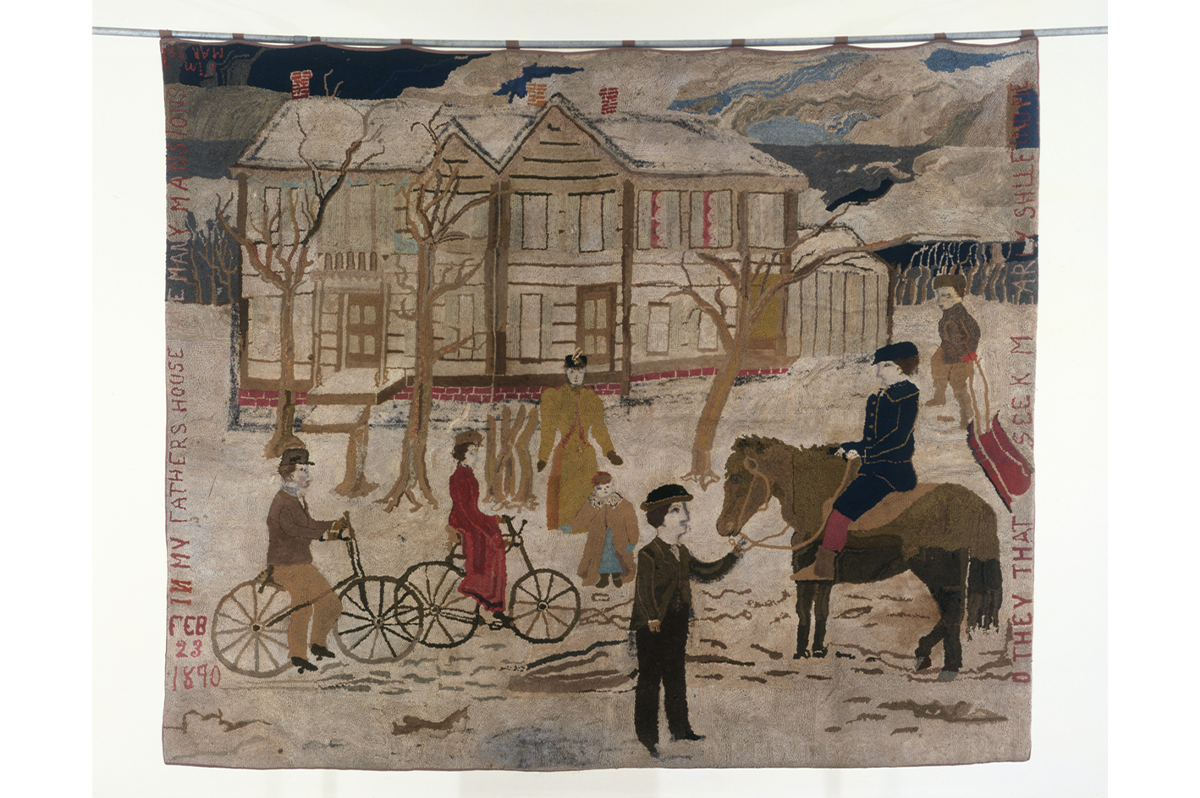 "In My Father's House Are Many Mansions," 1890, by Eleanor Blackstone (1837-1913). Physically imposing and cumbersome to exhibit, this rug is not on display but included here to compare to the Emeline Miner rugs in the Handmade exhibit. / THF91671
Blackstone's pictorial rug illustrates the artist’s growing family outside their rural Illinois home, suggesting a snapshot or the passage of time. This ambitious and compositionally sophisticated work belies the humble medium of rug hooking.
Likewise, the extraordinary work of Emeline Miner (1914-1997), an untrained but gifted artist from rural Iowa, also demonstrates expertise and creative flair with rug hooking techniques.
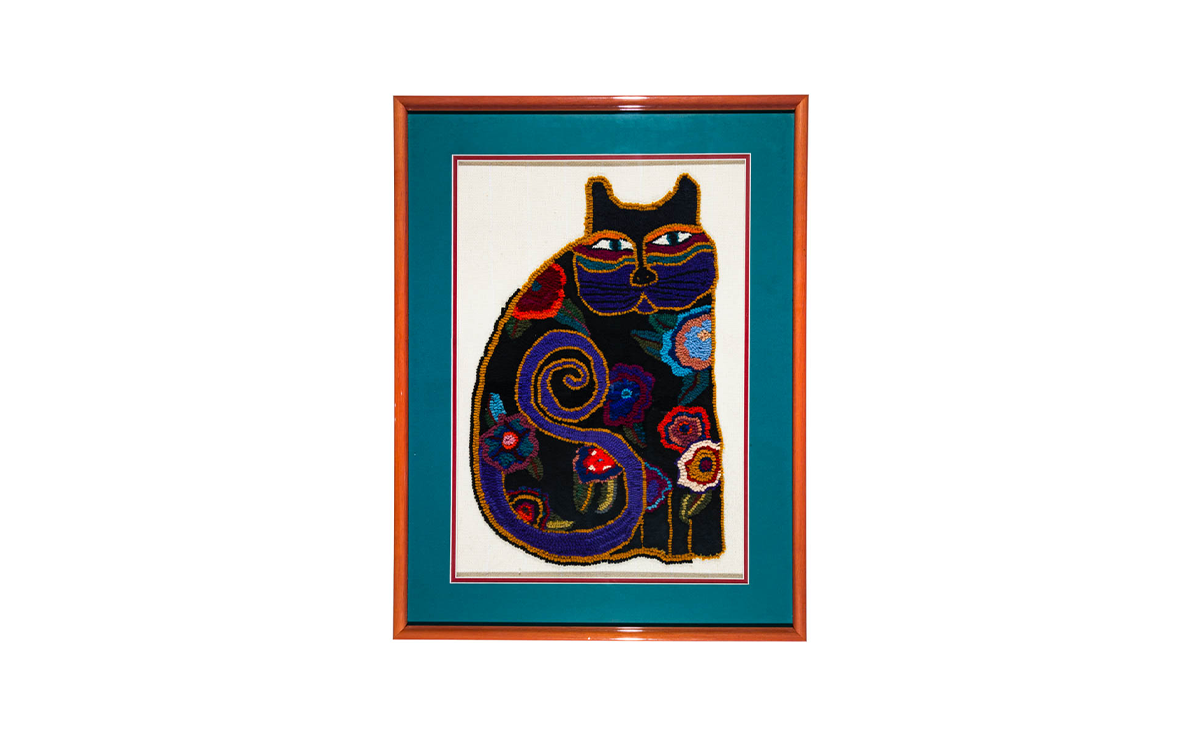 “Paisley Cat,” 1996, by Emeline Miner (1914-1997). / THF801594
These works, made by women who worked in the home, were created over 100 years apart, and acquired by The Henry Ford more than 50 years apart. Together, they demonstrate The Henry Ford's longstanding commitment to craft and women's history.
The Shakers: Equality of the Sexes in an Era of Inequality
Craft is not just the work of individuals—it can also be a community effort. In the early 19th century, utopian communities arose across the United States in response to societal changes. The “United Society of Believers in Christ's Second Appearing,” more commonly known as the Shakers because they shook with excitement during worship, was one such community. The Shakers believed in gender and racial equality and that they could create heaven on Earth through faith and hard work.
Shaker craftsmanship shows a simplicity of design and distillation of form that is distinctly Shaker and quintessentially American, as seen in their iconic handmade wood boxes.
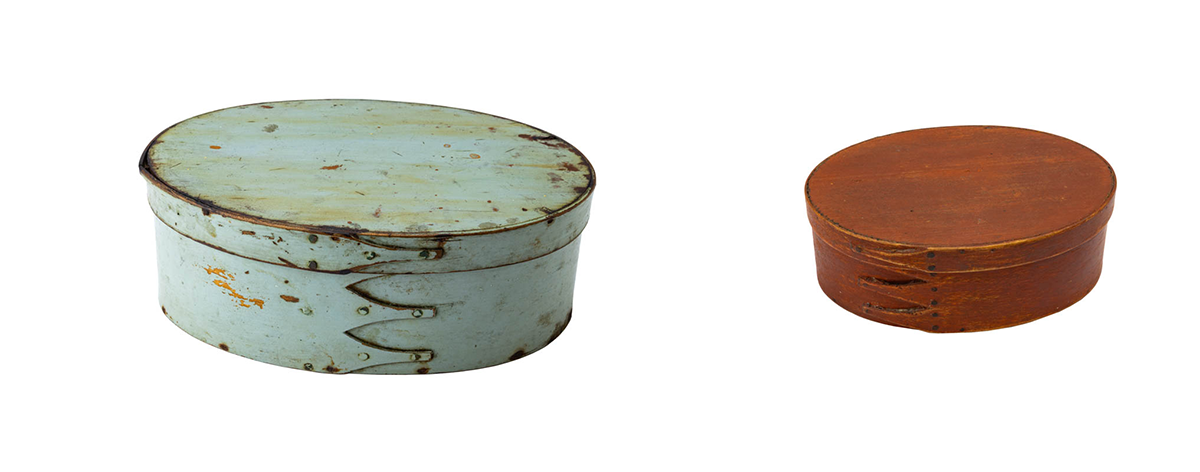 Shaker Box, 1840-1850 (left), Shaker box, 1880-1900 (right) / THF805406 (left), THF803757 (right)
Initially made by men, over time these simple yet elegant boxes were made by both sexes. More importantly, these well-made boxes came to be viewed as symbols of the Shakers themselves through their purity of form.
Women in the Arts and Crafts Movement
The Arts and Crafts movement arose in the 19th century as a reaction to the political and cultural effects of industrialization. Its advocates argued that mass production was dehumanizing and fueled poverty, producing goods they dismissed as “shoddy, overwrought, and poorly made.” In response, they championed a society in which artists and craftspersons were equal and everyday objects were both beautiful and thoughtfully made. Honesty of materials and purity of form—without excess ornamentation—became central principles of the Arts and Crafts movement.
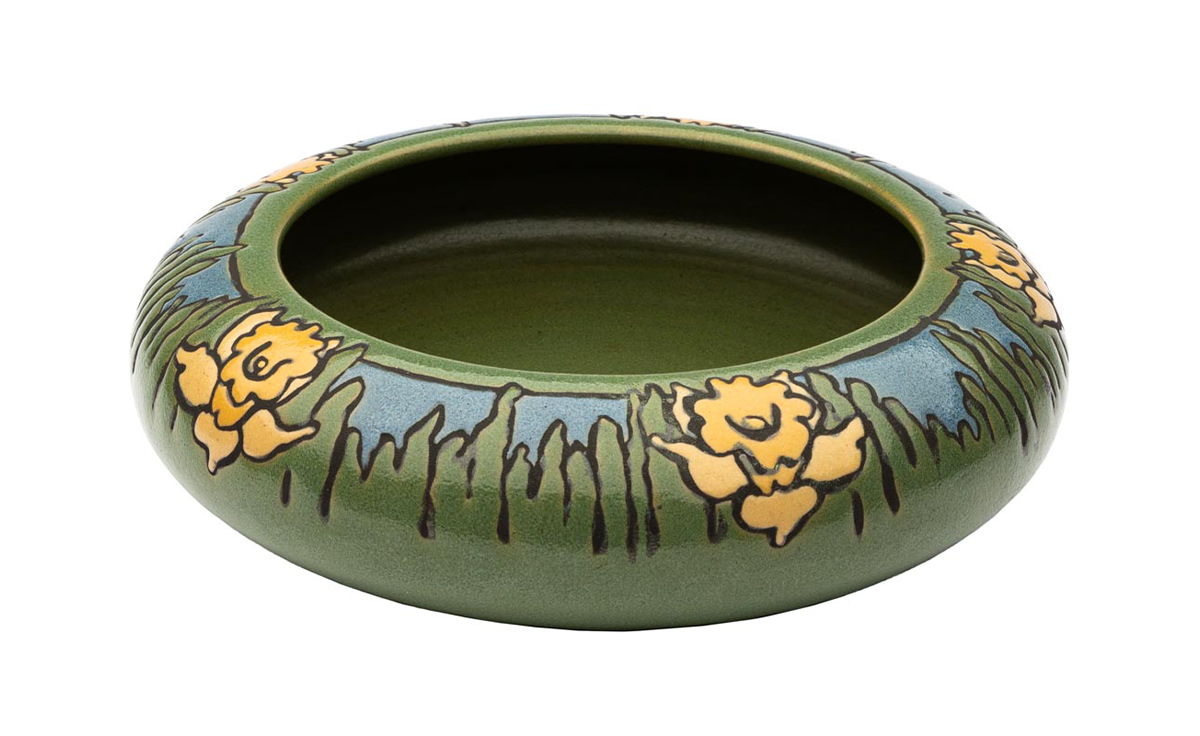 Centerpiece bowl, 1914, made and decorated by Sara Galner as part of Saturday Evening Girls in Boston, Massachusetts. / THF193474
The movement also expanded opportunities for women, who gained new professional stature in the decorative arts, though their contributions have only recently received sustained scholarly attention. The collections of The Henry Ford include outstanding examples of their work, such as pieces by Susan Frackelton, a founder of the American art pottery movement, Mary Chase Perry Stratton, who established Detroit’s renowned Pewabic Pottery, and the Saturday Evening Girls, a Boston settlement house that trained immigrant girls in ceramic production.
Although women in the Arts and Crafts movement are often associated primarily with ceramics, they were active across a wide range of media—especially the textile arts, long considered a "women's" craft. One of the most overlooked areas in which women made significant contributions, however, was metalwork.
Metalwork
Mary Peyton Winlock grew up in Cambridge, Massachusetts, the daughter of a prominent family. She was encouraged to go into the arts and enrolled in the newly founded School of the Museum of Fine Arts, Boston, in 1888. By 1891 she was talented enough to earn an award from the Department of Decorative Design. Ten years later, Ms. Winlock was elected as a craftsman member in the Society of Arts and Crafts, Boston.
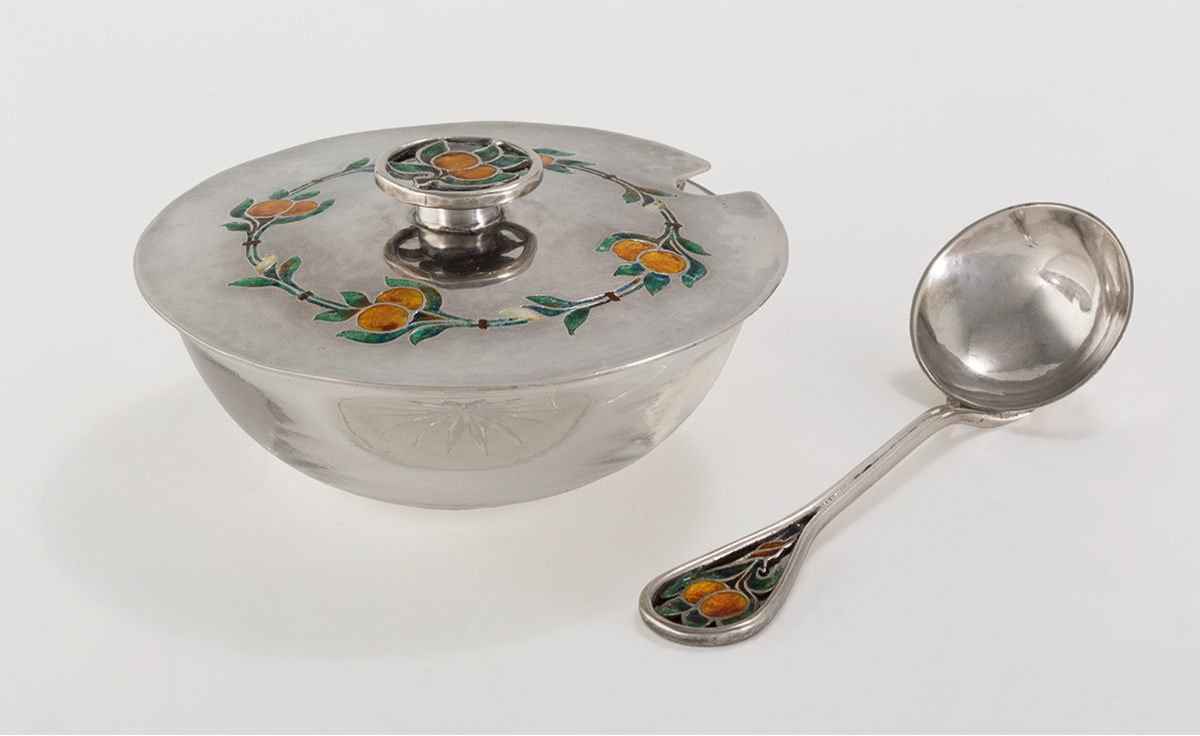 Jam dish and spoon, 1900-1910, made by Mary Peyton Winlock (1868-1942). / THF166128
Always an independent artist, Winlock joined the Handicraft Shop, a cooperative organization founded by the Society of Arts and Crafts in 1903. The Handicraft Shop was located approximately fifteen miles from downtown Boston, in the quiet town of Wellesley Hills. Through the Handicraft Shop, she made and sold her enameled silverware and jewelry. She was a master of the elaborate enameling technique known as champlevé, which allowed subtle overlays of yellows, oranges, and greens that suggest the sweet apricot jam inside the dish. Little of her work is in public collections, so she remains relatively unknown.
Ceramics
In the 20th century, many more women were active in a variety of crafts and led fascinating lives, such as ceramic artist Beatrice Wood (1893-1998). Born in San Francisco to a prosperous family, at a young age she wanted to focus on the arts. She was fluent in French and her parents sent her to Paris, where she first became acquainted with avante-garde artists. With the outbreak of World War I, Wood moved to New York City. By 1916, she began exhibiting with DADA artist Marcel Duchamp. She produced drawings and sculptures as part of a sophisticated art circle in New York City in the 1920s.
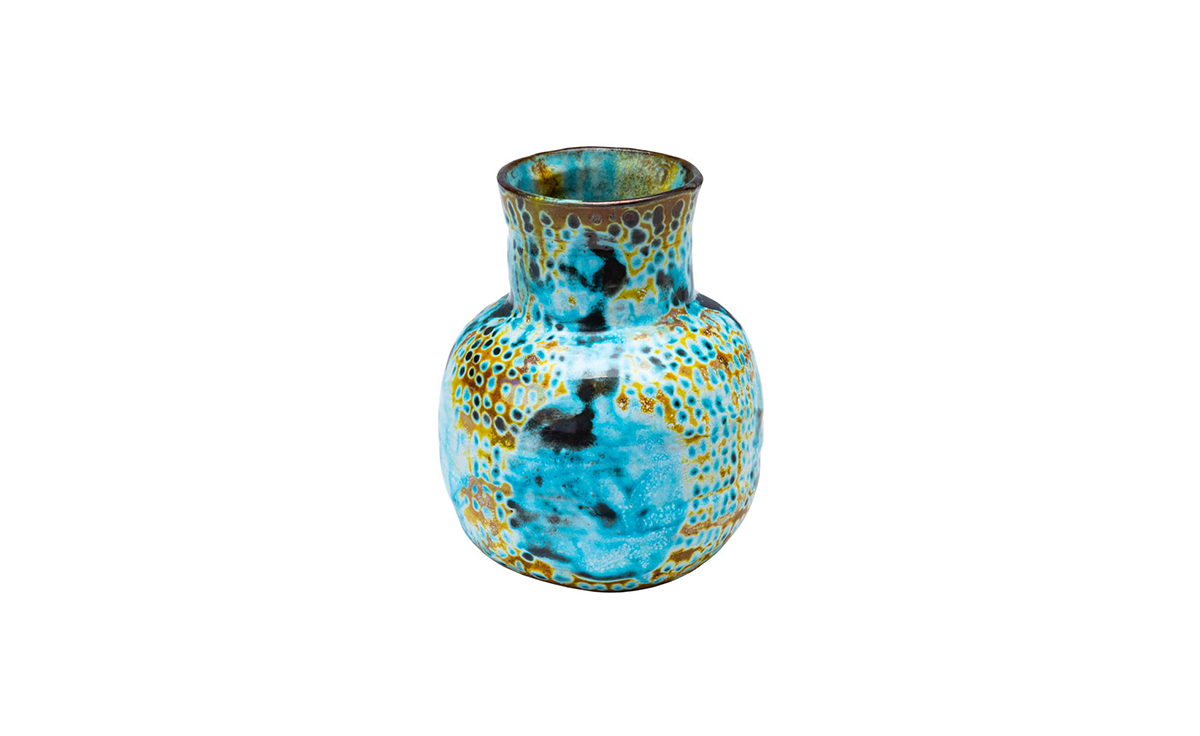 Vase, circa 1980, made by Beatrice Wood (1893-1998). / THF199621
Wood returned to California in the late 1920s and was drawn to ceramics first as a hobby. Eventually ceramics became a passion. She studied throughout the 1930s and 1940s with leading ceramics artists, maturing as a ceramic artist in the 1940s. Her work is characterized by mottled glazes. Her signature glaze was an iridescent luster, derived from her love of historical ceramics. She eventually settled in Ojai, California, and spent the rest of her life there. Always an iconoclast, “Beato,” as she called herself, became world famous as the partial basis for the character of Rose in the blockbuster film Titanic
These examples are just a few of the many stories on view in Handmade: The Crafting of America exhibition at Henry Ford Museum of American Innovation (Mar 21, 2026-Jan 18, 2027).
Charles Sable is Curator of Decorative Arts at the Henry Ford Museum. This article was completed with assistance from Aimee L. Burpee, Associate Curator.
Keywords | |
|---|---|
Series | |
Themes |