
Search
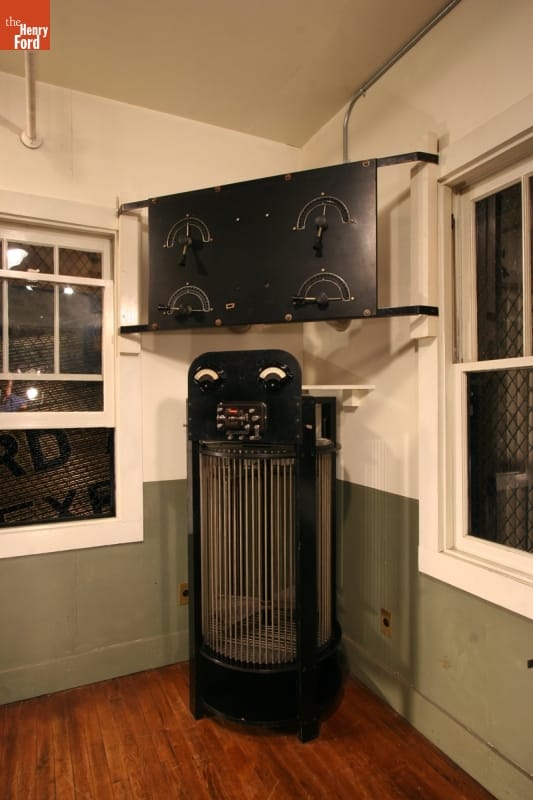
- Radio Goniometer Used at Ford Airport, circa 1927 - The radio beacon may be Henry Ford's most important contribution to aviation. Early pilots depended on landmarks, preventing reliable navigation in bad weather. Ford's engineers developed a radio beacon that simultaneously transmitted the Morse code letter "A" (dot-dash) in one direction and the letter "N" (dash-dot) in another. The pilot steered until the separate signals merged into a steady hum.
- circa 1927
- Collections - Artifact
Radio Goniometer Used at Ford Airport, circa 1927
The radio beacon may be Henry Ford's most important contribution to aviation. Early pilots depended on landmarks, preventing reliable navigation in bad weather. Ford's engineers developed a radio beacon that simultaneously transmitted the Morse code letter "A" (dot-dash) in one direction and the letter "N" (dash-dot) in another. The pilot steered until the separate signals merged into a steady hum.
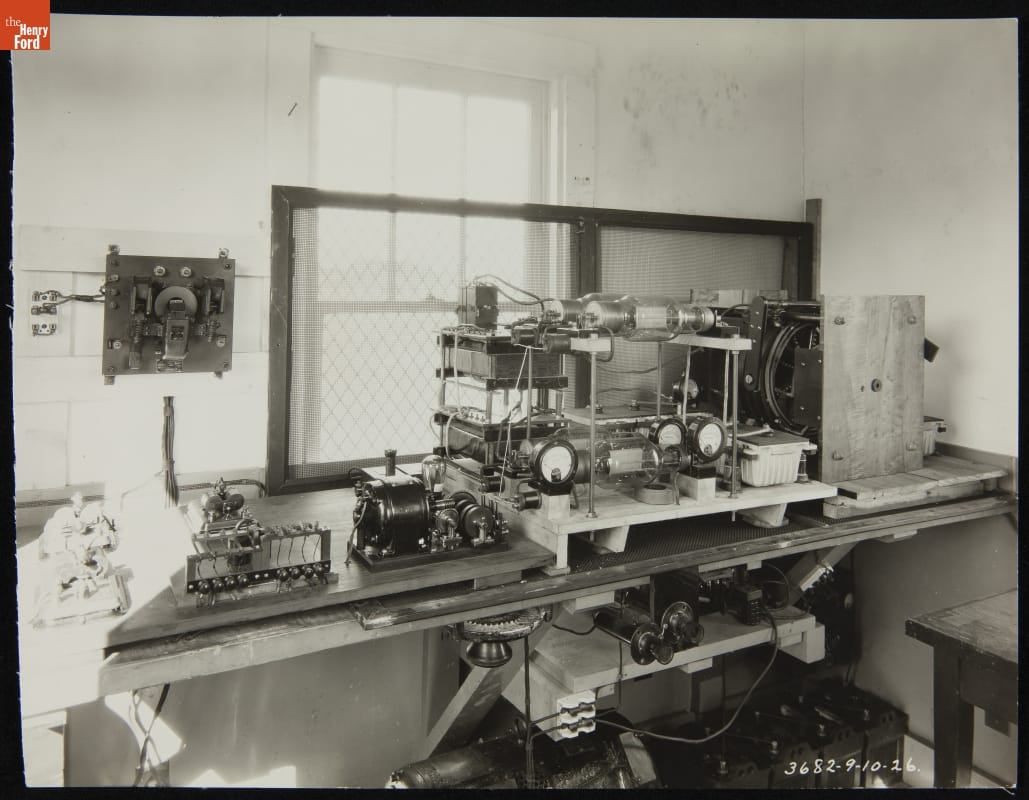
- Equipment Inside the Radio Beacon Station Building at Ford Airport, September 10, 1926 - Early pilots depended on landmarks, preventing reliable navigation in bad weather. Henry Ford's engineers developed a radio beacon that simultaneously transmitted two Morse code letters, allowing pilots to steer until the separate signals merged into a steady hum. The original beacon station at Ford Airport (shown here) was removed in 1933 and is now on display inside the museum.
- September 10, 1926
- Collections - Artifact
Equipment Inside the Radio Beacon Station Building at Ford Airport, September 10, 1926
Early pilots depended on landmarks, preventing reliable navigation in bad weather. Henry Ford's engineers developed a radio beacon that simultaneously transmitted two Morse code letters, allowing pilots to steer until the separate signals merged into a steady hum. The original beacon station at Ford Airport (shown here) was removed in 1933 and is now on display inside the museum.
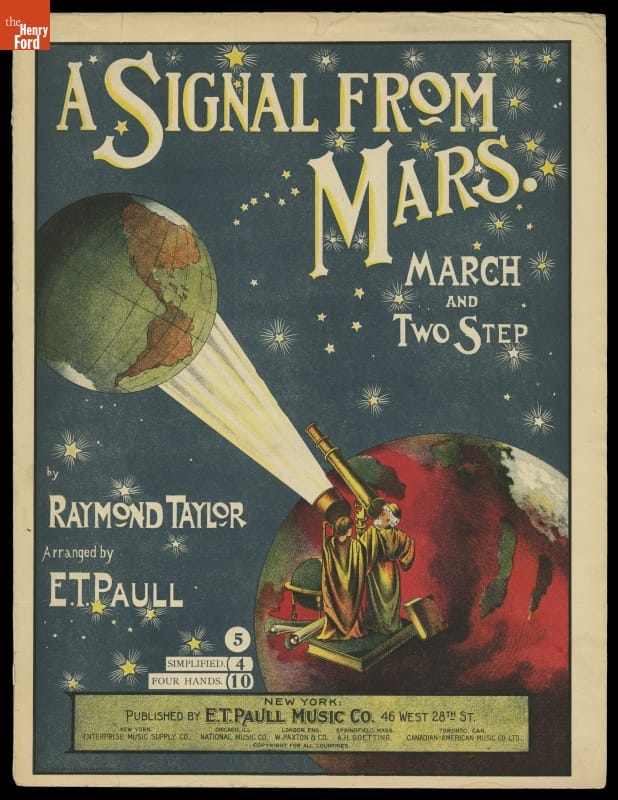
- "A Signal from Mars March and Two-Step," 1901 - The concept of "life on Mars" did not begin in tabloid magazines. In 1877, when astronomer Giovanni Schiaparelli's Mars report was translated into English, one word--canali--was misinterpreted to mean "canal." The idea of intelligent Martian lifeforms was influenced by this misunderstanding. This music documents the rise of "Mars Fever" and its impact upon popular, artistic and scientific cultures.
- 1901
- Collections - Artifact
"A Signal from Mars March and Two-Step," 1901
The concept of "life on Mars" did not begin in tabloid magazines. In 1877, when astronomer Giovanni Schiaparelli's Mars report was translated into English, one word--canali--was misinterpreted to mean "canal." The idea of intelligent Martian lifeforms was influenced by this misunderstanding. This music documents the rise of "Mars Fever" and its impact upon popular, artistic and scientific cultures.
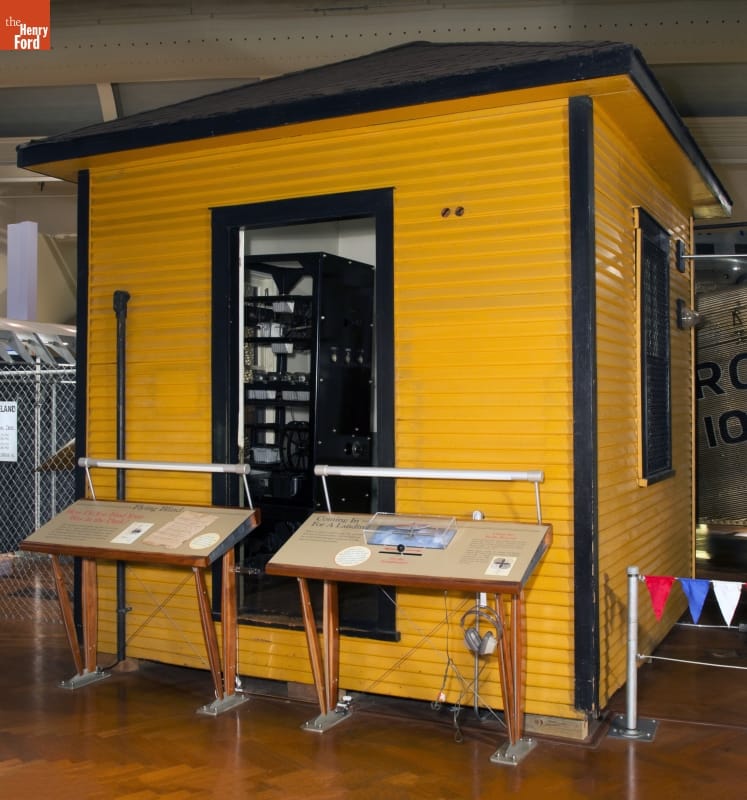
- Radio Beacon Station Building Used at Ford Airport, 1927 - Early pilots depended on visible landmarks, preventing reliable navigation in bad weather. Henry Ford's engineers developed a radio beacon that simultaneously transmitted two Morse code letters. Pilots steered until the separate signals merged into one steady hum. The original beacon station building at Ford Airport was removed in 1933 and is now displayed in Henry Ford Museum of American Innovation.
- 1927
- Collections - Artifact
Radio Beacon Station Building Used at Ford Airport, 1927
Early pilots depended on visible landmarks, preventing reliable navigation in bad weather. Henry Ford's engineers developed a radio beacon that simultaneously transmitted two Morse code letters. Pilots steered until the separate signals merged into one steady hum. The original beacon station building at Ford Airport was removed in 1933 and is now displayed in Henry Ford Museum of American Innovation.
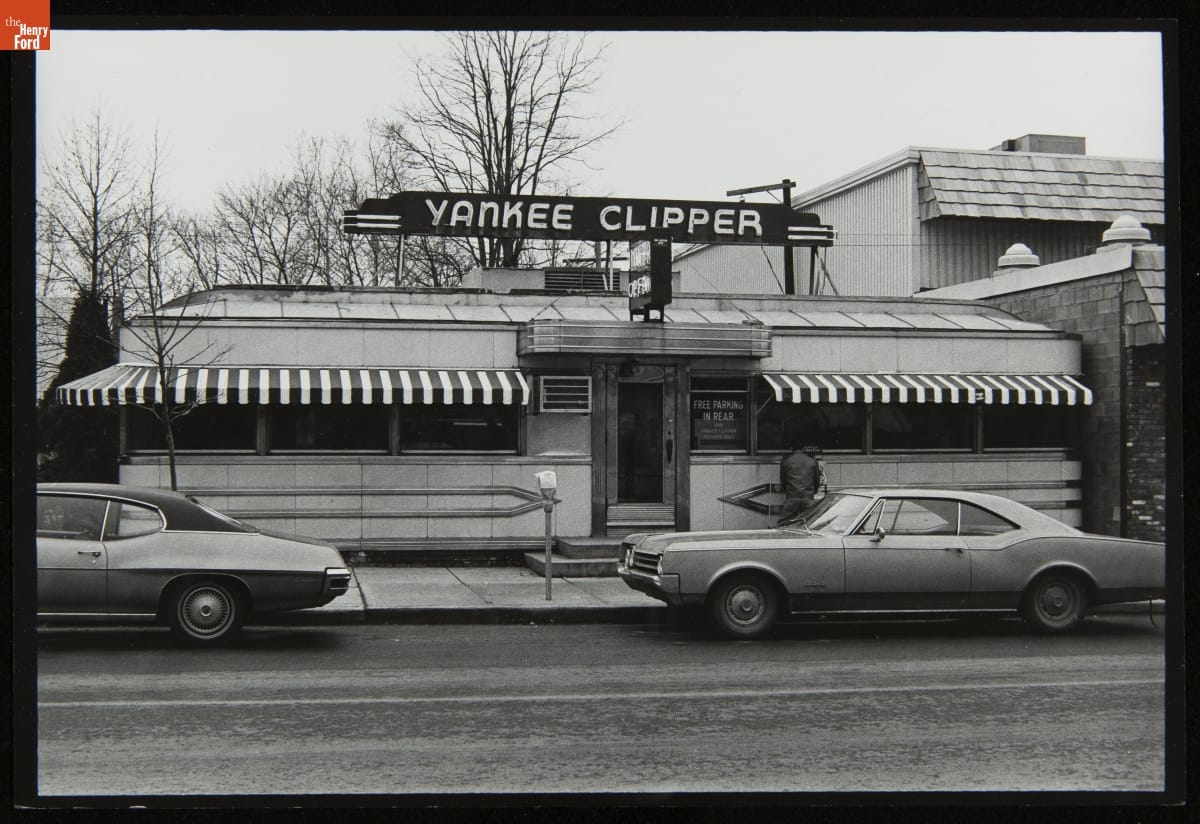
- Yankee Clipper Diner, Beacon, New York, circa 1972 -
- circa 1972
- Collections - Artifact
Yankee Clipper Diner, Beacon, New York, circa 1972
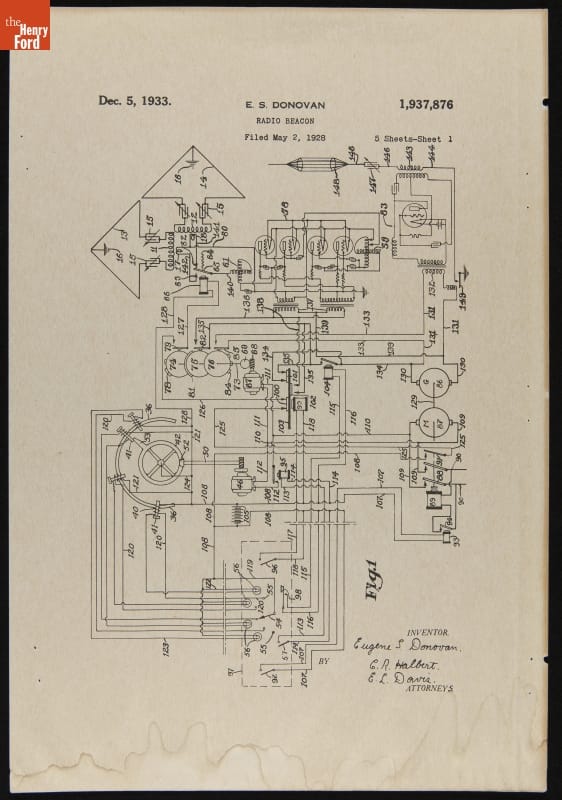
- Diagram for Radio Beacon Patent, #1,937,876, Granted December 5, 1933 - The radio beacon may be Henry Ford's most important contribution to aviation. Early pilots depended on landmarks, preventing reliable navigation in bad weather. Ford's engineers developed a radio beacon that simultaneously transmitted the Morse code letter "A" (dot-dash) in one direction and the letter "N" (dash-dot) in another. The pilot steered until the separate signals merged into a steady hum.
- December 05, 1933
- Collections - Artifact
Diagram for Radio Beacon Patent, #1,937,876, Granted December 5, 1933
The radio beacon may be Henry Ford's most important contribution to aviation. Early pilots depended on landmarks, preventing reliable navigation in bad weather. Ford's engineers developed a radio beacon that simultaneously transmitted the Morse code letter "A" (dot-dash) in one direction and the letter "N" (dash-dot) in another. The pilot steered until the separate signals merged into a steady hum.
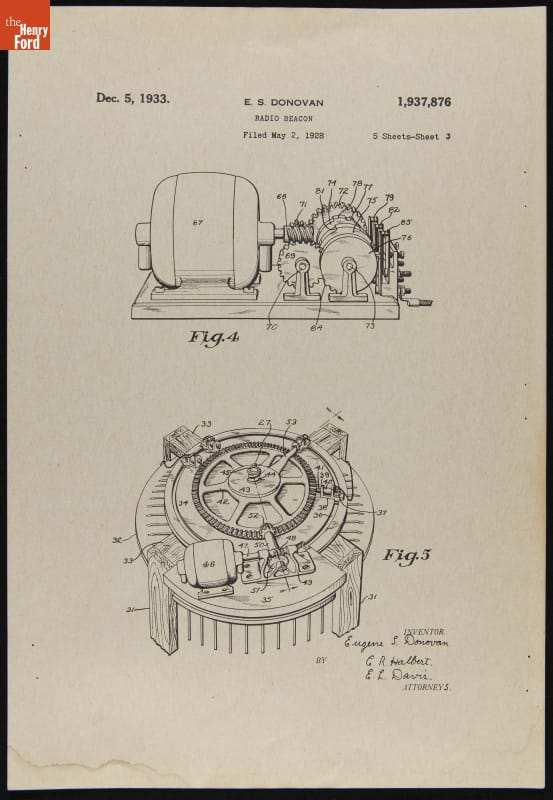
- Diagrams for Radio Beacon Patent, #1,937,876, Granted December 5, 1933 - The radio beacon may be Henry Ford's most important contribution to aviation. Early pilots depended on landmarks, preventing reliable navigation in bad weather. Ford's engineers developed a radio beacon that simultaneously transmitted the Morse code letter "A" (dot-dash) in one direction and the letter "N" (dash-dot) in another. The pilot steered until the separate signals merged into a steady hum.
- December 05, 1933
- Collections - Artifact
Diagrams for Radio Beacon Patent, #1,937,876, Granted December 5, 1933
The radio beacon may be Henry Ford's most important contribution to aviation. Early pilots depended on landmarks, preventing reliable navigation in bad weather. Ford's engineers developed a radio beacon that simultaneously transmitted the Morse code letter "A" (dot-dash) in one direction and the letter "N" (dash-dot) in another. The pilot steered until the separate signals merged into a steady hum.
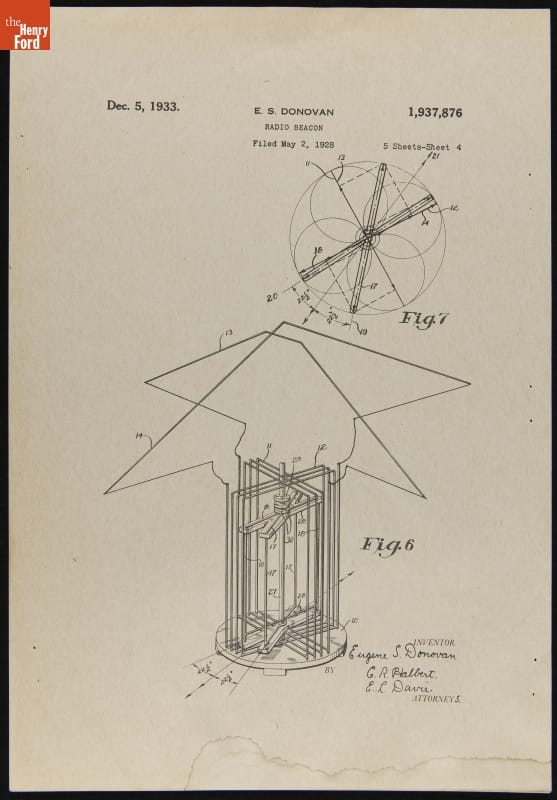
- Diagrams for Radio Beacon Patent, #1,937,876, Granted December 5, 1933 - The radio beacon may be Henry Ford's most important contribution to aviation. Early pilots depended on landmarks, preventing reliable navigation in bad weather. Ford's engineers developed a radio beacon that simultaneously transmitted the Morse code letter "A" (dot-dash) in one direction and the letter "N" (dash-dot) in another. The pilot steered until the separate signals merged into a steady hum.
- December 05, 1933
- Collections - Artifact
Diagrams for Radio Beacon Patent, #1,937,876, Granted December 5, 1933
The radio beacon may be Henry Ford's most important contribution to aviation. Early pilots depended on landmarks, preventing reliable navigation in bad weather. Ford's engineers developed a radio beacon that simultaneously transmitted the Morse code letter "A" (dot-dash) in one direction and the letter "N" (dash-dot) in another. The pilot steered until the separate signals merged into a steady hum.
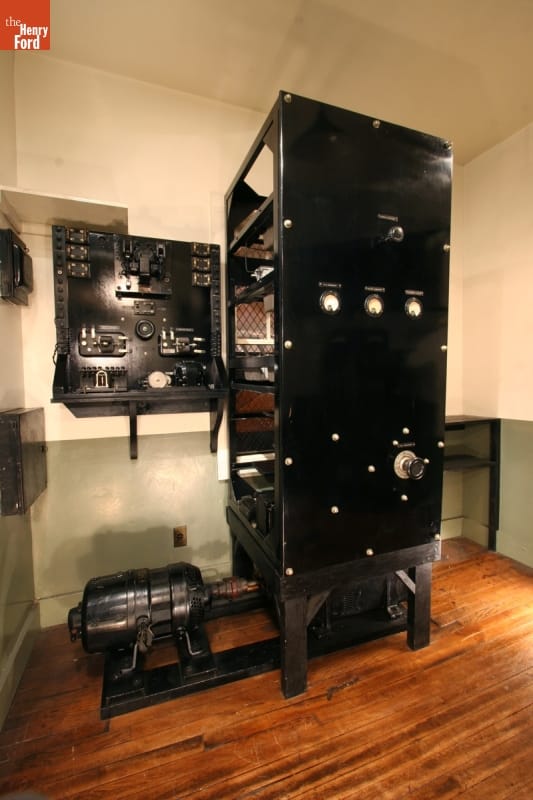
- Radio Beacon Transmitter Used at Ford Airport, 1927 - The radio beacon may be Henry Ford's most important contribution to aviation. Early pilots depended on landmarks, preventing reliable navigation in bad weather. Ford's engineers developed a radio beacon that simultaneously transmitted the Morse code letter "A" (dot-dash) in one direction and the letter "N" (dash-dot) in another. The pilot steered until the separate signals merged into a steady hum.
- 1927
- Collections - Artifact
Radio Beacon Transmitter Used at Ford Airport, 1927
The radio beacon may be Henry Ford's most important contribution to aviation. Early pilots depended on landmarks, preventing reliable navigation in bad weather. Ford's engineers developed a radio beacon that simultaneously transmitted the Morse code letter "A" (dot-dash) in one direction and the letter "N" (dash-dot) in another. The pilot steered until the separate signals merged into a steady hum.
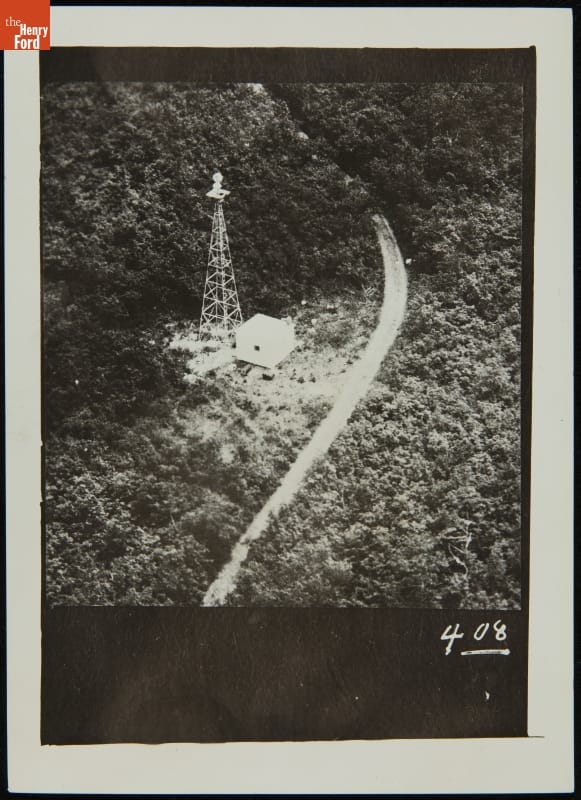
- Aeronautical Beacon in the Alleghenies, circa 1925 - In 1924, with the success of experimental night operations and increasing business interest in next-day mail, the U.S. Air Mail Service announced plans to establish regular overnight flights between New York and Chicago. Preparations included mounting floodlights and searchlights at airfields and constructing a series of routing beacons and emergency landing fields along the route. The first official flights departed from both terminal cities on July 1, 1925.
- circa 1925
- Collections - Artifact
Aeronautical Beacon in the Alleghenies, circa 1925
In 1924, with the success of experimental night operations and increasing business interest in next-day mail, the U.S. Air Mail Service announced plans to establish regular overnight flights between New York and Chicago. Preparations included mounting floodlights and searchlights at airfields and constructing a series of routing beacons and emergency landing fields along the route. The first official flights departed from both terminal cities on July 1, 1925.