
Search
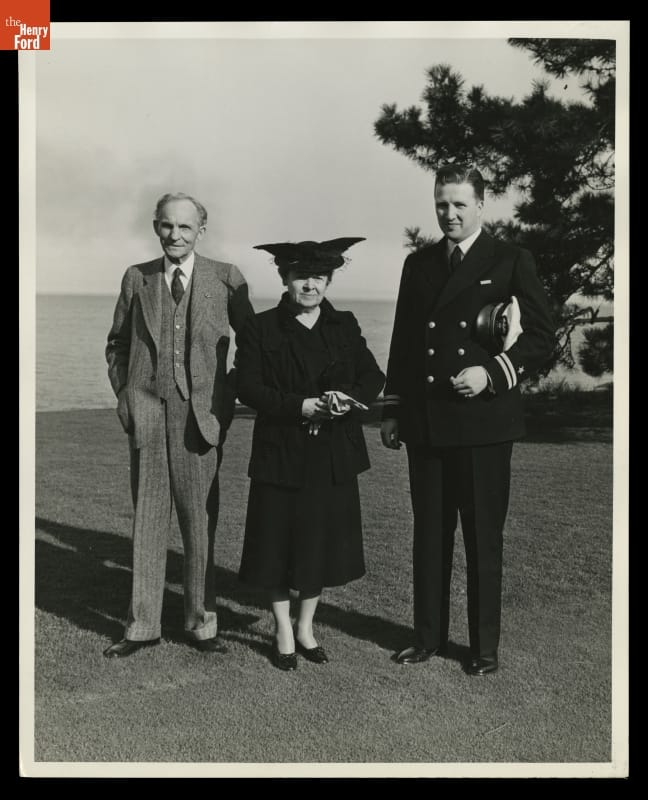
- Henry Ford, Clara Ford and Henry Ford II at Gaukler Point, Michigan, April 1943 - Henry Ford II posed with his grandparents, Henry and Clara Ford. The young Ford served in the U.S. Navy during World War II but, following the death of his father Edsel Ford in May 1943, he was released from duty to return to Ford Motor Company. Henry Ford II was appointed company president in September 1945, after his ailing grandfather resigned.
- April 01, 1943
- Collections - Artifact
Henry Ford, Clara Ford and Henry Ford II at Gaukler Point, Michigan, April 1943
Henry Ford II posed with his grandparents, Henry and Clara Ford. The young Ford served in the U.S. Navy during World War II but, following the death of his father Edsel Ford in May 1943, he was released from duty to return to Ford Motor Company. Henry Ford II was appointed company president in September 1945, after his ailing grandfather resigned.
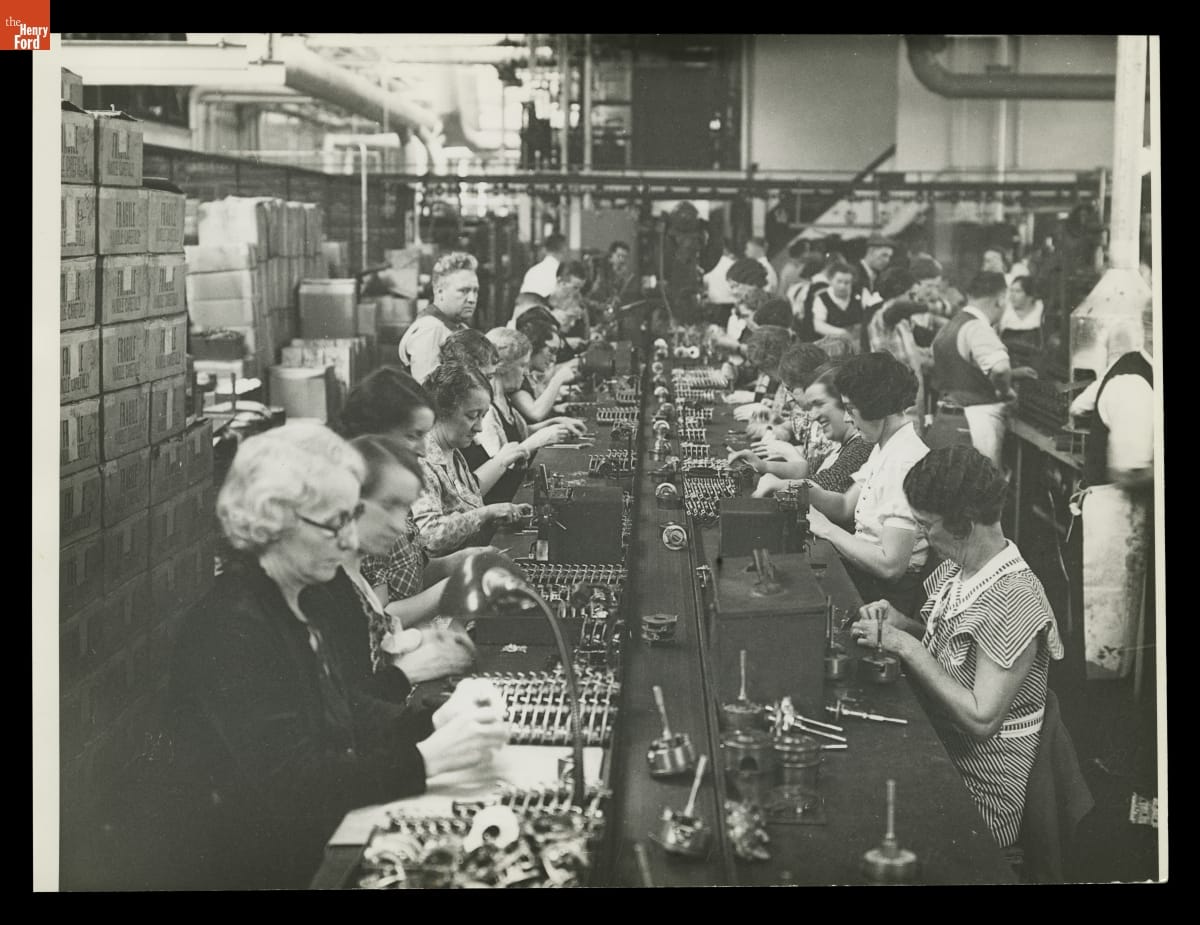
- Blind and Visually Impaired Workers at the Ford Rouge Plant, 1934 - Henry Ford believed in providing employment opportunities to individuals with disabilities. Workers who were blind or visually impaired could sort ammeter gauges or assemble valve bushings by feel, for example, while workers with amputations could operate push-button machines with no difficulty. It was estimated that Ford Motor Company employed as many as 13,000 people with disabilities in 1927.
- October 01, 1934
- Collections - Artifact
Blind and Visually Impaired Workers at the Ford Rouge Plant, 1934
Henry Ford believed in providing employment opportunities to individuals with disabilities. Workers who were blind or visually impaired could sort ammeter gauges or assemble valve bushings by feel, for example, while workers with amputations could operate push-button machines with no difficulty. It was estimated that Ford Motor Company employed as many as 13,000 people with disabilities in 1927.
- Bathers on the Dock at The Old Club, St. Clair Flats, Michigan, circa 1916 - From 1895 to 1924, the Detroit Publishing Company was one of the major image publishers in the world. The company's wide-ranging stock of original photographs documented life and landscapes from across the nation and around the globe. From the tens of thousands of negatives, the company created prints, postcards, lantern slides, panoramas, and other merchandise for sale to educators, businessmen, advertisers, homeowners and travelers.

- circa 1916
- Collections - Artifact
Bathers on the Dock at The Old Club, St. Clair Flats, Michigan, circa 1916
From 1895 to 1924, the Detroit Publishing Company was one of the major image publishers in the world. The company's wide-ranging stock of original photographs documented life and landscapes from across the nation and around the globe. From the tens of thousands of negatives, the company created prints, postcards, lantern slides, panoramas, and other merchandise for sale to educators, businessmen, advertisers, homeowners and travelers.
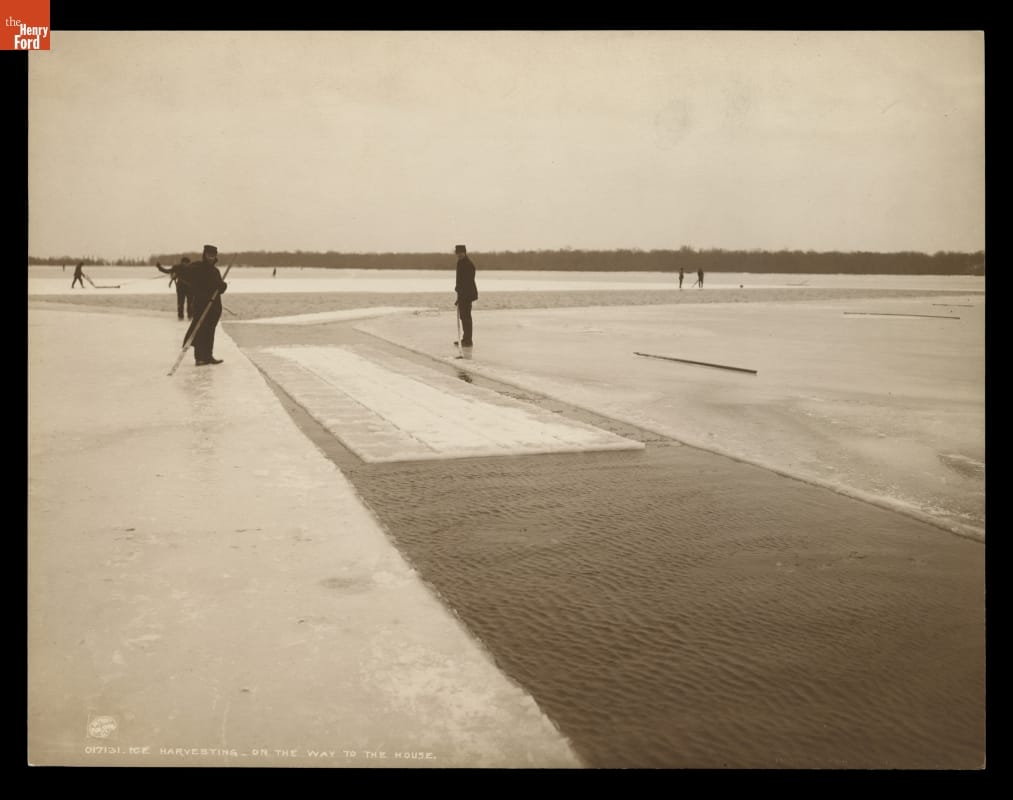
- Ice Harvesting-- On the Way to the Ice House, Probably Lake St. Clair, Michigan, circa 1905 - From 1895 to 1924, the Detroit Publishing Company was one of the major image publishers in the world. The company's wide-ranging stock of original photographs included this ice harvesting image. Workers guide rafts of freshly cut ice through a man-made channel toward an ice house. The floating blocks would be broken into more manageable "cakes" and stored until needed.
- circa 1905
- Collections - Artifact
Ice Harvesting-- On the Way to the Ice House, Probably Lake St. Clair, Michigan, circa 1905
From 1895 to 1924, the Detroit Publishing Company was one of the major image publishers in the world. The company's wide-ranging stock of original photographs included this ice harvesting image. Workers guide rafts of freshly cut ice through a man-made channel toward an ice house. The floating blocks would be broken into more manageable "cakes" and stored until needed.
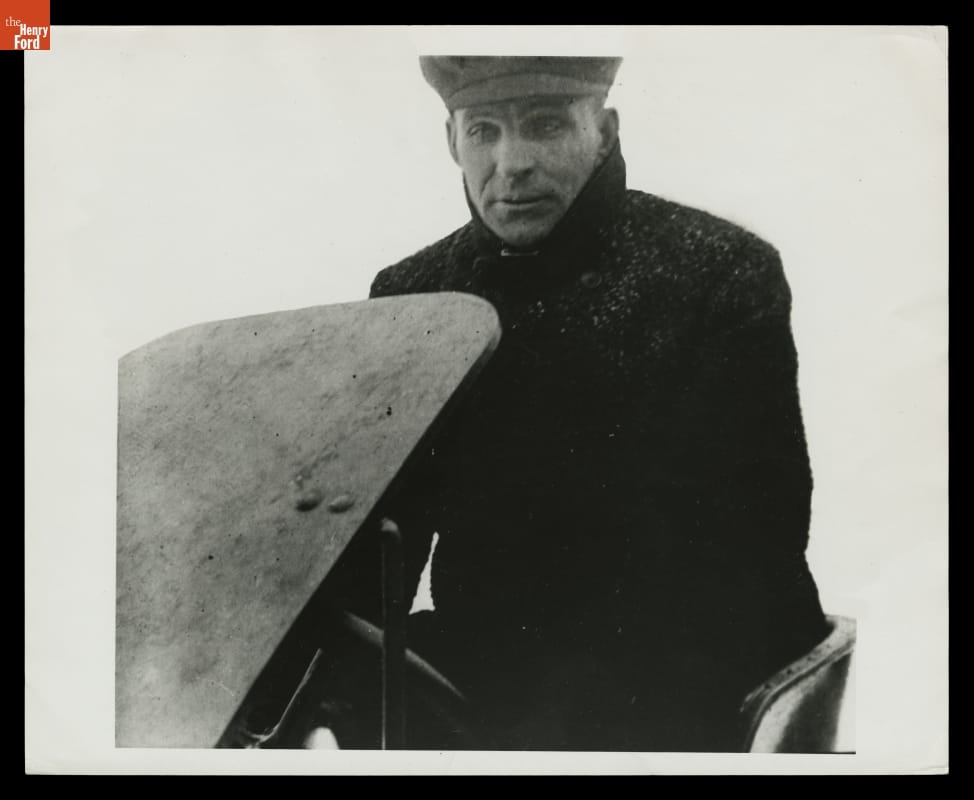
- Henry Ford at the Wheel of the Arrow Racer, Lake St. Clair, Michigan, 1904 - On January 12, 1904, Henry Ford and his riding mechanic Ed "Spider" Huff set a world speed record of 91.37 miles per hour on a frozen Lake St. Clair, northeast of Detroit. The feat raised Ford Motor Company's profile, and the "Arrow" racer -- though referred to as the Ford "999" -- became a common subject in Ford advertisements.
- January 12, 1904
- Collections - Artifact
Henry Ford at the Wheel of the Arrow Racer, Lake St. Clair, Michigan, 1904
On January 12, 1904, Henry Ford and his riding mechanic Ed "Spider" Huff set a world speed record of 91.37 miles per hour on a frozen Lake St. Clair, northeast of Detroit. The feat raised Ford Motor Company's profile, and the "Arrow" racer -- though referred to as the Ford "999" -- became a common subject in Ford advertisements.
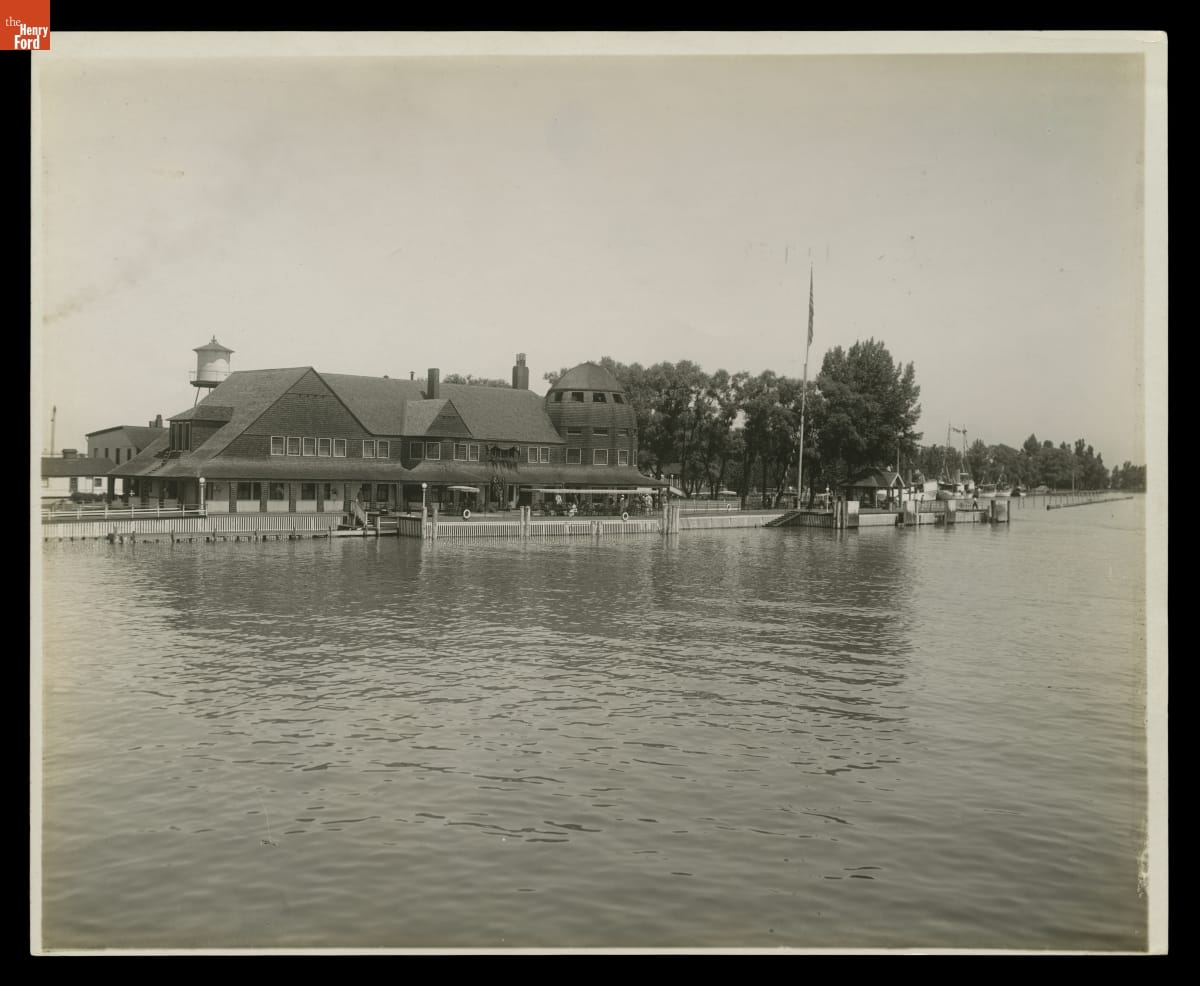
- The Old Club, St. Clair Flats, Michigan, circa 1916 -
- circa 1916
- Collections - Artifact
The Old Club, St. Clair Flats, Michigan, circa 1916
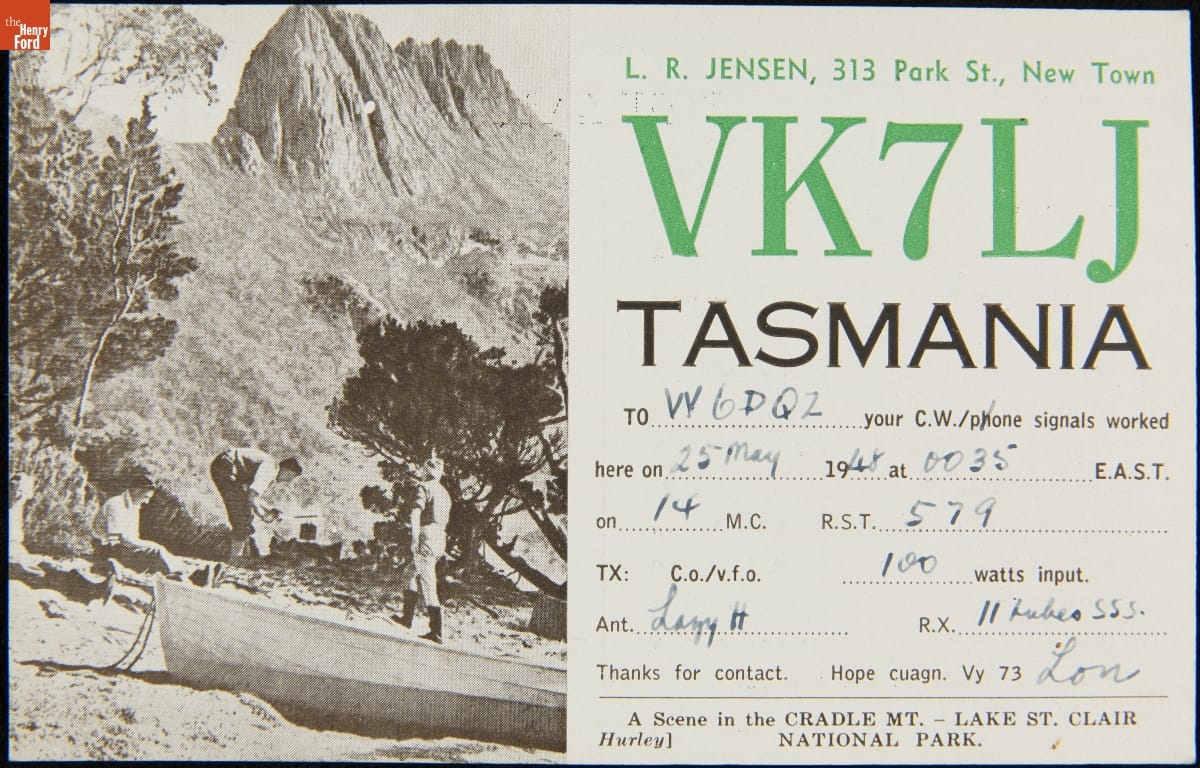
- QSL Card from VK7LJ (L.R. Jensen, Tasmania) to W6DQZ (Hamid Durmisevich, Los Angeles, California), May 25, 1948 - It was customary for ham radio operators (hams) to exchange these "QSL cards" with one another through the mail after their first conversation. Long-time hams amassed collections of thousands of cards, some from far-flung places. There is a story embedded in each example: the ham's call sign dominates the design, with additional details about location, reception reports, and weather conditions.
- May 25, 1948
- Collections - Artifact
QSL Card from VK7LJ (L.R. Jensen, Tasmania) to W6DQZ (Hamid Durmisevich, Los Angeles, California), May 25, 1948
It was customary for ham radio operators (hams) to exchange these "QSL cards" with one another through the mail after their first conversation. Long-time hams amassed collections of thousands of cards, some from far-flung places. There is a story embedded in each example: the ham's call sign dominates the design, with additional details about location, reception reports, and weather conditions.
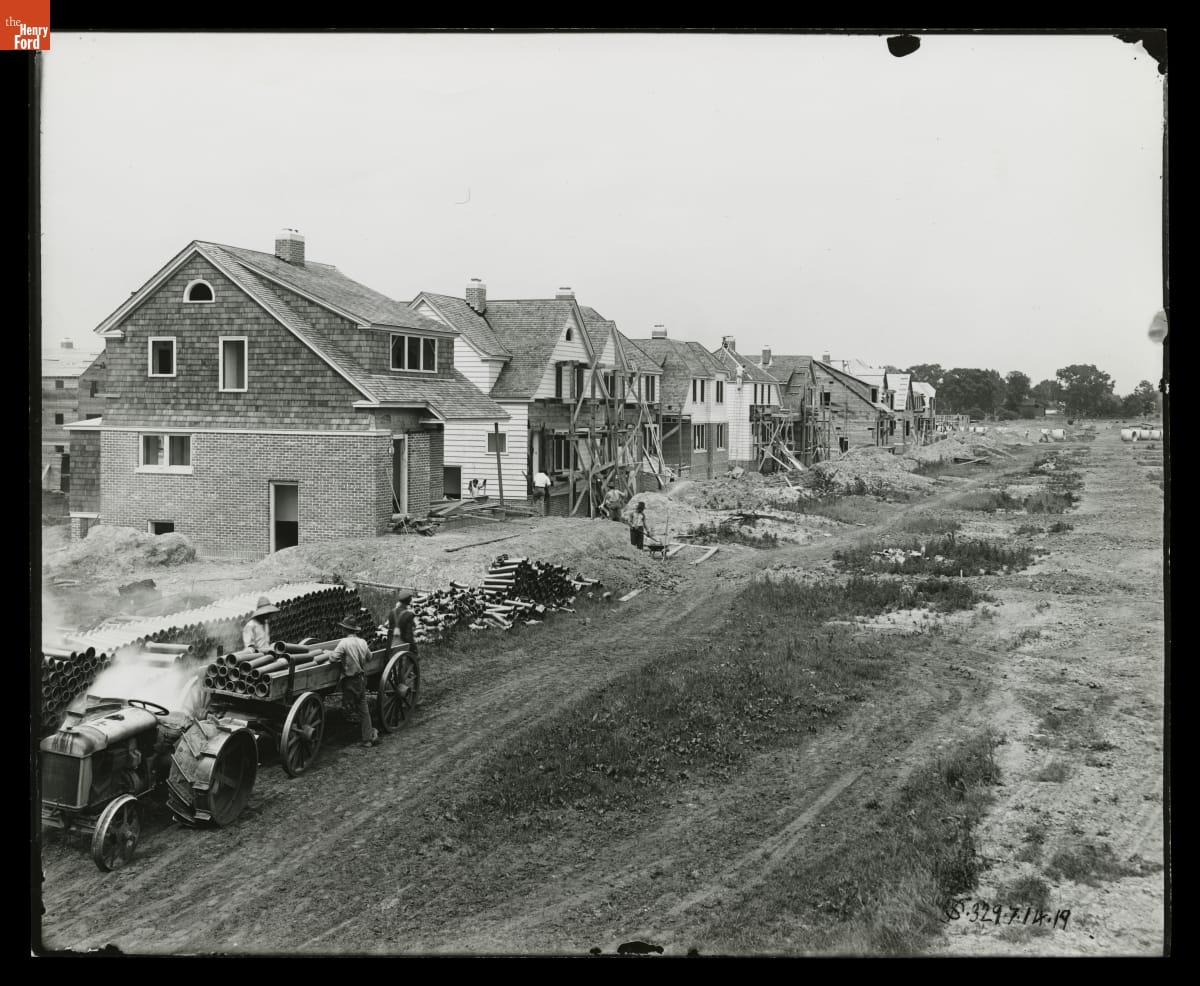
- Construction Progress, Ford Homes District, Dearborn, Michigan, July 1919 - In 1919, Edsel Ford and Ernest Liebold, Henry Ford's executive secretary, organized the Dearborn Realty and Construction Company to develop some of Henry Ford's extensive land holdings. Before the end of 1921, the company built 250 houses in what became the Ford Homes District in Dearborn, Michigan. Standardized designs and fixtures saved time and reduced construction costs in the project.
- July 14, 1919
- Collections - Artifact
Construction Progress, Ford Homes District, Dearborn, Michigan, July 1919
In 1919, Edsel Ford and Ernest Liebold, Henry Ford's executive secretary, organized the Dearborn Realty and Construction Company to develop some of Henry Ford's extensive land holdings. Before the end of 1921, the company built 250 houses in what became the Ford Homes District in Dearborn, Michigan. Standardized designs and fixtures saved time and reduced construction costs in the project.
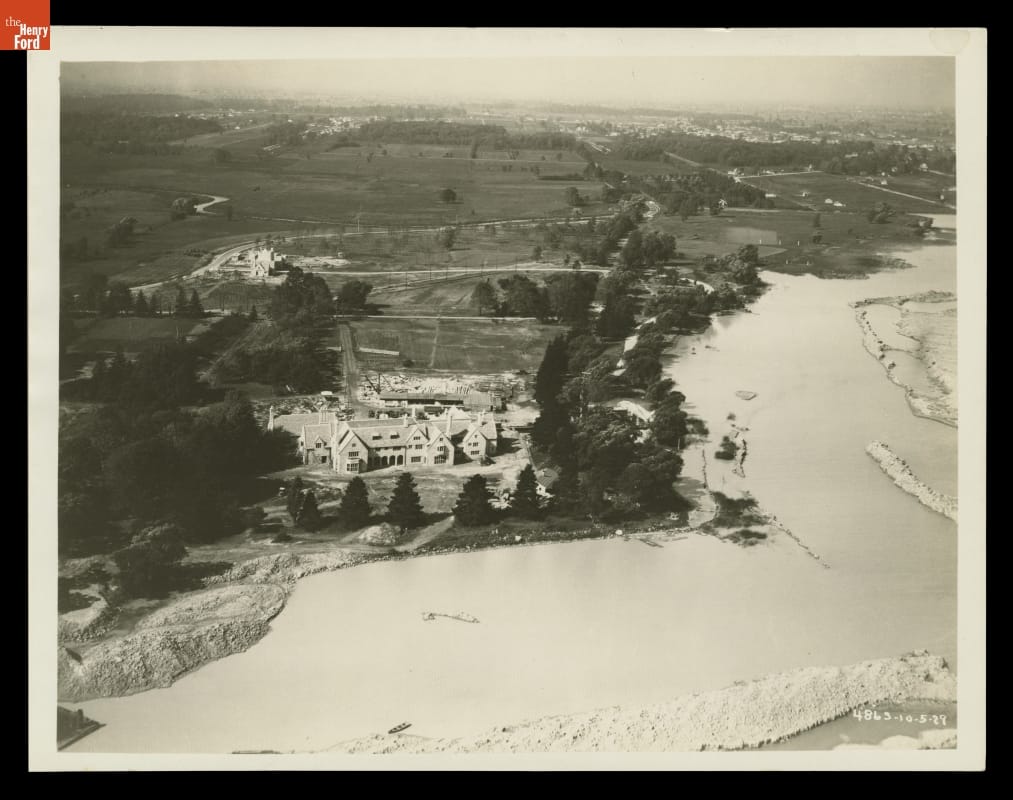
- Edsel and Eleanor Ford House, Gaukler Pointe, Under Construction, Grosse Pointe Shores, Michigan, 1927 - Edsel and Eleanor Ford moved into their home on Gaukler Pointe, near Grosse Pointe Shores, Michigan, in 1929. At the Fords' request, architect Albert Kahn designed the home in a style reminiscent of stone houses in the Cotswolds region of England. Noted landscape designer Jens Jensen planned the estate's grounds.
- October 05, 1927
- Collections - Artifact
Edsel and Eleanor Ford House, Gaukler Pointe, Under Construction, Grosse Pointe Shores, Michigan, 1927
Edsel and Eleanor Ford moved into their home on Gaukler Pointe, near Grosse Pointe Shores, Michigan, in 1929. At the Fords' request, architect Albert Kahn designed the home in a style reminiscent of stone houses in the Cotswolds region of England. Noted landscape designer Jens Jensen planned the estate's grounds.
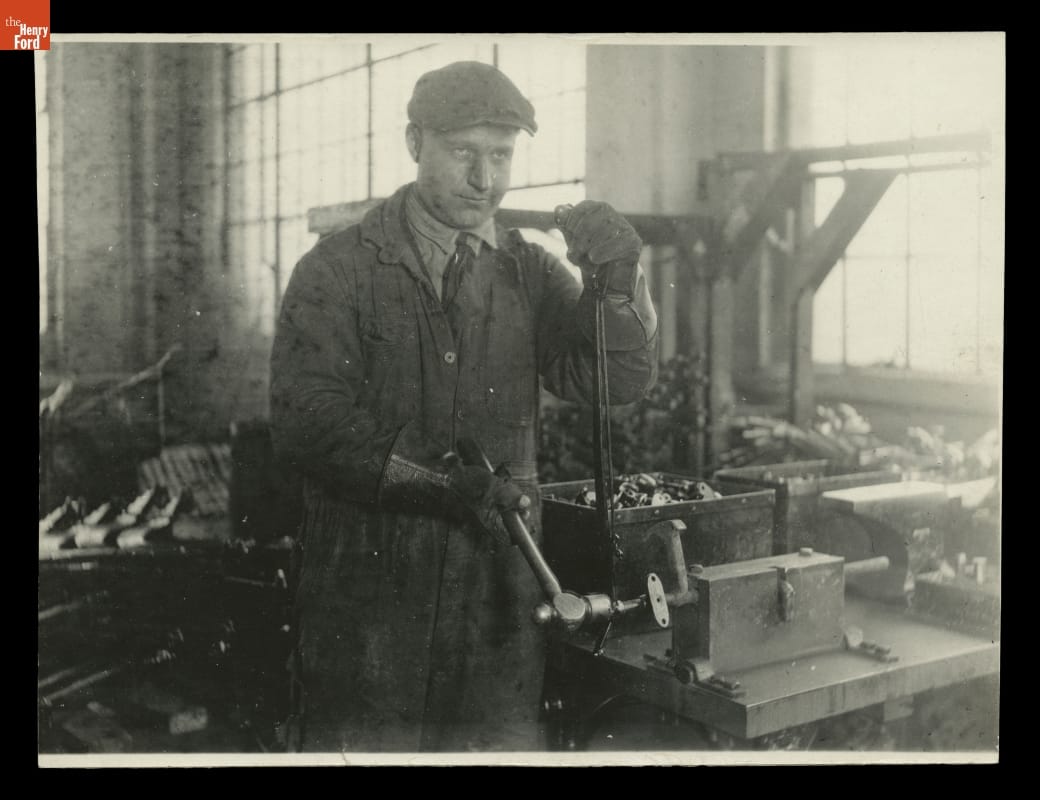
- Blind Worker at the Ford Rouge Plant, 1934 - Henry Ford believed in providing employment opportunities to individuals with disabilities. Workers who were blind or visually impaired could sort ammeter gauges or assemble valve bushings by feel, for example, while workers with amputations could operate push-button machines with no difficulty. It was estimated that Ford Motor Company employed as many as 13,000 people with disabilities in 1927.
- 1934
- Collections - Artifact
Blind Worker at the Ford Rouge Plant, 1934
Henry Ford believed in providing employment opportunities to individuals with disabilities. Workers who were blind or visually impaired could sort ammeter gauges or assemble valve bushings by feel, for example, while workers with amputations could operate push-button machines with no difficulty. It was estimated that Ford Motor Company employed as many as 13,000 people with disabilities in 1927.