
The Most Popular Digital Collections Artifacts of 2022
Share
share
This year, online visitors viewed the artifact pages in our Digital Collections nearly 900,000 times--that's more than one in every twenty-five pageviews on our whole website. Many of the artifacts that were viewed the most this year were also on last year's list, but some of the new entries include a 1996 StarTAC flip phone, a McDonald's Happy Meal "Teenie Beanie" toy, a 1923 Stutz Bearcat Roadster, and a Kmart "bluelight specials" strobe light.
LeMans06-66_441
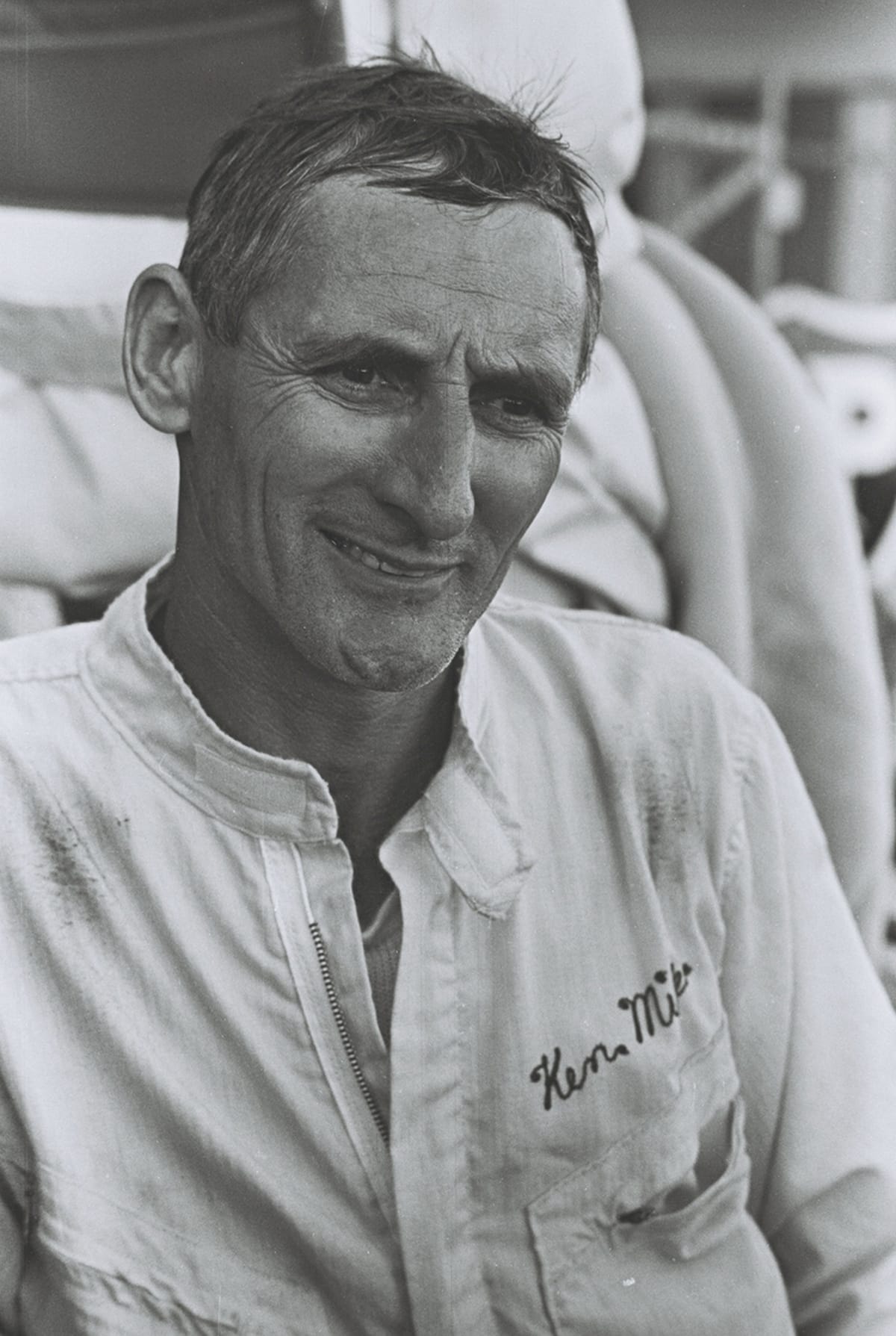
Ken Miles at the 24 Hours of Le Mans Race, June 1966
British-born Ken Miles was a gifted race car engineer and driver. Through his work for Carroll Shelby, Miles got involved in Ford's GT racing program. Miles won the 24 Hours of Daytona and the 12 Hours of Sebring in 1966, and he placed second at Le Mans. Miles died in a crash while testing Ford's J-Car later that year.
View Artifact1896 Ford Quadricycle Runabout, First Car Built by Henry Ford
The Quadricycle was Henry Ford's first attempt to build a gasoline-powered automobile. It utilized commonly available materials: angle iron for the frame, a leather belt and chain drive for the transmission, and a buggy seat. Ford had to devise his own ignition system. He sold his Quadricycle for $200, then used the money to build his second car.
View Artifact1961 Lincoln Continental Presidential Limousine Used by John F. Kennedy
President John F. Kennedy was assassinated in this car on November 22, 1963. The midnight blue, un-armored convertible was rebuilt with a permanent roof, titanium armor plating, and more somber black paint. The limousine returned to the White House and remained in service until 1977. The modified car shows the fundamental ways in which presidential security changed after Kennedy's death.
View ArtifactRosa Parks Bus
Inside this bus on December 1, 1955, Rosa Parks, a soft-spoken African-American seamstress, refused to give up her seat to a white man, breaking existing segregation laws. The flawless character and quiet strength she exhibited successfully ignited action in others. For this, many believe Rosa Parks's act was the event that sparked the Civil Rights movement.
View ArtifactSlave Collar, circa 1860
The wealth and power of Southern plantation owners depended upon a large labor force of enslaved people. Slaves known for running away might have had to wear an iron collar like this, for punishment or to prevent them from running away again. The hooks caught on bushes or tree limbs, causing a violent jerking to the individual's head and neck.
View ArtifactAmana Radarange Microwave Oven, 1975
Amana's Radarange, introduced in 1967, was the first compact microwave oven made for home use. By 1975, when Ed and Flo Harper bought this Radarange as a family Christmas gift, sales of microwave ovens outpaced gas ovens for the first time. The convenient, time-saving microwave oven was becoming a practical necessity for a fast-paced world. People had less time to devote to cooking.
View ArtifactLetter from Clyde Barrow to Henry Ford Praising the Ford V-8 Car, 1934
On April 13, 1934, Ford Motor Company received this unusual product testimonial. In it notorious bank robber Clyde Barrow extolled the virtues of Ford V-8s as getaway cars. Handwriting analysts have questioned the letter's authenticity, but it is the sort of thing the publicity-seeking Barrow might have written.
View Artifact1927 Blue Bird School Bus
This 1927 Blue Bird is the oldest surviving school bus in America. Albert Luce, Sr., built his first bus in 1925 by mounting a purchased wood body to a Ford truck frame. The body could not withstand the Georgia roads. Luce, convinced he could make a better bus, applied a steel framework under the wood body. His success led him to make school buses full time.
View Artifact"Whites Only" Drinking Fountain, 1954
From the late 19th through the mid-20th centuries, segregation laws in Southern states separated African Americans and whites in almost every aspect of public life -- from railroad cars and schools to restrooms and drinking fountains. Varying from state to state, these laws were supposed to establish facilities that were "separate but equal." In reality, these were almost never equal.
View ArtifactHenry Repeating Rifle, circa 1865
Designed by Benjamin Tyler Henry in 1860, the Henry Repeating Rifle was a major advancement in the repeating rifle. With a new bolt, firing pin and ammunition, it was much faster and more reliable than earlier repeaters. It gained fame during the Civil War, with more than 10,000 in use. The rifle was the basis for the 1866 Winchester Repeating Rifle.
View Artifact1914 Detroit Electric Model 47 Brougham, Personal Car of Clara Ford
Clara Ford, wife of Henry Ford, drove this Detroit Electric. In the years before World War I many women chose electric cars because they started instantly without hand cranking and had no difficult-to-shift transmission. The superintendent of the Detroit Electric factory employed his daughter, Lillian Reynolds, to sell to women -- including Clara Ford, who drove this car into the 1930s.
View ArtifactStarTAC Flip Phone, 1996
Motorola's StarTAC was the first flip phone. It was released in 1996, and its small, portable size and light weight (less than 4 ounces) helped make it popular among consumers for several years. The StarTAC's popularity helped everyday Americans develop a familiarity and comfort with cellphones.
View ArtifactAllegheny Steam Locomotive, 1941
The Chesapeake & Ohio Railway's massive Allegheny, introduced in 1941, represents the peak of steam railroad technology. Among the largest and most powerful steam locomotives ever built, it weighed 1.2 million pounds with its tender and could generate 7,500 horsepower. Just 11 years later, C&O began pulling these giants from service. Diesel-electric locomotives proved more flexible and less expensive.
View ArtifactRocking Chair Used by Abraham Lincoln at Ford's Theater the Night of His Assassination, April 14, 1865
President Abraham Lincoln was sitting in this rocking chair during a production of Our American Cousin at Ford's Theatre in Washington, D.C., when he was assassinated on April 14, 1865. Henry Ford purchased the chair in 1929 for the Museum, where it remains one of the most revered objects associated with the "man who saved the Union."
View Artifact1929 Ford Model A Roadster
Falling sales and pleas from his staff finally convinced Henry Ford to retire the Model T in 1927. Workers and factories sat idle for six months while Ford retooled for the replacement car. The new Model A was more mechanically advanced and stylish than its predecessor. It was a hit too, with nearly five million sold over four model years.
View ArtifactCarroll Shelby at the 24 Hours of Le Mans Race, June 1966
Carroll Shelby was brought in to boost Ford's struggling GT racing program in late 1964. Shelby, who'd won Le Mans as a driver in 1959, turned things around. His team reworked the GT40 and, with Ford engineers, replaced its 289-cubic-inch engine with a big 427. Ford swept the Le Mans podium in 1966 by taking first, second and third places.
View Artifact1903 Ford Model A Runabout
After his first two attempts at commercial automobile manufacturing failed, Henry Ford found success with Ford Motor Company, established in 1903. The new company's first product, the Model A, was conventional by the standards of the day. It featured a two-cylinder engine mounted under the seat and rear wheels driven by a chain.
View ArtifactMcDonald's Teenie Beanie Babies Happy Meal Toys, 1997
In the spring of 1997, McDonald's took advantage of the Ty Beanie Babies collecting craze and offered Teenie Beanies in its Happy Meals. The promotion appealed not only to children, but also to adults. Many who had never visited a McDonald's before came and waited in line to order Happy Meals. It is one of the most successful and memorable Happy Meals promotions.
View Artifact1901 Ford "Sweepstakes" Race Car
This is Henry Ford's first race car. After his first auto company failed, Ford turned to racing to restore his reputation. He raced "Sweepstakes" against Alexander Winton on October 10, 1901, and, to everyone's surprise, the novice Ford beat the established Winton. The victory and resulting publicity encouraged financiers to back Ford's second firm.
View Artifact1931 Bugatti Type 41 Royale Convertible
Longer than a Duesenberg. Twice the horsepower of a Rolls-Royce. More costly than both put together. The Bugatti Royale was the ultimate automobile, making its owners feel like kings. Not only did it do everything on a grander scale than the world's other great luxury cars, it was also rare. Bugatti built only six Royales, whereas there were 481 Model J Duesenbergs and 1,767 Phantom II Rolls-Royces.
View Artifact1923 Stutz Bearcat Roadster
The Stutz Bearcat, introduced in 1912, was perhaps America's first true sports car. Stutz individually tested each Bearcat at Indianapolis Motor Speedway, and many were raced with great success. Stutz dropped the model in 1924 only to bring it back in 1931, hoping the beloved name might improve sales during the Great Depression. But Stutz ended automobile production in 1935.
View ArtifactYoo-Hoo Chocolate Flavored Beverage Bottle, 1955-1965
Natale Olivieri added a chocolate flavored drink to the homemade fruit juices he sold at his grocery store in the mid-1920s. The New Jersey entrepreneur named the drink Yoo-hoo. Customers loved it and he bottled the beverage for wider distribution. More success followed in the 1950s, when members of the New York Yankees touted Yoo-hoo as the "The Drink of Champions."
View Artifact1972 Lincoln Continental Presidential Limousine Used by Ronald Reagan
President Ronald Reagan was getting into this car when he was shot by John Hinckley on March 30, 1981. The car carried Reagan to the hospital. Presidents Nixon, Ford, Carter, and George H.W. Bush also used this car. In 1982 the front sheet metal was updated, but since a 1982 grille no longer fit properly on the 1972 body, a 1979 grille was used.
View ArtifactWorld War II Poster, "United We Win," 1943
During the Second World War, all of the national governments of the warring nations used poster campaigns to encourage civilian and military support of the war effort. The advertising technique of these posters followed the innovative style developed during the First World War. By appealing to the viewer's emotions this poster helped the U.S. to rally the home front workers and consumers.
View ArtifactLamy's Diner, 1946
World War II veteran Clovis Lamy ordered this 40-seat diner from the Worcester Lunch Car Company, a premier New England diner builder. In April 1946, Lamy operated the diner in his home town of Marlborough, Massachusetts. Local factory workers ate lunch there and those returning from a movie or show dropped in for dinner. Lamy sold the business in 1949.
View ArtifactMelting Pot Ceremony at Ford English School, July 4, 1917
In 1914 Ford Motor Company established the Ford English School, where the automaker's diverse immigrant employees could learn the English language and take civics lessons in preparation for becoming U.S. citizens. At the graduation ceremony, students wearing clothing from their native countries descended into a large "American Melting Pot" and emerged wearing homogenous suits and waving American flags.
View ArtifactKu Klux Klan Robe and Hood, circa 1925
The Ku Klux Klan's robe and hood veiled the organization in secrecy. During the 1920s, the date of this robe, Klansmen hidden behind this regalia could carry out unchecked terror on African Americans, Catholics, Jews, and immigrants. The robe and hood instilled fear on its victims and a sense of power to its wearers.
View Artifact1952 Wienermobile
Carl Mayer, nephew of the company's namesake, created the first Oscar Mayer Wienermobile in 1936. In the years since, more than a dozen Wienermobiles have promoted the brand at stores, parades and festivals. Spokesman George Molchan, portraying the character "Little Oscar," traveled with the Wienermobile from 1951 to 1987. Today the vehicles are accompanied by college interns known as "Hotdoggers."
View ArtifactParcheesi Game, 1938-1945
Parcheesi is based on Pachisi -- a game that originated in India. Basic game rules have players traveling around the cross-shaped board from start to home. Landing on another players' marker sends that player back to start. American game makers, Selchow and Righter, trademarked the Parcheesi name in 1874 after purchasing the game rights in 1867.
View Artifact1962 Mustang I Roadster
This sharp looking little two-seater created a great "buzz" when racing driver Dan Gurney introduced it at the United States Grand Prix in Watkins Glen, New York, in 1962. Featuring a rear-mounted V-4 engine, it was unlike any Ford ever seen before. The Mustang name later appeared on a sporty four-seater that created its own buzz in 1964.
View Artifact1967 Ford Mark IV Race Car
This car was built to win the 24 Hours of Le Mans. Driven by Dan Gurney and A.J. Foyt, it accomplished that goal in 1967, beating the second-place Ferrari by 32 miles at a record-breaking average speed of 135.48 miles per hour. The Mark IV combined a sophisticated chassis with a big engine based on Ford's V-8 for stock car racing.
View ArtifactFirst Tri-Color, Four-Directional Traffic Signal, 1920
Detroit traffic officer William Potts created this three-color, four-way traffic signal in 1920. Previous illuminated signals used only red and green lights. The addition of an amber "caution" light made driving safer and the three-color signal became the standard by the mid-1930s. This first traffic light was installed at Woodward Avenue and Fort Street in Detroit, Michigan.
View ArtifactMap Showing Layout of Greenfield Village, Dearborn, Michigan, 1947
By 1947, Henry Ford had assembled a collection of nearly 90 historic and reproduction buildings in Greenfield Village. Ford had established the Edison Institute as a teaching institution in 1929, but relented to public demand and began admitting visitors in 1933. This map shows some efforts to accommodate increasing attendance figures, including a gatehouse, lunch wagon, and rest rooms.
View ArtifactNewspaper Article, "Henry Ford Gives $10,000,000 in 1914 Profits to His Employes"
When Henry Ford introduced the moving assembly line in 1913 he loved it but his employees didn't. The work was boring and relentless, and worker turnover was high. To get workers to stay, Henry more than doubled their pay, from $2.34 per day to $5 per day. It was headline news in Detroit and around the country.
View Artifact1980 Comuta-Car Electric Runabout
The Comuta-Car, and its predecessor the CitiCar, were electric cars designed for limited use in cities. Sharp increases in gasoline prices in the 1970s persuaded some 4,000 people to buy the tiny vehicles. But every time the price of fuel spiked, it always fell again, and demand for specialized urban electrics always fell along with it. Will the time for such cars ever come?
View ArtifactButton, "You Are the Spark That Started Our Freedom Movement. Thank You Sister Rosa Parks," circa 1988
On December 1, 1955, Rosa Parks refused to give up her seat to a white man on a bus in Montgomery, Alabama. Her courageous act of protest was considered the spark that ignited the Civil Rights movement. For decades, Martin Luther King Jr.'s fame overshadowed hers. But by the time of this button, Parks was beginning to receive long-overdue recognition.
View Artifact1891 Abbot Downing Concord Coach
The stagecoach is a symbol of the American West, but its origins are in New England. First built in the 1820s, Concord coaches featured an innovative leather-strap suspension that produced a rocking motion over rough roads -- easier on passengers and horses alike. This example carried passengers and mail in New Hampshire and Maine before the automobile made it obsolete.
View ArtifactLincoln Motor Company Advertisement Showing Greyhound Hood Ornament, circa 1930
Lincoln Motor Company adopted the greyhound as its corporate mascot in 1925. The swift, graceful animal was a fitting symbol for a company that prided itself on speedy and stylish motor cars. Gorham Manufacturing Company, a silversmithing firm based in New York City, designed the regal hood ornament that crowned Lincoln automobiles through the 1930s.
View ArtifactHoliday Inn "Great" Sign, circa 1960
When the first Holiday Inns opened in 1952, guests at roadside hotels were mostly traveling families who couldn't always plan their stops ahead of time. This sign -- taller and flashier than some but not radically different from other blinking neon highway signs -- was designed to be spotted from the new interstates. As Holiday Inns multiplied, the sign became a message: "Turn here for a predictable, quality experience."
View ArtifactCotswold Cottage
Cotswold Cottage is from the Cotswold Hills in southwest England. The Fords were attracted to the distinctive character of Cotswold buildings, which are characterized by the yellow-brown stone, tall gables, steeply pitched roofs, and stone ornamentation around windows and doors. Several decorative additions were made to the house in England, before dismantling and re-erecting it in Greenfield Village.
View ArtifactHenry Ford's "Kitchen Sink" Engine, 1893
Henry Ford built his first experimental engine using scrap metal for parts. He tested it on the kitchen sink after supper on December 24, 1893. For ignition he ran a wire from the ceiling's light bulb. His wife Clara hand-fed gasoline to the intake valve while Henry spun the flywheel. The engine roared into action, shaking the sink.
View ArtifactToaster, 2013
Starting in the early 1980s--and already established as an internationally recognized architect--Michael Graves began to pursue a parallel career as a product designer. Over the following three and a half decades he and his collaborators designed everything from humble household goods to limited edition luxury items for clients as diverse as Steuben, Alessi, Target, J. C. Penney, and Disney.
View Artifact1987 Ford Thunderbird Stock Car, Raced by Bill Elliott
Bill Elliott set NASCAR's all-time speed record with this car when he qualified for the 1987 Winston 500 at Talladega at 212.809 miles per hour. By the 1980s, "stock cars" only looked stock. Underneath this Thunderbird sheet metal is a purpose-built steel tube frame, racing suspension and brakes, and a racing engine that no Ford dealer ever sold.
View ArtifactMicroscope Used by George Washington Carver, circa 1900
By 1900, cotton production had depleted Southern soils, so George Washington Carver (1864-1943) developed nutritious crops like peanuts that nurtured the soil and could be sold to make industrial products. He used this microscope in his laboratory at the Tuskegee Institute in Alabama.
View ArtifactKmart's "Bluelight Specials" Strobe Light, circa 1972
A voice over the storewide intercom announces: "Attention Kmart shoppers, …" Customers pause and scan for a flashing blue light--somewhere in the store there is a sale! In the late 20th century, Kmart's iconic Bluelight Specials provided instant bargains for lucky in-store shoppers. Workers at one Kmart store created this Bluelight memento as a retirement gift for a longtime employee.
View ArtifactMartha-Mary Chapel
Churches were a center of community life in the 1700s, a place where townspeople came together to attend services and socialize. The Martha-Mary Chapel, with its architecture inspired by New England's colonial-era churches, was built in Greenfield Village in 1929. This chapel was named after Henry Ford's mother, Mary Litogot Ford, and his mother-in-law, Martha Bench Bryant.
View Artifact1927 Ford Model T Touring Car, The Fifteen-Millionth Ford
After 19 years and some 15 million cars, Ford Motor Company ended production of its venerable Model T. Company officials designated this car as the Fifteen Millionth and ceremonial "last" Model T. They gathered at Ford's Highland Park plant to watch Henry Ford and Edsel Ford drive it off the assembly line on May 26, 1927.
View Artifact

