Posts Tagged by james r. johnson


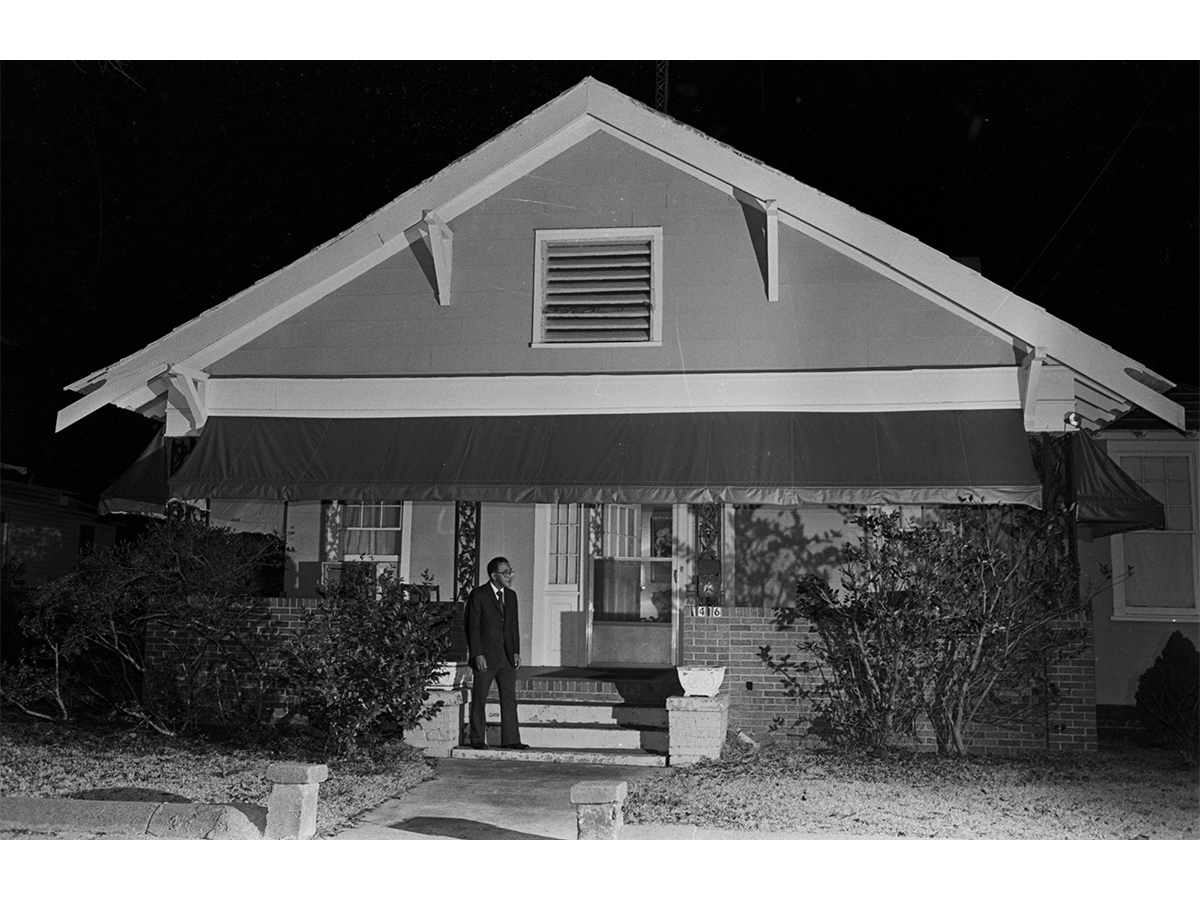 Dr. Sullivan Jackson on the front steps of The Jackson Home, circa 1999. The house reflects changes made in the late 1960s and 1970s. / Alabama Department of Archives and History. Donated by Alabama Media Group / Photo by Ed Jones, Birmingham News.
In 2026, The Jackson Home from Selma, Alabama, will open in Greenfield Village, becoming the first home to be added to this collection of historic structures in over 40 years. The home comes to us with the inspiring story of a courageous family and community at the forefront of one of the most crucial moments in the Civil Rights Movement in America. Their tireless efforts, spotlighted on national and world stages, would eventually lead to the signing of the Voting Rights Act on August 6, 1965.
During the first months of 1965, the home of Dr. Sullivan and Mrs. Richie Jean Jackson and their young daughter, Jawana, served as a key backdrop to the world-changing events in Selma. Their modest yet well-appointed home provided a safe haven for Rev. Dr. Martin Luther King Jr. and other civil rights activists planning the Selma-to-Montgomery marches, and acted as a communication hub, including ongoing calls to and from the White House.
It’s fitting that this home joins buildings associated with other extraordinary Americans, such as Abraham Lincoln, George Washington Carver, Thomas Edison, the Wright Brothers, and Henry Ford, who also achieved remarkable things. It’s also fitting that The Jackson Home is not a grand mansion. Instead, the home is an Arts & Crafts single-story southern bungalow, a style that became prevalent in neighborhoods across the country in the early 20th century. While Greenfield Village has a few 20th-century buildings, none are of this Arts & Crafts style.
The home will be restored to its 1965 appearance, both inside and out, reflecting the changes made by three generations of African American dentists who lived there between 1919 and 1965.
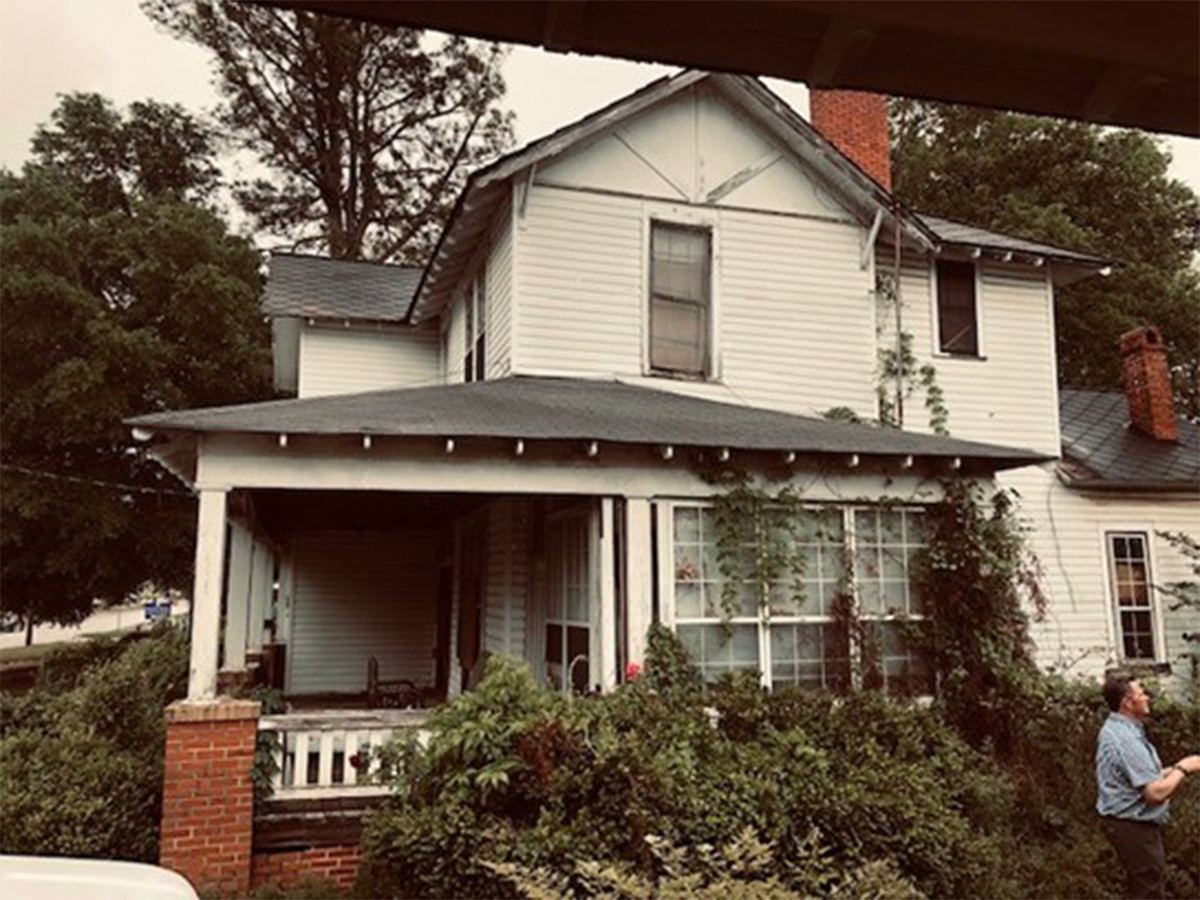 The home of Dr. R.B. Hudson, next door to The Jackson Home. Designed by Wallace A. Rayfield in 1910
The Jackson Home was commissioned by Dr. Richard Hudson as a wedding gift for his daughter, Leola Hudson, in 1919. Dr. Hudson was a prominent Alabama businessman and an important figure in Alabama’s black educational community. He was closely associated with Dr. Booker T. Washington and the Tuskegee Institute (now University), and was a benefactor of Selma University, which stood just down the street from his home. Hudson’s own home was designed by Wallace A. Rayfield in 1910, so it is not surprising that the new home for his daughter and her new husband, Dr. William Whitted, would also be a Rayfield design.
 Wallace A. Augustus Rayfield and students in a mechanical drawing class at the Tuskegee Institute, Tuskegee, Alabama, circa 1902. / Photograph by Frances Benjamin Johnston, courtesy of Library of Congress
 Wallace A. Rayfield provided designs for the remodeling of the home of Dr. L.L. Burwell in 1910. The Burwells are related to The Jacksons and this home stood just around the corner from The Jackson Home. / THF725295
The connection to Wallace A. Rayfield emerged early in our Jackson Home research. At the time the house was built, Rayfield was one of only two formally trained African American architects in America. After earning degrees from Howard University, Columbia, and the Pratt Polytechnic Institute, he began his career teaching architectural design and technical drawing at Tuskegee Institute. In 1908, Rayfield opened his own firm in Birmingham, Alabama, where he built a thriving business designing homes, schools, churches, and other public buildings for the growing black middle class. In 1909, Rayfield designed the famous 16th Street Baptist Church in Birmingham, the site of the horrific bombing that killed four young girls in 1963.
 16th Street Baptist Church, Birmingham, Alabama, designed by Wallace A. Rayfield in 1909. / THF725347
 Floor plan of The Jackson Home highlighting each of the additions. / From the Historic Structures Report prepared by Quinn Evans.
Dr. William and Leola Whitted lived in the home from their marriage in 1919 until Dr. Whitted’s death in 1940. In its first iteration, the house was sided in narrow painted clapboard with a wooden shingled roof. It ended at the kitchen door, with another doorway leading out from the hallway onto a covered porch. The house was heated by individual fireplaces with coal grates, with a coal stove likely in the kitchen, and featured indoor plumbing and electricity. Remarkably, all the original 1919 windows survived and will be reinstalled in the house.
In the late 1930s, as Dr. Whitted's health declined, Dr. Eric Portlock, a cousin of Leola's, joined the dental practice. After Dr. Whitted's death in 1940, Dr. Portlock took over the practice, and he and his wife, Bennie, moved into the house as tenants, while Leola relocated to Montgomery.
Under Bennie Portlock's care, the home became a center of hospitality for many of the women's groups, church organizations, and Selma University functions in which she was involved. Her love for gardening, flowers, and color became evident as she put her own stamp on the decor of the house.
 Birthday party for Rose Marie Foster (seated) hosted by Mrs. Bennie Portlock (directly behind Rose). This circa 1953 image shows the original features of the dining room and some of Mrs. Portlock's floral wallpaper. Marie Foster, one of Selma's “Courageous Eight,” stands next to her daughter, Rose. Marie was the sister of Sullivan Jackson and worked as a dental hygenist for both Dr. Portlock and Dr. Jackson. / THF708432
In the early 1950s, the Portlocks made significant upgrades to the house, including a large rear addition with a full bathroom, den, and bedroom. Along with these changes, they extensively decorated with colorful wallpapers. The kitchen was partially remodeled and updated, but the original 1919 kitchen cabinets remained in place.
 The kitchen of The Jackson Home in 1959. / THF708492
 The kitchen of The Jackson Home in 1959. / THF708428
Around this same time, the Portlocks also resided the house in a wide cement board (a maintenance-free upgrade to the painted wooden siding) finished in a fashionable salmon color with white trim, and added a metal shingle roof over the original wooden shakes. These exterior changes remained in place through 1965 and will be restored.
Dr. Portlock died in 1955. Bennie remained in the house alone until 1958, when Dr. Jackson and Richie Jean Sherrod moved in after their marriage. Dr. Jackson had joined the practice in the mid-1950s. Richie Jean was a cousin to Leola Whitted, the owner of the house, and would eventually inherit the home.
From 1958 onward, Richie Jean gradually added her own modern touches to the home's decor. The birth of Jawana Jackson in July 1960 brought further changes. It's important to note that very soon after The Jacksons moved into the home, Dr. Martin Luther King Jr. and his colleagues became frequent house guests while visiting Selma College for seminars and lectures. By this time, Dr. King and the Jacksons had become close friends, and The Jackson Home was a safe haven.
In November 1964, Dr. King contacted The Jacksons about coming to Selma to expose the voting inequities happening there and asked if their home could be a planning base. The Jacksons quickly agreed, and Richie Jean redecorated, painting over the aging wallpaper and installing new carpeting throughout the house. Family photos of this period show these changes taking place, while the house’s exterior remained unchanged through 1965.
 Artist’s rendering of The Jackson Home returned to its 1965 appearance. / Photo from The Henry Ford’s Experience Schematic Design Report
By 1967, the front porch’s wooden columns and crisscrossed railing were replaced with wrought iron. In the mid-1970s, the porch was further transformed into a brick half-walled space with a ceramic tile floor. The same brick was used to infill between the original piers and remodel the living room fireplace. Major renovations also included new drywall throughout the home, a remodeled kitchen, and the addition of a “lower den” family room. These changes, made after 1965, have since been removed to restore the home’s original 1965 appearance, with missing elements to be reproduced and reinstated to their original locations.
 The front of The Jackson Home, circa 1963. This image shows the 1950s configuration of the front porch that remained intact through 1965. / THF708601
 The front porch of The Jackson Home, Easter 1967, showing the recent addition of the wrought-iron railing and columns that replaced the wooden columns and railing. / THF718533
The Jackson Home has been part of many journeys. Among them are the lives of three generations, world-changing historical events and their aftermaths, a thousand-mile move from Selma, Alabama, to Dearborn, Michigan, and now, a journey back in time to 1965. Many of us have had the honor of being part of these last legs of the home’s journey, an honor we will not soon forget.
 One half of The Jackson Home in its shipping container arriving at Greenfield Village and its two halves reunited on its new foundation. / Photos by Staff of The Henry Ford
 One half of The Jackson Home in its shipping container arriving at Greenfield Village and its two halves reunited on its new foundation. / Photos by Staff of The Henry Ford.
- Brown, Charles A. W.A. Rayfield: Pioneer Black Architect of Birmingham, Alabama, Gray Printing Co., Birmingham, AL, 1977.
- Durough, Allen R., The Architectural Legacy of Wallace A. Rayfield, The University of Alabama Press, Tuscaloosa, 2010.
- Jackson, Richie Jean Sharrod, The House by the Side of the Road, The University of Alabama Press, Tuscaloosa, 2011.
- Historic Structures Report, The Sullivan and Richie Jean Jackson House, prepared by Quinn Evans, Ann Arbor, MI 2023.
- Van West, Carroll, and Richie Jean Jackson House National Register Nomination, Washington, DC: United States Department of Interior, National Park Service, 2013.
James R. Johnson is Director, Greenfield Village & Curator of Historic Structures & Landscapes at The Henry Ford.