


Vojtěch Kubašta: Beyond Borders
Alice in Wonderland pop-up book by Vojtěch Kubašta, c. 1960.
Vojtěch Kubašta is a name unfamiliar to most Americans. It's not surprising, as Kubašta lived and worked in Prague, behind the Iron Curtain in what is now the Czech Republic, for most of his life. But his name is revered among lovers of pop-up and movable books. He was an innovative storyteller, blending his deceptively simple artistry with imaginative movable and pop-up designs. His quiet ingenuity influenced and impacted others who created three-dimensional books, ushering in a resurgence of pop-ups.
Vojtěch Kubašta (1914-1992) was born in Vienna, Austria, but his family soon moved to Prague in what is now the Czech Republic. At an early age, Kubašta knew he wanted to be an artist. As a boy and young man, he filled pages and pages with drawings, sketches, and illustrations. In the early 1930s, he enrolled in the Czech Polytechnic University in Prague, studying to be an architect—a discipline that allowed him to do something with his hands and later helped him design movable and pop-up books. His university friends remembered Kubašta as an artist who studied architecture.
Kubašta honed his artistry and design skills over the next few decades. In the late 1930s and early 1940s, Kubašta designed stage sets for puppet theater -- a growing artistic movement in Czechoslovakia during the interwar years. (This experience, too, influenced his later mastery of movable and pop-up designs.) He taught graphic design. Kubašta also worked for a local plastics company, designing household items and creating marketing and advertising promotions. And as war engulfed Europe and the Czech people were overrun by Germany, Kubašta avoided run-ins with the Nazi occupiers, illustrating literary classics, fairy tales, children's books, and local interest subjects that appealed to national pride.
Kubašta continued his artistic journey after the end of World War II and the communist takeover of then-Czechoslovakia. Prague's printing industry had survived relatively intact, but communist control and censorship severely limited publishing output. Many Czech publishing houses closed. Yet, Kubašta persevered, creating advertisements and promotional materials and illustrating books, maps, posters, and other ephemera for several state-run agencies. He also devised ads with movable elements while working for the Czechoslovakian Chamber of Commerce.
In 1953, Kubašta began working for Artia, the state-run publishing and trading house. He offered his first pop-up book to Artia a few years later. Although he considered this first attempt crude, he would soon master the technique. Kubašta would add movable elements and create visuals to his pop-up books that extended beyond the pages, soaring over the book's flatness. Many of these pop-up books employed a stage-like setting -- pages with text parallel to the spine and that opened to a 90-degree angle to reveal three-dimensional scenery. These books' designs drew on his training as an architect and his work in puppet theater.
However, it wasn't only the three-dimensional elements that made Kubašta's books special. His richly colored illustrations are deceptively simple, filled with wit, humor, and little surprises. Kubašta masterfully blended two- and three-dimensional artistry, creating a visual unity to capture the imaginations of children and adults alike.
In the late 1950s and early 1960s, Artia contracted with several publishing houses in Western Europe, like Bancroft & Company of Westminster, London, to distribute Kubašta's works. Some of these children's storybooks made it to the United States. Alice in Wonderland, produced around 1960, displays the talent of Kubašta: soaring pop-ups, an innovative front cover (a die-cut opening covered with cellophane representing the rabbit hole), and bright, detailed illustrations with delightful surprises.
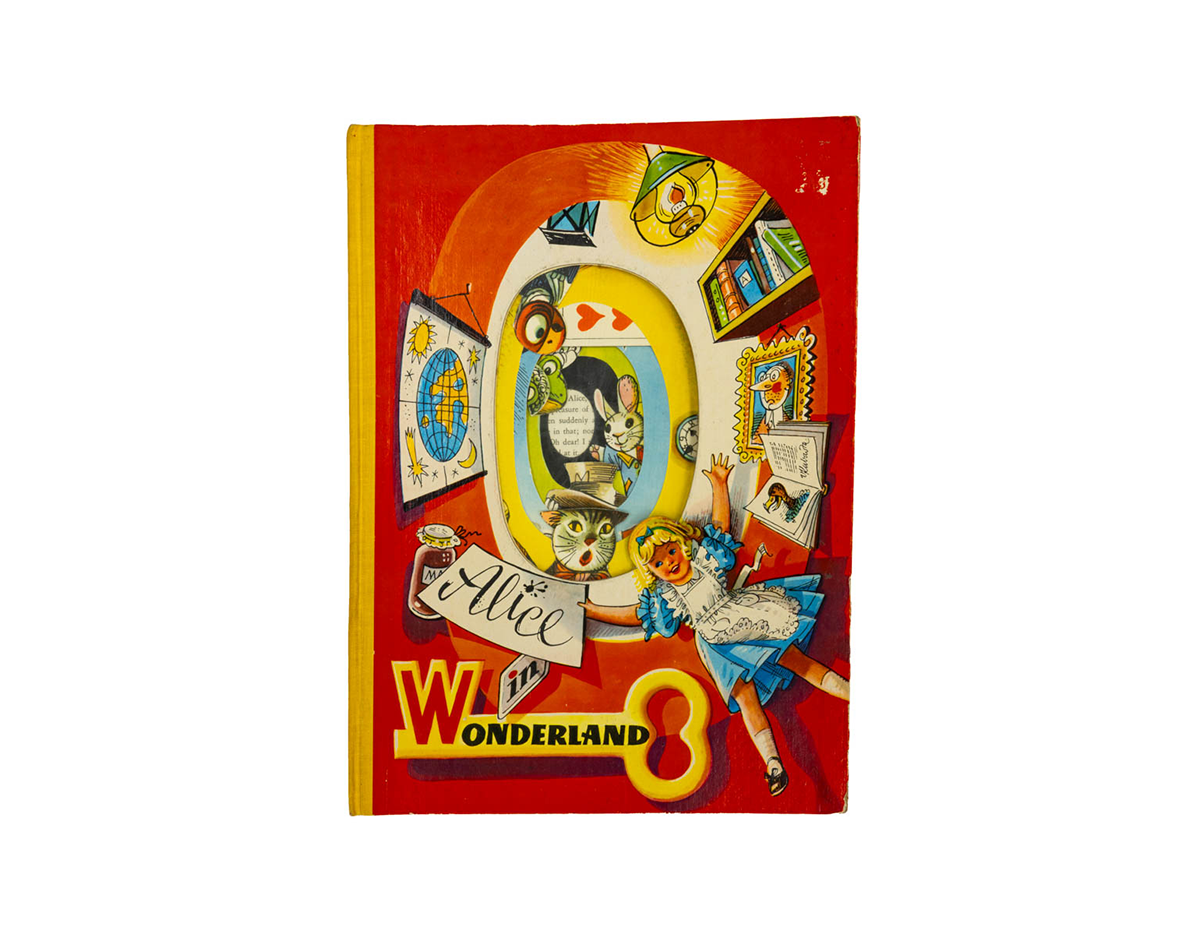 The oval die-cut opening on the cover is lined with cellophane, resembling the rabbit hole down which Alice fell. When closed, the images in the first pop-up are skillfully layered, allowing the reader to view some of the characters without opening the book. Kubašta was known for adding unusual materials, such as cellophane and foil, to his books. / THF803657
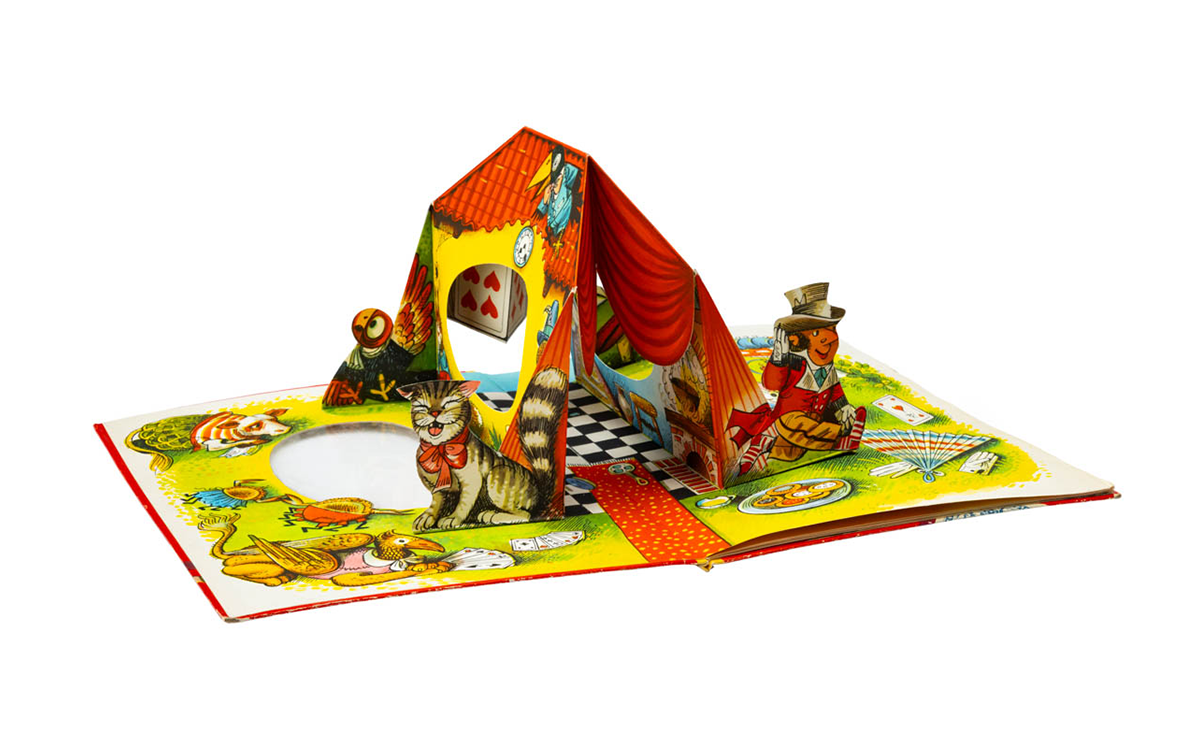 Open the book and discover this colorful pop-up filled with delightful illustrations depicting characters and images from Alice in Wonderland looming over the page. / THF803671
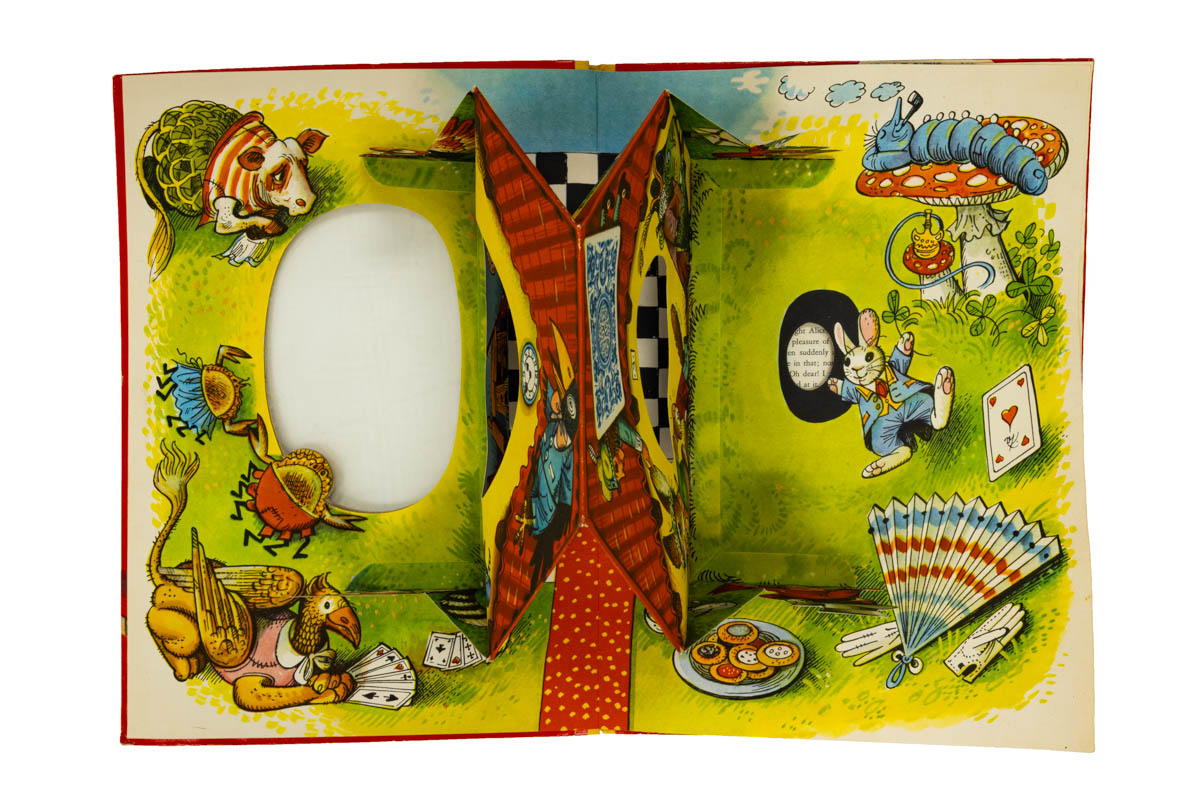 The front pop-up seen from above shows how Kubašta designed the cellophane-covered die-cut to reveal images. Note the large oval on the front cover (left), the oval cutouts in the pop-up house, and the smaller oval on the right (next to the rabbit) showing some of the book's text. / THF803658
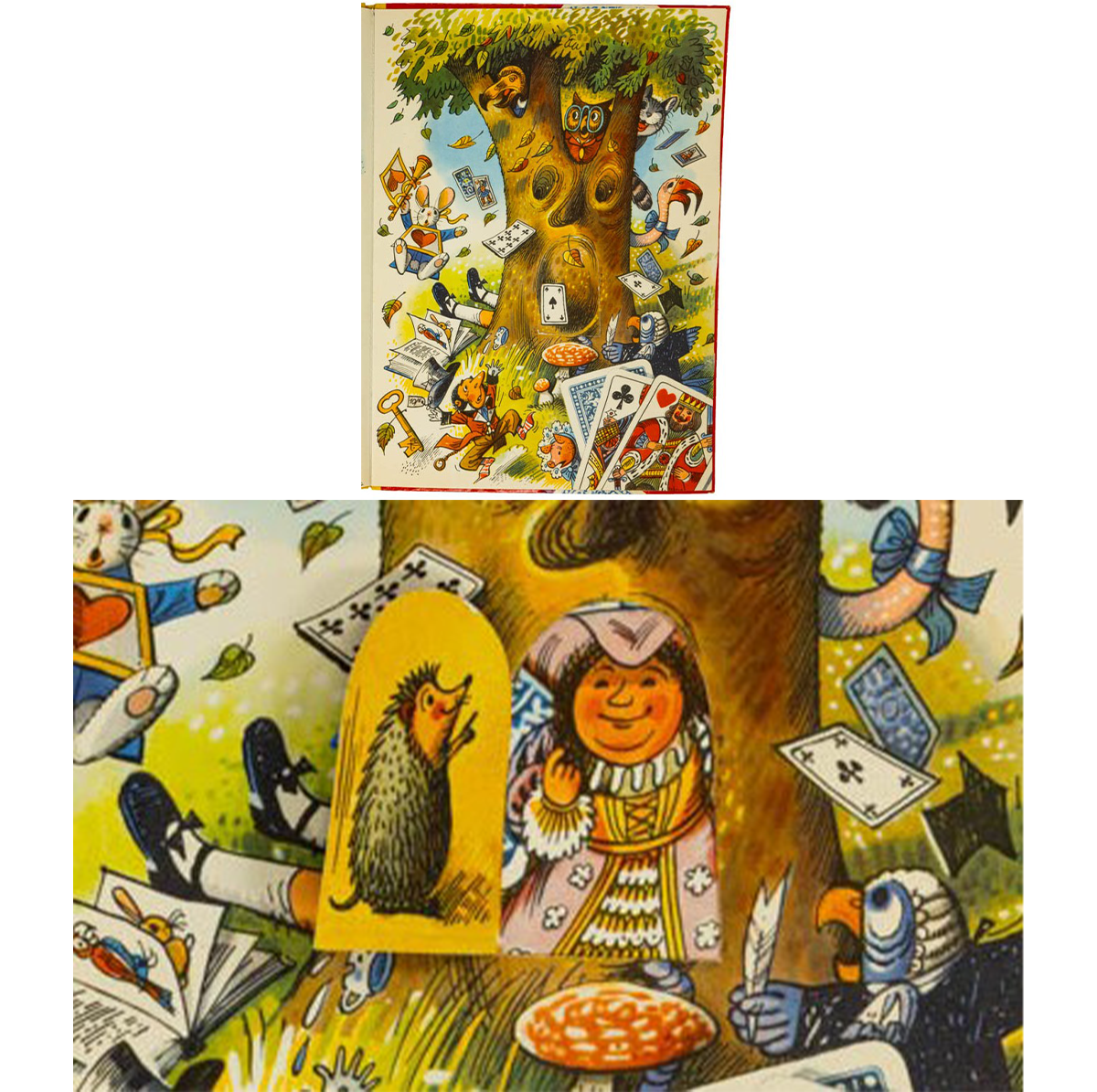 In an illustration at the end of the book, a hidden door in the tree opens to reveal an extra little surprise. / Details of THF803667 and THF803669
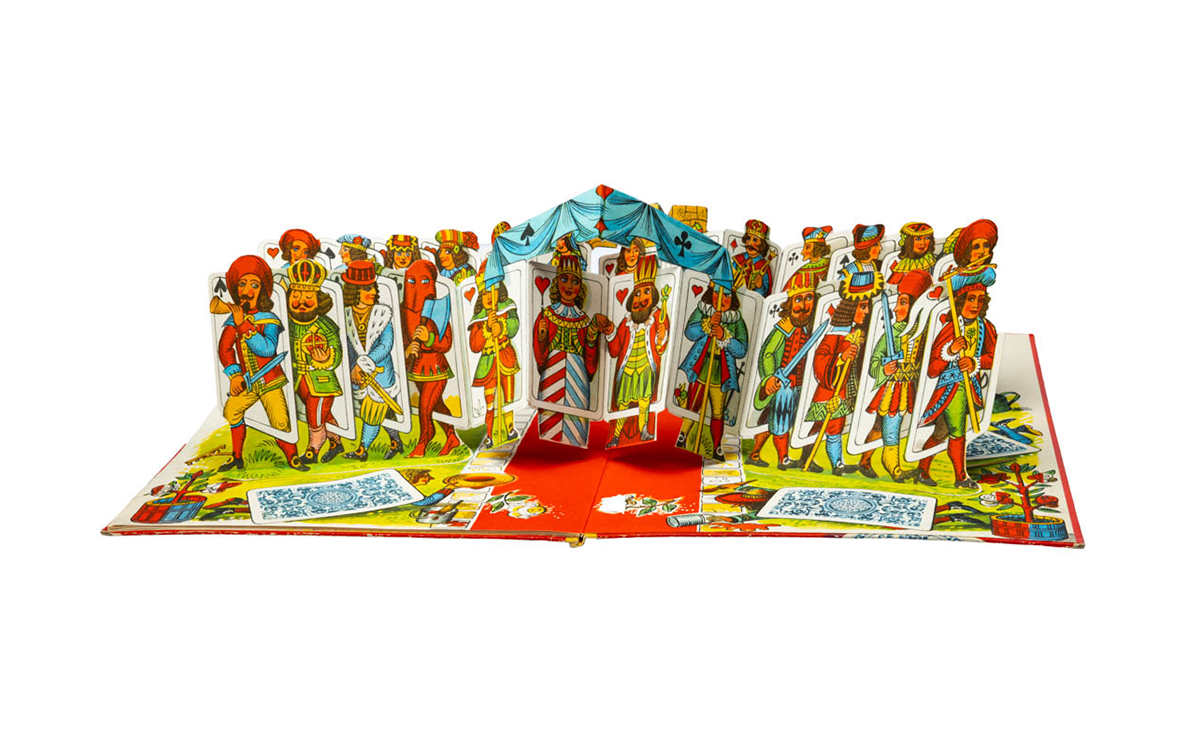 A host of card characters leap from the page at the end of the book. / THF803679
Kubašta's innovative books and other works that made it to the West caught the attention of entrepreneurs and future movable book artists in America. Waldo Hunt, a self-described "creative businessman," remembers seeing Kubašta's pop-up books in New York in the early 1960s. They inspired him. Hunt's work in advertising and publishing in the early 1960s soon incorporated movable and three-dimensional elements. He created the Wrigley Zoo animal pop-ups for the children's magazine Jack and Jill and, in 1965, published Bennett Cerf's Pop-Up Riddles, a promotional item for Maxwell House coffee. That was just the beginning. Hunt's passion spurred a pop-up book revival in America, jump-starting a new era in three-dimensional publications. He collaborated with Hallmark and Random House, then created Intervisual Communications, a firm that would dominate pop-up publications for decades.
Kubašta's work also influenced artists and paper engineers. When Robert Sabuda was ten, he received a copy of Kubašta's Cinderella. The gift forever changed his view of pop-up books; Sabuda would go on to become an award-winning artist and paper engineer. Other artists, such as Ib Penick and David A. Carter, have also cited Kubašta's influence in their careers
Vojtěch Kubašta's impact was far-reaching. A prolific creator, he produced more than 300 pop-up books during his lifetime and influenced a renaissance in pop-up books. But more than this, his colorful illustrations and imaginative movable and three-dimensional artistry depicted wonder and humor in uncomplicated, simple terms. The universal appeal of his works provides a lasting legacy of innovation that breaks through the confines of borders.
Source and for more information, see:
A. Findlay and Ellen G.K. Rubin. Pop-ups, Illustrated Books, and Graphic Designs of Czech Artist and Paper Engineer, Vojtěch Kubašta (1914-1992). Fort Lauderdale, FL: Bienes Center for the Literary Arts, 2005.
Andy Stupperich is an Associate Curator at The Henry Ford.
Facebook Comments