Monthly Archives: November 2024
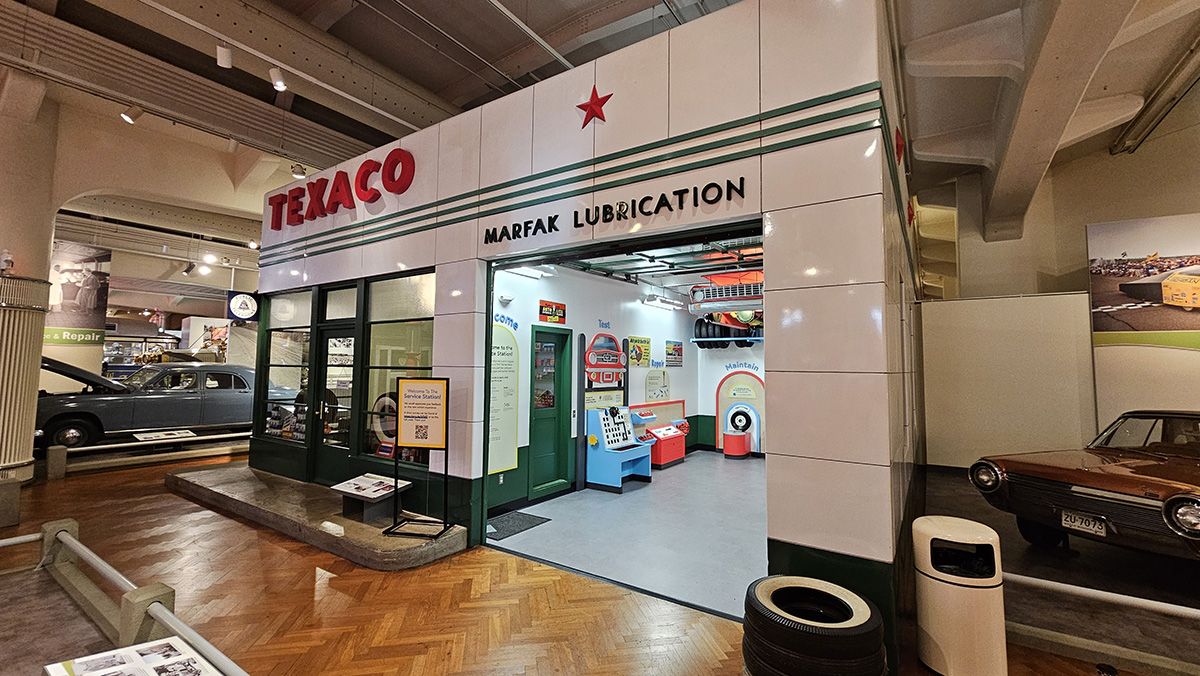
All-new interactives await guests of all ages and abilities in the reimagined Texaco Service Station Experience. / Photo by Matt Anderson
Young visitors to The Henry Ford will find a new group of interactive experiences in the reimagined service garage at our Texaco Service Station. Thanks to a grant from the Michigan Arts and Culture Council, we've been able to redesign and reopen this space that had been closed since 2018. Our Texaco Service Station Experience is more inclusive and accessible than ever before, with activities geared to guests of all abilities and varying age groups.
The new interactives are based on the actual work that took place in automotive service garages across the United States throughout the mid-20th century. Each activity is rooted in Model i, The Henry Ford's signature learning framework focusing on the actions and habits of innovators. Six concepts are highlighted in the garage: Diagnose, Assemble, Inspect, Maintain, Repair and Test.
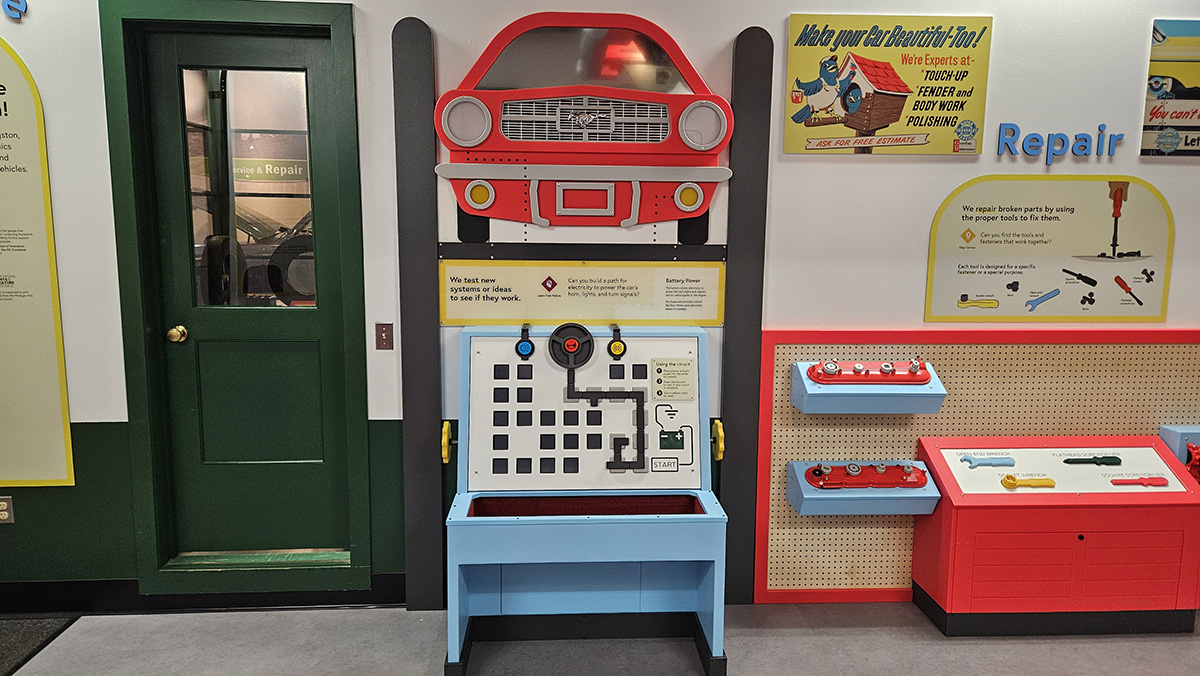
Guests build electrical circuits and find the right tool for the job in the Test and Repair interactives. / Photo by Matt Anderson
“Test” is centered on the electrical systems that power everything from a car's spark plugs to its horn. In this activity, guests make an electrical circuit using puzzle pieces connecting the battery with the horn, headlights and turn signals. Build the circuit correctly and you’ll see these various components work. But if they don't power up as expected, then you can go back to your circuit to find and fix the wrong puzzle pieces. Next to “Test” is the “Repair” station, where visitors discover valve covers with various fasteners. The challenge is to match nuts, bolts and screws with the tools that fit them, whether it's an open-end wrench, a socket wrench or a flathead or square screwdriver.
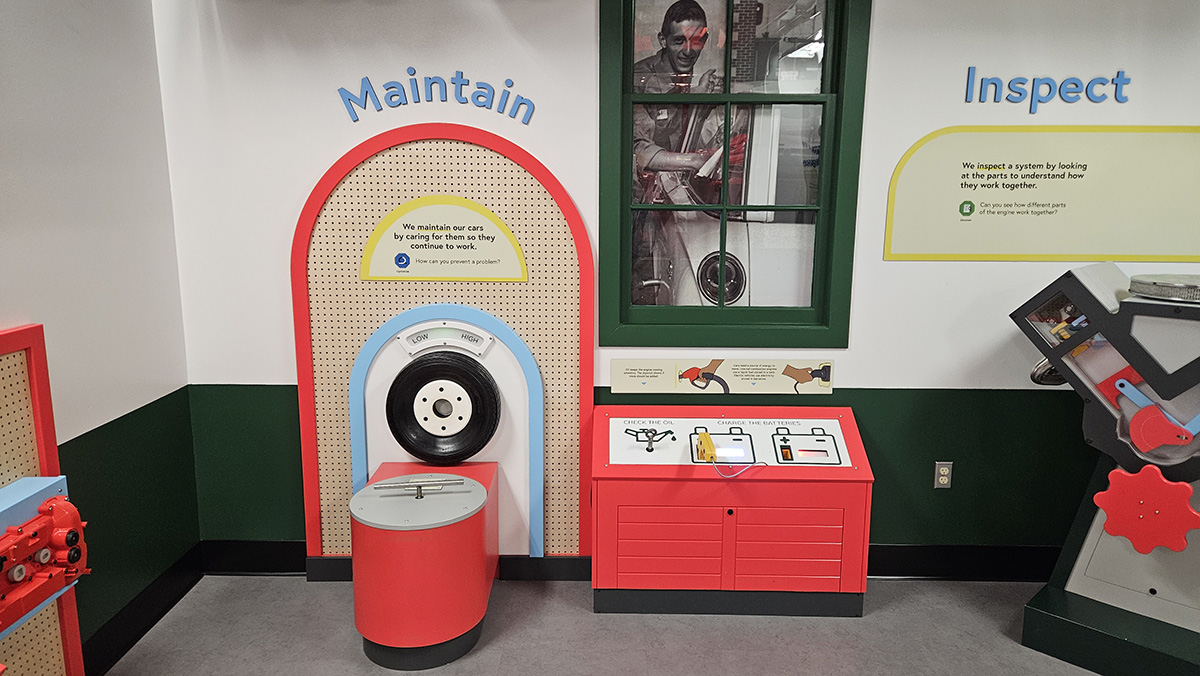
Guests can perform routine maintenance tasks like checking tire pressure or oil level. / Photo by Matt Anderson
The “Maintain” activity contains three routine maintenance tasks familiar to any driver: checking tire pressure, oil level and battery charge. Guests push down on a T-handle plunger and watch a tire pressure gauge as it moves between "low" and "high." When the center of the gauge lights up, you know you've got it right. Pull on a dipstick to check engine oil and you're rewarded with an amusing slide whistle glissando. And in a nod to the growing popularity of electric vehicles, guests can charge a pair of EV batteries using a paddle charger inspired by the type used with the General Motors EV1.
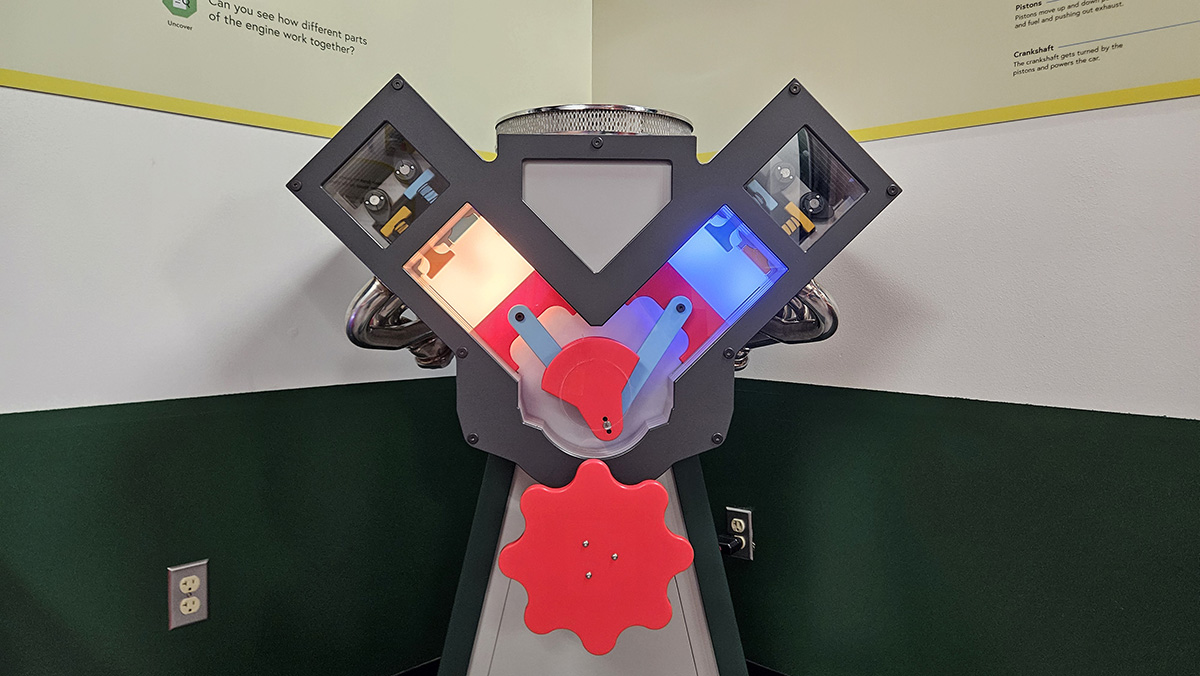
The basic workings of a four-stroke internal combustion engine are shown by this cutaway model. / Photo by Matt Anderson
The "Inspect" area includes an interactive that might appeal to adults as much as to children. We've created a cutaway model of a V-8 engine. Spin the red dial under the crankshaft and you can watch as pistons move up and down and valves open and close. What’s more, colored lights flash in sequence to illustrate ignition and exhaust within the two visible cylinders. As sophisticated as modern internal combustion engines are, most still use the same four-stoke cycle developed by Nikolaus Otto in the 1870s.
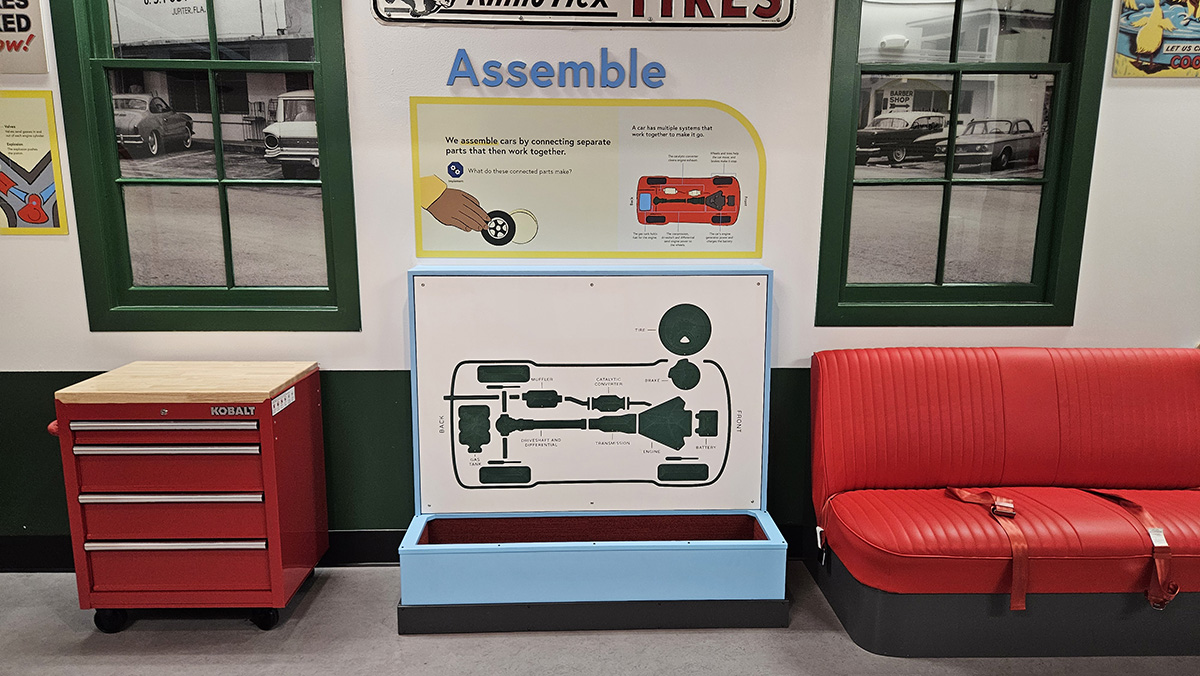
Guests assemble major automobile components in this puzzle activity. / Photo by Matt Anderson
Automobiles depend on multiple systems that work together to move the car. Young visitors discover some of the more significant ones in the service station's “Assemble” zone. Large puzzle pieces represent things like the engine, battery, driveshaft, muffler and tires on a typical car. Moving these pieces into their proper locations helps to show how they all work together to keep motorists moving down the road.
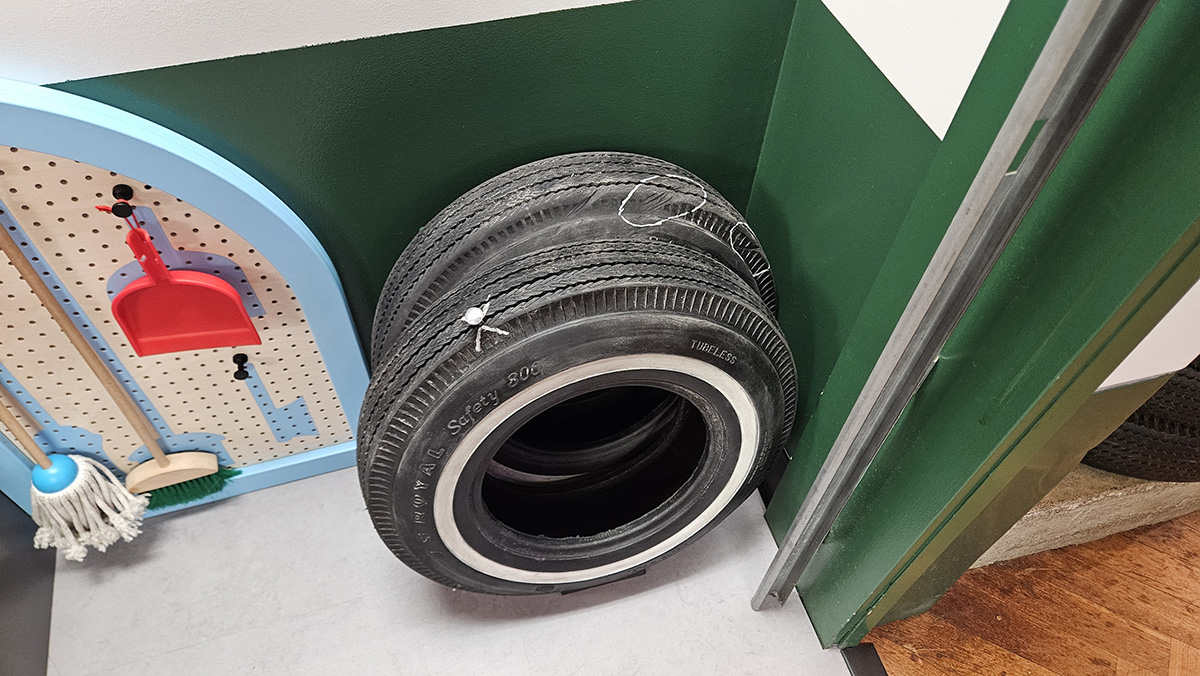
Youngsters can examine worn tire treads at this interactive station. / Photo by Matt Anderson
The station's "Diagnose" area is where the rubber meets the road. Children are invited to inspect a set of tires, looking for damage like a puncture from a nail or wear to the tread. This activity is a good reminder that today's highly reliable cars and trucks still depend on components that wear out with use and need replacing.
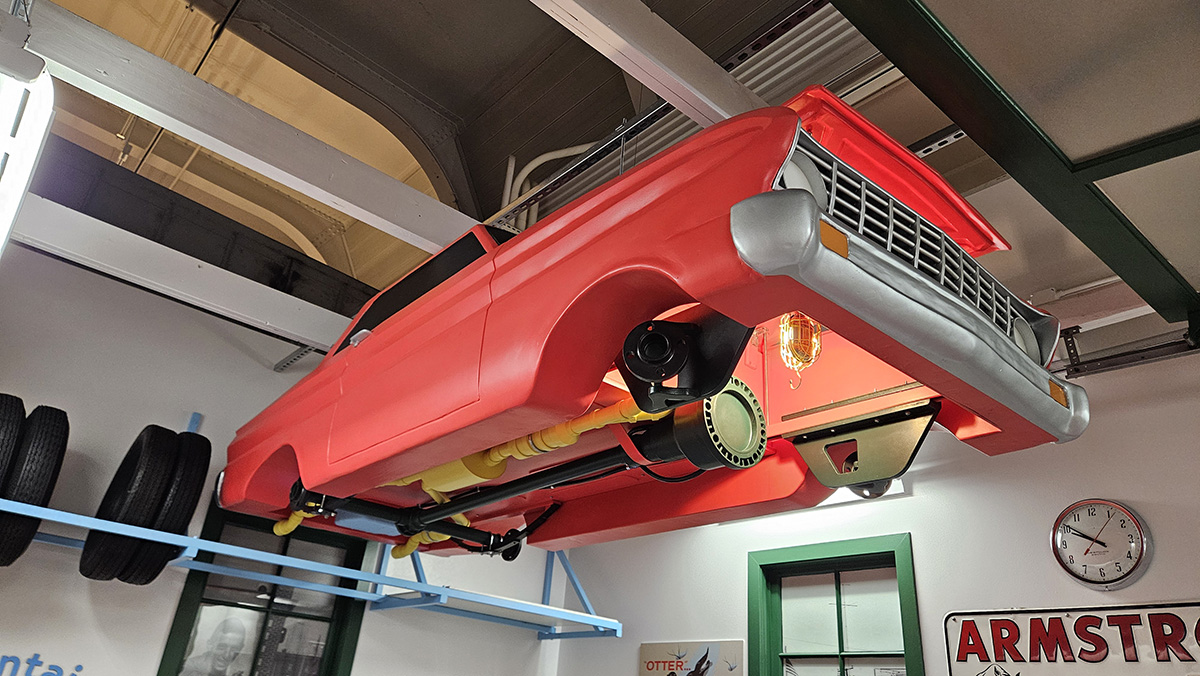
This scaled-down 1964 Ford Falcon replica hangs over the garage, allowing young visitors to see the car's undercarriage. / Photo by Matt Anderson
Visitors might recognize an old favorite returning from the previous version of the Texaco garage. Our scaled-down replica of a 1964 Ford Falcon, which previously sat on the garage floor, now hangs from the ceiling as if raised on a lift. This new placement lets visitors get a look at the car's undercarriage, as well as major components like the drivetrain and exhaust system. It all neatly mirrors the nearby "Assemble" puzzle activity.
Each of these new interactives was conceived, designed and built based on guest feedback and guidance from The Henry Ford's own accessibility advisory group. The activities bring new ideas and educational opportunities to the Texaco garage, and they make more efficient and effective use of the space. We're eager to share the reimagined Texaco Service Station Experience with everyone.
Matt Anderson is Curator of Transportation at The Henry Ford.
Detroit Red Wings logo from the Hydrotherapy Room in the players' locker room. Credit: Photograph courtesy of Detroit Red Wings. Allison Farrand, photographer.
The Performance team plays a crucial role in an athlete's health and abilities on the ice. The Detroit Red Wings Performance team consists of athletic trainers, physical therapists, a massage therapist, a dietitian, medical doctors, a dentist, and a chiropractor. Their work, aided by various tools, modalities, and nutrition plans, ensures players are both physically and mentally fit for the demands of the game.
One of the ways training staff does this is through sleep pattern analysis of data from a player's Oura Ring. The Oura Ring provides round-the-clock insights into sleep, fitness, and stress for wellness and helps determine a player's recovery and stress levels.
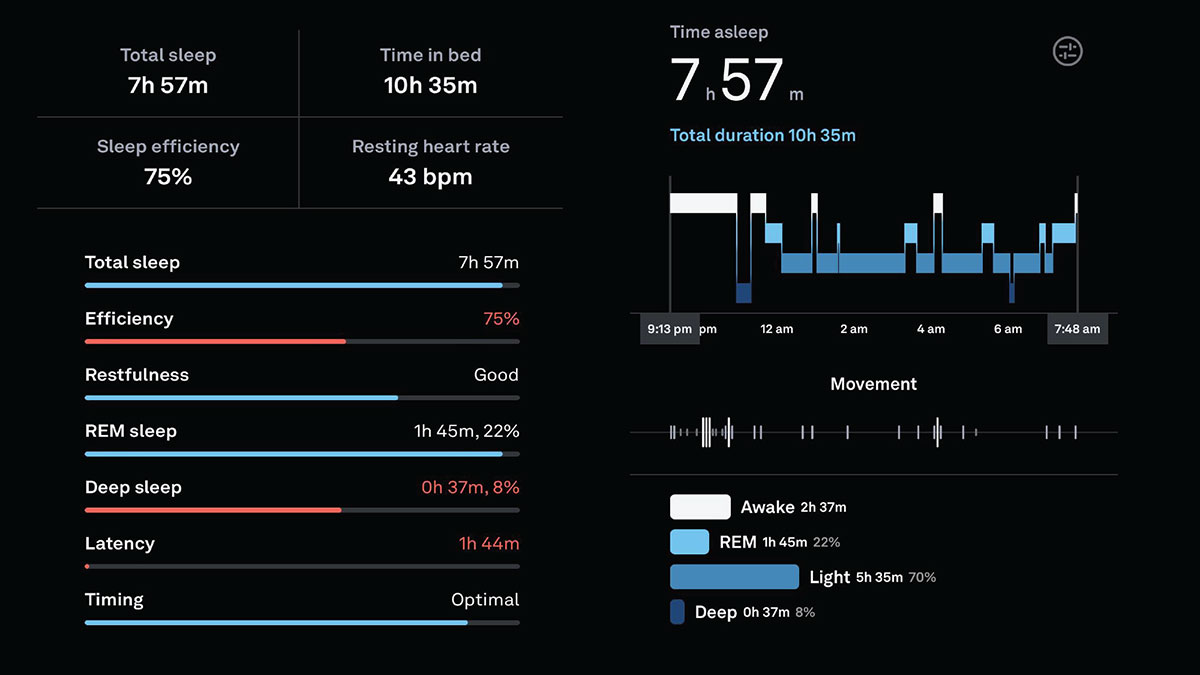
This data, an example of which is shown here, helps the performance team optimize recovery and energy with the ability to adjust conditioning based on the player's needs. Credits: Courtesy of Detroit Red Wings. Lisa McDowell, dietitian.
Players are instructed on best practices for the best sleep environment at home and when traveling for road games. One of the most important factors in maintaining quality sleep is optimizing circadian rhythm. Players need approximately eight to ten hours of sleep with two of those hours coming from Rapid Eye Movement or REM sleep and two to three hours coming from deep sleep. A poor night's sleep results in higher injury risk, slower speed and reaction time, lower testosterone, and impaired glycogen stores. Athletes recover physically during the deep sleep phases as growth hormone and testosterone are released for recovery. REM sleep allows for emotional recovery which is crucial to maintaining a player's peak mental health.
With frequent time zone changes and schedule shifts, a player's sleep routine is often impacted. To offset these disturbances and post-game adrenaline, the performance dietitian provides products such as tart cherry juice, chamomile tea, kiwi, nuts and magnesium, which are crucial for a great night's sleep. Drinks like ginger/turmeric shots and berry protein shakes accelerate recovery and reduce oxidative stress. Magnesium supplements and magnesium-rich foods also promote muscle relaxation and stress reduction.
Another key ingredient for an athlete's peak performance levels is arriving on game day well rested, hydrated, and fueled. Each player's nutrition plan is specific to them and based on genetics, body composition, blood work, metabolism, and personal preferences.
Each player can participate in a sports performance blood work panel and genetic testing. Body composition is also measured, and the goals are included as part of the nutrition plan. We are what we eat, and every choice matters; each player's nutrition routine is individualized to optimize performance, endurance, recovery, and overall health.

Sample meal plan for breakfast and protein shake. Credits: Courtesy of Detroit Red Wings. Lisa McDowell, dietitian.
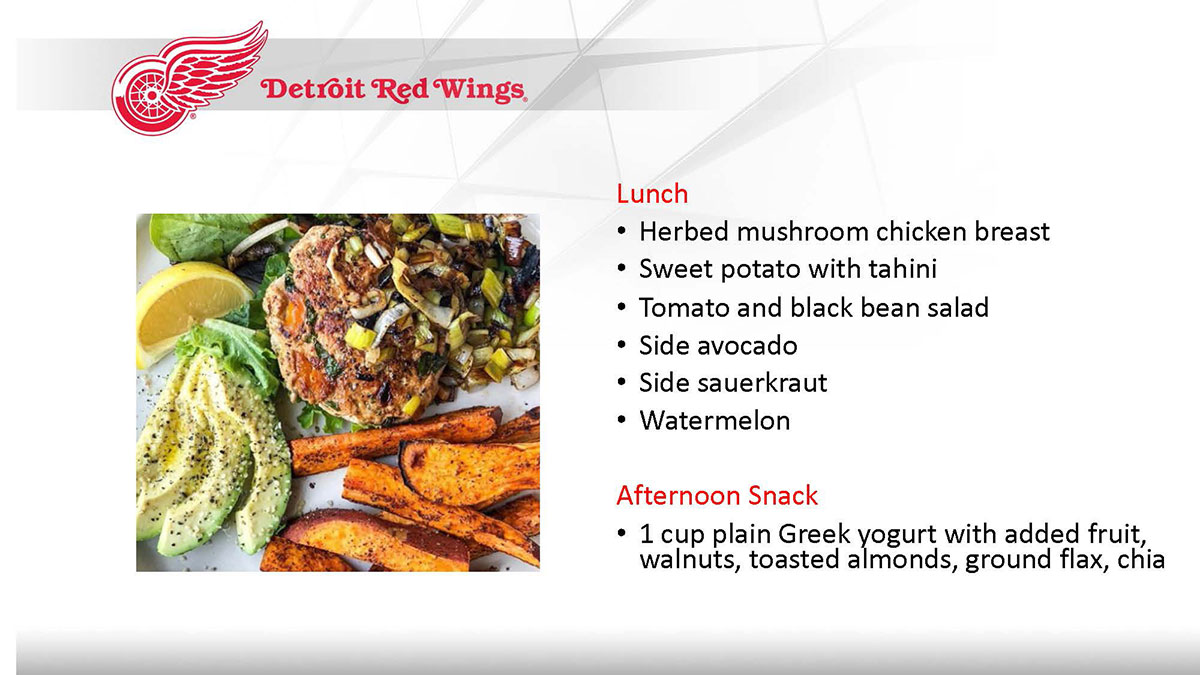
Sample meal plan for lunch and afternoon snack. Credits: Courtesy of Detroit Red Wings. Lisa McDowell, dietitian.

Sample meal plan for dinner. Credits: Courtesy of Detroit Red Wings. Lisa McDowell, dietitian.
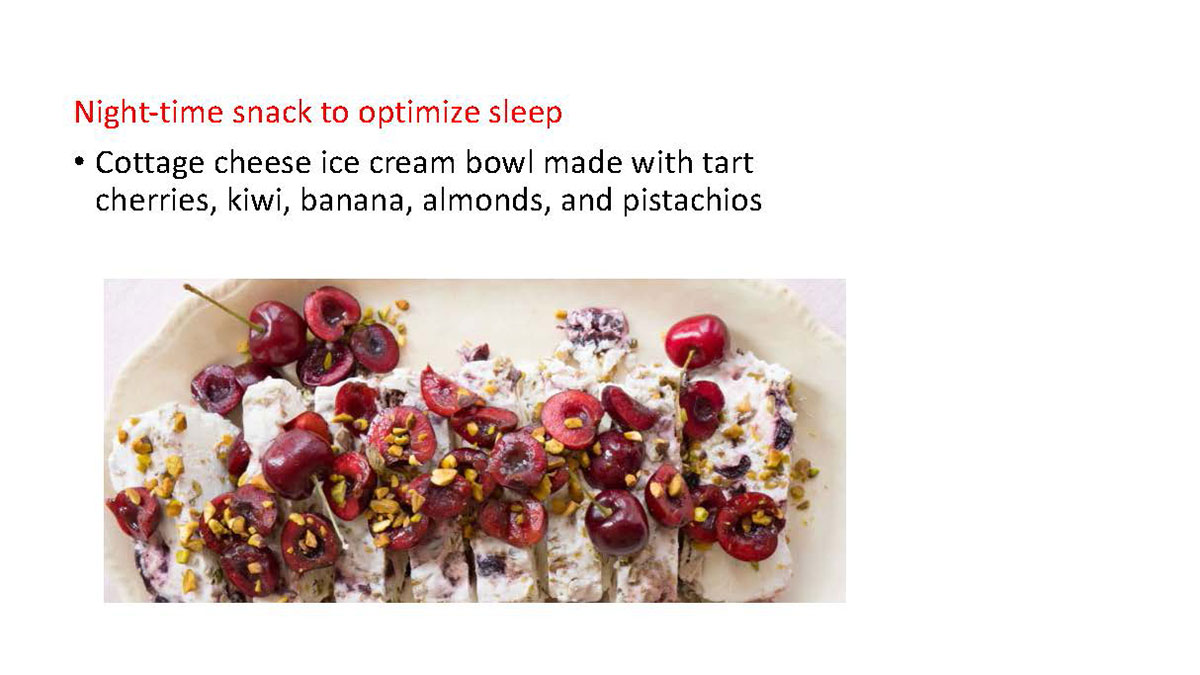
Sample meal plan for a night-time snack. Credits: Courtesy of Detroit Red Wings. Lisa McDowell, dietitian.
Attention to recovery after the game is part of the strategy to optimize the next day's performance. A hockey game typically lasts approximately two and a half hours, so restoring glycogen is paramount for back-to-back games. Most athletes can store enough muscle glycogen to fuel an entire game. Topping off glycogen stores before puck drop is one way to achieve this, through food choices that maximize metabolic efficiency and blood sugar stability.

Nutrition plans often include types of food referred to as "superfoods," examples of which are shown in the chart above. As the slide says, these foods help decrease inflammation and support hormones through naturally occurring bioactives. Credits: Courtesy of Detroit Red Wings. Lisa McDowell, dietitian.
On a similar note, nutrition plans are modified for illness and injury. Specific protocols for problems involving soft tissue, bones, concussions, gastrointestinal infections, and others are used by the performance team when helping players recover. These protocols also provide evidence-based micro and macro nutrients to accelerate healing and reduce days off the ice.
From a nutrition perspective, recovery begins as soon as the game ends. The minute the players begin to drink their recovery shakes and ginger/turmeric shots, the body begins the process of muscle repair. Food is provided as soon as the players have an appetite to eat (within an hour) to allow for optimal glycogen repletion and muscle protein synthesis. Certain bioactives found in food also help with recovery signaling by mitigating inflammation.
You can see other examples of the tools and modalities mentioned here at the HOCKEY: Faster Than Ever exhibition now through January 5.
A special thank you goes out to massage therapist Britta Ottoboni and team dietitian Lisa McDowell of the Detroit Red Wings. They not only provided input on this blog but also made significant contributions to the Performance Team display in the HOCKEY: Faster Than Ever exhibition.
Written by Cory Nummer, Curator, Curation & Collections, Ilitch Companies.
Before the Civil Rights Act of 1964, America was legally ruled by segregation—the separation of citizens based on race and ethnicity. These laws, both formally written into law and local, societal norms, often were based on the historic Black Codes (or Code Noire in French-speaking Louisiana), which dictated how African Americans were to interact with whites: from where one was able to buy a house or allowed to live generally, to stepping off the curb when passing whites on the sidewalk. These laws became known colloquially as “Jim Crow” laws.
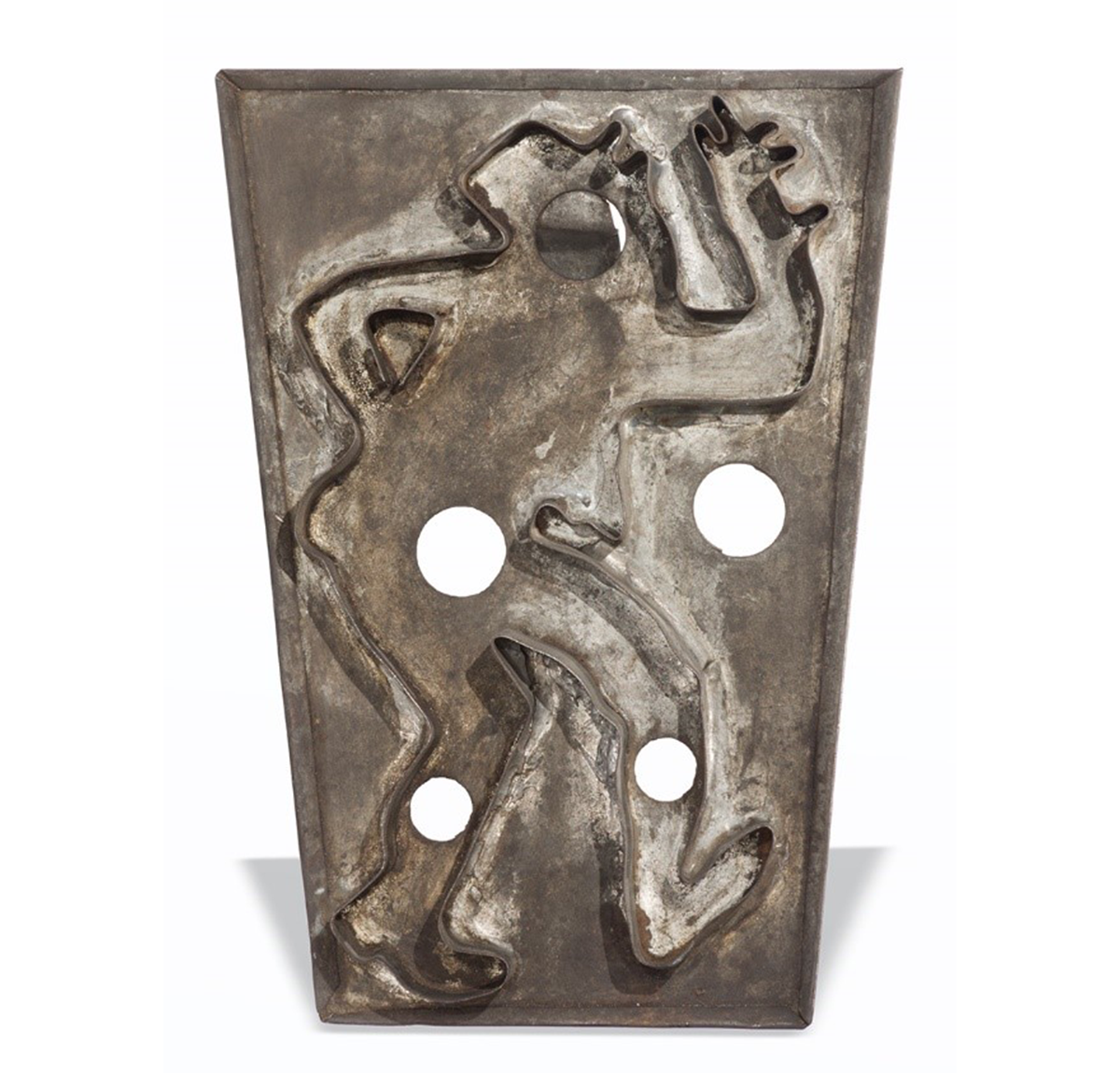
An interesting artifact in the collection of The Henry Ford is a “Jim Crow” cookie cutter (circa 1840-1870) dating from the earliest years of transition in forms of racial oppression / THF169389
Who Was Jim Crow?
He was a folk character popularized by white minstrel performer Thomas D. Rice and popularized in 1828. Jim Crow laws, put in place by local and state governments across the country, enforced racial segregation in public spaces and life. Stereotypes were popular ways of maintaining and promoting racial hierarchies and spreading distrust of “The Other” within white U.S. society. The Jim Crow stereotype became a popular form of not only diminishing African American cultural practices and physical differences to people of European descent but also normalizing thinking of them as lesser people.
The most sinister aspect of Jim Crow was how embedded it was in the everyday life of every American. Given that the music of the time was established in the minstrel scene, it isn't surprising that songs were rife with references to Jim Crow, like the sheet music seen here.
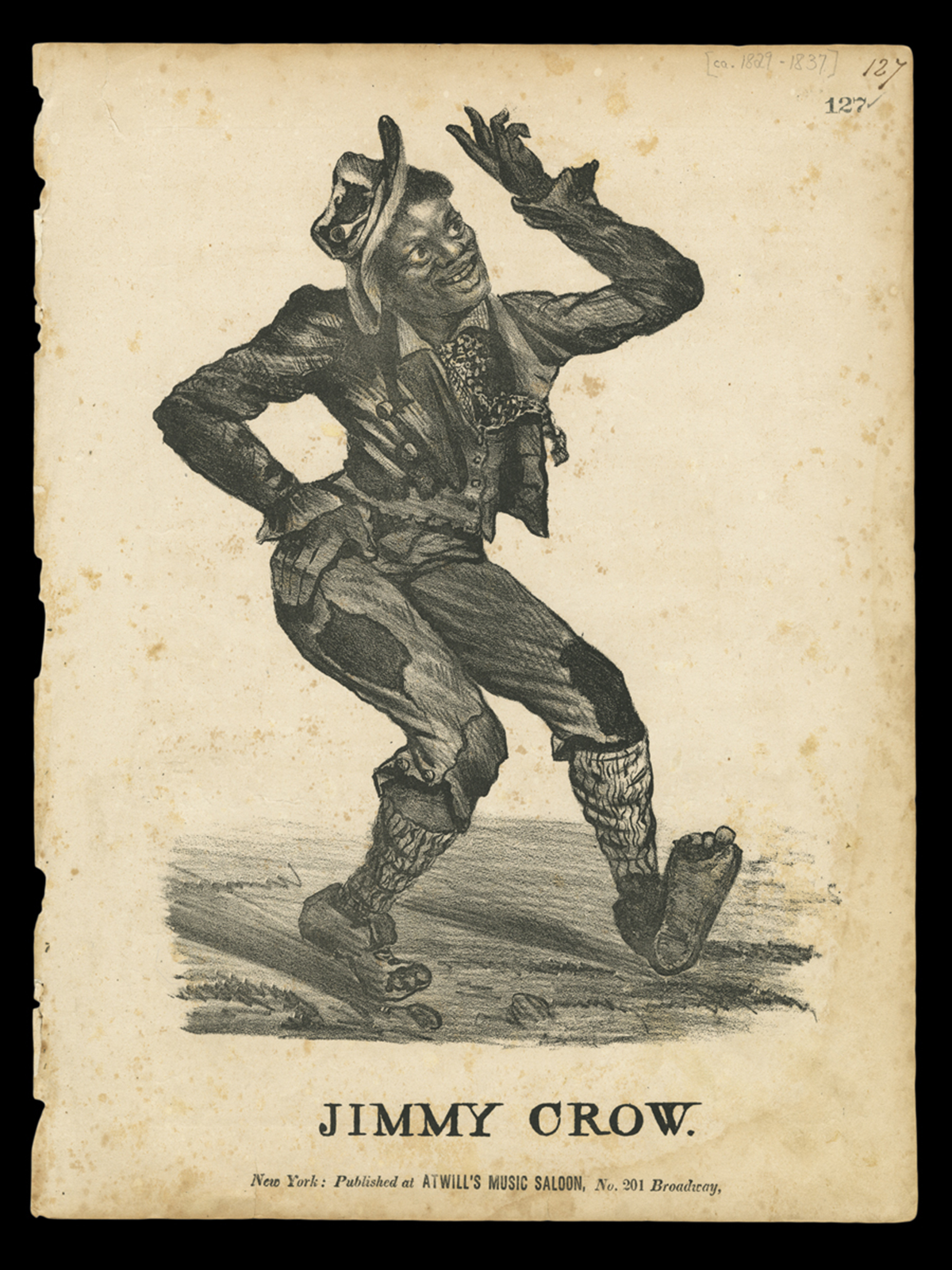
Music Sheet, "Jimmy Crow," 1834-1837 / THF98689
Navigating These Spaces
It is critical to note that African Americans did not take kindly to Jim Crow—the figure, or the laws. They consistently resisted, creating their own resources, businesses, and economic systems within their own communities. One of the most important tools used by African Americans to navigate, literally and figuratively, was The Negro Motorist Green Book. Published between 1936 and 1966, the “Green Book” contained advertisements and details on hotels, restaurants, and other destinations that catered to Black visitors. The spaces were oases for Black travelers who could go hundreds of miles without safe places to stop and rest.
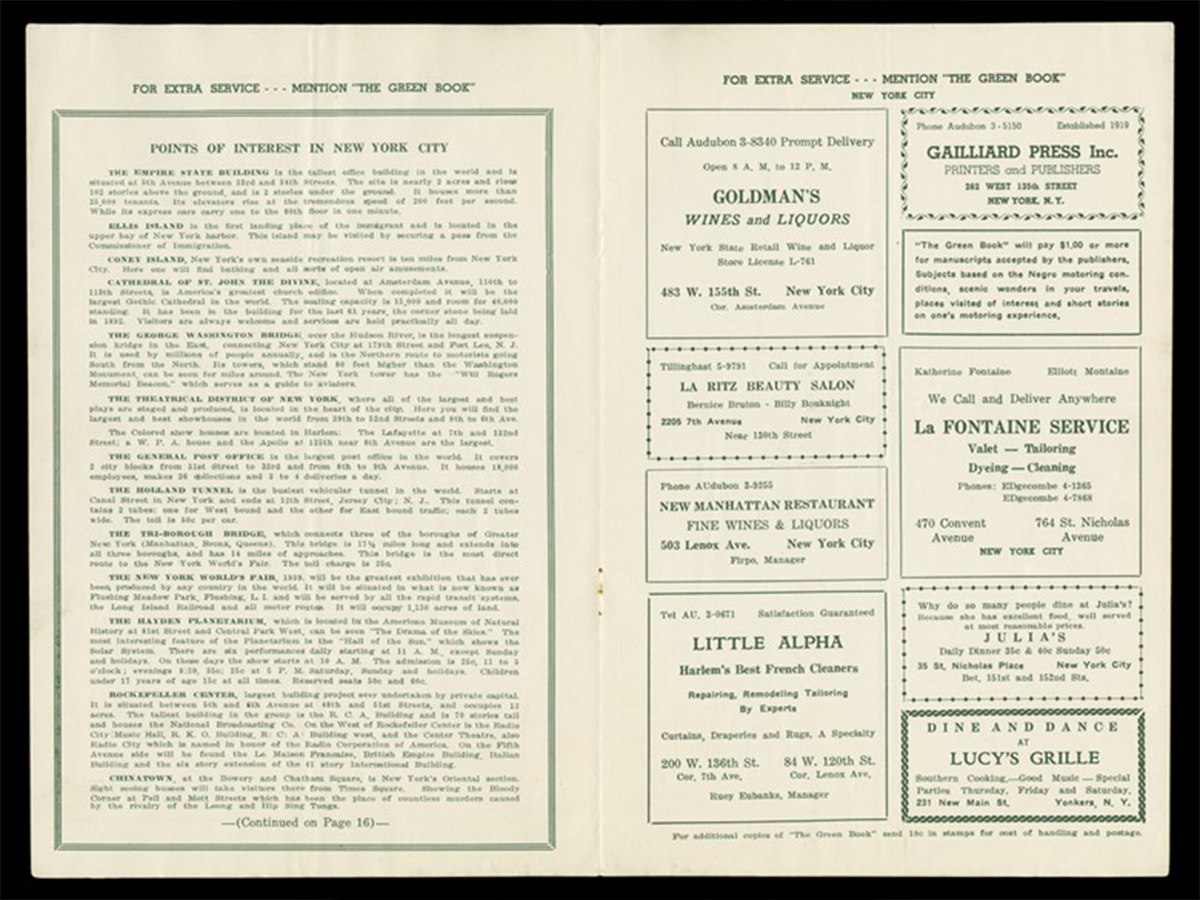
Guidebook, "Negro Motorist Green Book, 1937 Edition, Complimentary Issue", page 6-7 / THF99199
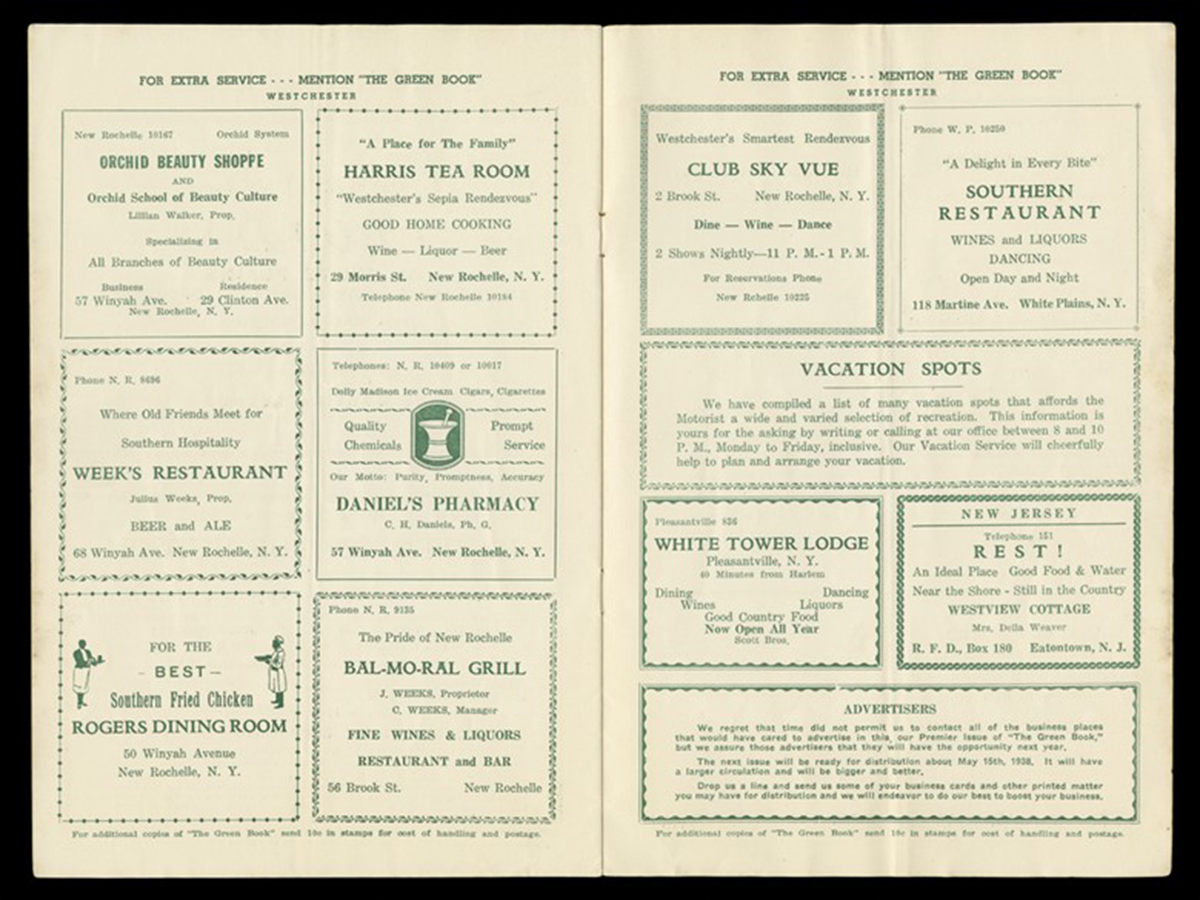
Guidebook, "Negro Motorist Green Book, 1937 Edition, Complimentary Issue", page 12-13 / THF99202
Fighting Back
Combatting Jim Crow took organization from several different African American-led and allied groups. The oldest of these is the National Association for the Advancement of Colored People, founded in 1909 when the premiere of The Clansman placed the Ku Klux Klan into a celebratory national light. The button below is from the Civil Rights Congress, a labor-based collaboration concerned about cases of racial injustice, particularly as it affected Black Americans in the South. These groups, working at the national and legal levels, often were supported by coalitions and individuals on the ground—who usually took the risks of violence head-on. Together, communities challenged the power of Jim Crow and chipped away at its power until they forced change everywhere.
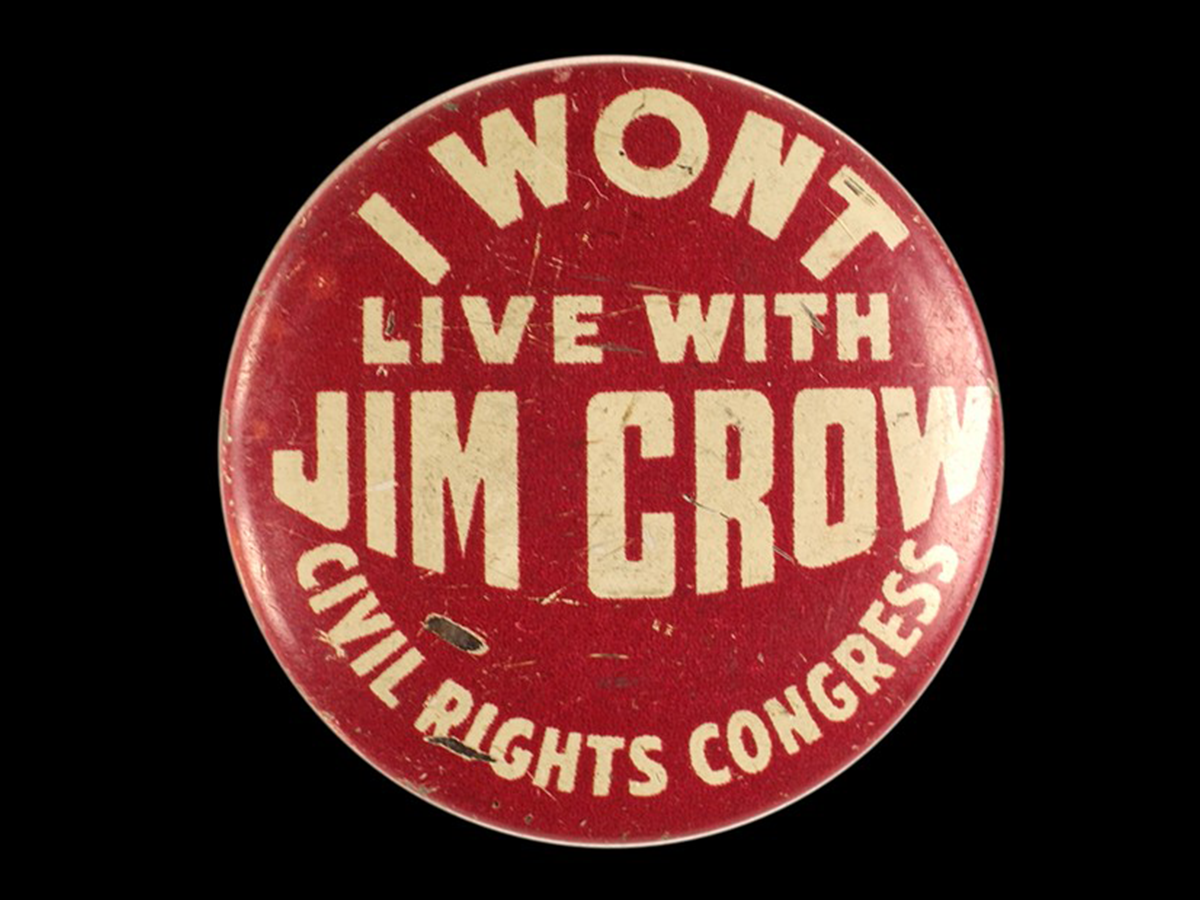
“I Won’t Live with Jim Crow: Civil Rights Congress” button, circa 1948 / THF1619
Amber N. Mitchell is curator of black history at The Henry Ford.
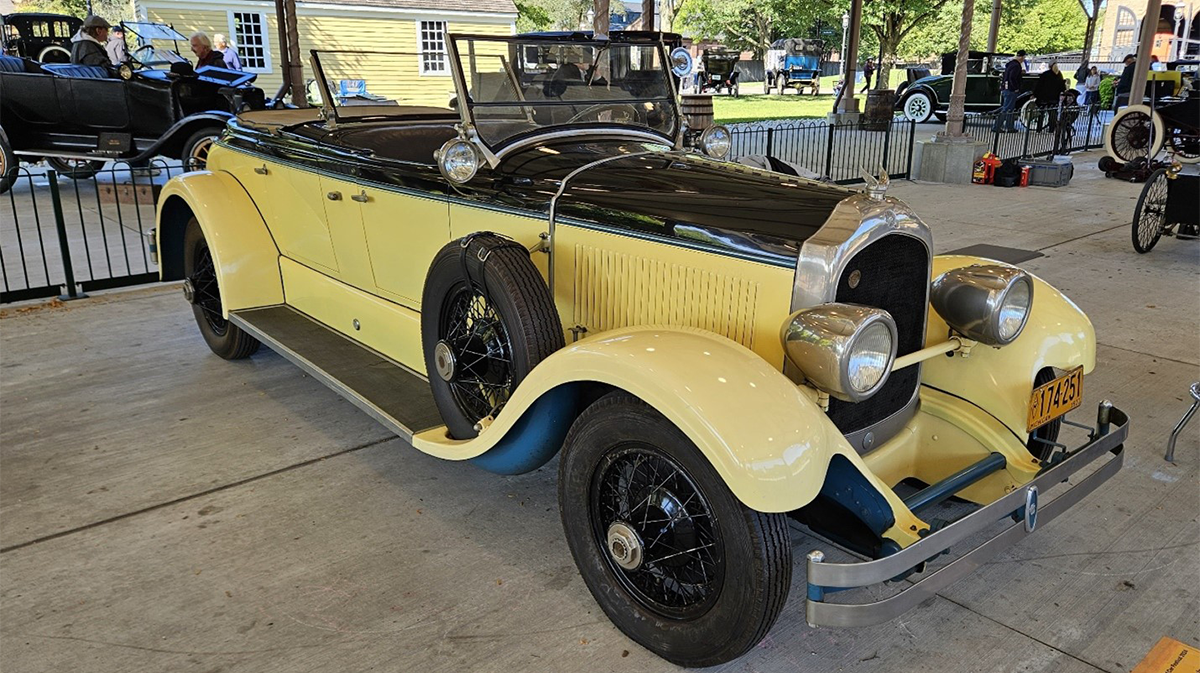
Chrysler cars, like this 1927 Imperial Sportif from The Henry Ford’s collection, were honored at this year’s Old Car Festival. / Photo by Matt Anderson
Automotive enthusiasts, history lovers, and folks just looking to have a good time descended on Greenfield Village on September 7-8, 2024, for Old Car Festival, our annual celebration of early American motoring circa 1900 to 1932. Nearly 750 cars, trucks, motorcycles, fire engines, and bicycles gathered for the show favored with sunny skies and fall-like temperatures. Attendees enjoyed good food, entertaining music and programs, and the incomparable kinetic energy of all those early gas, steam, and electric vehicles motoring through the village.
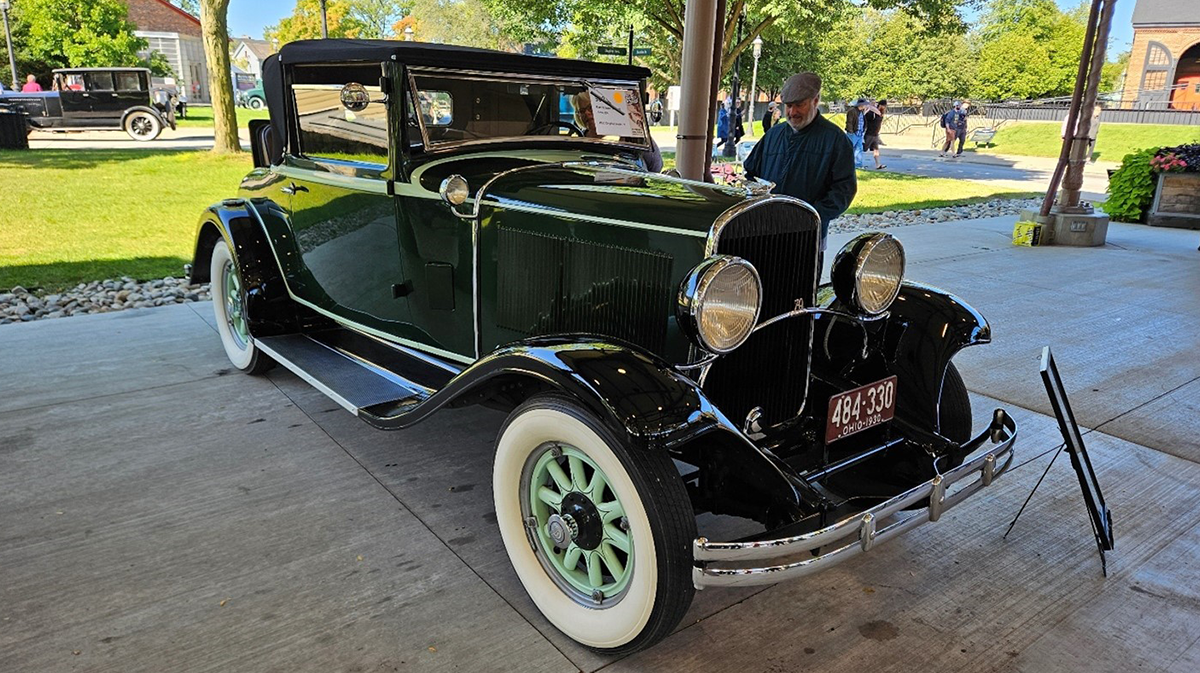
This 1930 Chrysler Series 70 was among the vehicles highlighted in Detroit Central Market. / Photo by Matt Anderson
Each year at Old Car Festival we honor a specific make or model, or we celebrate a significant anniversary. Considering that Walter P. Chrysler introduced the first Chrysler-badged cars in 1924, the Chrysler Centennial was an obvious choice for our 2024 theme. Chrysler got his start as a railroad machinist, but his abilities and industry contacts led to a job as Buick’s production head in 1911. Chrysler grew frustrated with General Motors boss William C. Durant – who enjoyed building corporations more than cars – and left in 1919. Never one to sit still, Chrysler reinvented himself as a turnaround manager, first at ailing Willys-Overland then at Maxwell. Chrysler effectively transformed Maxwell into his own Chrysler Corporation, and within five years he expanded it into a full-line automaker by purchasing Dodge Brothers and introducing mid-priced DeSoto and low-priced Plymouth.
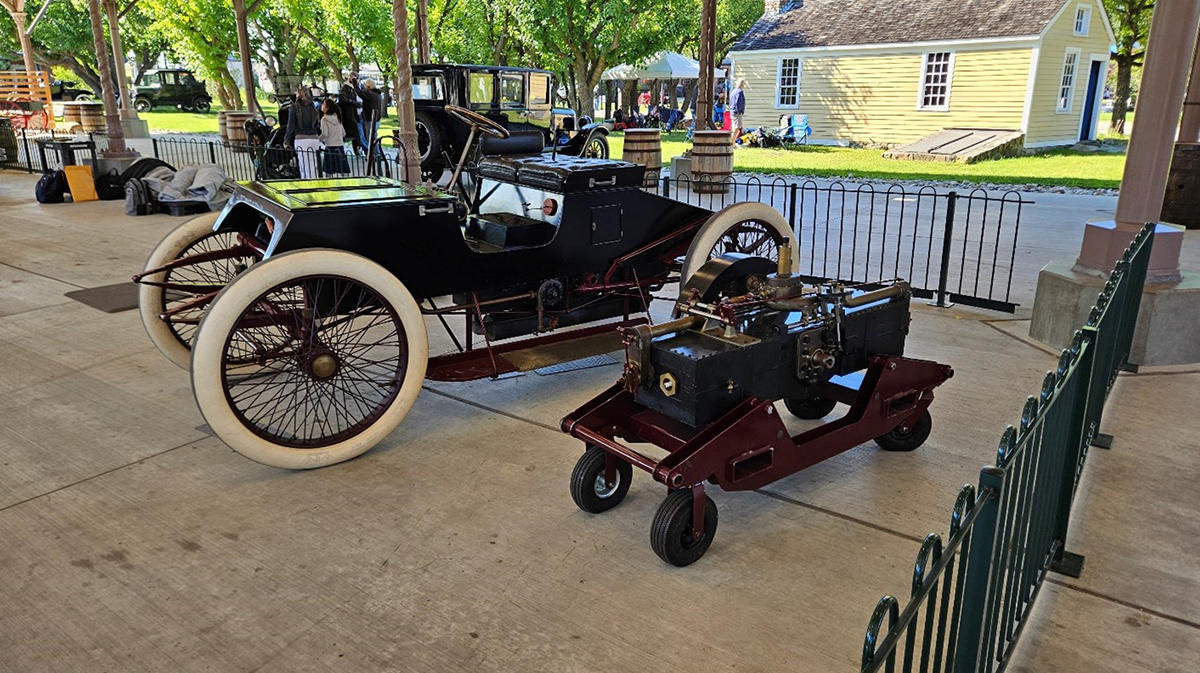
Our operating replica of Henry Ford’s 1901 “Sweepstakes” race car was in Detroit Central Market, alongside a separate copy of its 2-cylinder, 539-cubic-inch engine. / Photo by Matt Anderson
We honored Chrysler the man as much as Chrysler the company with a display in Detroit Central Market that covered all phases of his career. Several Old Car Festival participants kindly lent their own cars to the exhibit including a 1913 Buick 31, a 1920 Overland 4, a 1925 Maxwell 25-C, and various Chrysler models from 1927 to 1931 (including The Henry Ford’s own 1927 Chrysler Imperial Sportif). The special display was rounded out with a 1931 Plymouth PA and a 1932 Dodge Brothers DL.
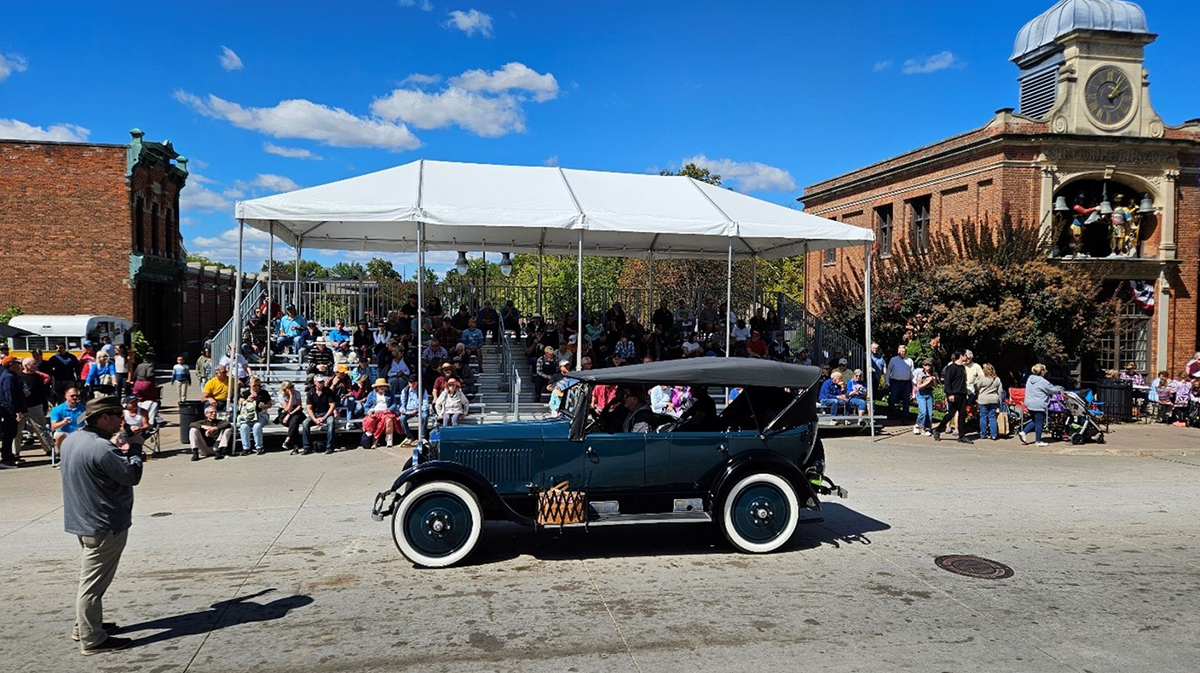
Narrated pass-in-review sessions provided a moment in the spotlight for participating cars, like this 1923 Studebaker Big Six. / Photo by Matt Anderson
For those who preferred to let the action come to them, Old Car Festival included several pass-in-review programs on Saturday and Sunday. Attendees could grab a seat in the bleachers and listen as experts like Andrew Beckman, archivist at the Studebaker National Museum, and Derek Moore, curator of collections at the Lane Motor Museum, provided commentary on passing vehicles. Folks interested in pedal-powered transportation could listen as bicycle historian Bill Smith narrated programs featuring high-wheel and safety bikes from the mid-19th century into the early 20th century.
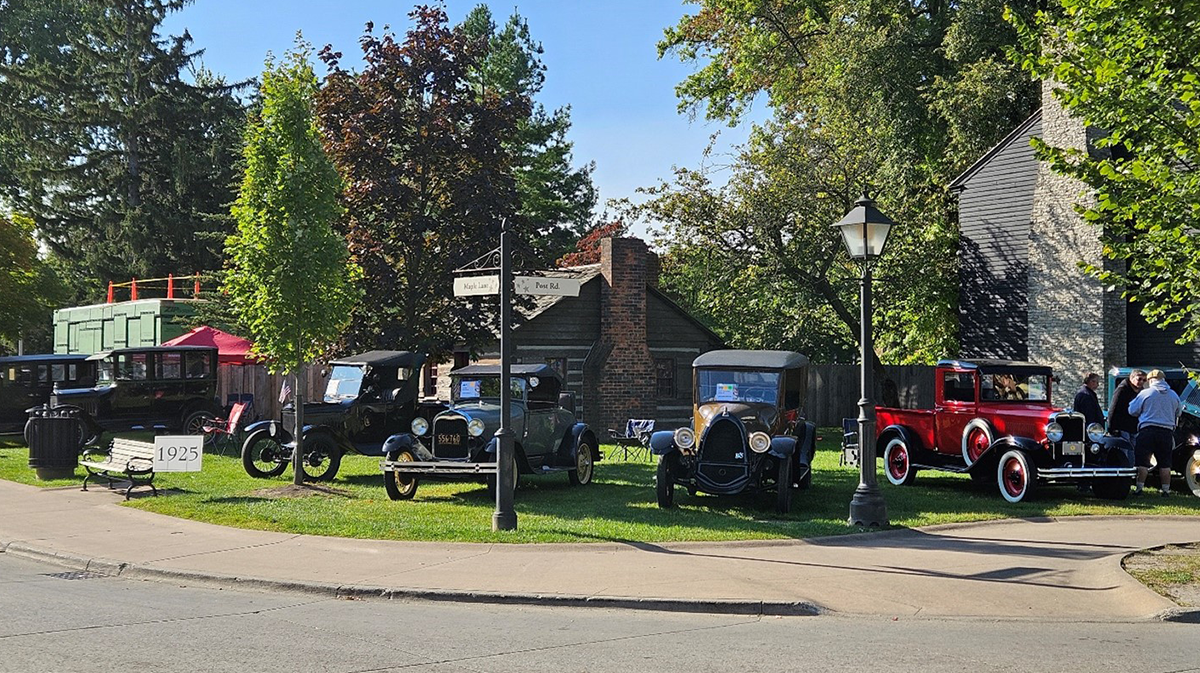
The corner of Maple and Post hosted a Ford Model T pickup and Model A roadster alongside a 1925 Franklin sedan and a 1931 Chevrolet pickup. / Photo by Matt Anderson
Beyond pass-in-review, the weekend included two special presentations in Martha-Mary Chapel. Bob Casey, retired curator of transportation at The Henry Ford, spoke about Fred Zeder, Owen Skelton and Carl Breer, the “Three Musketeers” who designed the first of Walter Chrysler’s eponymous cars – and many more thereafter. Andy Dervan, a volunteer with our Benson Ford Research Center, presented on Ford Times, Ford Motor Company’s promotional magazine published from 1908 to 1917. Meanwhile, roadside America historian Daniel Hershberger literally set up camp near Scotch Settlement School where he presented on early auto camping throughout the weekend.
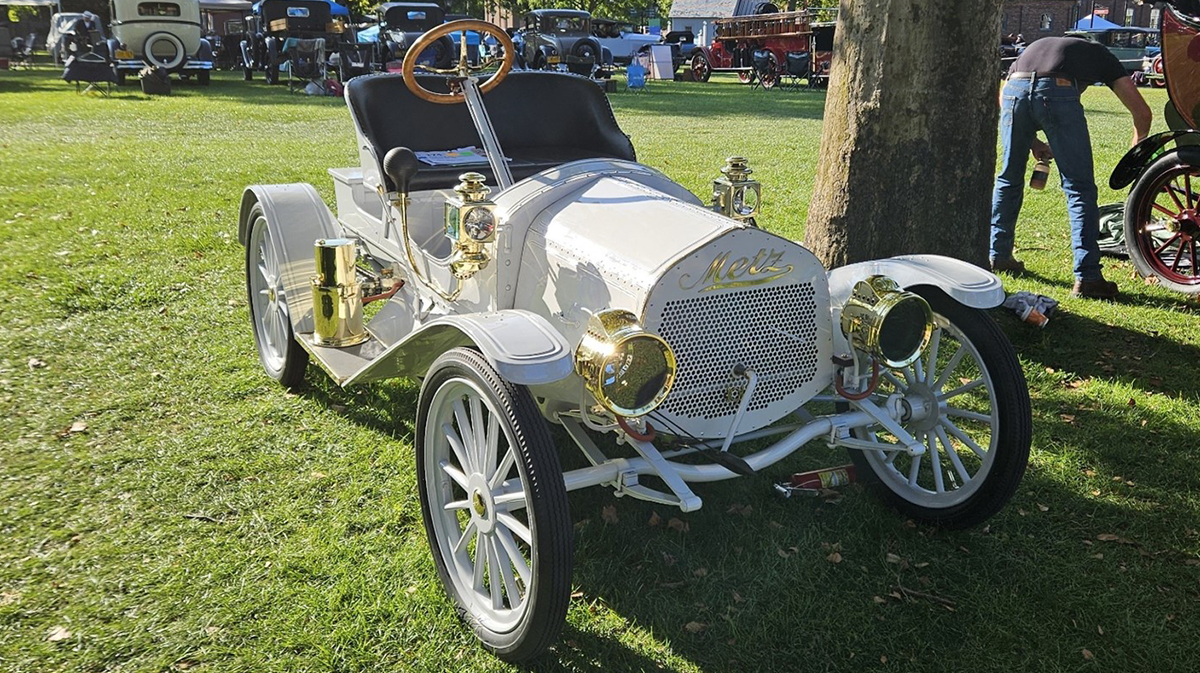
Acetylene lamps like those on this 1911 Metz lit the way during the Saturday evening gaslight tour. / Photo by Matt Anderson
Saturday evening brought its own special magic with a concert of period music by the River Raisin Ragtime Revue, and the ever-popular gaslight tour in which cars ignited their vintage acetylene lamps and paraded through the twilight. The evening festivities concluded with a Dixieland-style parade to the exit gates led by the Tartarsauce Traditional Jazz Band. Additional weekend music offerings included ragtime piano performances, blues from Rev. Robert Jones, vocal pop from the Village Trio and the Greenfield Village Quartet, and selections from the Masters of Music band and the Village Strings.
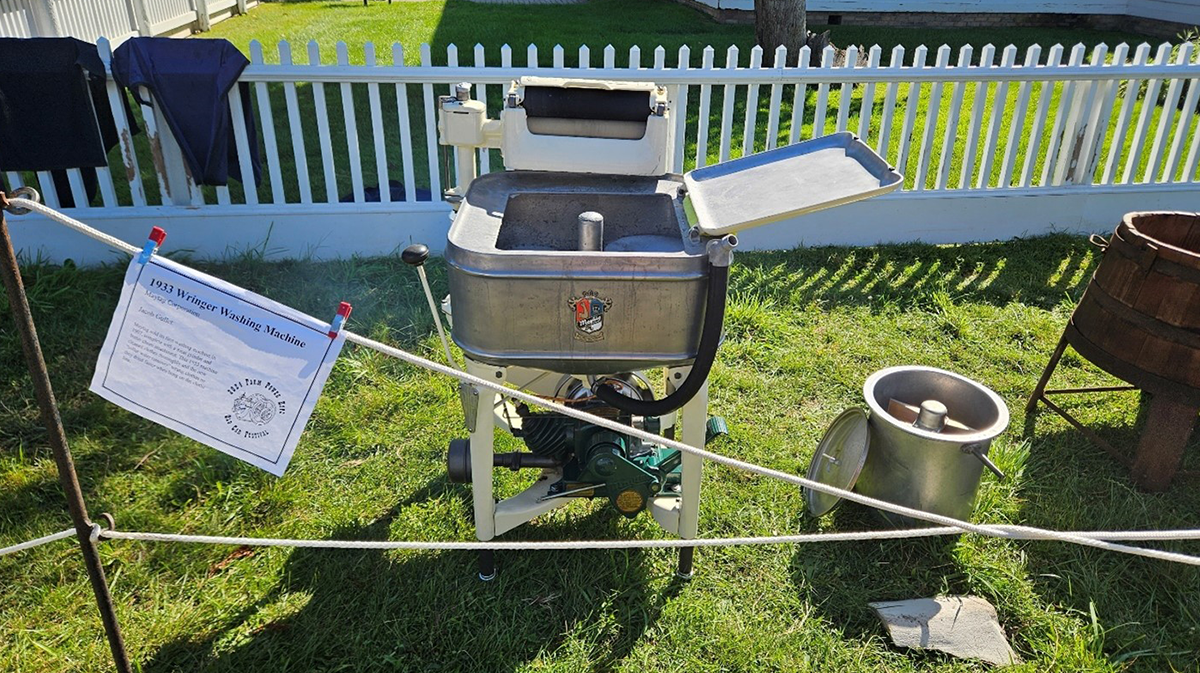
Small engines, including the one powering this early 1930s Maytag washing machine, were demonstrated at the Ford Home. / Photo by Matt Anderson
Automobile engines weren’t the only featured powerplants. Once again in 2024, the Early Engine Club put together a farm power expo at the Ford Home. Antique hit-and-miss engines, a Ford Model T powering small machines, and even a Model T converted into a tractor demonstrated the internal combustion engine’s abilities beyond motorized transportation. At the nearby Bagley Avenue Workshop, our own presenters regularly demonstrated a replica of Henry Ford's "Kitchen Sink” Engine, which powered Ford’s early ambitions toward automobile manufacturing.
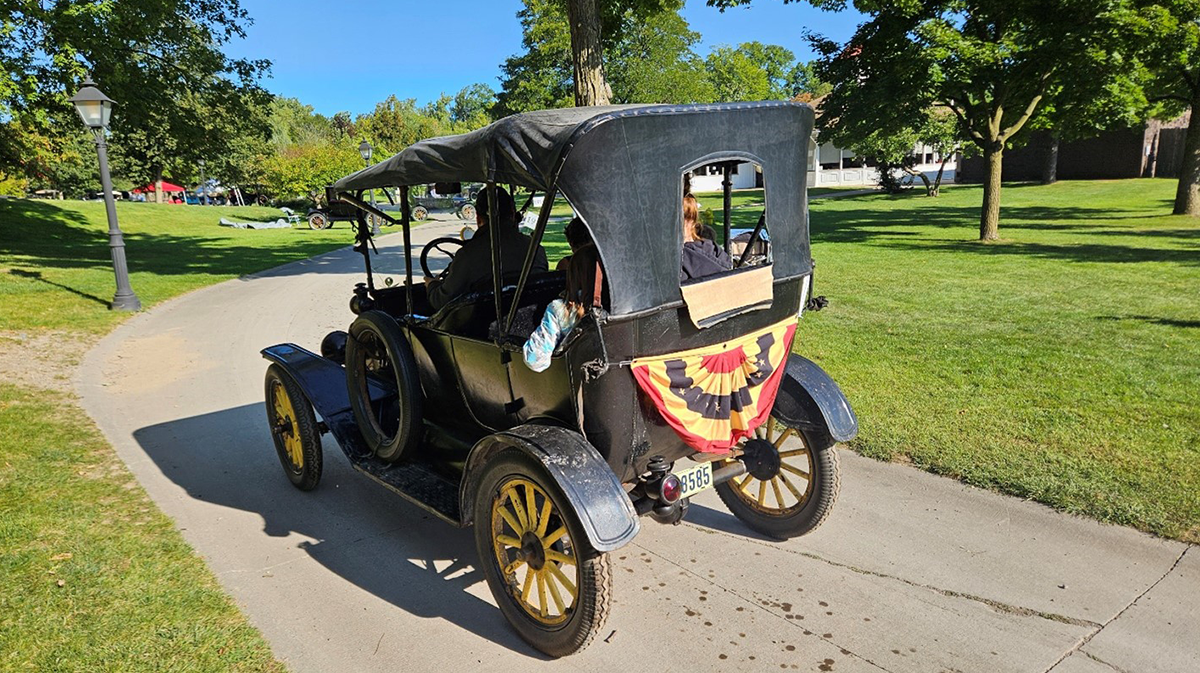
This 1916 Ford Model T, still running and still in the same family 108 years later, won a Curator’s Choice award. / Photo by Matt Anderson
As is a longstanding tradition, this year’s Old Car Festival included several cars that were judged for vehicle class awards based on authenticity, quality of restoration work, and care with which each car was maintained. First-, second-, and third-place prizes were awarded in eight classes, and one overall Grand Champion was selected for the festival. This year’s Henry Austin Clark, Jr., Grand Champion Award went to a 1932 Chevrolet Confederate Phaeton. We also presented two Curator’s Choice Awards to the best-preserved unrestored vehicles. Winners included a 1913 Oakland Model 40 Touring and a 1916 Ford Model T Touring. The complete list of our 2024 Old Car Festival award winners is available here
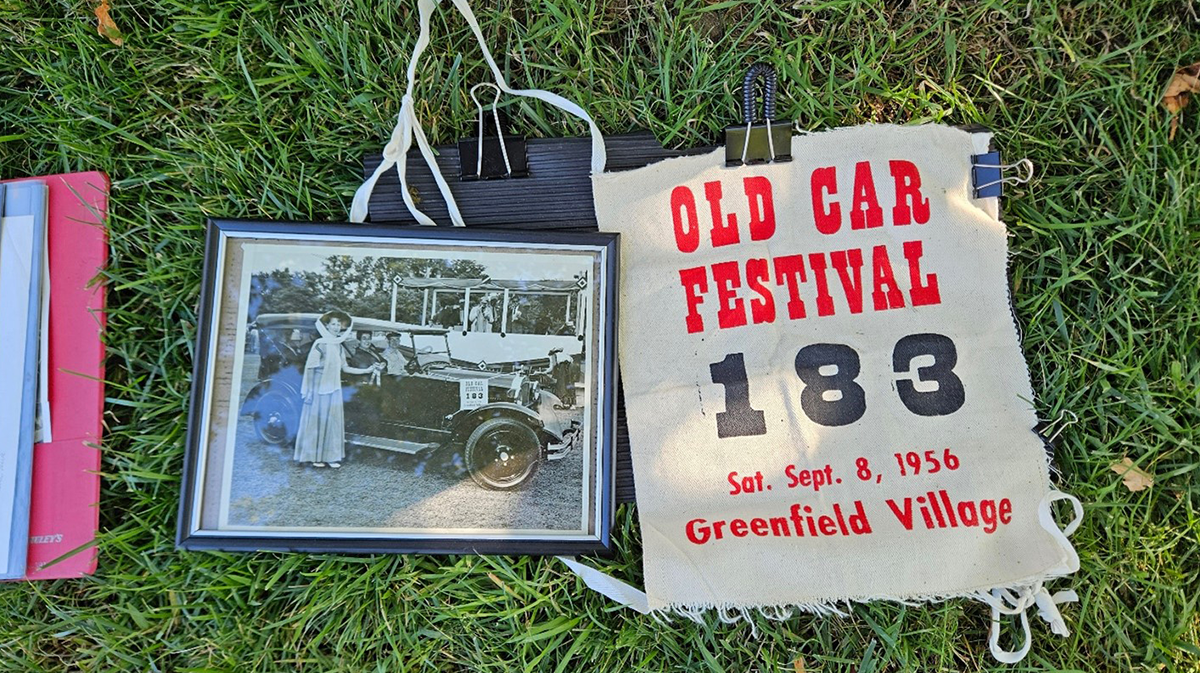
Old Car Festival is a tradition. This photo and banner are from the 1956 show, attended by a 1924 Dodge Brothers Series 116 that was here again in 2024. / Photo by Matt Anderson
We like to think that history comes alive in Greenfield Village every day, but rarely are the sights, sounds and smells of the past so fully resurrected as they are with the veteran motor vehicles of Old Car Festival. It’s an experience to savor year after year.
Matt Anderson is curator of transportation at The Henry Ford.


Pattern, Paint, and Peacocks: An Introduction to the Whimsical Art of the Pennsylvania Germans at The Henry Ford
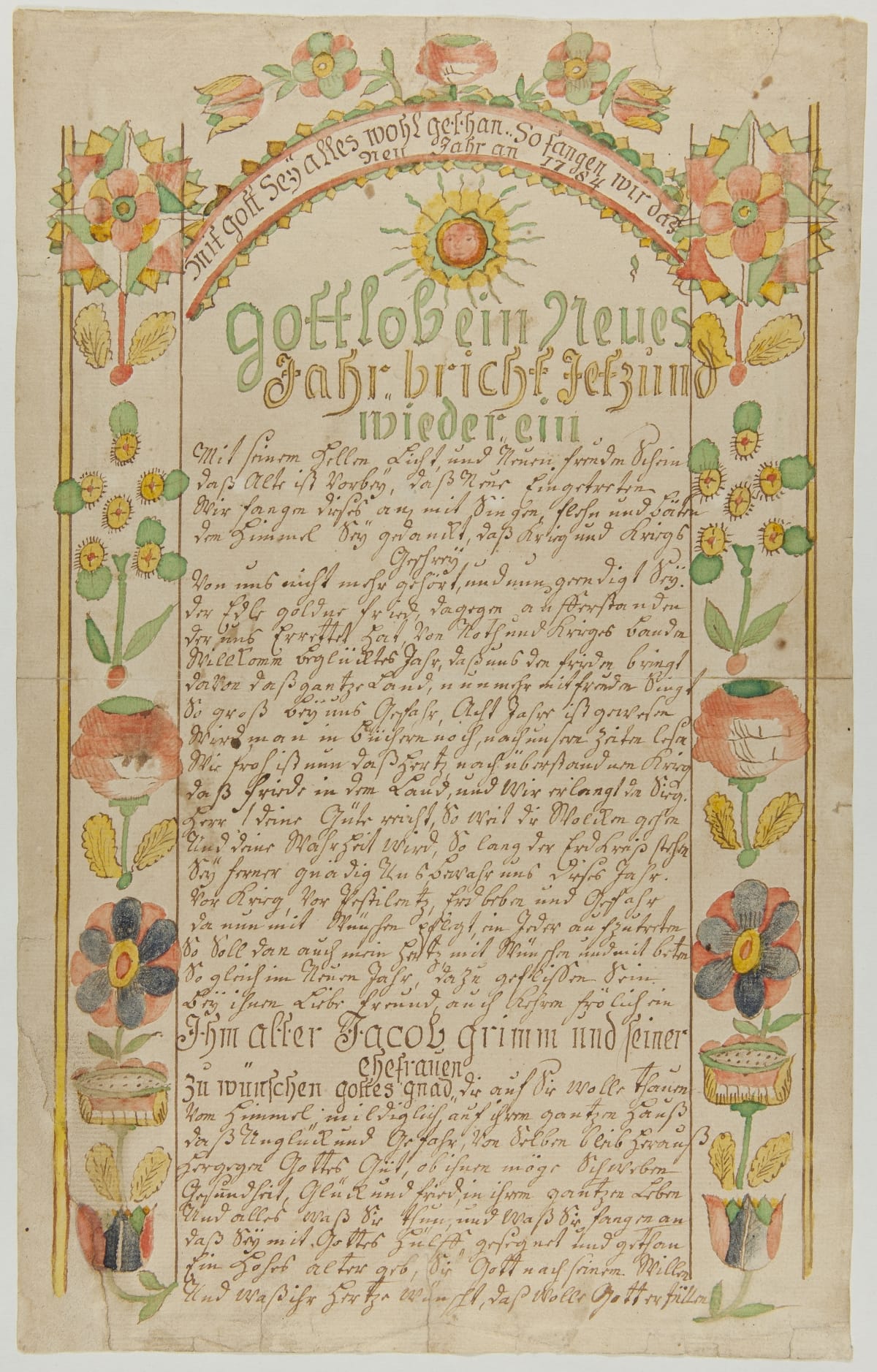
New Year’s Wish for Jacob Grimm and Family, 1784, made by Daniel Schumacher (active 1728-1787), worked in Berks, Lehigh, and Northampton Counties. 61.148.1 / THF237518
The Pennsylvania Germans, popularly known as the Pennsylvania “Dutch” (a corruption of the German word “Deutsche,” which literally means German) were a vibrant immigrant community active in southeastern Pennsylvania in the late 18th and early 19th centuries. By 1790, they made up about forty percent of the population and vied with those of British ancestry as the largest ethnic group. Even in urban areas, such as Lancaster and Philadelphia, the Germans were a sizeable minority.
Within the community itself there was great diversity, although many immigrated from the Palatinate area of southwestern Germany and approximately ninety percent were Protestants, with only ten percent Catholics.
What is remarkable about their legacy is their flamboyant, whimsical, playful, and highly imaginative folk art. They loved to decorate just about every type of household object, from small-scale items like ceramics to large-scale pieces like furniture, with instantly recognizable images. These artists are the most renowned among folk art collectors for their illuminated manuscripts, including marriage and birth certificates, family registers—essentially any type of recorded document. These pieces are called Fraktur.
The Compositions:
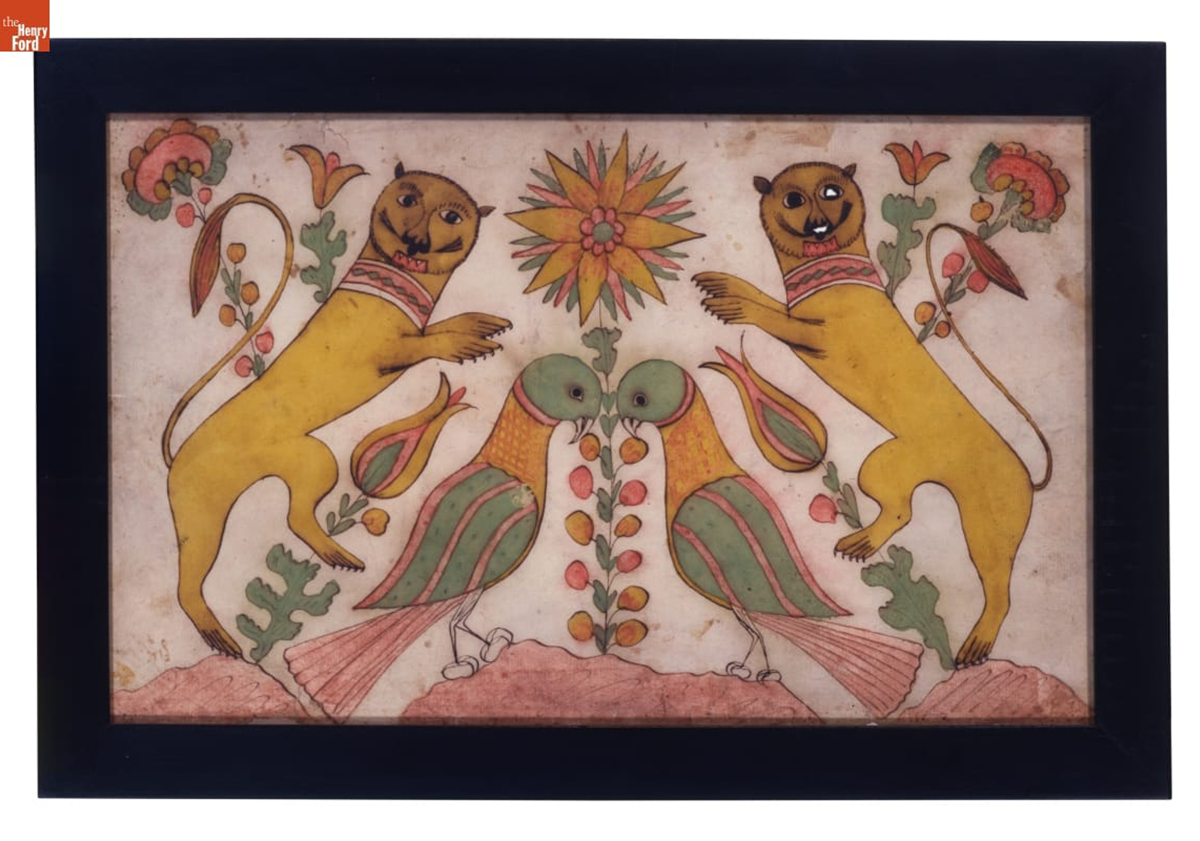
Confronted Lions and Birds, 1800-1820, made by Daniel Otto (active c. 1792-1822) Haines Township, Centre County, Pennsylvania, pen and ink and watercolor on woven paper, 00.3.3038 / THF119526
This Fraktur by Daniel Otto features a stylized central flower where everything on either side balances completely. This symmetry is the hallmark of folk art in general, and Pennsylvania German art in particular. Also note the whimsy or playfulness in the lions—they hardly look ferocious. This is yet another characteristic of Pennsylvania German art.
Decorative Motifs:
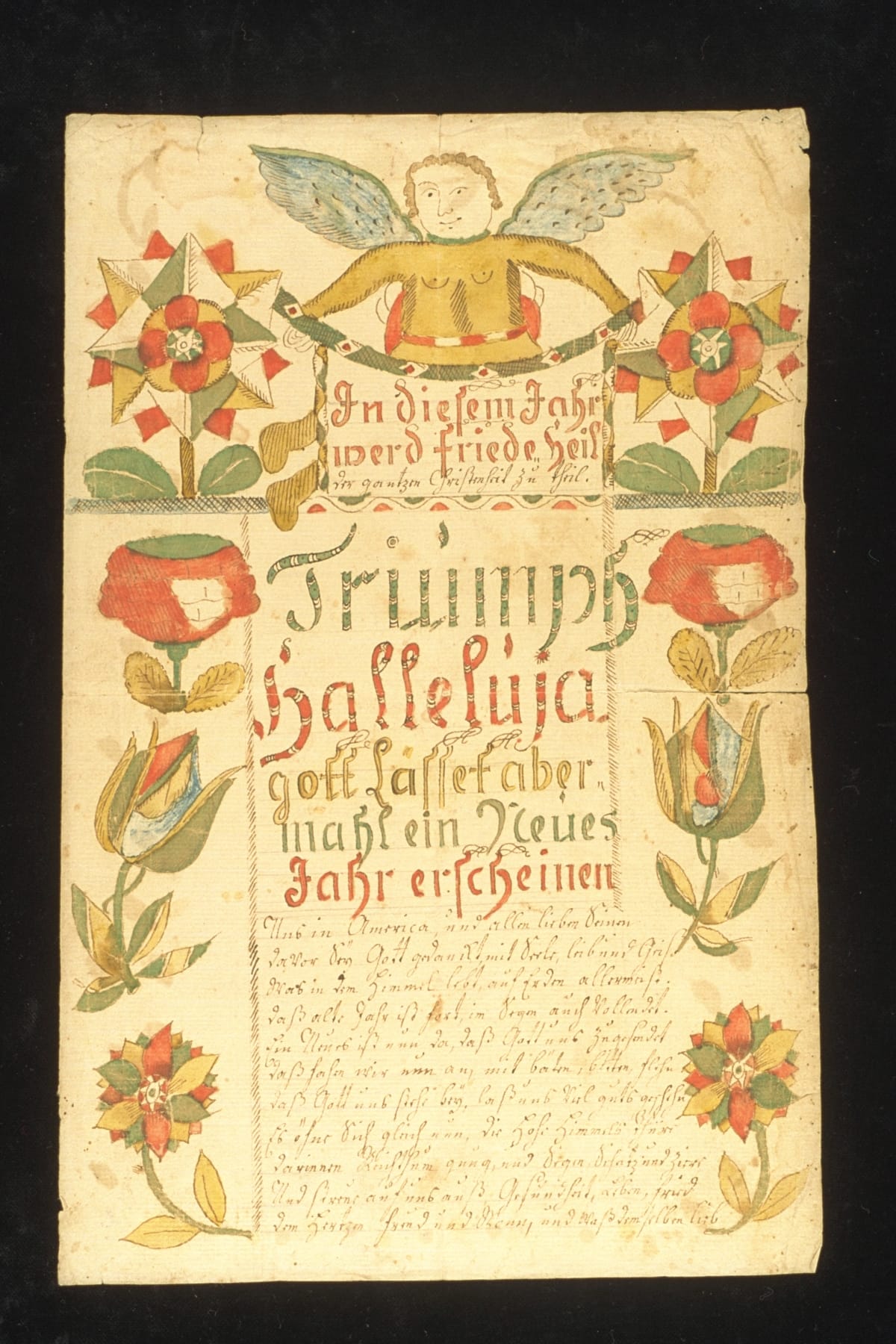
A New Year's Wish for Jacob Grimm and Family, circa 1775, made by Daniel Schumacher (active 1728–1787), worked in Berks, Lehigh, and Northampton Counties, 82.114.5 / THF305642
Notice that this piece, essentially an 18th-century New Year’s card, is symmetrically arranged around the text in the center. The highlight is the angel at the top. What is remarkable are the floral elements on either side. Tulips and stylized flowers are iconic design elements that appear in virtually every piece of Pennsylvania German art.
Another good example is this ceramic storage jar:
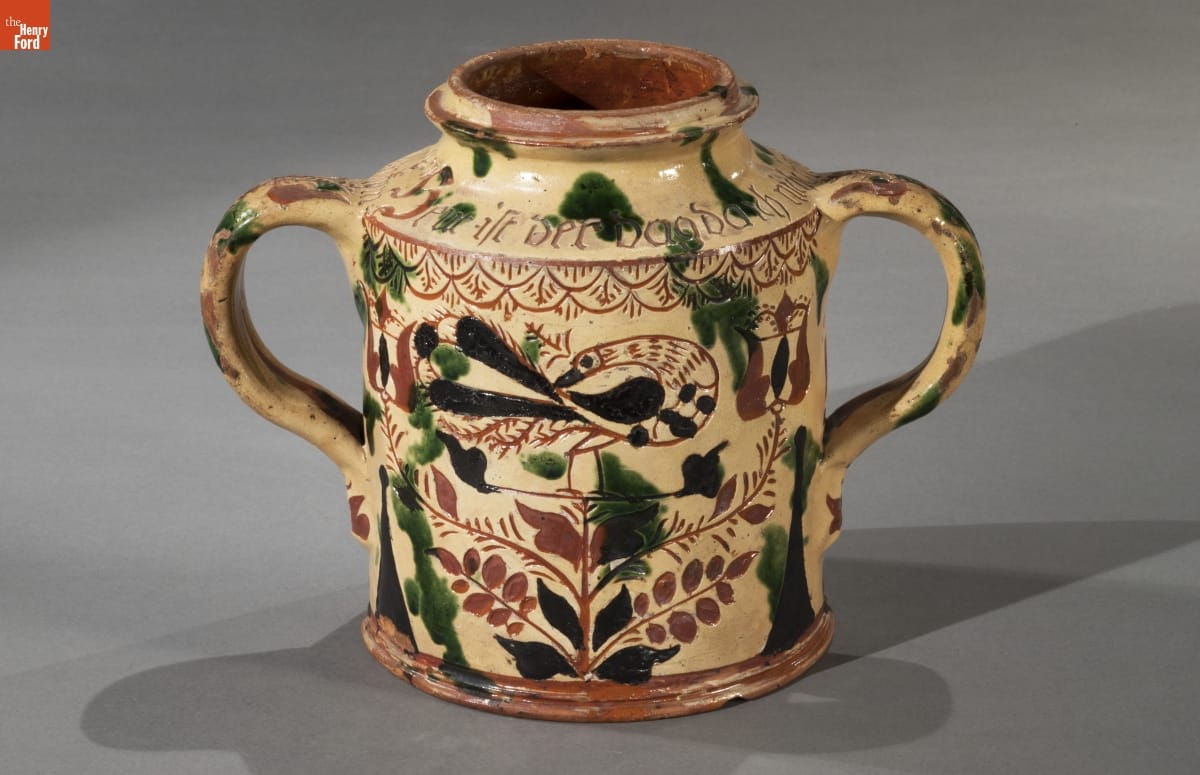
Storage jar, made between 1785-1796, made by George Hubener (1757-1828) Limerick Township, Montgomery County, Pennsylvania, 59.134.1 / THF177128
At the center of this jar, we find another peacock—which are in fact the 'confronted birds' in the second image above. Here, peacocks stand on the branches of a tree or bush. Notice that on either side, the floral branches terminate in tulip blossoms. Like peacocks or other stylized birds, the tulip is a motif frequently seen in Pennsylvania German folk art.
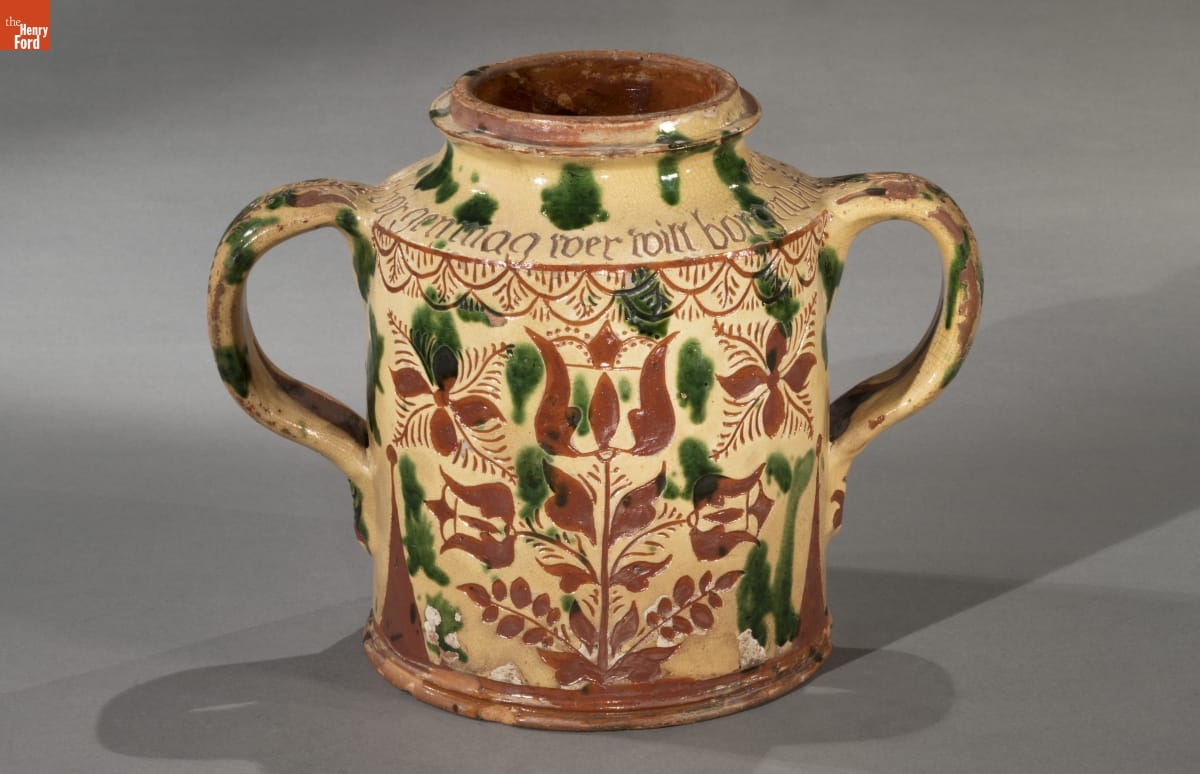
Reverse side of Storage jar, made between 1785-1796, made by George Hubener (1757-1828), Limerick Township, Montgomery County, Pennsylvania, 59.134.1 / THF177132
When we look at the reverse side of the jar, we see a variation of the image on the front. Of course, everything is arranged symmetrically, but instead of a bird at the center, we find a tulip blossom in its place. The space where the tulips were on the front side is now filled with abstracted floral elements.
The same use of symmetry is visible in this image of confronting peacocks:
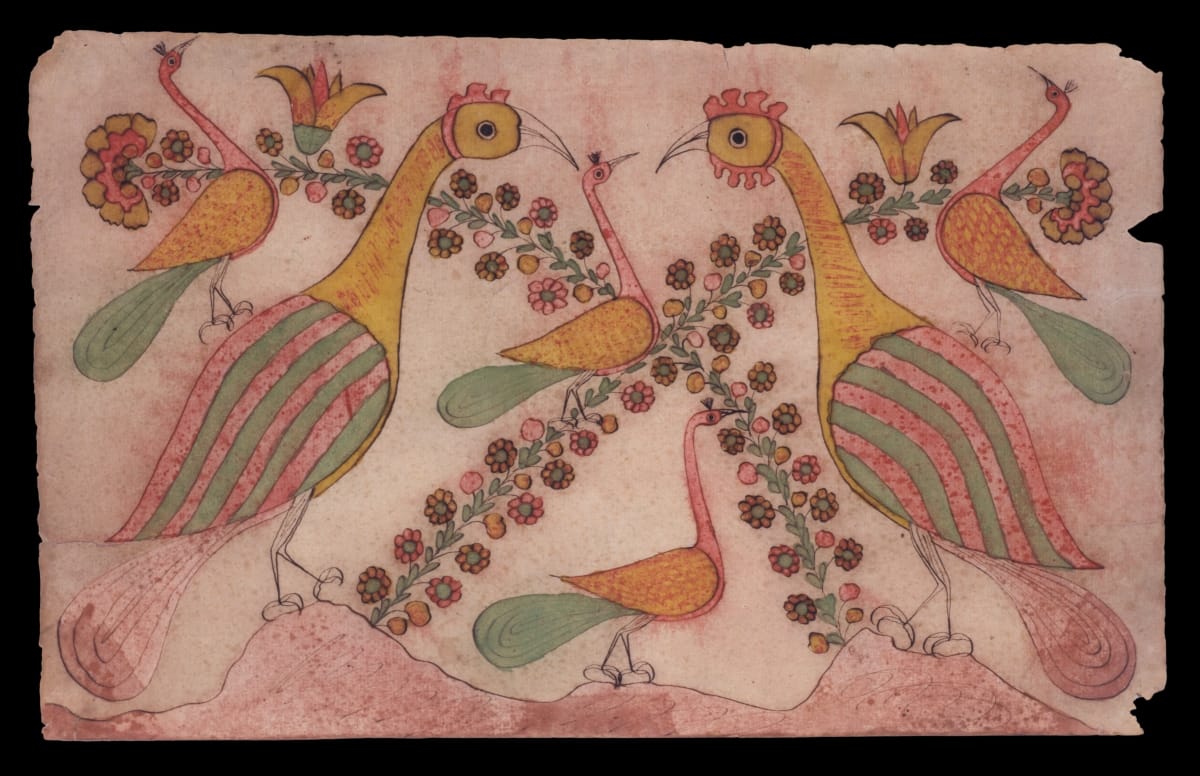
Confronted Peacocks, 1800-1820, made by Daniel Otto (active c. 1792-1822), Haines Township, Centre County, Pennsylvania, pen and ink and watercolor on wove paper, 29.2085.1 / THF119532
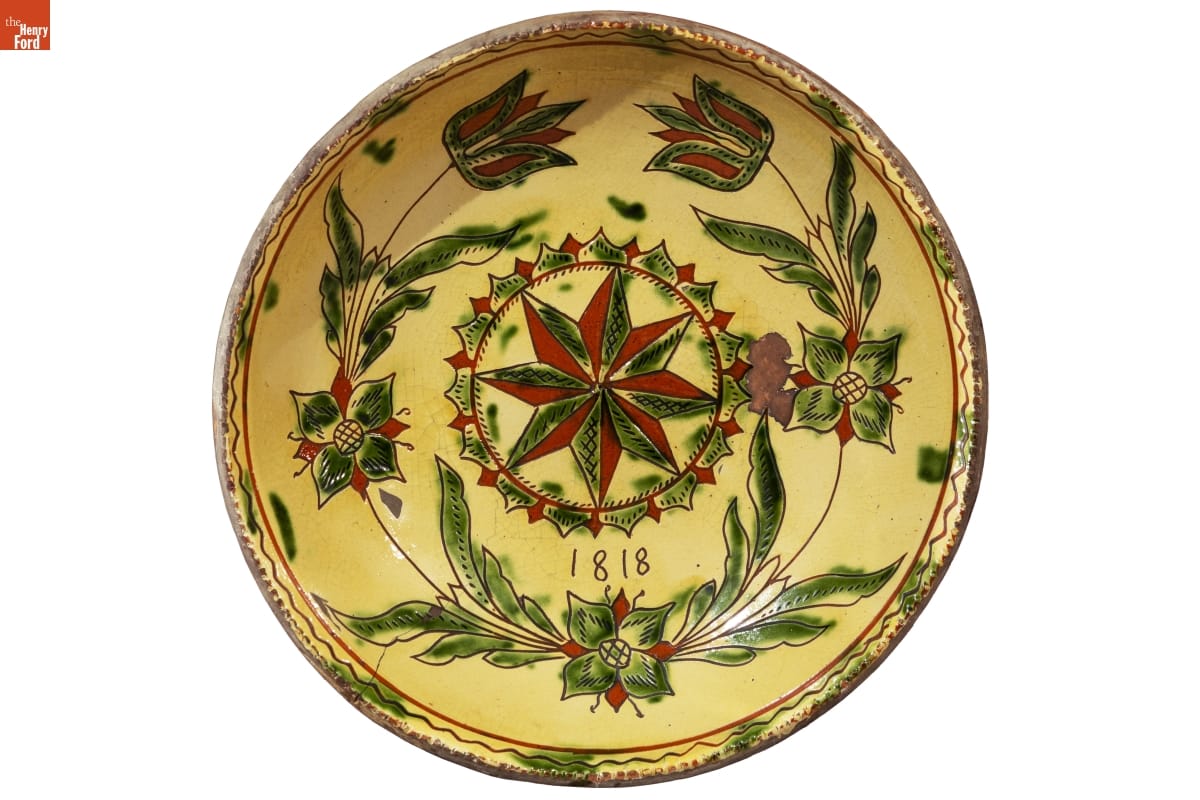
Plate, dated 1818, made by Andrew Headman, (active about 1756-1830), Rockhill Township, Bucks County, Pennsylvania, 56.54.1 / THF191114
This large plate, used primarily for decoration, is once again highly ornate, with a stylized star at the center. This is surrounded by a circle of triangles in red and green, which in turn is circled by a symmetrical row of ubiquitous tulips.
Furniture:

German American Wardrobe 1790-1800 59.80.1 / THF118499
Like all the examples we’ve seen, this wardrobe is decorated with flowers—some naturalistic, some stylized. It also uses reds against greens, like the plate above. Although called a wardrobe, or Schrank in German, it likely was used in a public room, like a parlor or dining room, where it was meant to impress guests. Of all the examples of Pennsylvania German folk art in the Museum’s collection, this is by far the largest and most impressive.
The Spreading Influence:
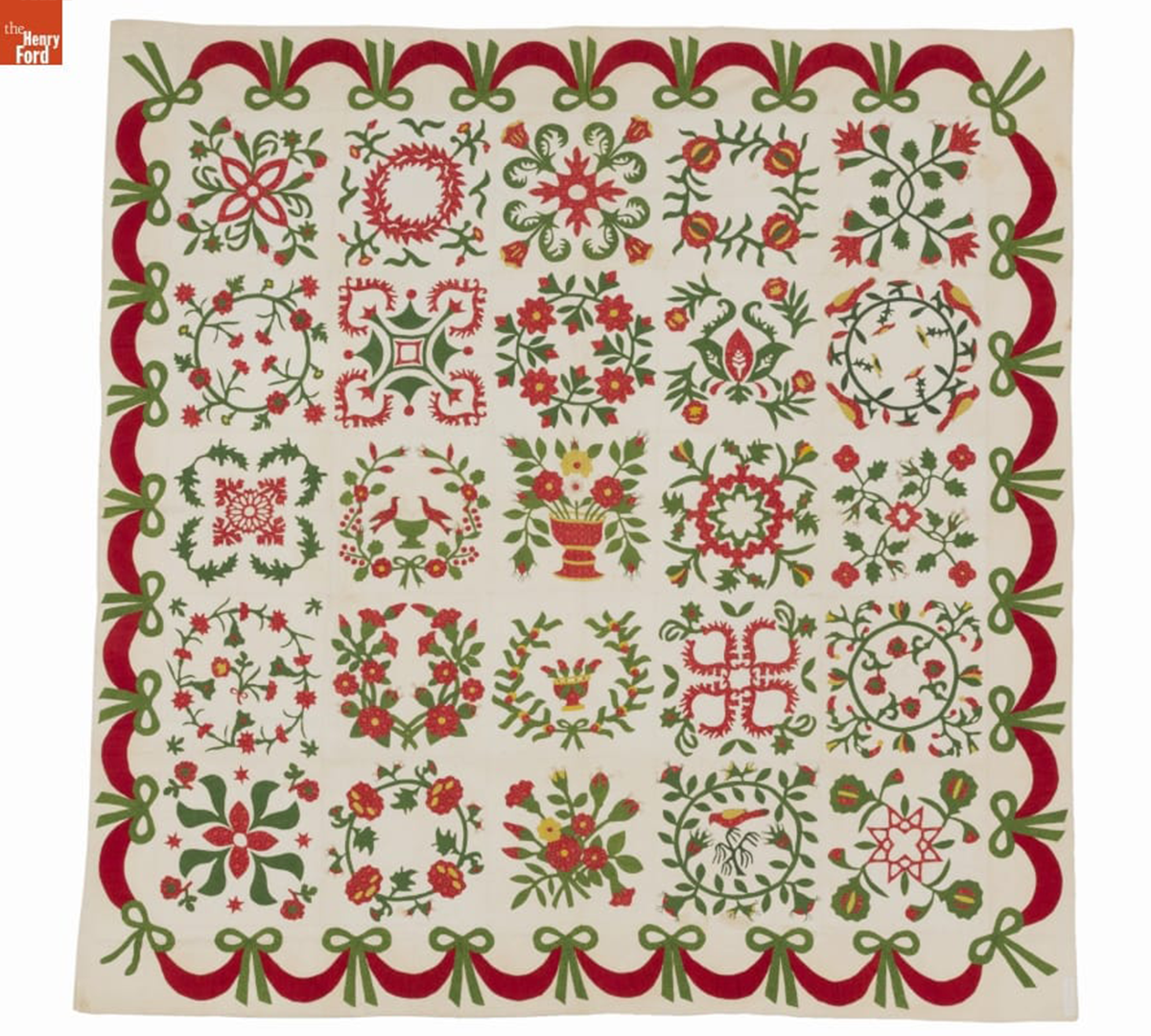
Album Quilt, probably made in southeastern Pennsylvania (perhaps in Chester County), circa 1850. One corner of this quilt carries an applied fabric strip with the inked inscription "Anne D. Morrison." 2016.22.1 / THF166494
By the middle of the 19th-century, the design vocabulary of the Pennsylvania Germans spread well beyond their community, encompassing the entire region. For example, we know that this “Album” quilt that utilizes the Pennsylvania German aesthetic was used by Anne Dawson Morrison (1798-1866), a prosperous Philadelphia Quaker.
These objects are just a small sampling of the large folk art collection of The Henry Ford. To see more, please go to https://www.thehenryford.org/collections-and-research/digital-collections/.
Charles Sable is Curator of Decorative Arts at The Henry Ford. Many thanks to Rachel Yerke-Osgood, Associate Curator at The Henry Ford, for editorial preparation assistance with this post.