Past Forward

Activating The Henry Ford Archive of Innovation

The Christmas season brings cherished traditions and much-anticipated activities. These Hallmark ornaments reflect some of these classic Christmas experiences.

'Friendly Greetings,' Christmas ornament, 1992

Friendly Greetings, 1992 / THF350088

Sending Christmas greetings is a long-standing custom — whether through a physical or digital greeting card or social media. Though the postman may deliver cards to our mailbox, or greetings may arrive through email or social media, holiday missives are one way of letting family and friends know we are thinking of them and wishing them well at this festive time of the year.

'Born to Shop,' Christmas ornament, 2004

Born to Shop, 2004 / THF354780

Continue Reading

Photojournalism at its best has the power to extend beyond being merely documentary; at its finest, it is intended to make the viewer think or feel something about the subject matter. In the early part of the 20th century, photojournalism saw a new boom, and the field was led by innovative photographers — many of them women — with opinions about the subjects they shot. Among these pioneers was Margaret Bourke-White.

Margaret Bourke-White was born on June 14, 1904, in New York City. Her father, Joseph White, was a factory superintendent and inventor with a mind for machinery; her mother, Minnie Bourke, was a homemaker who firmly believed that Margaret should not be impacted by traditional gender limitations. From a young age, Margaret shared her father's interest in the mechanical, while also longing for a career that would offer adventure and excitement. In 1924, she married photographer Everett Chapman, but the marriage dissolved in 1926. After graduating from Cornell University in 1927, she moved to Cleveland to pursue a career in commercial photography.

Continue Reading

by Rachel Yerke-Osgood

The Politics of a Press

November 30, 2023

During the 1920s, Henry Ford’s rampant collecting of Americana, which would become the basis of his museum’s collection, led him (through his purchasing associates and collectors) to pursue artifacts with compelling provenances attached to some of America's most fabled figures. While Ford maintained an interest in items of the “everyday” American, his avid pursuit of artifacts related to traditional American folk heroes, like George Washington and Abraham Lincoln, aligned with the interests of other collectors of the time. It should be no surprise, then, that when Ford learned about a printing press purportedly used by celebrated writer and humorist Samuel Clemens, otherwise known as Mark Twain, he leveraged his national network to acquire it.
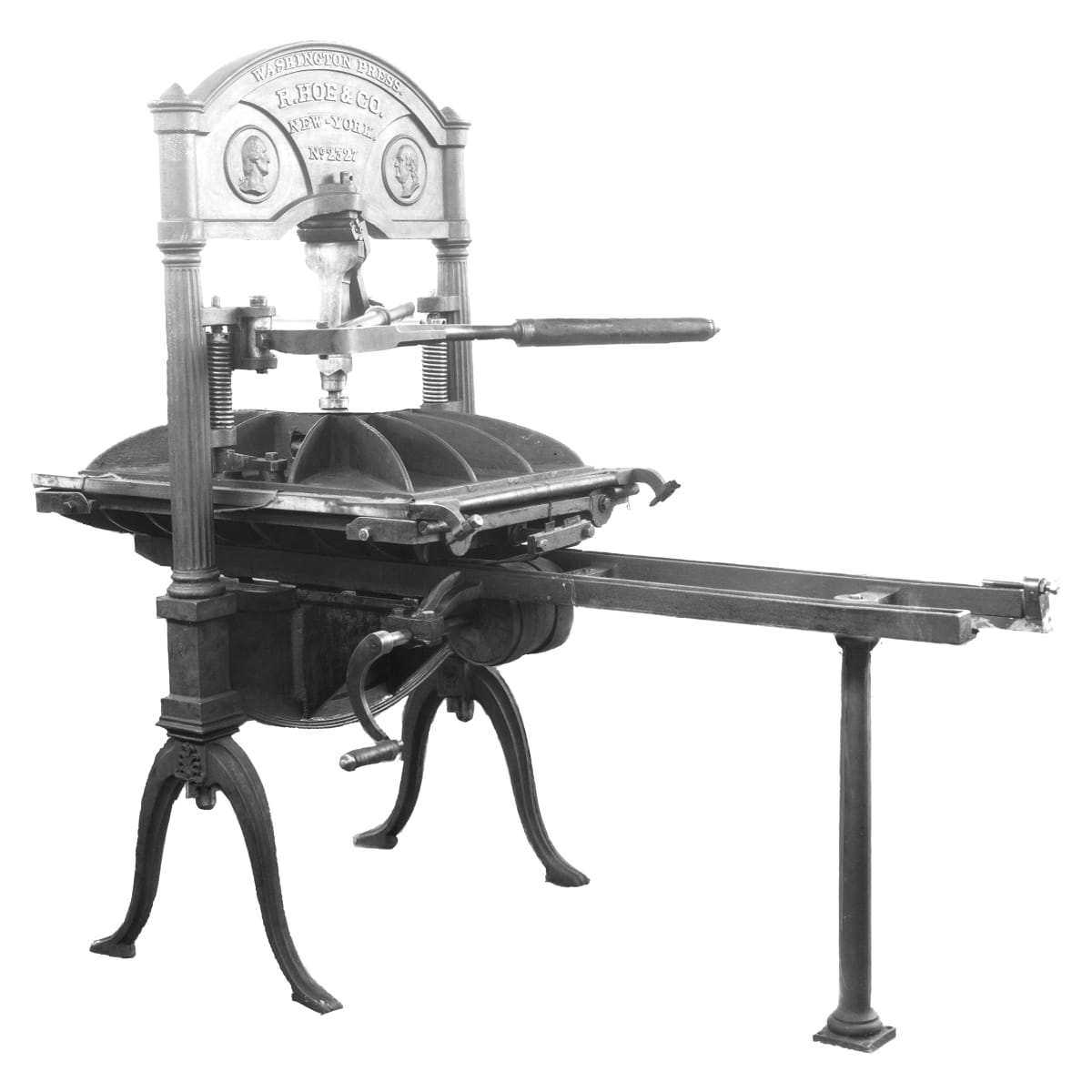
Washington press, circa 1848,  decorated with reliefs of George Washington and Benjamin Franklin.

Washington press, circa 1848, decorated with reliefs of George Washington and Benjamin Franklin. / THF101402

Continue Reading

by Ryan Jelso

“An oil painting by Matisse of a humanoid robot playing chess.” “An astronaut riding a horse in photorealistic style.” “An armchair in the shape of an avocado.” These are only a few input suggestions for the image generation platform known as Dall-E 2. In 2021, the company OpenAI launched the first iteration of Dall-E, and it quickly took the internet by storm. The program relies on a combination of machine learning techniques and artificial intelligence — or AI — to produce unique images from natural language text prompts.

But how unique are these images? Programmers, scholars and news anchors alike wrestled with this question in late 2022. The long-term consequences of technologies like Dall-E — including the chatbot ChatGPT — are still evolving. Some people see AI as a helpful aid for professional and personal creativity; others decry it as the end of art-making as we know it.

Like OpenAI's prompts suggest, Dall-E can mimic the style of other artists. Many artists' images, while visible on the internet, do not belong to the public domain. But Dall-E still mines their work to produce its own works. Is this fair practice? Is Dall-E stealing, or is it learning, like an apprentice learns from a master? Is Dall-E itself an artist?

Continue Reading

by CJ Martonchik

Whose Land Are You On?

November 24, 2023

The Paris of the Midwest. That was the phrase used to describe Detroit in the late 19th century. It was a city designed with a mission, and that mission was to impress, which it did. But the city and the land surrounding it were home to thousands of Indigenous peoples who, more often than not, are left out of the story.
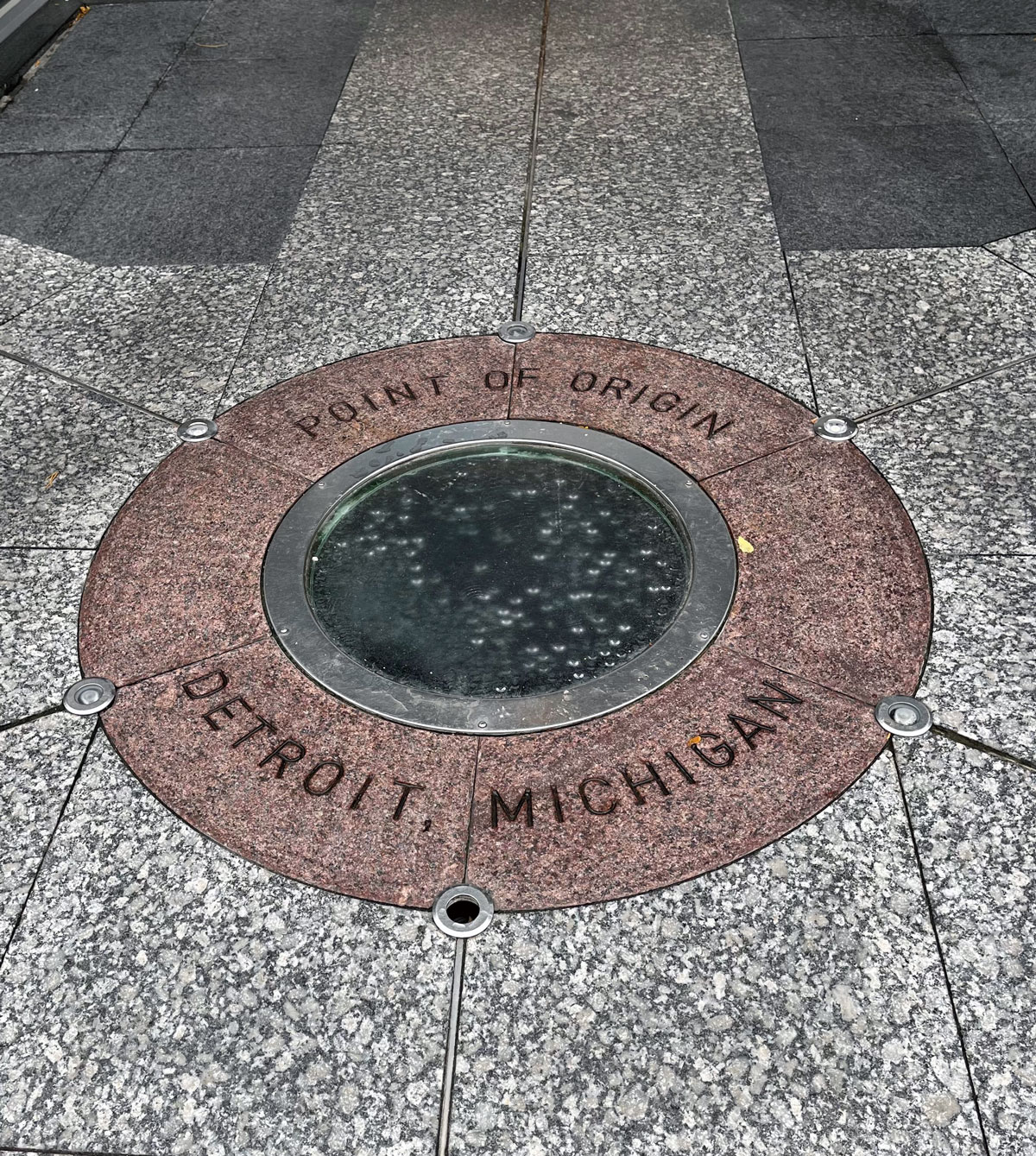
'Point of origin marker in Detroit.

Point of origin marker in Detroit. / Photo courtesy of author.

History says that Antoine de la Mothe Cadillac founded Fort Pontchartrain du Détroit on July 24, 1701. But before that, several Indigenous nations were living on the land, called Waawiiyaataanong, meaning “where the river bends.” The Potawatomi, Odawa, Ojibwe, Miami and Huron all called this area home. As with colonization, though, these nations had to leave the site as European settlements began to spread.

When the fort and the city were being built, the Indigenous peoples in the area were encouraged to settle around the fort. In Cadillac’s mind, this added another layer of protection, not just for the fort but also for the fur trade. With its location on a waterway now called the Detroit River, Detroit was an important center for fur trading. The river linked Lake St. Clair to Lake Erie, both important in trade. As the settlement grew, the tides changed, and the Indigenous folks who called the area home soon found their lives turned upside down.

Continue Reading

The Great Cranberry Scare

On November 9, 1959, Secretary of Health, Education and Welfare Arthur Flemming announced to the American public that a cranberry crop from the Pacific Northwest had tested positive for a herbicide. Growers began using aminotriazole to eliminate deep-rooted grasses and sedges from cranberry bogs in the mid-1950s, but the weed killer proved to cause thyroid tumors in test animals and left a residue in some cranberries. Even the Eisenhowers in the White House replaced cranberry sauce with applesauce at their 1959 Thanksgiving dinner.

Documenting this dangerous herbicide residue triggered the “Great Cranberry Scare” of 1959. The media coverage that resulted marked a turning point in modern American food scares and helped launch the modern environmental movement. Environmentalist Rachel Carson incorporated these events into her pathbreaking book, Silent Spring (1962).


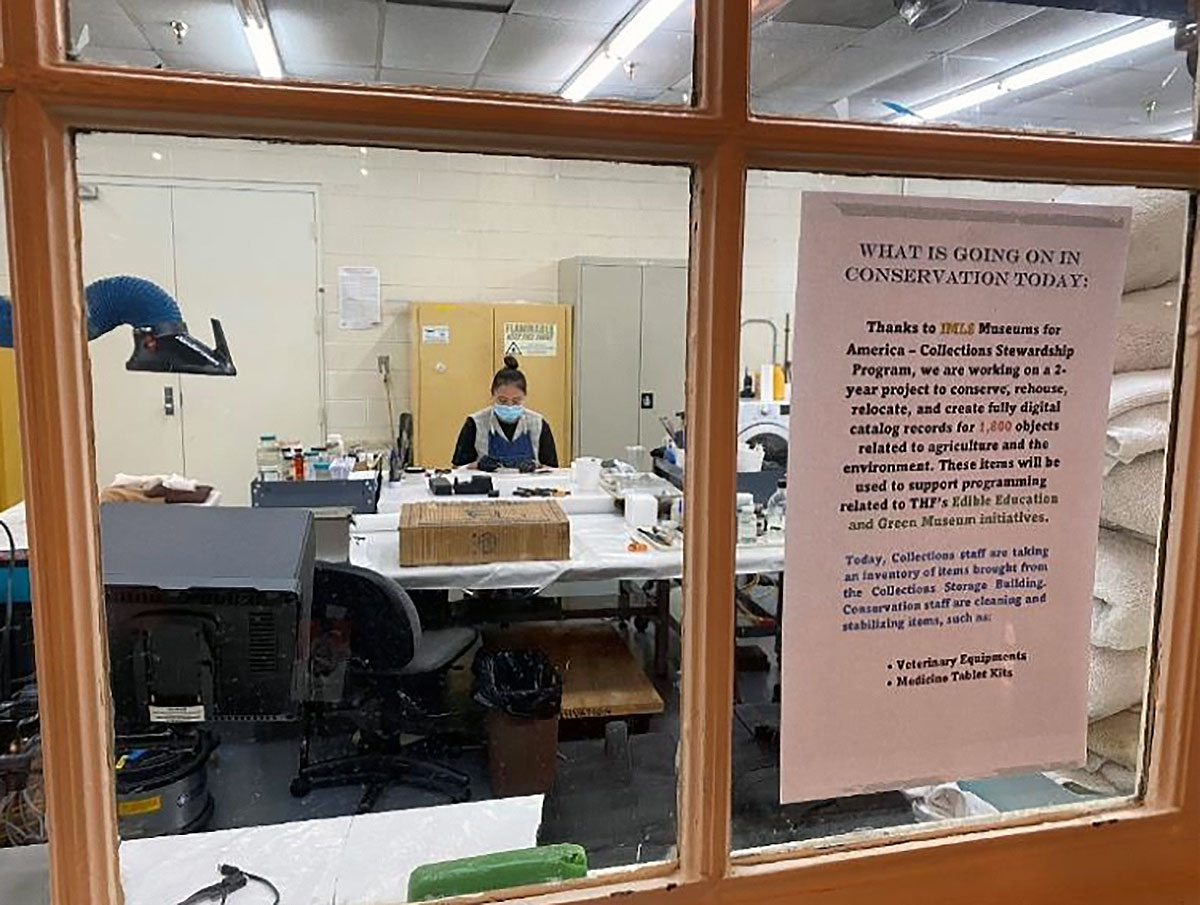
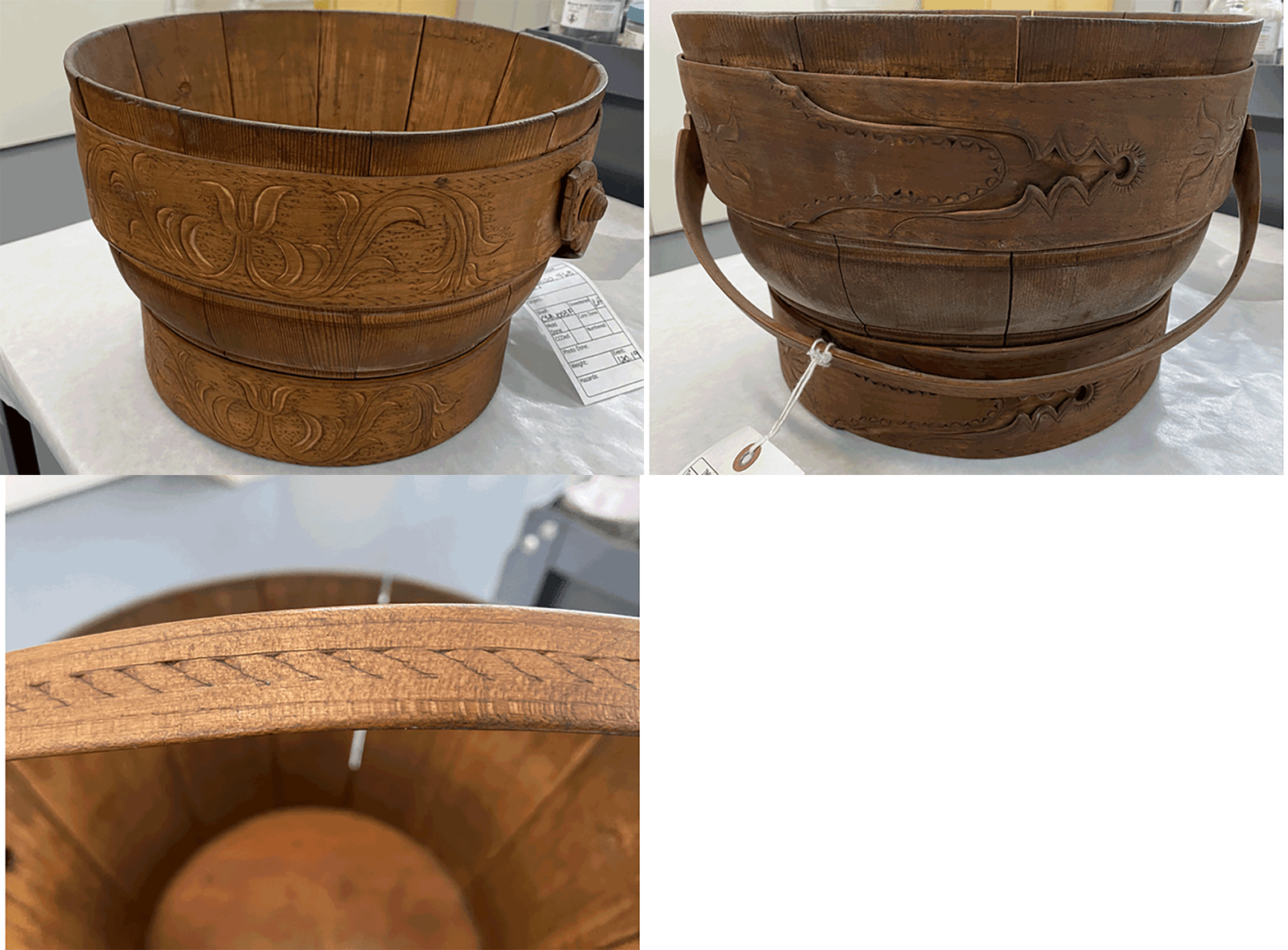
This incident reminds us of the important efforts of one of our collecting initiatives at The Henry Ford: the environment. The Henry Ford received funding from the Institute of Museum and Library Services (IMLS) to increase physical and intellectual control of agricultural and environmental artifacts. Cranberry harvesting tools, including rakes and bog shoes for horses hauling produce from bog to processing facility, count among the artifacts made more accessible because of IMLS funding.

Continue Reading
By Kayla Wendt

In 1972, Lillian Schwartz sat down with a bundle of pipe cleaners. She tested their flexibility, twisting them into loose loops and serpentine figures. Lillian was an artist and often used unconventional materials in her work, but these pipe cleaners weren't for arts and crafts. In front of her sat her colleague Max Mathews, who also worked at Bell Laboratories, a technology research facility in Murray Hill, New Jersey. Like Lillian, Max used the extensive computer equipment at the labs for creative endeavors, but he made music instead of art. Today, they were doing something different.

Lillian wrapped the pipe cleaners around Max's shoulders, experimenting with different positions — under his armpits, behind his neck — until she found a configuration that worked. The pipe cleaners sat over his right shoulder, arching from back to front, the front end spiraling up toward his mouth. Lillian would use this pattern to design a prototype hands-free telephone.

Max, like many people, easily tired of sitting in one place and holding a telephone receiver when taking calls. In the days before mobile phones, he couldn't even stand to walk around and burn off steam. Now, Max could easily take notes or pace across his office. Lillian's design not only responded to questions of ease and convenience, it anticipated hands-free technologies we're still experimenting with today.

Continue Reading

by CJ Martonchik

The holiday season is upon us, and visitors to Greenfield Village may catch a full Victorian Thanksgiving meal being prepared by presenters at Firestone Farm. Try our delicious Thanksgiving recipes at home. They all taste best with a healthy helping of homemade apple cider!

A roast turkey is served at Firestone Farm in Greenfield Village.

A roast turkey is served at Firestone Farm in Greenfield Village. Photo courtesy of Larissa Fleishman.

Roast Turkey

Wash, dry and stuff with a dressing of dry bread, soaked in water, pressed out and mixed with salt, pepper, thyme, butter and an egg. Sew up the turkey snugly, and put in a pan with a little water; roast slowly, allowing three hours for a ten-pound turkey. When commencing to brown, rub over with a little butter to keep the skin from blistering; boil giblets in water, chop fine and put in gravy.

May Perrin Goff, The Household of the Detroit Free Press, 1881, p. 590.

Continue Reading

Louis Comfort Tiffany (1848-1933) transformed the glass world with his patented Favrile process, which created a shimmering, iridescent effect, in the 1890s. More than a century later, Tiffany remains a household name, conjuring images of iridescent stained-glass windows and lighting. How has Tiffany stood the test of time?

Daffodil table lamp, designed by Clara Driscoll for Tiffany Studios, 1903-1920.

Daffodil table lamp, designed by Clara Driscoll for Tiffany Studios, 1903-1920. / THF167923

Tiffany worked with the leader of the Art Nouveau movement in Paris and became internationally renowned in the 1890s. Competing European glassmakers took inspiration from Tiffany, and rivals in the American market worked to develop wares that were almost indistinguishable from his — all helping to establish Tiffany as the look in art glass. Tiffany famously applied Art Nouveau aesthetics to lighting, creating what would become the iconic “Tiffany lamp.”

American tastes changed after World War I as people began searching for something modern and different in their décor. A new geometric style called Art Deco emerged, but Tiffany products remained rooted in the now-passé Art Nouveau. Sales plummeted in the 1920s, and the Great Depression finally shuttered Tiffany Studios. One scholar noted that Tiffany lamps, vases and decorative objects became fodder for tag and rummage sales. Nevertheless, influences of Tiffany’s aesthetic lingered throughout the 1930s and 1940s.

1930s White Castle sign

This 1930s White Castle sign shows Tiffany’s lingering influence. / Detail, THF101929

In the 1950s, museums began reevaluating Tiffany’s contributions to American culture. In 1955, the Morse Gallery of Art in Winter Park, Florida, organized "Works of Art by Louis Comfort Tiffany," the first solo exhibition of Tiffany since his death. Others, including Henry Ford Museum, began collecting Tiffany objects as early as 1954. By 1959, the prestigious Museum of Modern Art in New York included Tiffany glass in its modern design gallery and produced a groundbreaking exhibit, "Art Nouveau: Art and Design at the Turn of the Century." This reappraisal led to the beginning of new scholarship on Tiffany and a broader market for art glass among collectors from the 1960s onward.

The revival of interest in Tiffany's work — and in Art Nouveau in general — came into vogue through the counterculture of the 1960s. Just as before, a younger generation sought out new directions in material culture. In this, they referenced just about anything that rebelled against the prevailing minimalism of mid-century modernism. The highly decorative and organic qualities of Tiffany glass appealed to them.

Eurich's in Dearborn

The sense of nostalgia evoked by hippie culture appeared early on in mainstream material culture through old-fashioned ice cream parlors like Eurich's in Dearborn, Michigan, seen here circa 1962. Note the Tiffany-style lighting above the counter. / THF147849

By the early 1970s, Tiffany was more than a name — it was a style. Tiffany lamps reached the height of their popularity. And with the United States Bicentennial in 1976, Americans became even more enamored with the nostalgia of the American past. This led many companies to embrace an old-fashioned look that often included Tiffany-style lighting — the sort that filled early Wendy’s fast food restaurants, for example.

Tiffany Classic ornament

In the 1970s, Tiffany became fully diffused in American mainstream culture, as evidenced by Hallmark’s Tiffany Classics series of holiday ornaments. / THF177479

This nostalgia continued throughout the early 1980s but began to wane over the course of the decade. Yet even as the Tiffany style faded from fashion, it remained a cultural icon.

Charles Sable is curator of decorative arts at The Henry Ford. This post was adapted for the blog by Saige Jedele, associate curator.

by Charles Sable, by Saige Jedele

Beginning in 1948, the white-majority National Party of South Africa began codifying the harsh systems of racial segregation that had existed in South Africa since its colonization. Known as apartheid, this institutionalized segregation mobilized a new generation of leaders within the South African organization known as the African National Congress (ANC) to launch a larger liberation movement. Committed to fighting for Black South African rights, by the early 1950s leaders within the ANC, like Nelson Mandela, were promoting nonviolent demonstrations, strikes, boycotts and acts of civil disobedience in protest of South Africa’s white regime.

ANC leaders drew upon the nonviolence teachings of Mahatma Gandhi, an Indian lawyer who before leading India to independence from Britain in 1947 had spent over 20 years in South Africa honing his ethics and nonviolent protest tactics against white colonial rule. Gandhi’s teachings and the ANC‘s liberation mission was not lost on organizations in America fighting for similar equality goals. Civil rights activist Bayard Rustin helped create the American pacifist organization known as the Congress of Racial Equality (CORE) with George Houser and others who were influenced by Gandhi’s nonviolence teachings. In 1953, and in support of the ANC’s mission of resistance, Rustin and Houser founded the American Committee on Africa, one of the first national organizations dedicated to informing the American public about anticolonial struggles in Africa.

Button, 'Freedom Now,' circa 1960, created by the Congress of Racial Equality.

Button, "Freedom Now," circa 1960, created by the Congress of Racial Equality. / THF166827

Rustin’s organizational abilities also made an impression on a young Dr. Martin Luther King Jr., who brought Rustin on as an adviser during his Montgomery bus boycott, a protest campaign that saw King transform from a local minister of the Dexter Avenue Baptist Church to a national leader on civil rights. Rustin proved vital to King, providing him with a deeper understanding of Gandhi’s nonviolent tactics, which Rustin had studied in India. As King’s assistant, Rustin took on a variety of roles, including proofreader, ghostwriter, philosophy teacher as well as nonviolence strategist. In December 1956, Rustin proposed to King that he create an organization that would bring together Black leaders across the American South under a common banner in the fight for civil rights. With Rustin’s help, King formed the Southern Christian Leadership Conference, an organization that would be the driving force behind King’s civil rights work until his death in 1968.

Button, 'Practice Nonviolence,' circa 1965, indicating support for Dr. Martin Luther King's nonviolent tactics.

Button, "Practice Nonviolence," circa 1965, indicating support for Dr. Martin Luther King's nonviolent tactics. / THF8434

While fighting for civil rights at home during the early 1960s, Martin Luther King Jr. also grew more and more unsettled with what he saw unfolding in South Africa. After the Sharpeville massacre of 1960, where nearly 70 nonviolent protestors were killed by police, as well as the imprisonment of Nelson Mandela and other ANC leaders, King pushed for what he believed to be the only nonviolent solution to South African apartheid — an international economic and political boycott of the apartheid government. In large part, political activists across the United States echoed his call for action, demanding divestment and targeting large corporations that not only profited off the American people but also from doing business with South Africa. An early target, first protested by Students for a Democratic Society in 1965, was Chase Manhattan Bank, which loaned the South African government millions of dollars.

Button, 'Chase Manhattan Partner in Apartheid,' circa 1965, created by Students for a Democratic Society. title=

Button, "Chase Manhattan Partner in Apartheid," circa 1965, created by Students for a Democratic Society. / THF166804

In 1970, two Black employees at Polaroid, Caroline Hunter and Ken Williams, discovered on their way to lunch one day a mock-up of an ID for the South African Department of the Mines that contained a picture of a Black co-worker with a fake African name. Realizing Polaroid products were being used to produce passbooks that helped identify Black individuals in South Africa and uphold the apartheid system, Hunter and Williams created the Polaroid Revolutionary Workers Movement to organize a boycott of the company. Taking pride in being a “progressive” corporation, Polaroid launched a PR campaign to preserve its image, even after firing Hunter and Williams, and started new initiatives for its Black South African workers that did little to address systemic problems. Polaroid did not fully divest from South Africa until the late 1970s, eventually publicly pressured into being one of the first major American companies to do so.

'No Bullshit: Boycott Polaroid' Button, circa 1970-1975, created by the Polaroid Revolutionary Workers Movement.

"No Bullshit: Boycott Polaroid" Button, circa 1970-1975, created by the Polaroid Revolutionary Workers Movement. / THF196993

The 1970s saw boycott pressure placed on other large corporations, like automotive manufacturer General Motors and computer supplier IBM, both companies whose products the apartheid government relied on to function. Also included in this targeting was beverage company Coca-Cola, headquartered in Atlanta, Georgia. By the mid-1980s, Atlanta had become the center of opposition for the anti-apartheid movement in America, and it’s there where the southeast regional office of the American Friends Service Committee coordinated a national boycott of Coca-Cola, under the tagline “Coke Sweetens Apartheid.” Despite the campaign being led by Thandi Gcabashe, the daughter of ANC leader Albert Luthuli, who had worked with Nelson Mandela in the early 1950s, Coca-Cola never fully divested from South Africa.

'Coke Sweetens Apartheid: Coca Cola Out of South Africa' button, circa 1985, created by the American Friends Service Committee for its Coke Boycott Campaign.

"Coke Sweetens Apartheid: Coca Cola Out of South Africa" button, circa 1985, created by the American Friends Service Committee for its Coke Boycott Campaign. / THF196995

In 1985, the United States and Great Britain approved economic sanctions against South Africa, but oil and gas giant Royal Dutch Shell did not fully cooperate. From its home markets in Europe, Shell came to the United States in stages between 1912 and 1929, establishing a large brand identity in America as well as South Africa, where it was heavily relied on because South Africa did not have supplies of oil and gas of its own. From the offices of the United Mine Workers of America in Washington, D.C., the “Boycott Shell” campaign was launched in 1986 with the support of over 40 unions as well as the National Association for the Advancement of Colored People, the Southern Christian Leadership Conference and many other national organizations.

'Stop Apartheid Boycott Shell' Button, circa 1986-1987, distributed by the National Labor Boycott Shell Committee

"Stop Apartheid Boycott Shell" Button, circa 1986-1987, distributed by the National Labor Boycott Shell Committee via the offices of the United Mine Workers of America. / THF196996

The adoption of economic sanctions by the United States and transnational solidarity culminated in 1990 when Nelson Mandela was freed after 27 years of imprisonment. The apartheid regime of South Africa relinquished power and allowed for democratic elections that brought Mandela and the ANC to power in 1994.

Ryan Jelso is associate curator at The Henry Ford.

by Ryan Jelso