Posts Tagged by aidan thomas


In the spring of 2023, the contents of an entire house—9,000 everyday objects, including photographs, documents, books, and household items—were logged, packed, and shipped from Selma, Alabama to Dearborn, Michigan. That house was the Jackson Family Home, which was recently moved to its new permanent home in Greenfield Village—you can find out more about the move here. The items arrived and staff started their work to introduce them into The Henry Ford's Collection.
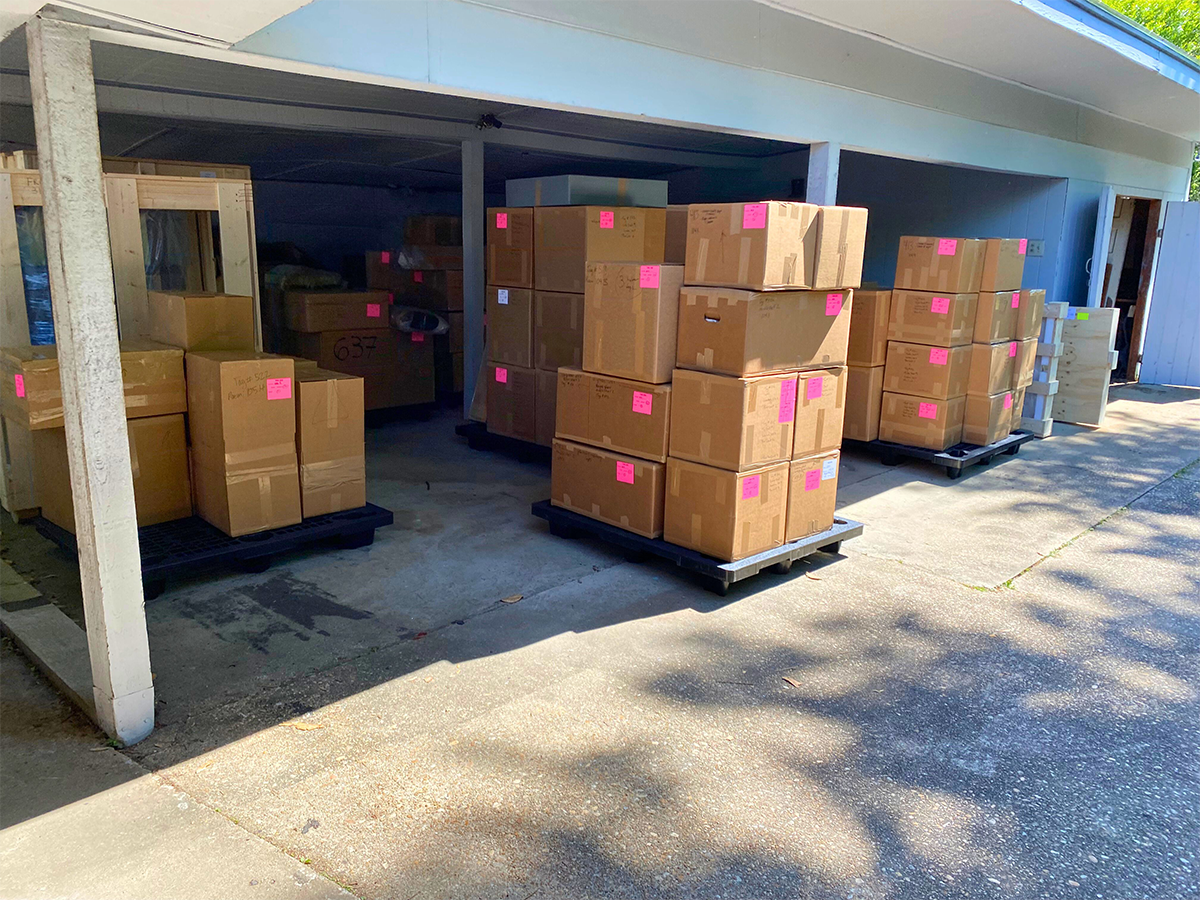 Contents of the Jackson Family Home are packed in boxes and await loading for shipment from Selma, Alabama, to Dearborn, Michigan. / Photograph by Staff of The Henry Ford.
Following the arrival of these materials to Michigan, two-dimensional materials were separated and inventoried as part of The Henry Ford’s Archives and Library collection, located in the Benson Ford Research Center. These materials were then sent to an abatement contractor and gamma irradiated to best preserve them for posterity. This interventive treatment sterilizes and decontaminates potential hazards, without causing any harm to the object. With the materials returned on-site, a processing archivist completed an intensive inventory, intellectually arranging, drafting descriptions, and rehousing the materials to increase accessibility and prepare them for use by researchers and the public.
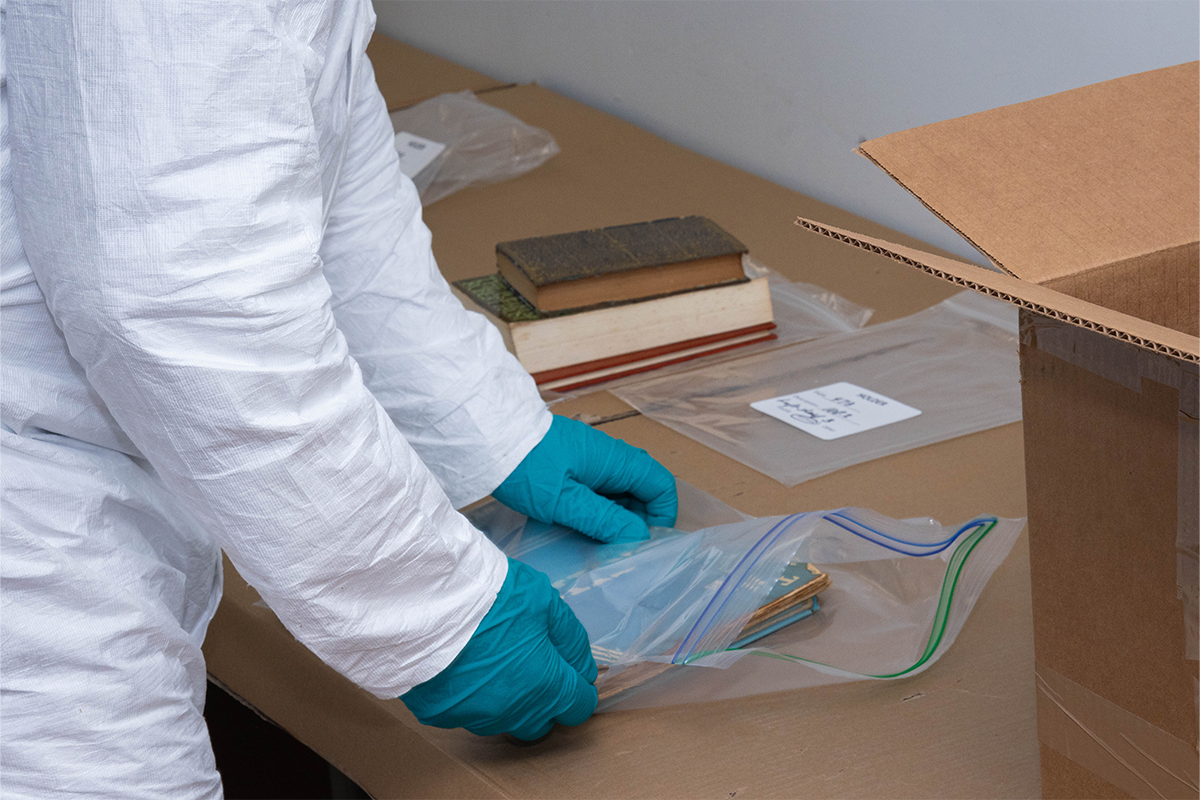 Staff at The Henry Ford organize archive and library materials in preparation for work with an abatement contractor. / Photograph by Staff of The Henry Ford.
Many of these materials are being used to fuel the interpretation and visualization of the Jackson Home for its opening in the summer of 2026.
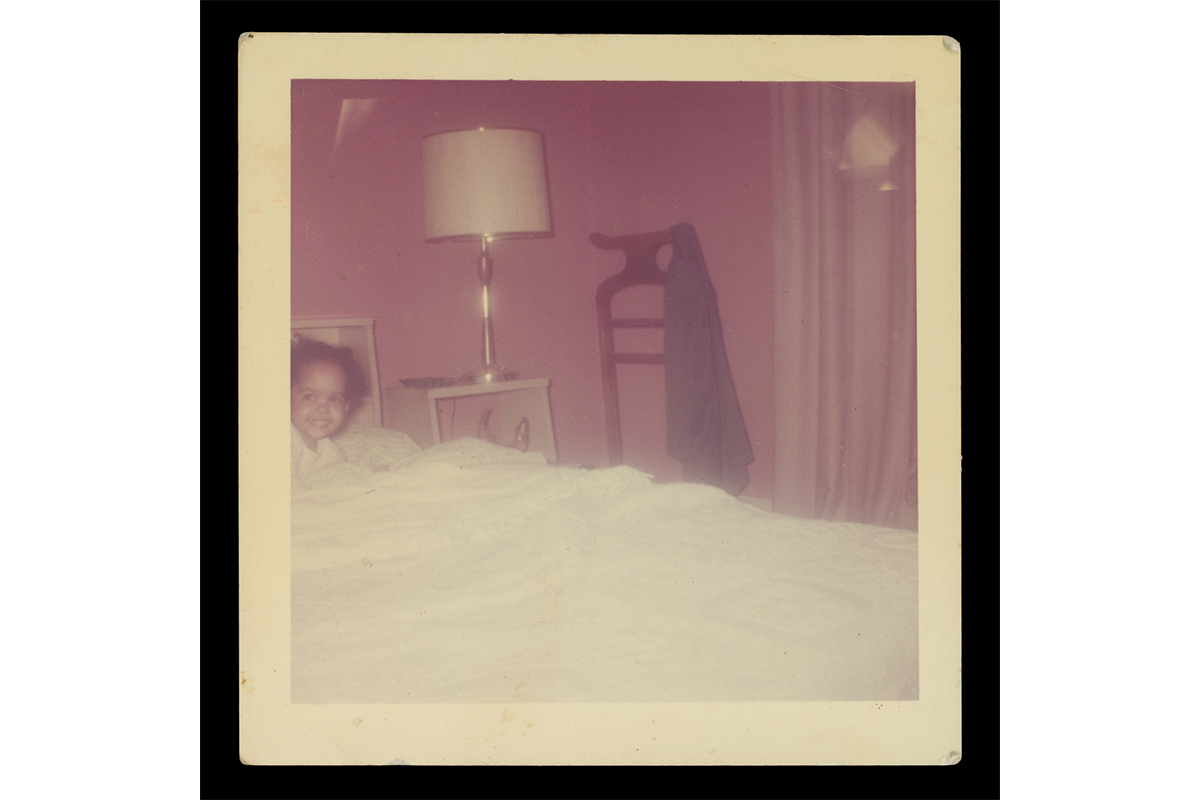 Photograph of Jawana Jackson in the Jackson Family Home. / THF708595
Processing of the three-dimensional artifacts began with unpacking 100 items at a time and assigning a temporary inventory number to each object. This number allows us to track the items as they move through various stages of processing. After inventory, high-resolution reference photographs are captured. This data is uploaded to our digital cataloging system and the items are then transferred to the conservation lab. In April 2023 this phase was completed, but there are several ongoing processing phases that will continue through 2026.
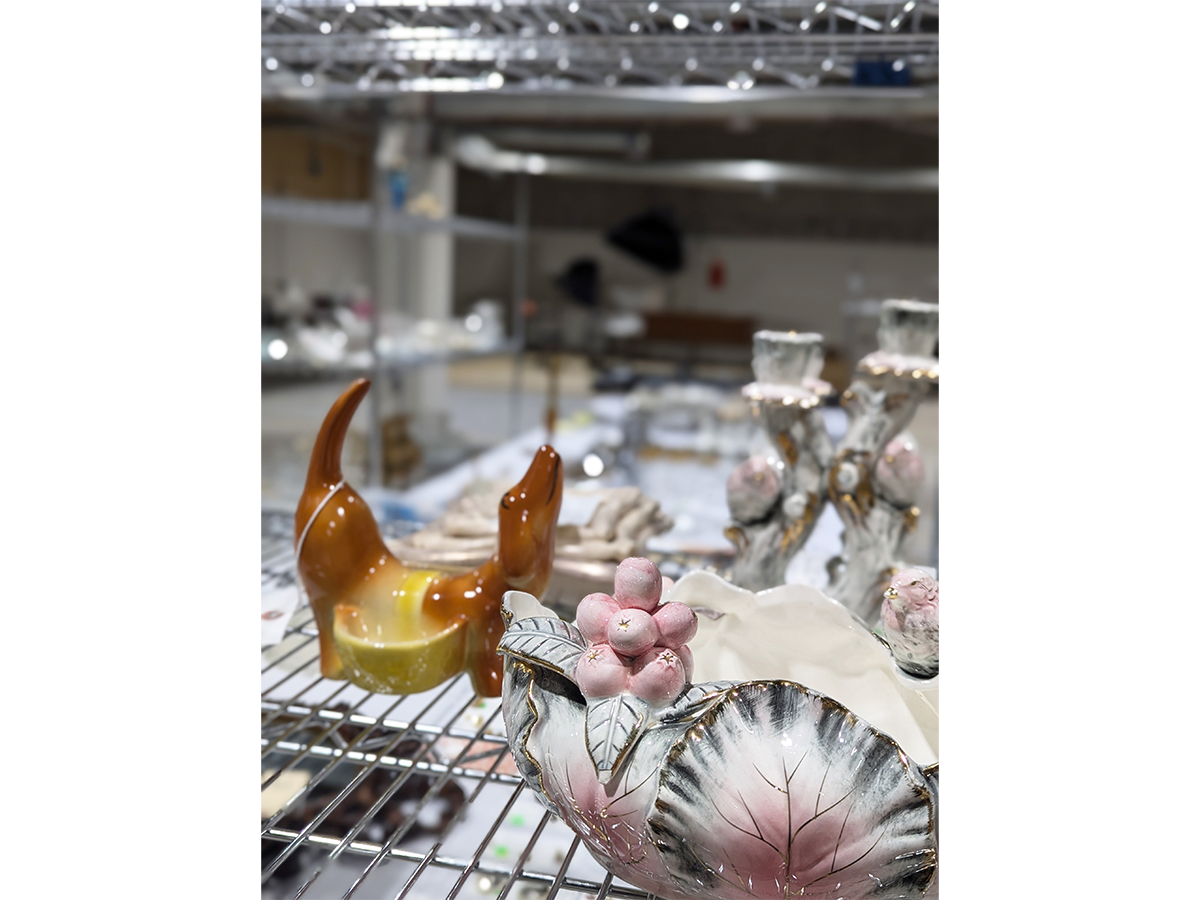 Carts are used to assist in relocating artifacts between stages of processing for the Jackson Home Project. A. L. Hirsch Rover Pottery Dachshund Ceramic Dresser Caddy and United China and Glass Company Pink and White Berries and Bird Leaf bowl are shown being relocated on a cart. / Photograph by Staff of The Henry Ford.
Every artifact from the Jackson Family Home undergoes multiple rounds of cleaning and repair in conservation. The process began when the contents of the home were packed in Selma—where larger items were lightly vacuumed to remove dust. Once on-site at The Henry Ford, each item was thoroughly cleaned and vacuumed during unpacking, providing the first opportunity to check the condition of objects for missing parts or signs of deterioration. Once in the conservation lab, a condition report and treatment plan are created for each object.
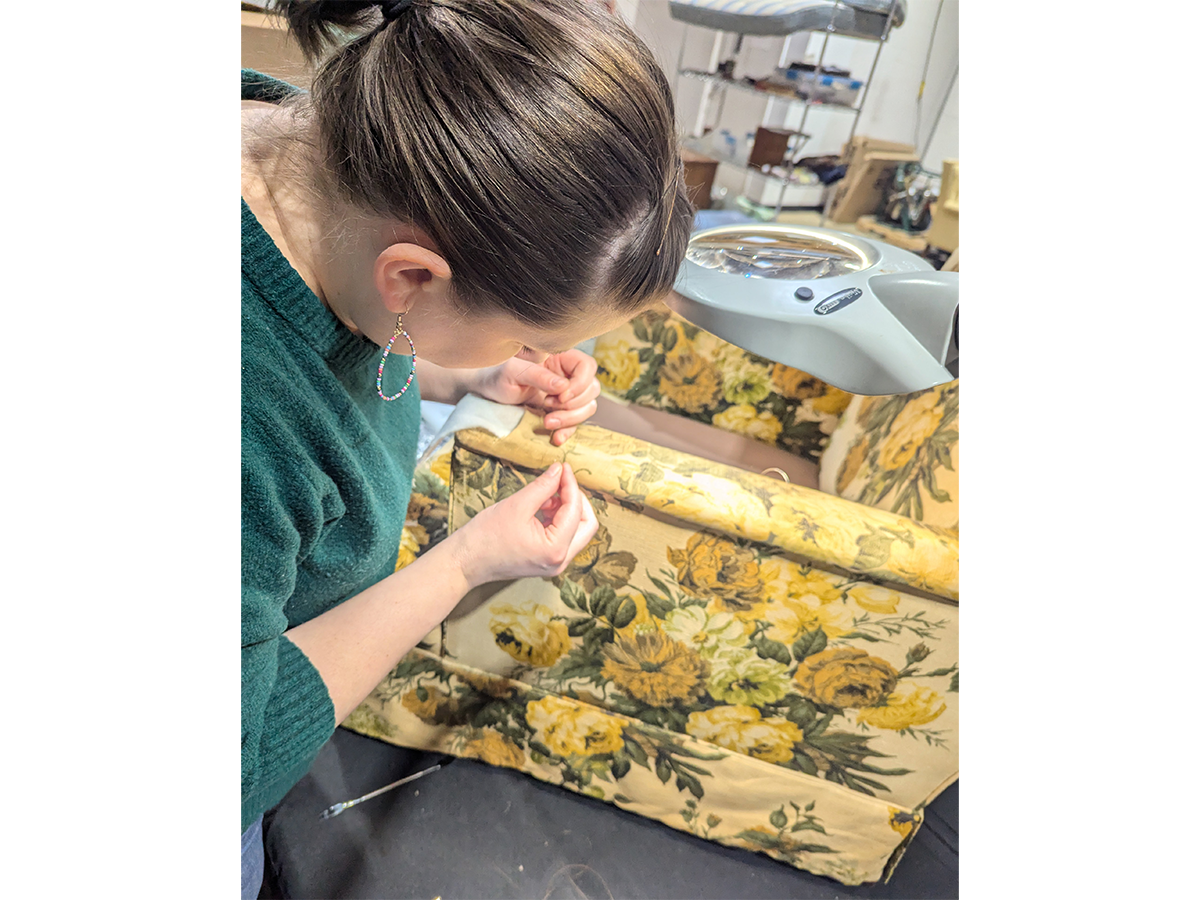 Associate Conservator Kate Herron adds netting to the arms of this Floral Globe Furniture Company armchair, an object used in the Jackson Family Home, for extra stability. / Photograph by Staff of The Henry Ford.
Treatment options can range from light cleaning to restoration or more extensive repairs, depending on the artifact’s condition. Regular meetings with curators at The Henry Ford help determine the appropriate level of cleaning, which items need preservation to address wear or evidence of use, and how each object contributes to the overall narrative.
 Curator of Decorative Arts Charles Sable consults with Conservator Louise Beck on conservation treatment of conservation treatment of a Cosco High chair with steps used in the Jackson Family Home kitchen. / Photograph by Staff of The Henry Ford.
Simple treatments, like wiping down with deionized water or ethanol, are often sufficient for stable items with light dirt. For kitchen equipment, layers of grease and dust are removed. Some artifacts require more complex treatments, including the repair of broken pieces or removal of corrosion from metals. To prevent deterioration, protective coatings like lacquer are used for brass and silver objects, and specific chemical treatments for iron and steel. Once treatment is complete, the object's condition and treatment details are documented in the catalog record, and the objects continue their journey to The Henry Ford’s registrar staff.
 Yellow Cosco Highchair with steps used in the Jackson Family Home, after conservation treatment. / THF803856
The registrar is responsible for research and cataloging each artifact. They build individual catalog records for each object with data such as size, maker, date of creation, and the purpose of the object. Every item is assigned a unique identifier, or an "accession number," that connects that object with a specific record. Accession numbers provide detailed information about the year the object was received into The Henry Ford’s collection, the collection “lot” it is a part of, and the specific registration succession number it is assigned. This unique identification number is attached or physically written on the artifact to ensure it can be traced to its record. Artifacts are labeled in a method that may be removed, if desired or needed down the road, without damage to the object. In addition to the photographic documentation in the collection, this research aids our understanding of what time period(s) the object lived in the Jackson Family Home.
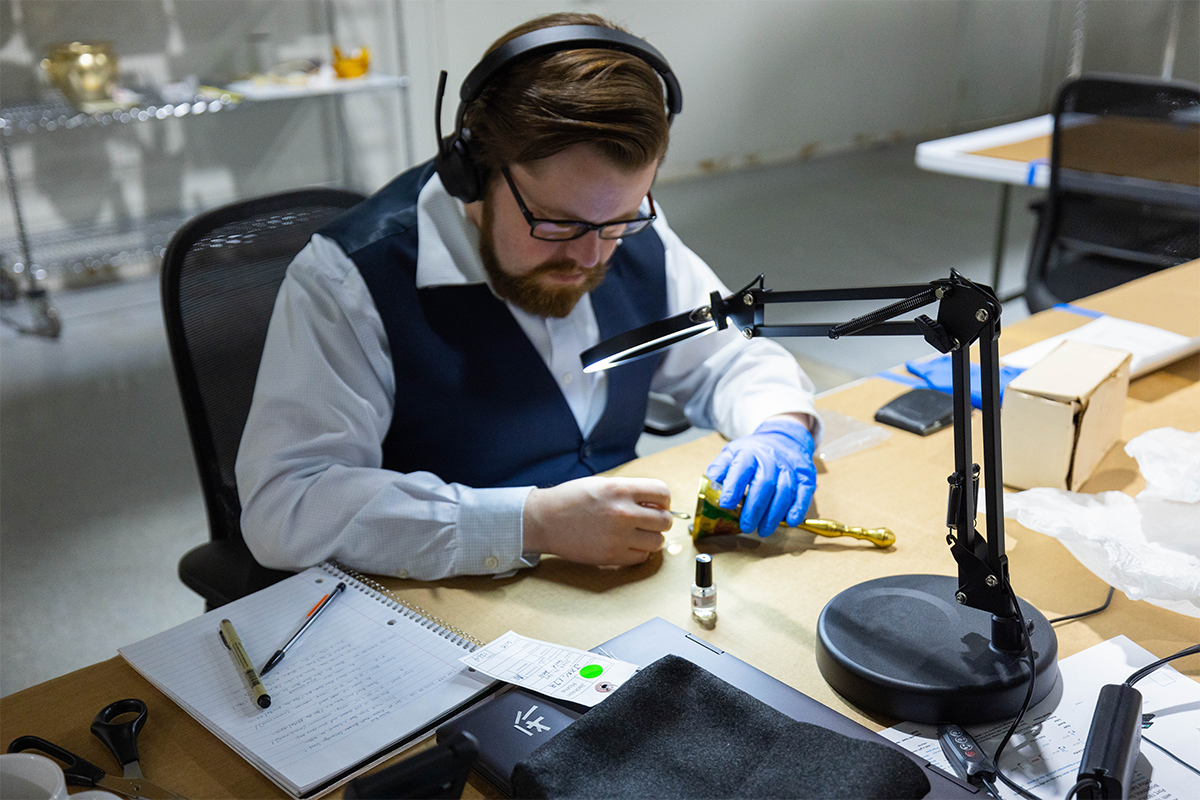 Artifacts in The Henry Ford collection are physically labeled with their accession number. A school bell from the Jackson Family Home is shown being labeled by Collections Specialist-Cataloger Andrew Schneider. / Photo by Staff of The Henry Ford.
The artifact then proceeds to photography for a high-resolution image. In 2026 the digitized objects and images from the Jackson Family Home will become accessible to the public on The Henry Ford’s digital collection, which can be accessed on The Henry Ford's Digital Collections website.
 The Henry Ford Photographer Jillian Ferraiuolo, capturing a photograph of a Breakfront China Cabinet from The Jackson Family Home. Digitizing our collection allows artifacts to be accessible, even when not on exhibition. / Photo by Staff of The Henry Ford.
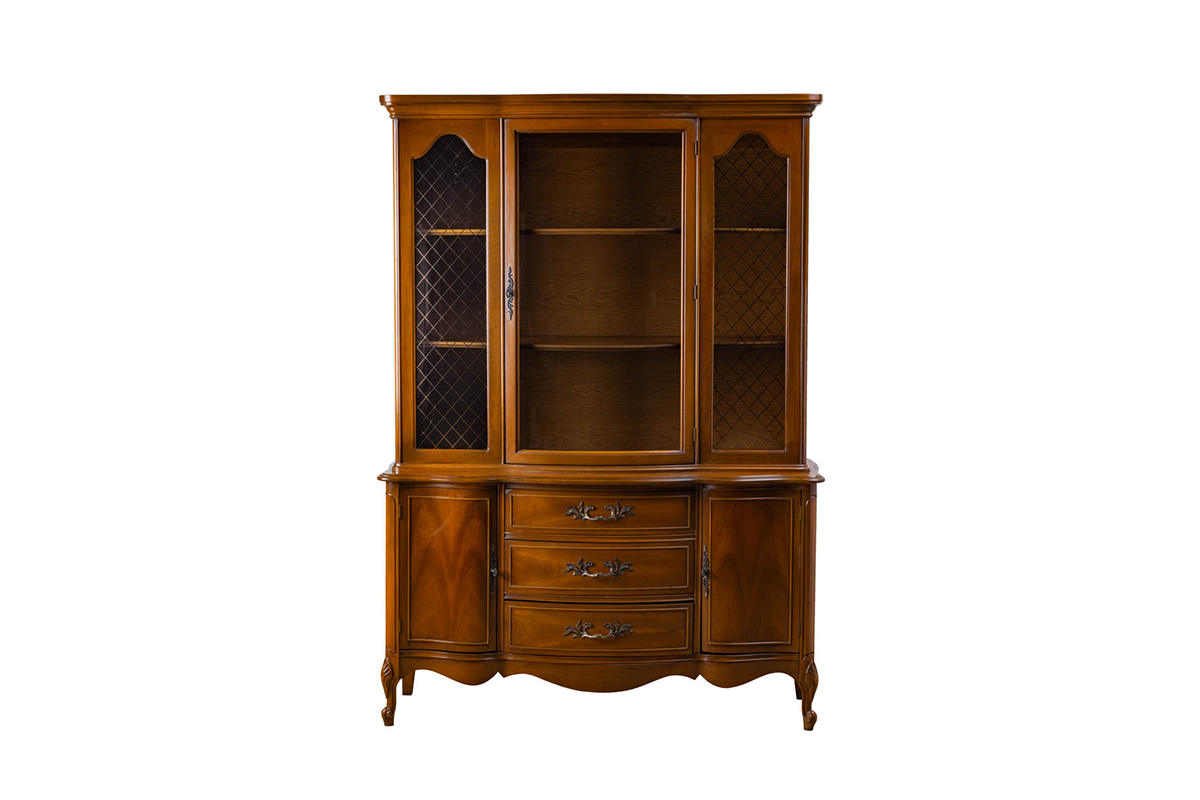 Breakfront China Cabinet. / THF803854
Once processing has concluded, the object is prepared for its new home in the collection, whether that is preparing for handoff to the exhibition team for installation in the Jackson Family Home, used in temporary exhibitions, or moved to storage for future research and opportunities.
This blog was produced by multiple authors: Kristen Hollingsworth, Jackson Home Project Coordinator; Louise Beck, Conservator, Julia DiLaura, Collections Specialist; Ashley Wimbrough, Collections Specialist; Andrew Schneider, Collections Specialist Cataloger; Jack Schmitt, Processing Archivist; and Aidan Thomas, Conservation Specialist at The Henry Ford.
by Kristen Hollingsworth, by Louise Stewart Beck, by Julia DiLaura, by Ashley Wimbrough, by Andrew Schneider, by Jack Schmitt, by Aidan Thomas