
Our Most-Viewed Digitized Artifacts of All Time
Share
share
In fall 2020, The Henry Ford digitized its 100,000th artifact. As part of a month-long celebration of that happy event, we assembled this set of the 100 artifacts most-viewed online since our first collections website was launched in the early 2010s. Many are fan favorites from Henry Ford Museum of American Innovation and Greenfield Village, but others might surprise you.
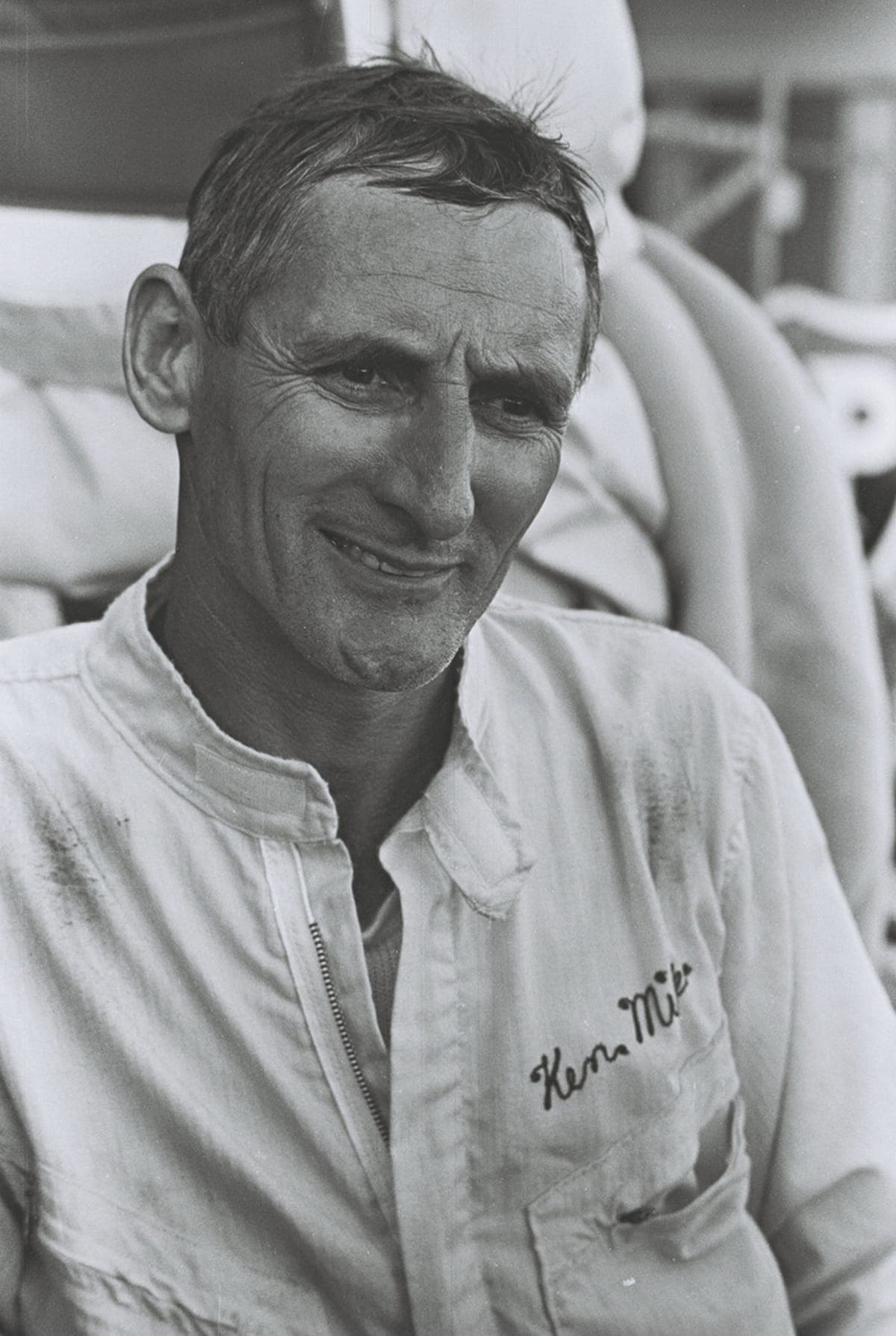
LeMans06-66_441
Ken Miles at the 24 Hours of Le Mans Race, June 1966
British-born Ken Miles was a gifted race car engineer and driver. Through his work for Carroll Shelby, Miles got involved in Ford's GT racing program. Miles won the 24 Hours of Daytona and the 12 Hours of Sebring in 1966, and he placed second at Le Mans. Miles died in a crash while testing Ford's J-Car later that year.
View ArtifactTHF90760
1896 Ford Quadricycle Runabout, First Car Built by Henry Ford
The Quadricycle was Henry Ford's first attempt to build a gasoline-powered automobile. It utilized commonly available materials: angle iron for the frame, a leather belt and chain drive for the transmission, and a buggy seat. Ford had to devise his own ignition system. He sold his Quadricycle for $200, then used the money to build his second car.
View ArtifactTHF103458
Letter from Clyde Barrow to Henry Ford Praising the Ford V-8 Car, 1934
On April 13, 1934, Ford Motor Company received this unusual product testimonial. In it notorious bank robber Clyde Barrow extolled the virtues of Ford V-8s as getaway cars. Handwriting analysts have questioned the letter's authenticity, but it is the sort of thing the publicity-seeking Barrow might have written.
View ArtifactTHF134576
Rosa Parks Bus
Inside this bus on December 1, 1955, Rosa Parks, a soft-spoken African-American seamstress, refused to give up her seat to a white man, breaking existing segregation laws. The flawless character and quiet strength she exhibited successfully ignited action in others. For this, many believe Rosa Parks's act was the event that sparked the Civil Rights movement.
View ArtifactTHF93158
Button, "You Are the Spark That Started Our Freedom Movement. Thank You Sister Rosa Parks," circa 1988
On December 1, 1955, Rosa Parks refused to give up her seat to a white man on a bus in Montgomery, Alabama. Her courageous act of protest was considered the spark that ignited the Civil Rights movement. For decades, Martin Luther King Jr.'s fame overshadowed hers. But by the time of this button, Parks was beginning to receive long-overdue recognition.
View ArtifactTHF134572
Allegheny Steam Locomotive, 1941
The Chesapeake & Ohio Railway's massive Allegheny, introduced in 1941, represents the peak of steam railroad technology. Among the largest and most powerful steam locomotives ever built, it weighed 1.2 million pounds with its tender and could generate 7,500 horsepower. Just 11 years later, C&O began pulling these giants from service. Diesel-electric locomotives proved more flexible and less expensive.
View ArtifactLeMans06-66_312
Carroll Shelby at the 24 Hours of Le Mans Race, June 1966
Carroll Shelby was brought in to boost Ford's struggling GT racing program in late 1964. Shelby, who'd won Le Mans as a driver in 1959, turned things around. His team reworked the GT40 and, with Ford engineers, replaced its 289-cubic-inch engine with a big 427. Ford swept the Le Mans podium in 1966 by taking first, second and third places.
View ArtifactTHF90733
1967 Ford Mark IV Race Car
This car was built to win the 24 Hours of Le Mans. Driven by Dan Gurney and A.J. Foyt, it accomplished that goal in 1967, beating the second-place Ferrari by 32 miles at a record-breaking average speed of 135.48 miles per hour. The Mark IV combined a sophisticated chassis with a big engine based on Ford's V-8 for stock car racing.
View ArtifactTHF150787
Automobile Bud Vase, 1920-1940
Early luxury vehicles sometimes contained bud vases for flowers. The flowers, whether real or silk, freshened up the interior. This pressed glass bud vase from The Henry Ford's 1922 Detroit Electric car has molded flowers on its sides.
View ArtifactTHF106481
Melting Pot Ceremony at Ford English School, July 4, 1917
In 1914 Ford Motor Company established the Ford English School, where the automaker's diverse immigrant employees could learn the English language and take civics lessons in preparation for becoming U.S. citizens. At the graduation ceremony, students wearing clothing from their native countries descended into a large "American Melting Pot" and emerged wearing homogenous suits and waving American flags.
View ArtifactTHF90167
1901 Ford "Sweepstakes" Race Car
This is Henry Ford's first race car. After his first auto company failed, Ford turned to racing to restore his reputation. He raced "Sweepstakes" against Alexander Winton on October 10, 1901, and, to everyone's surprise, the novice Ford beat the established Winton. The victory and resulting publicity encouraged financiers to back Ford's second firm.
View ArtifactTHF90618
1965 Ford Mustang Convertible, Serial Number One
It's an old auto industry cliche -- "you can't sell a young man an old man's car, but you can sell an old man a young man's car." It's also true. The sporty Mustang was a young man's -- and woman's -- car. The under-30 crowd loved it. But older people also bought them, often as a second car. The Mustang hit a sweet spot in the market, appealing to a wide range of buyers.
View ArtifactTHF90128
1987 Ford Thunderbird Stock Car, Raced by Bill Elliott
Bill Elliott set NASCAR's all-time speed record with this car when he qualified for the 1987 Winston 500 at Talladega at 212.809 miles per hour. By the 1980s, "stock cars" only looked stock. Underneath this Thunderbird sheet metal is a purpose-built steel tube frame, racing suspension and brakes, and a racing engine that no Ford dealer ever sold.
View ArtifactTHF159532
Rocking Chair Used by Abraham Lincoln at Ford's Theater the Night of His Assassination, April 14, 1865
President Abraham Lincoln was sitting in this rocking chair during a production of Our American Cousin at Ford's Theatre in Washington, D.C., when he was assassinated on April 14, 1865. Henry Ford purchased the chair in 1929 for the Museum, where it remains one of the most revered objects associated with the "man who saved the Union."
View ArtifactTHF1690
Cotswold Cottage
Cotswold Cottage is from the Cotswold Hills in southwest England. The Fords were attracted to the distinctive character of Cotswold buildings, which are characterized by the yellow-brown stone, tall gables, steeply pitched roofs, and stone ornamentation around windows and doors. Several decorative additions were made to the house in England, before dismantling and re-erecting it in Greenfield Village.
View ArtifactTHF91101
1961 Lincoln Continental Presidential Limousine Used by John F. Kennedy
President John F. Kennedy was assassinated in this car on November 22, 1963. The midnight blue, un-armored convertible was rebuilt with a permanent roof, titanium armor plating, and more somber black paint. The limousine returned to the White House and remained in service until 1977. The modified car shows the fundamental ways in which presidential security changed after Kennedy's death.
View ArtifactTHF806026
Detroit Toledo & Milwaukee Roundhouse
Steam locomotives required constant maintenance from an army of skilled and unskilled workers, and the roundhouse is where that work took place. This roundhouse was built in 1884 in Marshall, Michigan, for the Detroit, Toledo & Milwaukee Railroad. Today it services the locomotives and equipment of Greenfield Village's Weiser Railroad.
View ArtifactTHF90825
1931 Bugatti Type 41 Royale Convertible
Longer than a Duesenberg. Twice the horsepower of a Rolls-Royce. More costly than both put together. The Bugatti Royale was the ultimate automobile, making its owners feel like kings. Not only did it do everything on a grander scale than the world's other great luxury cars, it was also rare. Bugatti built only six Royales, whereas there were 481 Model J Duesenbergs and 1,767 Phantom II Rolls-Royces.
View ArtifactTHF90218
1902 Ford "999" Race Car, Built by Henry Ford
Henry Ford hired a fearless bicycle racer named Barney Oldfield to drive "999." Although he had never driven a car, Oldfield learned quickly and won his first competition. He went on to become America's first nationally famous racing hero, known for his thrilling exhibition races and the trademark cigar he chewed to protect his teeth in a crash.
View ArtifactTHF90585
1965 Lotus-Ford Race Car
Scotsman Jim Clark won the Indianapolis 500 with this rear-engine car in 1965. After his victory, a traditional front-engine car never won that race again. The Lotus-Ford combined a European Formula One-inspired lightweight chassis with a big Ford V-8 engine. The Lotus-Ford's success effectively killed the traditional Indy roadster and established a new design for American race cars.
View ArtifactTHF95128
Vine Quilt by Susan McCord, 1880-1890
Indiana farmwife Susan McCord made this stunningly beautiful quilt -- indisputably her masterpiece. This trailing vine design is a McCord original. McCord pieced together printed and solid cotton fabric scraps to create the over 300 leaves on each of the thirteen vine panels. McCord used variations of this vine in the borders of several quilts. But McCord's vine design is rendered to perfection in this work of genius.
View ArtifactTHF90281
1914 Ford Model T Touring Car, Given to John Burroughs by Henry Ford
This 1914 touring car is one of several Model T automobiles given to naturalist John Burroughs by his friend Henry Ford. Ford Motor Company experienced a milestone year in 1914. The automaker fully implemented the moving assembly line at its Highland Park plant, and it introduced the Five Dollar Day profit-sharing plan for its employees.
View ArtifactTHF11607
Patent Model of Edison's Electrographic Vote Recorder and Register, His First Patent, 1869
Edison received a patent for this electrographic vote recorder in 1869. Legislative bodies could record votes accurately and instantaneously with his device. Edison's invention stirred little interest and was never manufactured. The invention's significance, however, should not be overlooked. This was the first of Edison's 1093 U.S. patents and in a way marks the start of his inventive activity.
View ArtifactTHF155181
Slate Pencils, circa 1875
In the nineteenth century, schoolchildren used slates to practice handwriting and arithmetic without wasting precious paper. Slate pencils were made of soapstone or softer pieces of slate rock, sometimes wrapped in paper like this one. Many students remember the sound of the slate pencil -- like nails on a chalkboard. In the late nineteenth/early twentieth century, chalk was used instead.
View ArtifactTHF91087
1972 Lincoln Continental Presidential Limousine Used by Ronald Reagan
President Ronald Reagan was getting into this car when he was shot by John Hinckley on March 30, 1981. The car carried Reagan to the hospital. Presidents Nixon, Ford, Carter, and George H.W. Bush also used this car. In 1982 the front sheet metal was updated, but since a 1982 grille no longer fit properly on the 1972 body, a 1979 grille was used.
View ArtifactTHF90666
1962 Mustang I Roadster
This sharp looking little two-seater created a great "buzz" when racing driver Dan Gurney introduced it at the United States Grand Prix in Watkins Glen, New York, in 1962. Featuring a rear-mounted V-4 engine, it was unlike any Ford ever seen before. The Mustang name later appeared on a sporty four-seater that created its own buzz in 1964.
View ArtifactTHF97802
Wright Brothers Home and Cycle Shop, Greenfield Village, 1971
Henry Ford acquired the Wright brothers' home and cycle shop in 1936. He then relocated the buildings from Dayton, Ohio, to his Dearborn, Michigan, museum complex. Ford placed the structures right next to each other in Greenfield Village. In Dayton, the buildings had been located a few blocks apart.
View ArtifactTHF1966
Martha-Mary Chapel
Churches were a center of community life in the 1700s, a place where townspeople came together to attend services and socialize. The Martha-Mary Chapel, with its architecture inspired by New England's colonial-era churches, was built in Greenfield Village in 1929. This chapel was named after Henry Ford's mother, Mary Litogot Ford, and his mother-in-law, Martha Bench Bryant.
View ArtifactTHF152426
Henry Ford's "Kitchen Sink" Engine, 1893
Henry Ford built his first experimental engine using scrap metal for parts. He tested it on the kitchen sink after supper on December 24, 1893. For ignition he ran a wire from the ceiling's light bulb. His wife Clara hand-fed gasoline to the intake valve while Henry spun the flywheel. The engine roared into action, shaking the sink.
View ArtifactTHF70569
Van Cleve Bicycle, Made by the Wright Brothers circa 1896
Wilbur and Orville Wright established their first bicycle shop in 1892. They started building their own bikes in 1896. Van Cleve bicycles -- named for Wright family ancestors -- used high-grade materials, and they featured special oil-retaining wheel hubs and coaster brakes of the brothers' own design. The Wrights built each bike to order, hand-making parts with basic tools.
View ArtifactTHF13425
Slave Collar, circa 1860
The wealth and power of Southern plantation owners depended upon a large labor force of enslaved people. Slaves known for running away might have had to wear an iron collar like this, for punishment or to prevent them from running away again. The hooks caught on bushes or tree limbs, causing a violent jerking to the individual's head and neck.
View ArtifactTHF90450
1903 Ford Model A Runabout
After his first two attempts at commercial automobile manufacturing failed, Henry Ford found success with Ford Motor Company, established in 1903. The new company's first product, the Model A, was conventional by the standards of the day. It featured a two-cylinder engine mounted under the seat and rear wheels driven by a chain.
View ArtifactTHF112065
Guide Map and Brochure, "Welcome to Greenfield Village," circa 1968
THF77183
"Negro Motorist Green Book, An International Travel Guide," 1949
Before the 1964 Civil Rights Act, African Americans faced persistent racial discrimination when traveling. It could be difficult to find restaurants, hotels, or other amenities. The Negro Motorist Green Book, begun in 1936, became a guide for the African American traveler. This 1949 edition listed travel information that would keep the traveler "from running into difficulties [and] embarrassments," and would "make his trips more enjoyable."
View ArtifactTHF94994
Letter to Henry Ford from the Wife of an Assembly Line Worker, 1914
Letter written to Henry Ford from the wife of an assembly line worker, January 23, 1914. The woman writes asking Henry Ford to investigate the situation on the assembly lines in the factories with regard to working conditions. She is angry about the treatment her husband receives on the job.
View ArtifactTHF91019
1914 Detroit Electric Model 47 Brougham, Personal Car of Clara Ford
Clara Ford, wife of Henry Ford, drove this Detroit Electric. In the years before World War I many women chose electric cars because they started instantly without hand cranking and had no difficult-to-shift transmission. The superintendent of the Detroit Electric factory employed his daughter, Lillian Reynolds, to sell to women -- including Clara Ford, who drove this car into the 1930s.
View ArtifactTHF13419
"Whites Only" Drinking Fountain, 1954
From the late 19th through the mid-20th centuries, segregation laws in Southern states separated African Americans and whites in almost every aspect of public life -- from railroad cars and schools to restrooms and drinking fountains. Varying from state to state, these laws were supposed to establish facilities that were "separate but equal." In reality, these were almost never equal.
View ArtifactTHF1858
Logan County Courthouse
Between 1840 and 1847, Abraham Lincoln tried cases here as a traveling lawyer. Visiting once or twice a year, he worked mostly on cases resolving neighbors' disagreements over land, contracts, and debts. As Lincoln traveled, people got to know him because he always took time to talk to them. This helped him earn votes later when he went into politics.
View ArtifactTHF133856
Amana Radarange Microwave Oven, 1975
Amana's Radarange, introduced in 1967, was the first compact microwave oven made for home use. By 1975, when Ed and Flo Harper bought this Radarange as a family Christmas gift, sales of microwave ovens outpaced gas ovens for the first time. The convenient, time-saving microwave oven was becoming a practical necessity for a fast-paced world. People had less time to devote to cooking.
View ArtifactTHF90188
1906 Locomobile "Old 16" Race Car
In 1908, driver George Robertson and mechanician Glenn Ethridge took this car to victory in the Vanderbilt Cup, America's first great automobile race. It marked the first time an American-built car won a major international road-circuit race. The Locomobile competed while wearing number 16, and it's been known as "Old 16" ever since.
View ArtifactTHF129663
Test Tube, "Edison's Last Breath," 1931
This test tube was one of several that Charles Edison noticed standing open in a rack in the bedroom in which his father had just died in 1931. The attending physician was asked to seal the tubes, one of which Charles later sent on to Henry Ford who kept it with other Edison mementos at his home, Fair Lane.
View ArtifactTHF135450
1927 Ford Model T Touring Car, The Fifteen-Millionth Ford
After 19 years and some 15 million cars, Ford Motor Company ended production of its venerable Model T. Company officials designated this car as the Fifteen Millionth and ceremonial "last" Model T. They gathered at Ford's Highland Park plant to watch Henry Ford and Edsel Ford drive it off the assembly line on May 26, 1927.
View ArtifactTHF90438
1909 Ford Model T Touring Car
Henry Ford crafted his ideal car in the Model T. It was rugged, reliable and suited to quantity production. The first 2,500 Model Ts carried gear-driven water pumps rather than the thermosiphon cooling system adopted later. Rarer still, the first 1,000 or so -- like this example -- used a lever rather than a floor pedal to engage reverse.
View ArtifactTHF90885
1906 Ford Model N Runabout
Two-seater runabouts like this 1906 Ford Model N were favored by middle-class Americans who could afford one. They were fast and rugged. Most runabouts featured one- or two-cylinder engines and bicycle-style chain drives. But this Ford Model N offered four cylinders and a shaft drive, plus it cost less. At $500, it became the bestselling car in America.
View ArtifactTHF152054
Brick from Indianapolis Motor Speedway
When Carl Fisher and his partners opened Indianapolis Motor Speedway in 1909, the crushed stone and tar track surface quickly proved too dangerous. Fisher had the entire track resurfaced with 3.2 million paving bricks. The track was fully paved with asphalt by 1961, but a three-foot brick strip -- at the start/finish line -- remains, as does the speedway's nickname: the Brickyard.
View ArtifactTHF151672
Aeron Task Chair, Pre-Production Prototype, 1994
Designers Don Chadwick and Bill Stumpf explored new materials that could replicate the cooling effect of historic wicker furniture and studied human sitting habits to create Herman Miller's groundbreaking Aeron task chair. One of the last in a series of experimental prototypes, this 1994 version incorporates the distinctive skeletal appearance that exemplified the production Aeron introduced later that year.
View ArtifactTHF175180
Firestone Farmhouse
Benjamin and Catherine Firestone raised their three children in this farmhouse, including tire maker Harvey Firestone. Originally located near Columbiana, Ohio, the 1828 house was updated in 1882 to appear more stylish and up-to-date. The traditional Pennsylvania German layout of the Firestone's farmhouse was transformed, with a central foyer, separate dining room and kitchen, a sitting room, closets, wallpaper, and fancy new furniture.
View ArtifactTHF18671
Highland Park Plant Engine- Generator, 1915-1916
Ford's Model T mass production system would not have been practical without electricity; by 1919 nine of these Ford-designed hybrid internal combustion/steam engines generated the power needed by the Highland Park plant's assembly lines and associated machinery. By 1926 the engines were rendered obsolete when electricity was fed from the power plant at Ford's River Rouge plant ten miles away.
View ArtifactTHF90556
1919 Ford Model T Sedan
The Model T's basic design received many updates over the car's 19-year life. Some incorporated mechanical improvements, some responded to growing consumer demands, and some simply reduced costs. The 1919 sedans were the first with electric starters and demountable tire rims. These features were standard on other makes but cost extra on a Ford, keeping the base price low.
View ArtifactTHF1973
Menlo Park Laboratory
When Edison moved to Menlo Park, New Jersey, in spring of 1876 the laboratory building contained his entire operation -- a handful of collaborators, office, library, and machine shop as well as laboratory. As the scale of Edison's investigations grew so did the complex, but this building -- dedicated to experimental activities -- was always understood to be the heart of the enterprise.
View Artifact

