Monthly Archives: June 2017


Tray of Wood Type, circa 1840. THF159398
The Henry Ford and House Industries, two institutions committed to celebrating the spirit of innovation, joined forces to create House Industries: A Type of Learning, an exhibit in Henry Ford Museum of American Innovation from May 27 through September 4, 2017.
Artifacts provided by House Industries and others are complemented by pieces from our own collections, like this tray of wood type from around 1840. These items can be seen in the exhibit or in this expert set. Regardless of where you see them for yourself, these artifacts showcasing design might just spark your own creative moment.

Many of us like to keep our cars clean. Whether it’s with a trip through the automatic car wash, or a hosing and waxing in the driveway, we try to keep the mud, dirt and grime away. Some of us spend just as much time on the interiors, crawling over seats with a shop vac in hand. A car is a big investment and, the more expensive something is, the better care we’re likely to give it.
An automobile was no less an investment a century ago. Even at its absolute lowest price of $260 in 1924, a Ford Model T cost one-fifth of the average annual wage in the United States. Not surprisingly, many car owners took great pains to keep their cars neat and tidy – both to ensure that the vehicle remained in top condition, and as a more basic point of pride. We recently acquired one of the key tools for a fastidious flivver owner – an “Automobile Special” feather duster from the 1920s.
A look at period mail-order catalogs reveals any number of cleaning products available to motorists in the 1910s and 1920s. Montgomery Ward’s 1916 supplemental automobile equipment catalog grouped its cleaning products under the breezy heading, “A Clean Auto Means a More Attractive Auto.” Its pages include a mix of waxes and polishes easily recognizable today, along with archaic products like “Neats Foot Oil Clutch Compound” (used to soften a leather-surfaced clutch that engaged too abruptly). The mail-order giant’s larger Catalog and Buyer’s Guide No. 93 from 1920 devotes most of page 894 to car cleaning. Ward’s offered waxes, enamels, rubber floor mats, horsehair washing brushes, and renewing compounds for leather roofs. The duster advertised on that page is captioned with a helpful – and persuasive – warning: “Do not let dust remain on the finish of your car as it quickly works its way into the paint which kills the luster.”
On that note, our “Automobile Special” duster likely wasn’t recommended for exterior surfaces. Those ten-inch turkey feathers – with their tendency to scratch – would scare off any discerning car owner, then or now. The choosy motorist would have selected a “dustless duster” with chemically-treated fibers designed to absorb dust rather than push it around. They were readily available 100 years ago but, naturally, they came at an extra cost – 35 cents versus 14 cents for a comparable feather duster. Nevertheless, a feather duster could have been safely used to tidy up an auto’s interior surfaces, and many surely were.
While we have other feather dusters in the collection, they likely were intended for use in the home. None is specifically labeled as being for automotive use. This newly-acquired “Automobile Special” duster is an important piece – rough on the paint or not – in that it gets us to the stories of automotive maintenance and pride of ownership in the 1920s, when automobiles were priced within reach of most Americans.
Matt Anderson is Curator of Transportation at The Henry Ford.

Linotype Composing Machine, circa 1915. THF126838
For the past 25 years House Industries has been known for their unique font collections. Their fonts have been used to create logos for some of the best-known brands, from entertainers to news outlets. At The Henry Ford, our collections house some important printing presses. The printing press democratized knowledge. As mechanical improvements were made, printing became faster and cheaper. By extension, the content of newspapers and books diversified, and the printed word was distributed on a mass scale.
This collection documents the mechanical lineage of printing presses, from a circa 1809 Ramage--one of the oldest surviving hand presses in the country--to the efficient Mergenthaler Linotype composing machine.
Meet our next artist in residence, Herb Babcock. Tell us a little bit about yourself and your work.
I was born in a small town in Ohio in 1946. I received a BFA in Sculpture from the Cleveland Institute of Art, Cleveland, Ohio in 1969 and an MFA in Sculpture from Cranbrook Academy of Art, Bloomfield Hills, Michigan in 1973. I studied sculpture at the Skowhegan School of Painting and Sculpture, Skowhegan, Maine 1967 and glass at the Toledo Museum of Art, Toledo, Ohio from 1970-71.
I am Professor Emeritus, College for Creative Studies. I taught at CCS for 40 years. Currently I indulge myself in the studio, conceptualizing and creating art.
Fire began to dominate my art in 1969, the first time I tried to blow glass. As a sculptor, I was forging steel into “form.” Molten glass was an alternative: a hot, quick and scary medium to make art. Once I immersed myself in the glass process, the material became a “fine art” medium for me. 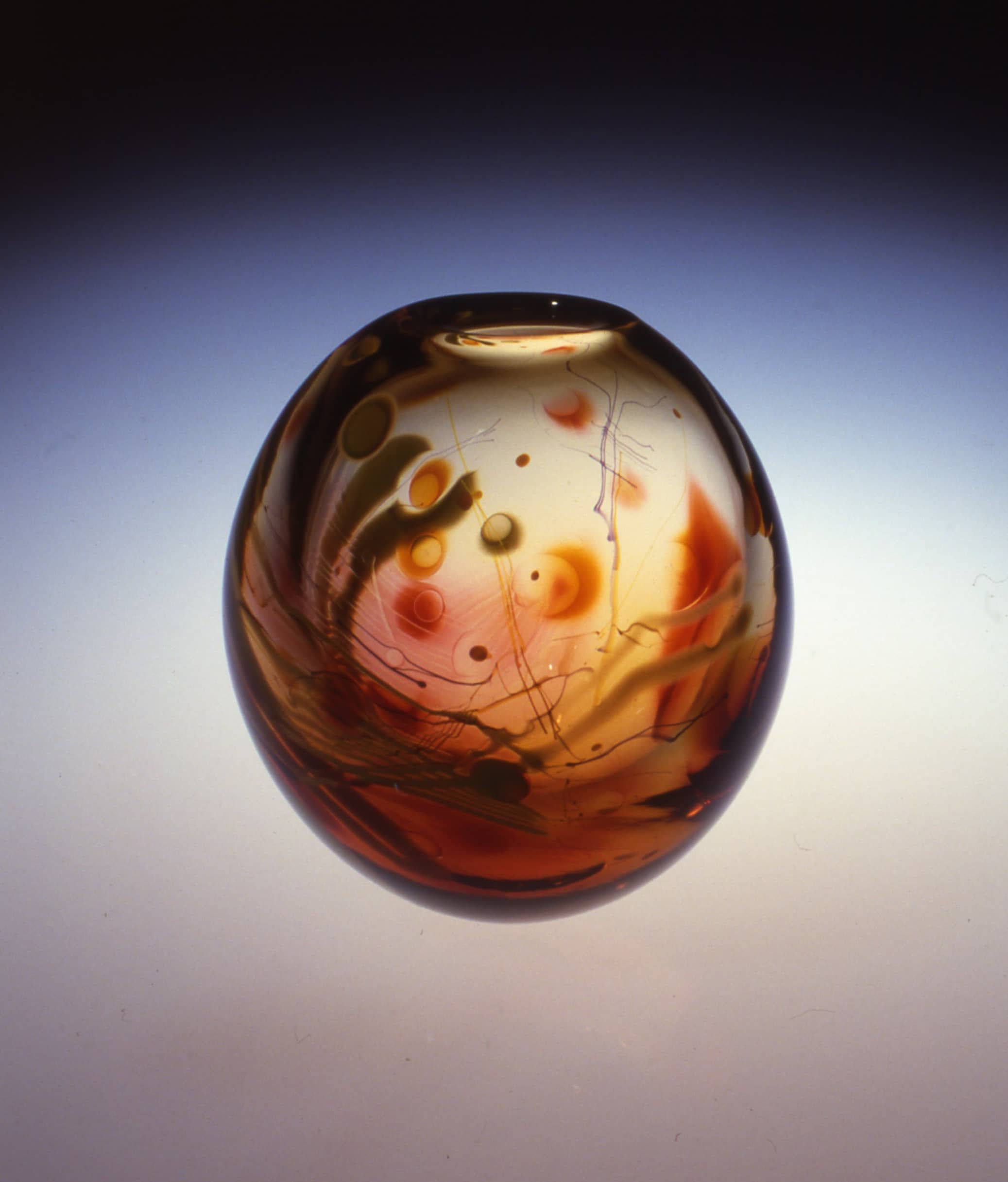
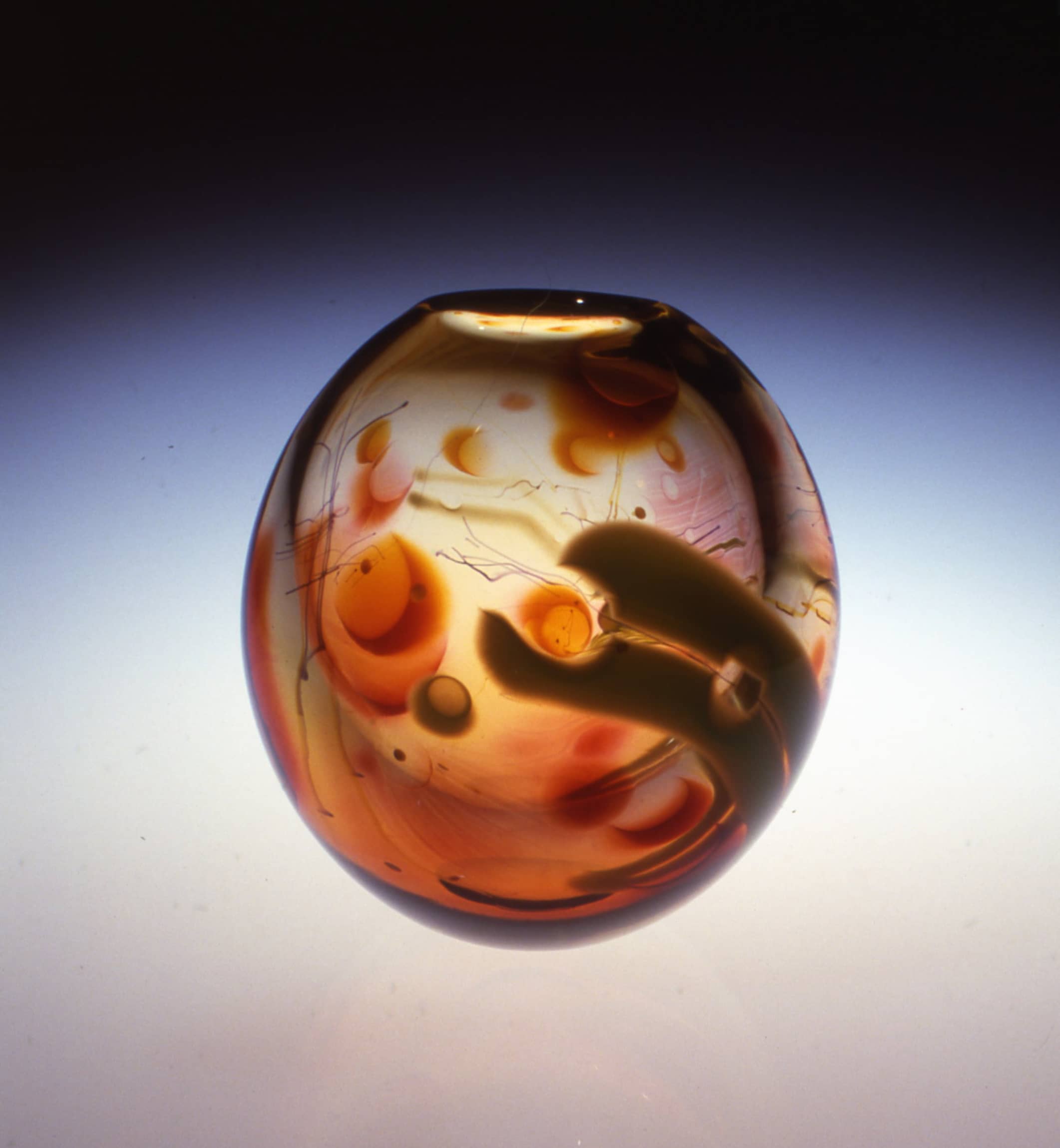
As my glass skills evolved and I explored a new process, I created the Image Vessel Series in 1976. In this series, I “painted” using color and line, and “sculpted” to produce a three-dimensional image through a blown-glass vessel.
Do you have a favorite piece you’ve created?
Not one favorite piece; however, each step in the evolution of my work has produced several pieces that I believe interpret what I am trying to say.
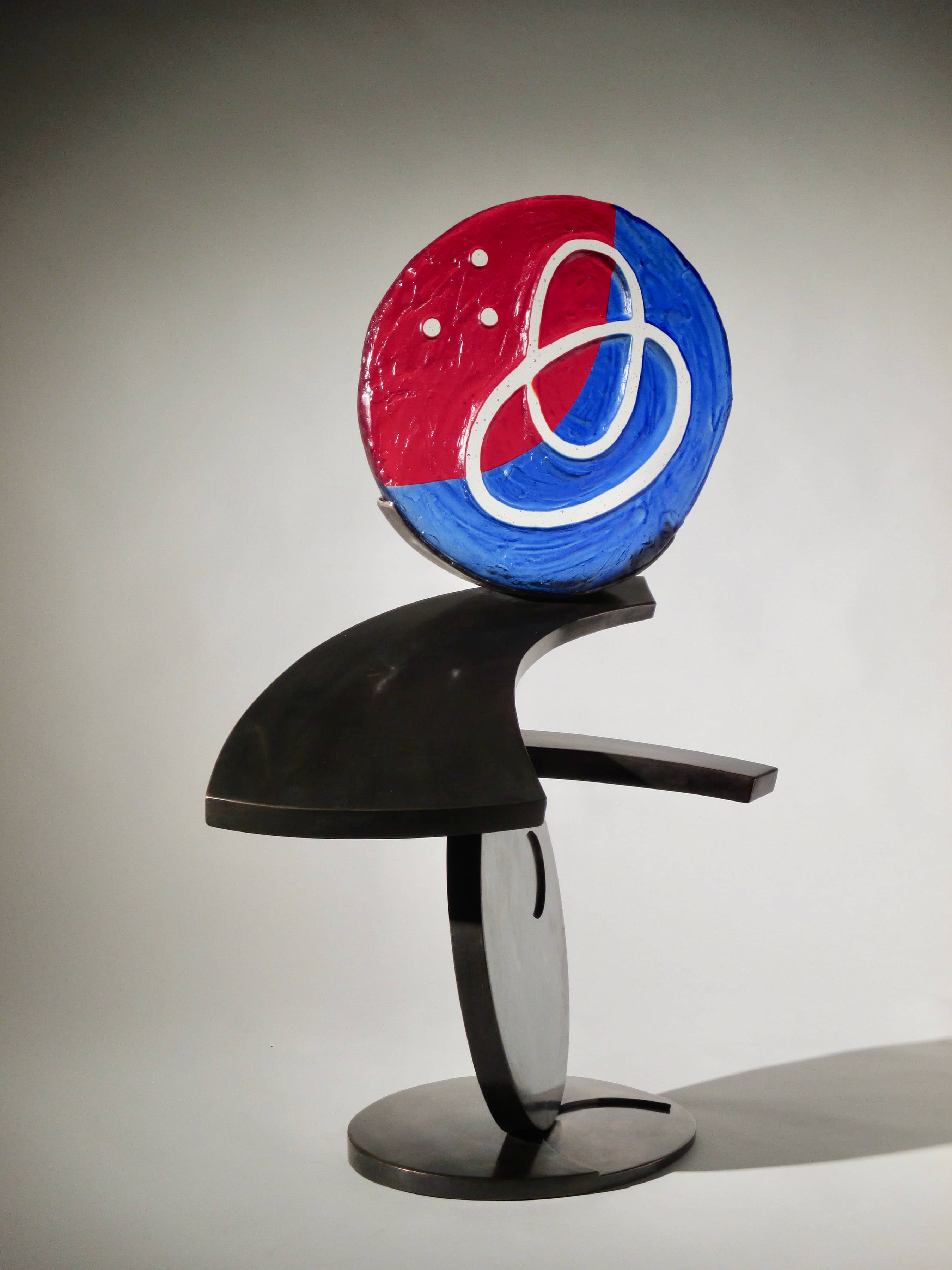
Why do you enjoy working with glass?
The three-dimensional world is reflected light and shadow. Glass adds transparency and translucency. Together this considerably expands the vocabulary of sculpture.
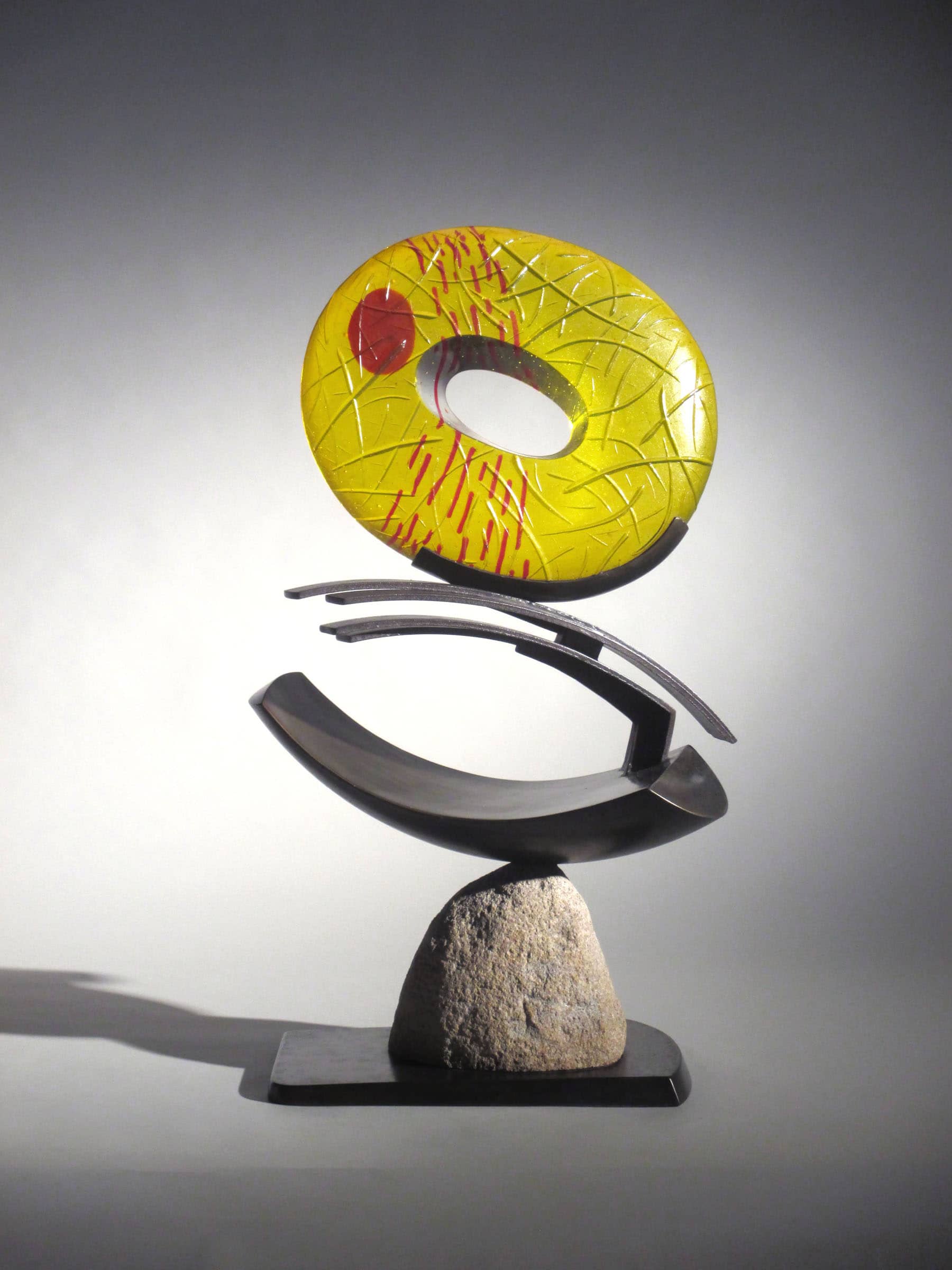
Where do you find your inspiration for your creations?
Inspiration comes from the “human figure” along with its movement and stance.
What are you most looking forward to while being an Artist in Residence at The Henry Ford?
I look forward to working with the highly skilled artisans that make up the Henry Ford glass studio. I hope to produce a three- dimensional interpretation of my Image Vessel Series.
Michigan, Dearborn, 21st century, 20th century, making, Greenfield Village, glass, artists in residence, art

Record Album, "Sgt. Pepper's Lonely Hearts Club Band," 1967. THF 113167
Fifty years ago this month, the Beatles released their album "Sgt. Pepper’s Lonely Hearts Club Band." Thousands of young people flocked to San Francisco to experience the "Summer of Love."
The summer of 1967 saw the flowering of a counterculture movement, a reaction against the moral complacency and social conformity of postwar America, that would create ripples of change in American society in the coming years. An alternative vision of living—vastly different from the traditional and conformist 1950s—ignited the imaginations of millions of young Americans who came of age during the 1960s. The times, they were a-changing.
Sgt. Pepper’s Lonely Hearts Club Band
When the Beatles released their album "Sgt. Pepper’s Lonely Hearts Club Band" in June 1967, it inspired a generation with optimism and an alternative vision of possibility. Young people had eagerly waited for it in great anticipation—it was the first album whose release was truly an "event."
By the time the Beatles recorded "Sgt. Pepper," they were beginning to incorporate a variety of new influences in their music, including a broader range of instruments—including an Indian sitar—and innovative recording techniques. The album features elaborate musical arrangements and use of studio effects like echo and reverberation. The album cover was truly smashing. It featured a colorful collage of cardboard models of famous people—at its center appeared the Beatles themselves, dressed in day-glo satin military band-style outfits. With its mystical influences, psychedelic music, and fanciful album art, "Sgt. Pepper" encapsulated the very essence of counterculture aesthetic.
Millions around the world were galvanized by "Sgt. Pepper’s" music and message. Alienated youth, searching for a better society and a good life, were entranced by the Beatles’ vision of what could be, rather than what was. The album quickly anointed the Beatles as leaders of the 1960s counterculture movement.
The Summer of Love
If "Sgt. Pepper" was the quintessential counterculture album, San Francisco’s "Summer of Love" was an iconic counterculture event.
In 1967, the "Summer of Love" turned national attention to the emerging counterculture movement. That summer, over 100,000 young people came to San Francisco’s Haight-Ashbury district, drawn by a "groovy" counterculture vision of freedom and social harmony. Teenagers and college students with rainbow-colored clothing and long hair flocked to join the cultural utopia. Thousands of aspiring, idealistic flower children—mesmerized by images of incense, flowers, psychedelia, acid rock, peace signs and cosmic harmony—gathered in Haight-Ashbury to indulge in communal living, drugs, music, and free love.

Concert Poster for Electric Flag American Music Band, Moby Grape, and Steve Miller Blues Band at The Fillmore, 1967. THF 125134
Record Album, Jefferson Airplane "Surrealistic Pillow," 1967. THF 125136
Rock concerts were an important source of community. In San Francisco during this time, local rock groups like Jefferson Airplane and the Grateful Dead—who were beginning to achieve nationwide popularity and commercial success—provided a counterculture soundtrack. These bands entertained at free concerts around the Haight and Golden Gate Park, and played paid engagements at nearby Fillmore West and Winterland.
Yet this months-long psychedelic love-in, with its counterculture ideals, could not sustain its participants. Overcrowding, homelessness, hunger and drug problems were rampant. By early fall, the crowds had melted away as students returned to school and other young people left to practice alternative living in new settings.
But these new ideas, values, behaviors and styles of fashion defined the coming-of-age of a generation. America’s youth eschewed chasing material success and social status, and championed alternative, non-conformist ways of living. They embraced things like transcendental meditation, hallucinogenic drugs, and utopian communal living. America’s youth were determined to change "the system."
Counterculture Goes Commercial
Counterculture values distained capitalism. Yet, ironically, the counterculture also developed a commercial side. Retailers enthusiastically sold faded blue jeans, hippie-inspired fashions, beads, and incense. Health food stores sprouted up. Rock groups, despite protests against materialism or capitalism in their song lyrics, made millions from their concert tours and record albums.
By the mid-1970s, the counterculture movement was winding down. Many of the flower children had by then joined "the establishment," taking up professions or becoming businesspeople—living much more "traditional" lives.
Jeanine Head Miller is Curator of Domestic Life at The Henry Ford.
1960s, 20th century, California, summer, popular culture, music, by Jeanine Head Miller